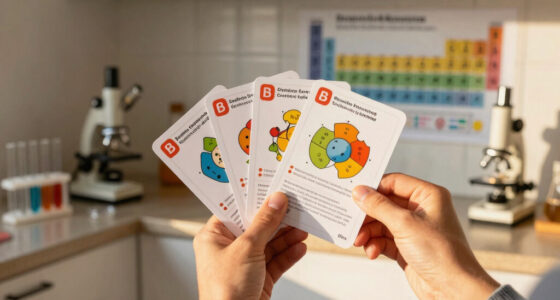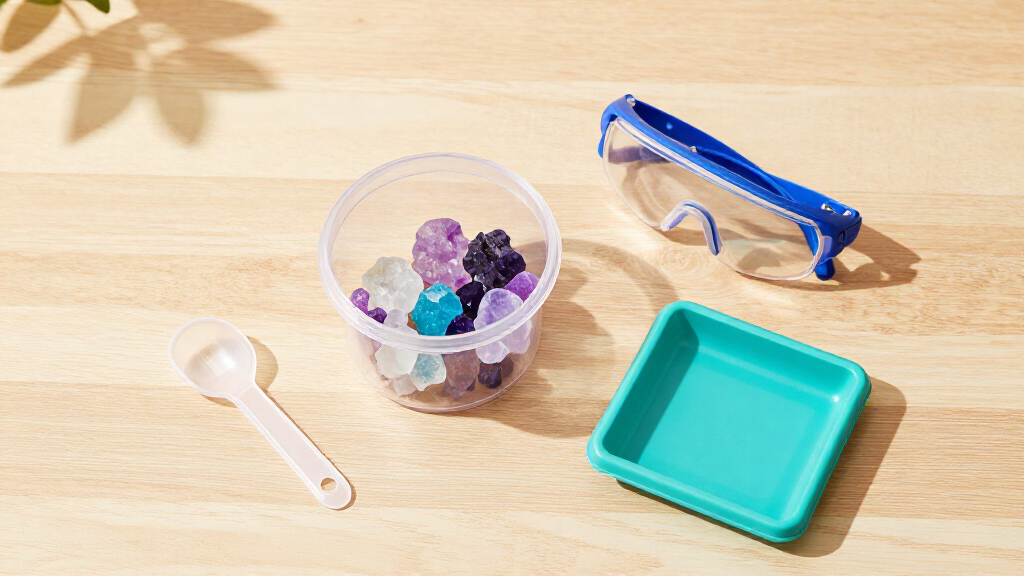

Educational crystal growing kits for kids can turn crystal formation into a hands-on science activity, but the options differ in how much they teach, how many projects they include, and how the finished crystals are displayed. My best overall pick is the National Geographic Crystal Growing Kit with 5 Activities for its range of projects, while the 4M Crystal Growing Science Experimental Kit stands out for its display domes and the BBC Earth Grow & Discover Crystal Aquarium STEM Kit for its themed presentation. A larger activity set may offer more to explore, while a light-up stand or character model can make the result more appealing to a child; simpler kits may suit a first experiment better. Adult help, waiting time, and the number of useful repeat activities also matter. Read on for the full breakdown and guidance on choosing the right kit for your child.

Prime made for students and young adults
- Fast, free delivery for dorm and study essentials
- Prime Video and Amazon Music included
- Member-only deals
Key Takeaways
- Multiple activities separate learning-focused picks from single-project kits: the National Geographic five-activity set offers more variety for children who want to try several crystal-growing projects.
- Display features are a distinct advantage, not a substitute for science content: the 4M domes and light-up stand kits focus more on showing off the finished crystals than on broad activity variety.
- Theme can help a child engage, but it narrows the appeal: Barbie, aquarium, and hedgehog-model options may suit children drawn to those designs, while a general science kit is easier to share across interests.
- Party favors solve a different problem from a home experiment: the 16-piece set may suit group activities, but buyers should check what each participant receives and how much adult setup is needed.
- Kit size alone does not reveal the best fit: a mega kit may offer more materials, while a compact or themed option can be a better match for a shorter activity, a gift, or a child who prefers a clear centerpiece.
| National Geographic Jumbo Glow-in-the-Dark Crystal Growing Kit |  | Best for a Standout Display | Brand: Blue Marble | Age range: 8 years and up | Educational objective: STEM | VIEW LATEST PRICE | See Our Full Breakdown |
| Barbie Crystal Growing Kit for Kids |  | Best for Colorful Collecting | Brand: Blue Marble | Age range: 8 years and up | Number of crystals: 3 | VIEW LATEST PRICE | See Our Full Breakdown |
| National Geographic Crystal Growing Kit with 5 Activities |  | Best for Activity Variety | Brand: Blue Marble | Age range: 8 years and up | Activities: 5 crystal-growing activities | VIEW LATEST PRICE | See Our Full Breakdown |
| National Geographic Mega Crystal Growing Kit for Kids |  | Best for an Illuminated Crystal Collection | Brand: National Geographic | Recommended age: 8 years and up | Crystals: 6 in blue, red, purple, green, yellow, and glow-in-the-dark | VIEW LATEST PRICE | See Our Full Breakdown |
| National Geographic Crystal Growing Craft Kit |  | Best for a Quick Creative Project | Brand: Blue Marble | Age range: 8 years and up | Educational objective: STEM | VIEW LATEST PRICE | See Our Full Breakdown |
| Crystal Growing Science Kit, 16-Piece Party Favor Set for Kids |  | Best for Parent-Guided Observation | Brand: Tymokcall | Set name: Crystal Growing Kit | Listed quantity: 16 pieces in title; 24 items in product information | VIEW LATEST PRICE | See Our Full Breakdown |
| 4M Crystal Growing Science Experimental Kit with Display Domes |  | Best for Experiment Variety | Brand: 4M | Experiments: 7 | Recommended age: 10–15 years | VIEW LATEST PRICE | See Our Full Breakdown |
| UNGLINGA Crystal Growing Experiment Science Kit for Kids |  | Best for Themed Crystal Projects | Brand: UNGLINGA | Age range: 8 years and up | Experiments: 5 | VIEW LATEST PRICE | See Our Full Breakdown |
| National Geographic Crystal Growing Kit with Light-Up Display Stand | 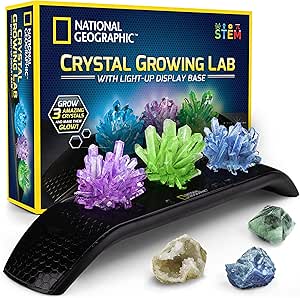 | Best for Gemstone Learning | Brand: National Geographic | Age range: 8 years and up | Crystal colors: Blue, purple, and green | VIEW LATEST PRICE | See Our Full Breakdown |
| Dan&Darci Light-Up Crystal Growing Kit for Kids |  | Best for Growing Three Colors | Brand: Dan&Darci | Age range: 8 years and up | Crystal colors: Red, blue, and clear | VIEW LATEST PRICE | See Our Full Breakdown |
| BBC Earth Grow & Discover Crystal Aquarium STEM Kit |  | Best for an Aquarium Display | Brand: Horizon Group USA | Age range: 6 years and up | Educational topics: Crystal growing, earth science, oceans, STEM, sustainability | VIEW LATEST PRICE | See Our Full Breakdown |
| sdaymol Crystal Growing Kit for Kids |  | Best for Multiple Small Experiments | Brand: sdaymol | Recommended age: 8 years and up | Included components: 3 hedgehog models, crystal-growing powder, 3 plastic containers, 3 stirring sticks, instruction guide | VIEW LATEST PRICE | See Our Full Breakdown |
| sdaymol Crystal Growing Kit for Kids with Two Hedgehog Models |  | Best for a Two-Experiment Starter | Brand: sdaymol | Age range: 8–18 years | Included components: 2 hedgehog models, crystal-growing powder, 2 plastic containers, 2 stirring sticks, instructions | VIEW LATEST PRICE | See Our Full Breakdown |
| educational crystal growing kits for kid | Brand | Included components | Age range |
|---|---|---|---|
| National Geographic Jumbo Glow | Blue Marble | Crystal growing kit, detailed learning guide, fluorite specimen | 8 years and up |
| Barbie Crystal Growing Kit for | Blue Marble | Crystal-growing powder, seed rocks, rose quartz specimen, display stand, magnifying glass, instructions and learning guide | 8 years and up |
| National Geographic Crystal Gr | Blue Marble | Crystal solutions, growing stones, display container, dinosaur mold, tree forms, safety gear, instructions, and Learning Guide | 8 years and up |
| National Geographic Mega Cryst | National Geographic | — | — |
| National Geographic Crystal Gr | Blue Marble | 1 genuine geode specimen, 2 cherry tree forms, 1 evergreen tree form, 3 packs of crystal-growing liquid, 3 tree base stands, 5 non-toxic watercolor pens, full-color learning guide | 8 years and up |
| Crystal Growing Science Kit | Tymokcall | — | — |
| 4M Crystal Growing Science Exp | 4M | Crystal compounds, seven display domes, stirring supplies, and instructions | — |
| UNGLINGA Crystal Growing Exper | UNGLINGA | Crystal-growing seed, measuring cup, crystal-growing powder, and other supplies | 8 years and up |
| National Geographic Crystal Gr | National Geographic | Crystal powders, seed rocks, growing chamber, display base, and instructions | 8 years and up |
| Dan&Darci Light-Up Crystal Gro | Dan&Darci | — | 8 years and up |
| BBC Earth Grow & Discover Crys | Horizon Group USA | 1 crystal aquarium, 4 crystal-growing rocks, 1 crystal-growing solution, 2-in-1 poster and guide | 6 years and up |
| sdaymol Crystal Growing Kit fo | sdaymol | 3 hedgehog models, crystal-growing powder, 3 plastic containers, 3 stirring sticks, instruction guide | — |
| sdaymol Crystal Growing Kit fo | sdaymol | 2 hedgehog models, crystal-growing powder, 2 plastic containers, 2 stirring sticks, instructions | 8–18 years |
More Details on Our Top Picks
National Geographic Jumbo Glow-in-the-Dark Crystal Growing Kit
This kit suits kids who would rather grow one large crystal than juggle several small projects. Its glow-in-the-dark finish gives the finished specimen a display feature that the Crystal Growing Craft Kit’s colorful trees do not offer, while the included fluorite provides a real mineral to compare with the grown crystal. The learning guide and straightforward instructions help connect the activity to crystal science, making it more than a decorative project. The tradeoff is focus: compared with the National Geographic Crystal Growing Kit with 5 Activities, this kit offers fewer ways to experiment, and the crystal needs a few days to grow. I’d choose it for a child who enjoys waiting for one eye-catching result, not for a family seeking quick or varied activities.
Pros:- Focuses on growing a large, glow-in-the-dark crystal
- Includes a fluorite specimen for comparison with the grown crystal
- Provides a learning guide and easy-to-follow instructions
- Designed for children ages 8 and up
Cons:- The crystal takes a few days to grow
- Offers less activity variety than the National Geographic Crystal Growing Kit with 5 Activities
Best for: Kids ages 8 and up who want to grow and display one large glow-in-the-dark crystal alongside a real mineral specimen.
Not ideal for: Families seeking several different experiments or a same-day finished project; this kit centers on one crystal that takes a few days to grow.
- Brand:Blue Marble
- Age range:8 years and up
- Educational objective:STEM
- Included components:Crystal growing kit, detailed learning guide, fluorite specimen
- Dimensions:7.24 x 2.37 x 10 inches
- Model number:NGJUMCRYSTAL
Our verdict“Choose this kit for an age-8-and-up child who values one large glowing crystal and a real fluorite specimen more than a variety of projects.”
Barbie Crystal Growing Kit for Kids
With materials for three crystals in blue, pink, and purple, this kit gives kids more color variety than the Jumbo Glow-in-the-Dark kit’s single-crystal focus. The rose quartz specimen and illustrated guide add a useful science angle, while the magnifying glass encourages close inspection as crystals grow. The display stand helps present a finished piece, but it holds only one crystal, so the other two do not get the same ready-made showcase. That makes this a better pick for children who enjoy growing several colorful samples than for anyone expecting a complete display for the whole set. Compared with the five-project National Geographic kit, Barbie’s offering is more focused on colored crystal collecting and less varied in activity type.
Pros:- Includes materials to grow three crystals in blue, pink, and purple
- Comes with a genuine rose quartz specimen
- Includes a magnifying glass for examining crystal details
- Illustrated guide introduces crystal science
Cons:- The included stand displays only one finished crystal
- Offers less variety in activity type than the National Geographic Crystal Growing Kit with 5 Activities
Best for: Kids ages 8 and up who like colorful collections and want to grow three crystals with a rose quartz specimen for comparison.
Not ideal for: Children who want every finished crystal displayed together, or families seeking several distinct kinds of crystal-growing activity.
- Brand:Blue Marble
- Age range:8 years and up
- Number of crystals:3
- Crystal colors:Blue, pink, and purple
- Included components:Crystal-growing powder, seed rocks, rose quartz specimen, display stand, magnifying glass, instructions and learning guide
- Item dimensions:6.25 x 2.4 x 9.76 inches
- Item weight:16 ounces
- Educational objective:STEM
Our verdict“Pick this kit for a child who wants three colorful crystals to grow, but skip it if displaying the complete set is a priority.”
National Geographic Crystal Growing Kit with 5 Activities
Among these picks, this is the clearest choice for kids who want to try different crystal-growing formats rather than repeat one setup. Its five activities include a glow-in-the-dark crystal, underwater crystals, crystal trees, and a dinosaur figure, giving children more ways to see how crystals can form on different shapes. The included safety gear and learning guide support a more structured science activity than the simpler single-crystal Jumbo kit. That breadth comes with a practical tradeoff: the kit requires adult supervision, so it is not the best choice for an independent project. Compared with the Crystal Growing Craft Kit, which centers on decorating tree forms and grows over several hours, this one offers broader project variety but asks for more setup and oversight.
Pros:- Includes five different crystal-growing activities
- Offers glow-in-the-dark and underwater crystal projects
- Includes safety gear, instructions, and a learning guide
- Combines crystal growth with dinosaur and tree forms
Cons:- Requires adult supervision for children
- More varied than a single-project kit, but also involves more components and setup
Best for: Families with children ages 8 and up who want multiple crystal projects and can provide adult supervision during the activities.
Not ideal for: Kids expected to complete a crystal activity independently, or families who prefer a single, simple growing setup.
- Brand:Blue Marble
- Age range:8 years and up
- Activities:5 crystal-growing activities
- Included components:Crystal solutions, growing stones, display container, dinosaur mold, tree forms, safety gear, instructions, and Learning Guide
- Item dimensions:8.97 x 5.35 x 7.2 inches
- Item weight:2.2 pounds
- Theme:Earth Science
Our verdict“Choose this kit when project variety matters and an adult can supervise; choose the Jumbo Glow-in-the-Dark kit for a simpler one-crystal activity.”
National Geographic Mega Crystal Growing Kit for Kids
This kit is built for children who want several specimens and a dedicated way to show them off: it grows six colorful crystals and includes a USB-powered light-up stand. Four real gemstone specimens—rose quartz, fluorite, blue calcite, and a quartz geode—give the learning guide concrete examples to pair with the growing activity. That makes it a more display-oriented set than the Barbie kit, whose stand fits only one finished crystal, and a bigger collecting project than the Jumbo kit. The tradeoffs are the 3–4 day growth time and the stand’s need for USB power. Its two silicone chambers also mean the kit is not simply six separate growing vessels. I’d pick it for display-minded learners, not for kids seeking a quick result.
Pros:- Grows six crystals in several colors, including a glow-in-the-dark option
- Includes a USB-powered light-up display stand
- Provides four real gemstone specimens for comparison
- Comes with a full-color learning guide
Cons:- Crystal growth takes 3–4 days
- The display stand requires USB power
- Includes two growing chambers rather than six separate chambers
Best for: Kids ages 8 and up who want a multi-color crystal collection, real gemstone specimens, and an illuminated display.
Not ideal for: Families who want crystals to grow in a single session or do not have a convenient USB power source for the display stand.
- Brand:National Geographic
- Recommended age:8 years and up
- Crystals:6 in blue, red, purple, green, yellow, and glow-in-the-dark
- Crystal growth time:3–4 days
- Growing chambers:2 silicone chambers
- Display:USB-powered light-up stand
- Gemstone specimens:Rose quartz, fluorite, blue calcite, and quartz geode
- Item dimensions:7.87 x 4.92 x 9.84 inches
- Item weight:1.49 kg
Our verdict“Choose this for a child who wants a well-supported crystal display and several real specimens, provided a multi-day grow and USB-powered stand suit your setup.”
National Geographic Crystal Growing Craft Kit
This craft kit is the strongest fit for kids who want to see visible progress sooner than with the multi-day Jumbo or Mega kits. Crystals can start appearing on its two cherry trees and one evergreen tree within minutes, with full growth taking about six hours. That shorter wait makes it easier to pair crystal science with an afternoon art activity; the watercolor pens let children add their own color, and the geode specimen offers a real example to inspect. Compared with the five-activity National Geographic kit, this one has less project variety, but its tree forms give the activity a clear creative focus. The tradeoff is that “quick” still means several hours for the trees to become fully covered.
Pros:- Crystals can begin appearing within minutes
- Combines crystal growth with watercolor decorating
- Includes two cherry tree forms and one evergreen tree form
- Comes with a genuine geode specimen and full-color learning guide
Cons:- Full crystal coverage takes up to six hours
- Focuses on tree forms rather than a broad range of crystal projects
Best for: Families seeking an age-8-and-up STEM-and-art activity that shows early crystal growth and can be completed over an afternoon.
Not ideal for: Kids who want a large standalone crystal or a range of different experiments; this kit centers on decorating three tree forms.
- Brand:Blue Marble
- Age range:8 years and up
- Educational objective:STEM
- Included components:1 genuine geode specimen, 2 cherry tree forms, 1 evergreen tree form, 3 packs of crystal-growing liquid, 3 tree base stands, 5 non-toxic watercolor pens, full-color learning guide
- Growing time:Up to 6 hours
- Dimensions:6.15 x 2.2 x 9.3 inches
- Weight:240 g
- Model number:NGCRYSTALGRD3T
Our verdict“Choose this for a creative afternoon activity with visible early growth; pick the five-activity kit if variety matters more than a focused tree craft.”
Crystal Growing Science Kit, 16-Piece Party Favor Set for Kids
The Tymokcall kit suits families who want crystal growth to become a short daily observation activity, rather than a large collection of experiments. Its stated 4–5-day growth period gives kids a chance to watch a process unfold and practice patience, while included instructions and a video offer guidance. Compared with the 4M Crystal Growing Science Experimental Kit, which lays out seven experiments for older children, this is positioned more simply and is described as a parent-child activity. That makes it a better fit for younger learners with an adult leading preparation, not a substitute for independent experimenting. Hot water requires adult help, and the package count is unclear: the title says 16 pieces, while product information says 24 items. I would choose it for guided observation, not when a precise contents list is a priority.
Pros:- A stated 4–5-day growth period encourages repeated observation
- Instructions and a video provide support for the activity
- Designed to work as a parent-child learning project
Cons:- Hot-water preparation requires adult assistance
- The listed quantity conflicts between 16 pieces and 24 items
Best for: Parents seeking a guided crystal-growing activity with daily observation for a young child
Not ideal for: Families wanting children to handle preparation independently, or buyers who need a clearly verified piece count
- Brand:Tymokcall
- Set name:Crystal Growing Kit
- Listed quantity:16 pieces in title; 24 items in product information
- Recommended age:3 years and up
- Intended age:4 years and up
- Crystal growth time:4–5 days
- Theme:Chemistry
- Dimensions:5 x 2 x 3 inches
Our verdict“Choose this for a parent-guided introduction to observing crystals grow, provided the inconsistent piece count is not a concern.”
4M Crystal Growing Science Experimental Kit with Display Domes
For older kids who want several rounds of crystal-growing work, the 4M kit is the lineup’s clearest experiment-first option. Its seven activities, stirring supplies, crystal compounds, and seven display domes pair hands-on chemistry and geology with a place to keep the results. That breadth sets it apart from the Tymokcall kit, which is framed around a more straightforward parent-child activity and a single stated growth period. The tradeoff is age and supervision: 4M is recommended for ages 10–15, and the experiments require hot water, so it is not the easiest pick for younger children or independent use. Its domes make the finished crystals easier to preserve and show, but this kit emphasizes repeated procedures more than the illuminated display appeal of the National Geographic kit.
Pros:- Includes materials and instructions for seven experiments
- Connects crystal growing with chemistry and geology
- Seven display domes provide individual spaces for finished crystals
Cons:- Hot water is required for the activities
- Recommended age of 10 and up makes it less suitable for younger beginners
Best for: Families with children ages 10–15 who want several guided chemistry and geology experiments
Not ideal for: Younger children or families seeking a low-supervision kit with a light-up display
- Brand:4M
- Experiments:7
- Recommended age:10–15 years
- Included components:Crystal compounds, seven display domes, stirring supplies, and instructions
- Educational objective:STEM
- Themes:Chemistry and geology
- Dimensions:8.5 x 9.5 x 3.25 inches
- Model number:5557
Our verdict“Pick 4M for an older child who values repeated experiments and keepsake domes more than a light-up presentation.”
UNGLINGA Crystal Growing Experiment Science Kit for Kids
UNGLINGA is a strong match for children who are more motivated by making shaped displays than by repeating a basic crystal-growing procedure. The five experiments include a Christmas tree, peacock, and plant, while step-by-step instructions give the projects a clear structure. Compared with the 4M kit’s seven experiments, UNGLINGA offers fewer activities, but its named shapes make the outcomes feel more craft-oriented and varied. The product data lists a seed, measuring cup, powder, and other supplies without detailing every component, so buyers get less clarity about the full contents than with 4M or the Dan&Darci kit. Its main drawback is supervision: the instructions call for constant adult oversight, which limits independent use. I’d select it for a child who enjoys themed projects and has an adult available throughout.
Pros:- Offers five distinct crystal-growing experiments
- Named projects include a Christmas tree, peacock, and plant
- Step-by-step instructions support hands-on STEM learning
Cons:- Requires constant adult supervision
- The listed components do not specify every included supply
Best for: Children ages 8 and up who enjoy shaped projects and can work with constant adult supervision
Not ideal for: Families seeking independent activities or a fully itemized kit contents list
- Brand:UNGLINGA
- Age range:8 years and up
- Experiments:5
- Included components:Crystal-growing seed, measuring cup, crystal-growing powder, and other supplies
- Theme:Chemistry
- Material:Plastic
- Dimensions:5.71 x 4.5 x 4.5 inches
- Number of items:1
Our verdict“Choose UNGLINGA for themed crystal projects with an adult nearby, rather than for independent experimenting.”
National Geographic Crystal Growing Kit with Light-Up Display Stand
This National Geographic kit makes a good choice for children who want to connect growing crystals with examples from the natural world. It grows blue, purple, and green crystals and adds a geode, green fluorite, blue calcite, and a learning guide. Those real specimens give it a stronger geology angle than the Dan&Darci Light-Up Crystal Growing Kit, which also grows three colors but focuses on an illustrated guide and an LED base. Here, the light-up stand offers seven single-color modes, rainbow mode, and three brightness levels, giving finished crystals a display role as well as a learning one. Growth takes time and patience, and the chamber and stand are sized for a small collection. I’d favor it for specimen-led learning, not for anyone hoping to build a large display.
Pros:- Grows crystals in blue, purple, and green
- Includes a geode, green fluorite, and blue calcite for geology context
- Light-up stand provides multiple color modes and brightness settings
- Learning guide supports crystal-focused STEM activity
Cons:- Crystal growth requires time and patience
- Growing chamber and display stand accommodate only a small collection
Best for: Children ages 8 and up who want crystal growing paired with real gemstone specimens
Not ideal for: Families wanting a large crystal collection or a display with substantial growing capacity
- Brand:National Geographic
- Age range:8 years and up
- Crystal colors:Blue, purple, and green
- Display modes:7 single-color modes and rainbow mode
- Display brightness:3 levels
- Included gemstones:Geode, green fluorite, and blue calcite
- Included components:Crystal powders, seed rocks, growing chamber, display base, and instructions
- Model number:NGLITCRYSTAL
Our verdict“Choose this for a child interested in both growing crystals and comparing them with real gemstone specimens.”
Dan&Darci Light-Up Crystal Growing Kit for Kids
Dan&Darci is aimed at kids who want to grow several colors and then see the results displayed together. Its three growing cups, powder bags, and crystal starters support red, blue, and clear crystals, while the illustrated 12-page guide explains how crystals form. Compared with the National Geographic Light-Up Display Stand kit, this option gives each color its own cup and includes a dedicated guide, while National Geographic adds real gemstone specimens and more display lighting modes. The Dan&Darci LED base keeps the finished crystals visible, but it needs a USB power connection, so placement depends on access to power. Growth also takes time, and the supplied data does not state how long the process takes. I’d pick it for a child who values three separate color-growing attempts over added geology specimens.
Pros:- Includes three cups, starters, and powder bags for three crystal colors
- LED base illuminates the finished crystals
- Illustrated 12-page guide explains crystal formation
- Includes a Micro-USB cable for powering the display
Cons:- The LED display requires a USB power connection
- Crystal growth takes time, and no specific growth duration is listed
Best for: Children ages 8 and up who want to grow red, blue, and clear crystals in separate cups
Not ideal for: Families seeking real gemstone specimens or a display that does not rely on USB power
- Brand:Dan&Darci
- Age range:8 years and up
- Crystal colors:Red, blue, and clear
- Items included:LED display, Micro-USB cable, 3 growing cups, 3 crystal powder bags, 3 crystal starters, mixing stick, tweezers, and guide
- Number of items:14
- Guide:12-page illustrated guide
- Display:USB-powered LED base
- Educational objective:STEM
Our verdict“Choose Dan&Darci for three separate color-growing projects and an illuminated display, but pick National Geographic for gemstone specimens.”
BBC Earth Grow & Discover Crystal Aquarium STEM Kit
The reusable aquarium gives this kit a clear advantage for children who want more than a one-time crystal activity: the finished formations can sit in an ocean-themed setting, with cave stickers adding a visual link to the included earth science material. Crystals can grow in four colors and reach up to four inches tall, making the result more substantial than the small hedgehog models in the sdaymol kits. The guide also connects crystal growth with underwater rock formations, so the activity has a stronger earth science angle than a simple decoration project. The tradeoff is setup: the kit involves five steps, which may need adult help for younger children. Choose it for display and context; choose sdaymol’s three-model kit for several separate experiments instead.
Pros:- Crystals can grow in four colors and reach up to 4 inches tall
- Reusable aquarium provides a dedicated place to display the finished crystals
- Guide connects crystal formation with underwater rock formations
- Designed for children as young as 6
Cons:- Five setup steps may require adult help for younger children
- Focuses on one aquarium project rather than several distinct experiments
Best for: Families with children aged 6 and up who want a sizable crystal display paired with an earth science guide
Not ideal for: Children who need a very simple, quick activity or families who prefer multiple separate experiments in one kit
- Brand:Horizon Group USA
- Age range:6 years and up
- Educational topics:Crystal growing, earth science, oceans, STEM, sustainability
- Aquarium dimensions:8.25 x 5 x 1.75 in.
- Included components:1 crystal aquarium, 4 crystal-growing rocks, 1 crystal-growing solution, 2-in-1 poster and guide
- Crystal colors:Four colors
- Maximum crystal height:Up to 4 inches
- Model number:228019RF
Our verdict“Pick this for a younger child who will enjoy growing and displaying crystals in an ocean-themed aquarium.”
sdaymol Crystal Growing Kit for Kids
Three hedgehog models and three containers make this the most repeatable hands-on option among these sdaymol kits: children can run three crystal-growing activities rather than choosing between two models in the JY01 kit. That setup can support comparing colors or observing how separate experiments develop, while the guide introduces crystal growth and chemistry. The activity is geared to ages 8 and up, and growth may take about 24 hours, giving children time to practice observation and patience. Unlike the BBC Earth aquarium kit, it does not offer a large reusable display or an earth science setting; its appeal is having several compact experiments. The wait and instruction-following are real parts of the activity, so it is a weaker fit for children expecting immediate results or needing close guidance through each step.
Pros:- Includes materials for three separate crystal-growing activities
- Three containers allow experiments to be kept apart
- Introduces crystal growth and chemistry through hands-on observation
- Blue, green, and red colors give children different results to observe
Cons:- Crystal growth may take about 24 hours
- Children need to follow the experiment instructions
- Small hedgehog models offer less display presence than the BBC Earth aquarium
Best for: Families with children aged 8 and up who want several compact crystal experiments to compare or repeat
Not ideal for: Children who expect a quick result, dislike following experiment instructions, or want a larger finished display
- Brand:sdaymol
- Recommended age:8 years and up
- Included components:3 hedgehog models, crystal-growing powder, 3 plastic containers, 3 stirring sticks, instruction guide
- Colors:Blue, green, and red
- Approximate growth time:About 24 hours
- Item dimensions:3 x 3 x 3 inches
- Material:Plastic
- Manufacturer part number:JY03
Our verdict“Choose this for an older child who will enjoy comparing three small experiments more than creating one large display.”
sdaymol Crystal Growing Kit for Kids with Two Hedgehog Models
This JY01 kit offers a straightforward entry to crystal growing: children get two hedgehog models, containers, stirring sticks, powder, and instructions for two experiments. Its blue-and-green color focus is simpler than the three-color JY03 sdaymol kit, which includes a third model and container; that makes this a more modest choice for a child who needs two activities, not three. Like the JY03, it introduces crystal growth through a process that may take about 24 hours, so observation and patience are part of the learning rather than an optional extra. The tradeoff is that it provides fewer experiments and less color variety than its sibling, while the BBC Earth aquarium offers a more substantial display and broader earth science framing. Pick JY01 for a compact two-project introduction, not maximum variety.
Pros:- Includes materials for two crystal-growing experiments
- Instructions and stirring sticks support a guided activity
- Blue and green crystals provide distinct outcomes to observe
- Hands-on process can encourage patience and problem-solving
Cons:- Only two models and containers, fewer than the JY03 kit
- Crystal growth may take about 24 hours
- Requires children to follow experiment instructions
Best for: Families with children aged 8 and up who want two guided crystal experiments without the extra model in the JY03 kit
Not ideal for: Children who want several color choices or more than two experiments, or families seeking a prominent reusable display
- Brand:sdaymol
- Age range:8–18 years
- Included components:2 hedgehog models, crystal-growing powder, 2 plastic containers, 2 stirring sticks, instructions
- Crystal colors:Blue and green
- Approximate growth time:About 24 hours
- Material:Plastic
- Dimensions:9.4 x 4.9 x 3.5 inches
- Weight:0.6 kg
- Model number:JY01
Our verdict“Choose this as a two-experiment introduction for a child who does not need the extra model and color variety of the JY03 kit.”

How We Picked
I ranked these kits by how well they serve the needs behind an educational crystal-growing activity: clear opportunities to observe crystal formation, a useful balance of projects and supplies, child-friendly presentation, and practical display or storage features. I also weighed how a kit’s format fits its likely use, whether that is a first experiment, a longer home activity, a themed gift, or a group event. A display feature adds appeal, but it does not outweigh activity variety when the goal is continued exploration.
The ranking favors options with a strong balance of learning potential, usability, and versatility over kits whose main distinction is a character or decorative finish. Specialized picks still earn a place when they serve a clear buyer need, such as party favors or a light-up display. Since children may need adult help with preparation and handling, I treat supervision and setup as practical parts of the choice rather than assuming every kit is independently usable.
Factors to Consider When Choosing Educational Crystal Growing Kits For Kids
Before choosing a kit, decide what you want the activity to do: introduce a science concept, keep a child busy with several projects, create a display piece, or provide a shared activity for a group. Those goals can point to different kits, even when all of them grow crystals.
Match Activity Variety to Your Child’s Interest
A kit with several activities may give a curious child more chances to compare results, but extra projects only help if the child is interested in repeating the process. For a first experiment, a more focused kit can keep instructions and materials manageable. Avoid treating the number of pieces as a measure of educational depth; some pieces may support presentation rather than a new science task. Think about whether your child likes repeating an experiment, following a themed activity, or moving quickly from setup to a finished object. If the kit is for siblings, broader activity variety may be more useful than a character-specific design. Choose the format that supports the kind of attention your child is likely to give it.
Plan for Adult Help and Waiting Time
Crystal growing is not usually an instant craft: preparation comes first, and the crystals need time to form. The child’s age and ability to follow instructions matter, but so does an adult’s availability to supervise measuring, mixing, and handling materials. A common mistake is buying a kit as a same-day activity without checking its directions for timing and setup. If you need an activity that holds attention throughout, plan a second task for the waiting period, such as recording observations or drawing predictions. For younger children, choose a kit that an adult can prepare alongside them rather than expecting independent use. This practical fit can matter more than a large collection of accessories.
Choose Between Science Exploration and Display
Some kits put the emphasis on growing and comparing crystals; others add domes, themed scenes, or lights to make the result a keepsake. A display feature can motivate a child to finish the experiment and gives the crystals a place to sit afterward. It does not necessarily add more scientific learning, so decide whether presentation is a main goal or a bonus. If the child wants to observe changes and try different activities, prioritize project variety and clear instructions. If the appeal is making something to show in a bedroom, a stand or model may carry more weight. Check where the finished display will go, since an elaborate presentation is less useful if it takes up more space than you have.
Check the Kit’s Fit for Group Use
A multi-piece party set may look convenient for a classroom, birthday, or club, but group activities can involve more than one set of materials per participant. Check what is included for each child and whether a shared adult-led setup is expected. A single larger kit may work better when children can take turns observing a central experiment, while individual kits suit groups that each want a personal result. Consider how long the activity takes and whether the group can return to view the crystals later. One common oversight is planning only for the experiment and not for cleanup, waiting, or display space. For a group, simple instructions and a clear division of tasks can matter more than decorative extras.
Think About the Finished Crystal’s Care
The growing stage is only part of the activity; the finished crystals may need a safe place where they will not be knocked over or handled roughly. A dome or stand can help with presentation, while kits without dedicated display pieces may need a small container or shelf at home. Before buying, think about whether your child wants to keep the result, give it as a gift, or simply observe the process. If keeping crystals is important, check the kit instructions for any drying, handling, or storage guidance. Do not assume a display accessory will protect every piece from spills or breakage. Planning a spot for the finished work makes the project feel complete without turning storage into an afterthought.
Frequently Asked Questions
Which kind of crystal kit makes the most sense for a child’s first experiment?
For a first experiment, prioritize instructions that are easy to follow and a manageable project rather than the largest kit. A child who likes trying several activities may get more from a multi-activity set, while a child who prefers a clear goal may do better with one main project. Plan to help with preparation, especially if the child is young or has not followed a science-kit procedure before. Also check the directions for how long the crystals take to form so expectations are realistic. The best first kit is one your child can stay interested in from setup through observation.
Is a light-up crystal kit better for learning than a kit with more experiments?
Not necessarily: lighting improves how the finished crystal is presented, but it does not automatically add more opportunities to learn about crystal growth. A multi-activity kit may be a better fit for a child who wants to compare projects or repeat the process. A light-up display makes more sense when a child is motivated by keeping and showing the finished result. Decide whether the main goal is exploration or presentation before giving either feature priority. If both matter, compare the activity scope as well as the display accessories.
Can a crystal-growing kit work as a party activity for a group of kids?
It can, but first check whether the kit provides materials for individual participants or expects children to share supplies. Crystal growth also takes time, so the activity may work best as a setup session followed by a later reveal rather than a single party-time project. An adult may need to lead preparation and keep the steps organized. For a group, decide whether each child needs a personal crystal to take home or whether observing one shared experiment is enough. That choice will help distinguish a party-favor set from a larger kit designed for one or a few children.
Should I choose a character or themed kit if my child already likes the design?
A familiar character or theme can make a science activity feel more inviting, especially for a child who might not choose a general-purpose kit. The tradeoff is that themed presentation may matter more than the range of experiments, so check what the child can actually do with the kit. If the child is likely to return to the activity, a broader set may offer more ongoing interest. If the theme is the reason they will start the project, it may be a sensible choice even with a narrower focus. Consider whether another child in the household will want to share it, since general science designs can be easier to pass around.
What should I check before buying a crystal kit as a gift?
Check the recipient’s age, interest in hands-on activities, and whether an adult can help with preparation. Look for the kind of experience the child prefers: several experiments, a themed craft, or a finished crystal with a display feature. Ask whether the household has room to leave the project undisturbed while crystals form and a place to keep the result afterward. If the gift is for a specific date, read the kit directions for the expected growing time rather than assuming it will be ready immediately. A kit that fits the child’s interests and the family’s schedule is more likely to be used than one chosen for size alone.
Conclusion
For most families, I’d start with the National Geographic Crystal Growing Kit with 5 Activities as the best overall choice because its multiple projects suit children who want more than one chance to explore. For value, the National Geographic Crystal Growing Craft Kit is a sensible option for shoppers seeking a more focused activity without making display features the priority. Beginners may prefer a straightforward, single-project format such as the 4M Crystal Growing Science Experimental Kit, especially when an adult can guide setup; choose it for its display domes rather than for the widest activity range. For a premium-feeling presentation, compare the National Geographic Light-Up Display Stand and Dan&Darci Light-Up Kit with the 4M domes, then pick the display style that suits the child. For specific needs, the 16-piece party-favor set is aimed at groups, while the Barbie, aquarium, and hedgehog-model kits suit children drawn to themed designs. The best fit depends on whether your priority is broader science exploration, a polished display, a first experiment, or a group activity.