TL;DR

Prime made for students and young adults
- Fast, free delivery for dorm and study essentials
- Prime Video and Amazon Music included
- Member-only deals
A National Academies report published in 2024 concluded that long-term zinc creep in cable sockets was the root cause of the Arecibo telescope’s 2020 collapse. It says cable pullouts worsened after Hurricane Maria and calls for stronger maintenance and monitoring at aging research facilities; a proposed electrical mechanism remains unconfirmed.
A 2024 National Academies report concluded that long-term zinc creep in cable sockets caused the collapse of the Arecibo Observatory’s 305-meter telescope in Puerto Rico in December 2020. The finding links the loss of the suspended platform to gradual failure where zinc-filled sockets gripped supporting cables, and the report says the deterioration became more pronounced after Hurricane Maria.
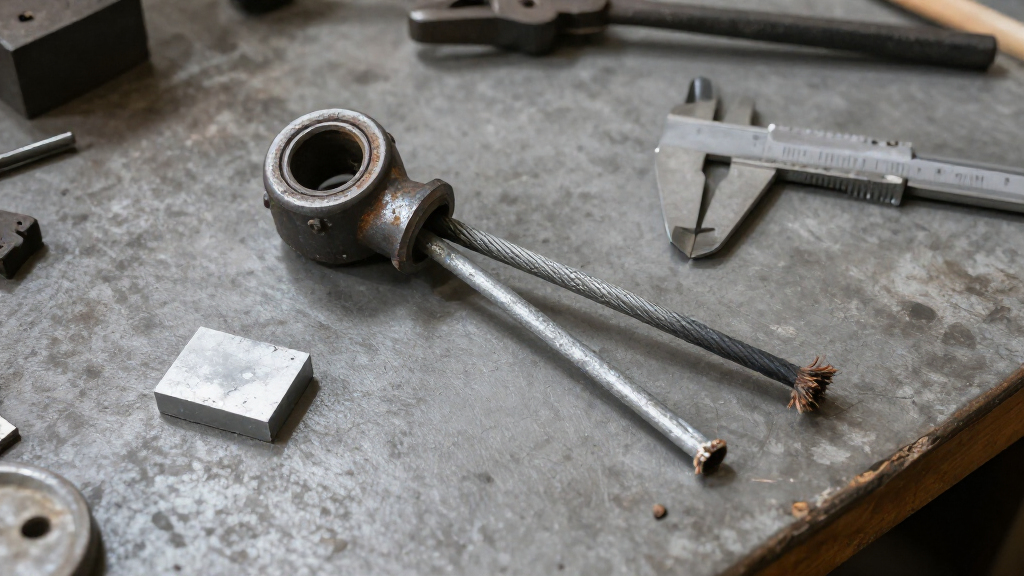
The telescope’s platform was suspended above a 305-meter reflector dish by cables. Each cable was secured in a socket filled with zinc. According to the report, the zinc gradually lost its hold, allowing cables to pull out; multiple cable failures then led the platform to fall into the dish. The National Academies called this the first documented case of long-term zinc-induced creep failure in this type of socket, despite more than a century of use.
The report traces the failure sequence to Hurricane Maria, more than three years before the collapse. It says cable pullout was minimal before the storm, while visual inspections afterward showed large and progressive pullouts. The committee concluded that those signs should have prompted remedial action. It also found that safety-factor calculations made after the first cable failure did not account for the accelerated, time-dependent materials failure that ultimately governed the zinc pullout.
The consensus study, titled Failure Analysis of the Arecibo Observatory 305-Meter Telescope Collapse, was released by the National Academies in 2024. Its committee reviewed forensic investigations commissioned by the University of Central Florida and the National Science Foundation, along with engineering plans, structural analyses, inspection records, photographs, repair proposals, research literature and information from observatory employees. The report also makes recommendations on maintenance manuals, inspection programs and independent audits.
Lessons for Aging Research Facilities
The report’s conclusions matter beyond Arecibo because they show how a failure in a long-used component can develop in ways that earlier experience may not predict. The committee said the socket design had a long history of use, yet the zinc-related failure had no documented precedent. That makes the case relevant to operators of custom-designed scientific facilities, where standard calculations and past performance may not capture new deterioration patterns.
The National Academies recommends closer attention to condition monitoring as facilities age, including checks capable of detecting progressive damage and novel failure modes. It also says the NSF should make explicit funding provisions for ongoing maintenance and monitoring. The recommendations address a practical challenge: identifying risks early can require repeated inspections, specialist analysis and investment before a failure is certain.
The report does not establish that every zinc socket, cable system or comparable facility faces the same risk. Its significance is that long service alone is not proof that a component remains safe, particularly when inspections reveal a changing pattern of damage. For infrastructure that supports high-value research, the report argues for maintenance plans and independent review that can respond to evidence as it develops.
Popular right now

Dyson Car+Boat Cordless Handheld Vacuum

Dyson V8 Cyclone Cordless Vacuum

KitchenAid 5.5-Qt Bowl-Lift Stand Mixer, Porcelain White (KSM55SXXX)
As an affiliate, we earn on qualifying purchases.
From Hurricane Damage to Collapse
Arecibo’s 305-meter radio telescope was a major research facility operated by the University of Central Florida for the NSF’s National Astronomy and Ionosphere Center. Its platform hung over the reflector on a network of support cables. After Hurricane Maria in 2017, inspectors observed substantial cable pullouts that progressed over time, according to the National Academies assessment.
The platform collapsed in December 2020, destroying the telescope’s reflector and ending operations with the instrument. The report’s review followed forensic work commissioned by the NSF and the University of Central Florida. Rather than treating the event as a single sudden break, the committee examined the sequence of deterioration, inspection findings and engineering decisions that preceded the collapse.
The assessment also discusses a possible contributing process: low-current electroplasticity, potentially induced by electromagnetic waves from the telescope, may have accelerated the zinc creep. The report presents this as a possible explanation, not a proven cause. It recommends making remaining cable and socket sections available to researchers for further study.
The Proposed Electrical Mechanism
The report identifies zinc creep in the sockets as the root cause, but it does not settle every detail of how the process accelerated. In particular, the suggestion that electromagnetic waves produced long-term, low-current electroplasticity is described as a possibility. The committee recommends further research using the remaining cable and socket sections; the source material does not report results from such testing.
The assessment also does not establish that the same mechanism is occurring at other facilities or specify a universal inspection schedule that would prevent similar failures. It calls for careful monitoring as facilities age and for dedicated maintenance funding, while recognizing that the particular failure mode had no documented precedent. The extent to which earlier interventions could have prevented the collapse is not stated as a definitive counterfactual.
Further Study and Maintenance Measures
The report recommends that the NSF offer remaining Arecibo socket and cable sections to the research community for examination. Further study could help clarify whether electroplasticity contributed to the accelerated zinc creep and improve understanding of how comparable components behave over long periods.
For the NSF and operators of other specialized facilities, the report points toward practical follow-up: clear operations and maintenance manuals, more attentive inspections as structures age, independent audits and explicit budgets for ongoing condition monitoring. The source material does not give a timetable for those measures or report whether the recommended research on the remaining components has begun.
Key Questions
What caused the Arecibo telescope to collapse?
The National Academies report concluded that long-term zinc creep in cable sockets was the root cause. The zinc gradually lost its grip on support cables, allowing them to pull out.What role did Hurricane Maria play?
The report says that after Hurricane Maria, visual inspections found large and progressive cable pullouts. It says those signs should have prompted remedial action, but does not describe the hurricane as the sole cause of the collapse.Is the proposed electromagnetic explanation confirmed?
No. The report says low-current electroplasticity associated with the telescope’s electromagnetic waves may have accelerated the zinc creep. It presents this as a possible mechanism requiring further study.When was the report released?
The National Academies released its consensus study report, Failure Analysis of the Arecibo Observatory 305-Meter Telescope Collapse, in 2024.What does the report recommend for other research facilities?
It recommends careful monitoring as facilities age, detailed maintenance planning, independent audits and explicit funding for ongoing condition monitoring. It also recommends studying the remaining Arecibo cable and socket sections.Source: maketecheasier.com