
Science reference flashcards come in two very different flavors: exam-prep card systems built for certification tests like the TExES, Praxis, and GACE, and laminated quick-reference guides that condense a subject onto a handful of durable pages. My top pick overall is the TExES Science 4-8 (116) Flashcard Study System, because it offers the deepest, most exam-aligned coverage in the lineup. For students who want rapid review instead of test drilling, the AP Environmental Science Flashcards, Fourth Edition stands out for its structured question-and-answer format, while the Our World in Pictures card sets are the clear choice for younger learners. The main tradeoff you’ll face is depth versus portability — full study systems carry more content but cost and weigh more, while laminated guides slip into any binder but can’t replace real practice. Read on for the full breakdown.

Prime made for students and young adults
- Fast, free delivery for dorm and study essentials
- Prime Video and Amazon Music included
- Member-only deals
Key Takeaways
- The lineup splits cleanly into three types — certification exam systems, AP/coursework flashcards, and laminated reference sheets — and the best pick depends entirely on which of those jobs you need done.
- The TExES Science 4-8 system earned the top spot because it’s the only option that pairs broad content coverage with an exam-specific structure, something the QuickStudy guides deliberately avoid.
- The QuickStudy laminated guides (Biology, Anatomy 2, Physical Science) are the best value per dollar but work as memory joggers, not primary study tools — buyers expecting flashcard-style quizzing will be disappointed.
- The Our World in Pictures sets (Rocks and Minerals, Human Body) are the only options genuinely suited to elementary and middle school learners, trading academic depth for visual engagement.
- Subject-specific exam systems like the Praxis Earth and Space Sciences (5572) and GACE Science of Reading cards are excellent but narrow — they’re only worth buying if that exact test is on your schedule.
| TExES Science 4-8 (116) Flashcard Study System |  | Best for Texas Certification Candidates | Format: Physical flashcards | Target Exam: TExES Science 4-8 (116) | Subject Coverage: Life, physical, and earth science | VIEW LATEST PRICE | See Our Full Breakdown |
| Biology: A QuickStudy Laminated Reference Guide | 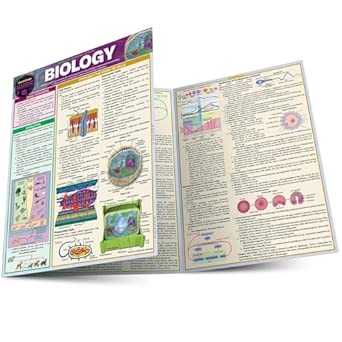 | Best Quick Reference Value | Format: Laminated reference guide (fold-out panels) | Subject: Biology overview | Durability: Laminated, spill-resistant | VIEW LATEST PRICE | See Our Full Breakdown |
| GACE Application of the Science of Reading Flashcard Study System |  | Best for Reading Specialist Certification | Format: Physical flashcards | Target Exam: GACE Application of the Science of Reading | Subject Coverage: Reading pedagogy, phonics, and literacy assessment | VIEW LATEST PRICE | See Our Full Breakdown |
| Our World in Pictures Rocks and Minerals Flash Cards |  | Best for Young Visual Learners | Format: Flash cards with full-color images | Subject: Rocks and minerals | Audience Level: Elementary-age children | VIEW LATEST PRICE | See Our Full Breakdown |
| Praxis Earth and Space Sciences (5572) Flashcard Study System |  | Best for Praxis Earth Science Candidates | Format: Flashcard study system | Target Exam: Praxis Earth and Space Sciences (5572) | Subject Coverage: Earth science and space science | VIEW LATEST PRICE | See Our Full Breakdown |
| AP Environmental Science Flashcards, Fourth Edition |  | Best for AP Exam Prep | Format: Printed flashcard set | Edition: Fourth Edition | Subject: AP Environmental Science | VIEW LATEST PRICE | See Our Full Breakdown |
| Anatomy 2 – Reference Guide (8.5 x 11): A QuickStudy Laminated Reference Guide |  | Best Quick-Reference Chart | Format: Laminated reference guide (chart) | Dimensions: 8.5 x 11 inches | Subject: Anatomy (advanced systems) | VIEW LATEST PRICE | See Our Full Breakdown |
| Our World in Pictures Human Body Flash Cards |  | Best for Young Learners | Format: Printed flashcard set | Subject: Human body basics for children | Visual style: Colorful photo-illustrated cards | VIEW LATEST PRICE | See Our Full Breakdown |
| Physical Science – Physics & Chemistry: A QuickStudy Laminated Reference Guide |  | Best Formula Cheat Sheet | Format: Laminated reference guide (chart) | Subjects: Physics and chemistry | Content type: Concise summaries and essential formulas | VIEW LATEST PRICE | See Our Full Breakdown |
| science reference flashcard | Format | Primary Use | Subject |
|---|---|---|---|
| TExES Science 4-8 | Physical flashcards | Certification exam preparation | — |
| Biology: A QuickStudy Laminate | Laminated reference guide (fold-out panels) | Quick reference and review | Biology overview |
| GACE Application of the Scienc | Physical flashcards | Georgia educator certification prep | — |
| Our World in Pictures Rocks an | Flash cards with full-color images | Educational enrichment at home or school | Rocks and minerals |
| Praxis Earth and Space Science | Flashcard study system | Certification exam preparation | — |
| AP Environmental Science Flash | Printed flashcard set | — | AP Environmental Science |
| Anatomy 2 | Laminated reference guide (chart) | — | Anatomy (advanced systems) |
| Our World in Pictures Human Bo | Printed flashcard set | — | Human body basics for children |
| Physical Science | Laminated reference guide (chart) | — | — |
More Details on Our Top Picks
TExES Science 4-8 (116) Flashcard Study System
Among the certification-focused decks in this roundup, this one stands out for matching a single state exam blueprint rather than trying to cover general science broadly. Compared with the Praxis Earth and Space Sciences Flashcard Study System, it spans a wider mix of life, physical, and earth science topics, which mirrors the breadth the TExES 4-8 test actually demands. The card format makes it easy to study in short bursts between classes or during commutes. The tradeoff is familiar to these exam-prep systems: answers come without detailed explanations, so a wrong guess stays wrong unless the buyer consults a textbook. It also serves no purpose after test day, unlike the laminated QuickStudy guides that double as classroom references.
Pros:- Coverage aligned to the specific TExES 4-8 exam blueprint
- Spans multiple science disciplines like the actual test does
- Portable card format suits short, frequent study sessions
- Includes practice questions alongside review material
Cons:- No detailed answer explanations, so gaps in understanding go unaddressed
- Useful only for this one exam, with no reference value afterward
Best for: Texas teacher candidates preparing specifically for the TExES Science 4-8 (116) certification exam
Not ideal for: Anyone studying science outside of Texas certification — the exam-specific scope makes it useless as a general reference
- Format:Physical flashcards
- Target Exam:TExES Science 4-8 (116)
- Subject Coverage:Life, physical, and earth science
- Includes Practice Questions:Yes
- Answer Explanations:Not provided
- Primary Use:Certification exam preparation
Our verdict“This pick makes the most sense for a Texas certification candidate who wants portable, exam-aligned drilling and already has textbooks for deeper explanations.”
Biology: A QuickStudy Laminated Reference Guide
Where the certification decks are built to be studied and discarded, this laminated guide is built to survive years of backpack abuse and stay useful the whole time. It is the least expensive item in this lineup, yet it condenses an entire introductory biology course into a format a student can scan in minutes before an exam. Compared with the Anatomy 2 QuickStudy guide, it trades anatomical depth for broad conceptual coverage, which makes it the better first purchase for a general biology student. The obvious limitation: this is a reference, not a study system — no practice questions, no self-testing mechanism, and no treatment of advanced topics. Buyers wanting active recall should pair it with a flashcard deck rather than expect it to do that job alone.
Pros:- Laminated pages resist spills, tears, and backpack wear
- Dense overview of core biology concepts at a glance
- Very low price compared with multi-card study systems
- Clear layouts designed for rapid scanning
Cons:- No practice questions or self-quizzing capability
- Stops short of advanced coursework material
Best for: High school and early college biology students who want a durable, inexpensive refresher before exams
Not ideal for: Students preparing for a standardized science exam — there are no practice questions or test-specific content here
- Format:Laminated reference guide (fold-out panels)
- Subject:Biology overview
- Durability:Laminated, spill-resistant
- Practice Questions:None
- Audience Level:High school to introductory college
- Primary Use:Quick reference and review
Our verdict“This guide fits the buyer who needs a cheap, durable biology cheat sheet rather than an exam-prep toolkit.”
GACE Application of the Science of Reading Flashcard Study System
This deck occupies a niche none of the other four can touch: it drills the science of reading pedagogy tested on the Georgia GACE exam, not science content itself. That distinction matters — compared with the TExES Science 4-8 Flashcard Study System, which covers scientific disciplines, this set targets literacy instruction theory, phonics, and assessment practices. For a Georgia educator facing this specific certification requirement, the narrow focus is the whole point. The same narrowness is also its weakness: it has zero utility outside this exam, and like the TExES deck it skips answer explanations, forcing buyers to research incorrect answers on their own. The Biology QuickStudy guide costs less and lasts longer, but it simply cannot prepare anyone for this test.
Pros:- Precisely aligned to the GACE Science of Reading exam objectives
- Covers pedagogy and literacy theory not found in general science decks
- Card format supports repeated self-drilling
- Includes targeted practice questions
Cons:- Completely limited to one exam topic with no broader use
- No detailed explanations accompanying the answers
Best for: Georgia teachers who must pass the GACE Science of Reading assessment for reading-specialist certification
Not ideal for: Anyone outside the Georgia certification pathway — the single-exam focus makes it an expensive one-trick purchase
- Format:Physical flashcards
- Target Exam:GACE Application of the Science of Reading
- Subject Coverage:Reading pedagogy, phonics, and literacy assessment
- Includes Practice Questions:Yes
- Answer Explanations:Not provided
- Primary Use:Georgia educator certification prep
Our verdict“Buy this only if the GACE Science of Reading exam stands between you and certification; everyone else should pass.”
Our World in Pictures Rocks and Minerals Flash Cards
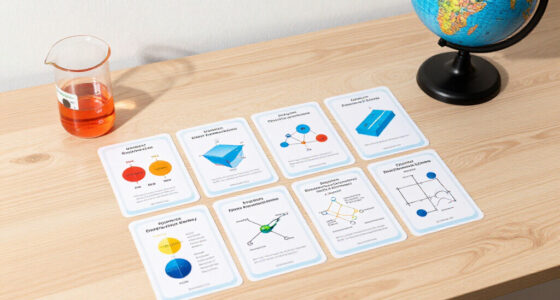
Every other product here serves teens and adults; this is the one built for children. Big photography, bite-size facts, and a topic kids naturally collect — rocks — make it a genuinely engaging entry point into geology. Compared with the Our World in Pictures Human Body Flash Cards from the same series, it skews toward observation and identification rather than systems and processes, which suits younger learners who like sorting and naming. The honest drawback is transparency: the publisher shares little about card count, dimensions, or depth, so buyers are trusting the brand more than the spec sheet. Parents expecting a curriculum-grade tool will also find it shallow — it sparks curiosity, but it will not carry a middle-schooler through a unit test.
Pros:- Bright photography that keeps young kids engaged
- Simple facts sized for early readers
- Encourages sorting, collecting, and hands-on learning
- Durable card format suited to small hands
Cons:- Minimal published detail on card count or content depth
- Too shallow for older students or formal study
Best for: Parents and elementary teachers looking for a fun, image-driven introduction to rocks and minerals
Not ideal for: Students needing test preparation or rigorous geology content — the facts stay at surface level
- Format:Flash cards with full-color images
- Subject:Rocks and minerals
- Audience Level:Elementary-age children
- Learning Style:Visual identification and fact recall
- Practice Questions:No — fact-based cards
- Primary Use:Educational enrichment at home or school
Our verdict“This is the pick for sparking a child’s interest in geology, not for anyone studying science seriously.”
Praxis Earth and Space Sciences (5572) Flashcard Study System
Think of this as the specialist counterpart to the TExES Science 4-8 deck: same study-system approach, same portability, but concentrated on earth and space sciences for teachers taking Praxis 5572. That focus is a genuine advantage over broad decks when the exam itself is specialized — fewer wasted cards on biology or chemistry content that will not appear. Against the Biology QuickStudy guide, it offers something that laminated sheet never will: a self-testing structure with practice questions built for a specific test. The compromises are real, though. Content depth is thinly documented, format details are sparse, and like its Mometrix sibling it skips detailed explanations, so it works best as a final review layer rather than a primary study resource.
Pros:- Focused exclusively on earth and space science, matching the 5572 exam scope
- Includes practice test questions for self-assessment
- Card format fits short review sessions before exam day
- Skips irrelevant disciplines, so study time is efficient
Cons:- Very limited published information on content depth and organization
- No detailed explanations for the practice answers
Best for: Teacher candidates registered for the Praxis Earth and Space Sciences 5572 exam who want focused final review
Not ideal for: Buyers who want transparency on content depth and format — the sparse documentation makes it a leap of faith
- Format:Flashcard study system
- Target Exam:Praxis Earth and Space Sciences (5572)
- Subject Coverage:Earth science and space science
- Includes Practice Questions:Yes
- Answer Explanations:Not provided
- Primary Use:Certification exam preparation
Our verdict“Choose this if Praxis 5572 is on your calendar and you want targeted drilling; skip it if you need documented, explanation-rich content.”
AP Environmental Science Flashcards, Fourth Edition
Among the flashcard sets in this lineup, this is the only one purpose-built for a standardized exam, and that focus shows. Where Our World in Pictures Human Body Flash Cards aims at casual learning with colorful visuals, this set drills the specific topics and terminology the AP Environmental Science exam actually tests. The included sorting ring is a genuinely useful touch — it lets a student pull weak cards into a custom deck instead of replaying material they already know, which is how flashcards should work for exam prep. The tradeoff is transparency: there is little published detail on card count or content depth, so buyers are trusting the publisher’s track record. Compared with the TExES Science 4-8 Flashcard Study System, this set covers one subject more deeply rather than surveying a broad certification exam. This pick makes the most sense for students on a deadline who want an efficient, curriculum-aligned review tool.
Pros:- Aligned with current AP Environmental Science exam standards
- Sorting ring enables custom study decks focused on weak areas
- Comprehensive coverage of exam topics in one set
- Purpose-built for test prep rather than general reference
Cons:- Publisher provides little detail on card quantity or content depth
- Narrowly scoped — has no value beyond AP exam preparation
Best for: High school students preparing for the AP Environmental Science exam who want targeted, sortable review
Not ideal for: Learners wanting general science enrichment — the narrow AP focus makes it useless outside that exam context
- Format:Printed flashcard set
- Edition:Fourth Edition
- Subject:AP Environmental Science
- Study feature:Included sorting ring for custom decks
- Content alignment:Updated to current AP exam standards
- Intended audience:AP exam students
Our verdict“Buy this only if the AP Environmental Science exam is on your calendar; otherwise its single-purpose design is wasted money.”
Anatomy 2 – Reference Guide (8.5 x 11): A QuickStudy Laminated Reference Guide
This is not a flashcard deck at all — it is a laminated reference chart, and that distinction is its whole value proposition. Compared with the AP Environmental Science Flashcards, which are built for sequential drilling, this guide rewards a different workflow: pin it above a desk or slip it into a binder and glance at it during homework or clinical review. The laminated 8.5 x 11 format survives coffee spills and backpack abuse far better than loose cards, and the clear labeled diagrams condense systems that would take dozens of flashcards to cover. The tradeoff is depth. Advanced anatomy students will hit its ceiling quickly, and unlike the biology chart elsewhere in this roundup, there are no linked digital resources to extend it. This option stands out for speed of lookup rather than retention practice — a complement to flashcards, not a replacement.
Pros:- Laminated surface withstands heavy daily use and spills
- Clear, concise diagrams summarize complex systems at a glance
- Standard 8.5 x 11 size fits binders and small desk spaces
- Faster lookup than flipping through a flashcard deck
Cons:- Too shallow for advanced or graduate-level anatomy study
- No companion online resources to extend the material
Best for: Nursing, allied health, and pre-med students who need a durable at-a-glance anatomy reference during coursework
Not ideal for: Students preparing for anatomy-heavy exams who need active recall practice, not passive reference
- Format:Laminated reference guide (chart)
- Dimensions:8.5 x 11 inches
- Subject:Anatomy (advanced systems)
- Durability:Laminated, spill-resistant
- Study feature:Labeled diagrams with concise labels
- Intended audience:Students and professionals needing quick reference
Our verdict“A durable visual anchor for students who review anatomy repeatedly at a desk, but not a substitute for active-recall study tools.”
Our World in Pictures Human Body Flash Cards
Every other product in this roundup assumes the reader is a teenager or adult; this one is the clear choice for elementary-age children. The colorful, image-driven cards translate anatomy into something a seven-year-old will actually pick up voluntarily — a completely different job than the dense, formula-heavy Physical Science QuickStudy guide, which would lose a young audience instantly. Cards also beat the laminated Anatomy 2 reference guide for kids because each card is a single, manageable bite of information rather than an intimidating wall of labels. The compromises are real: facts are shallow, there are no extended explanations for curious kids who ask follow-up questions, and the set stays at basic body-concept level. Compared with the sibling Our World in Pictures Rocks and Minerals Flash Cards, this human body version plays to the same strengths with an even more kid-relatable subject.
Pros:- Bright, engaging visuals that hold young children’s attention
- Card format delivers one idea at a time for short attention spans
- Compact and portable for car rides, waiting rooms, and travel
- Screen-free educational entertainment
Cons:- No in-depth explanations for curious kids who want the ‘why’
- Limited to basic human body concepts with no growth room
Best for: Parents of roughly 5-10 year olds who want screen-free, playful introduction to how the body works
Not ideal for: Middle schoolers and up — the basic concepts and thin explanations will be outgrown within a year or two
- Format:Printed flashcard set
- Subject:Human body basics for children
- Visual style:Colorful photo-illustrated cards
- Reading level:Early elementary
- Portability:Compact box for travel and on-the-go use
- Intended audience:Young learners (approx. 5-10)
Our verdict“The right first anatomy set for young kids, but families with older students should step up to a more detailed reference.”
Physical Science – Physics & Chemistry: A QuickStudy Laminated Reference Guide
Where most products here help you memorize terms, this guide solves a different problem: remembering which formula applies where. Physics and chemistry live or die on equations, and having the essential formulas condensed onto a laminated sheet is a genuine time-saver during problem sets, when tabbing through a textbook wastes momentum. It shares the durable, binder-friendly format of the Anatomy 2 reference guide from the same publisher, but serves a harder use case — formulas get looked up far more often than anatomical labels during homework sessions. The limitation mirrors its sibling: it is a recall aid, not a teaching tool. Students who do not already understand the underlying concepts will find concise summaries with no worked explanations, and coverage sticks to key concepts rather than a full course. Compared with the AP Environmental Science Flashcards, this is for open-book homework support, not closed-book exam drilling.
Pros:- Consolidates essential physics and chemistry formulas in one place
- Laminated design survives daily backpack and desk use
- Extremely fast reference during problem-solving sessions
- Covers two subjects in a single portable sheet
Cons:- No worked examples or conceptual explanations to teach the material
- Sticks to key concepts only, so it cannot replace a textbook
Best for: High school or intro college students who need fast formula and concept lookup during homework and open-note study
Not ideal for: Students learning physics or chemistry from scratch — the terse summaries assume prior understanding
- Format:Laminated reference guide (chart)
- Subjects:Physics and chemistry
- Content type:Concise summaries and essential formulas
- Durability:Laminated, spill-resistant
- Portability:Fits standard binders and folders
- Intended audience:Students and educators needing quick review
Our verdict“A smart desk-side companion for anyone mid-course in physical science, provided they already grasp the fundamentals it summarizes.”

How We Picked
My evaluation started with a simple question: what job is each product actually trying to do? Because this category mixes exam-prep card systems, AP study decks, and laminated reference sheets, comparing them on a single scale would be misleading. Instead, I judged each product against its intended use — certification candidates need alignment with test frameworks and enough cards for spaced repetition, students need clear question-and-answer formatting, and reference-guide buyers need density, durability, and logical organization.
From there, I weighed four factors: content accuracy and depth, format and usability (card stock quality, lamination, readability), versatility across study situations, and value for money, since prices range from a single laminated sheet to multi-hundred-card systems. Products that serve their core audience exceptionally well ranked above broader but shallower options. That’s why the exam-aligned TExES system leads the list while the cheaper QuickStudy guides sit lower despite being genuinely useful — they’re supplements, not standalone study solutions.
| science reference flashcard | Format | Primary Use | Subject |
|---|---|---|---|
| TExES Science 4-8 | Physical flashcards | Certification exam preparation | — |
| Biology: A QuickStudy Laminate | Laminated reference guide (fold-out panels) | Quick reference and review | Biology overview |
| GACE Application of the Scienc | Physical flashcards | Georgia educator certification prep | — |
| Our World in Pictures Rocks an | Flash cards with full-color images | Educational enrichment at home or school | Rocks and minerals |
| Praxis Earth and Space Science | Flashcard study system | Certification exam preparation | — |
| AP Environmental Science Flash | Printed flashcard set | — | AP Environmental Science |
| Anatomy 2 | Laminated reference guide (chart) | — | Anatomy (advanced systems) |
| Our World in Pictures Human Bo | Printed flashcard set | — | Human body basics for children |
| Physical Science | Laminated reference guide (chart) | — | — |
Factors to Consider When Choosing Science Reference Flashcards
Before choosing a set of science reference flashcards, it helps to understand the category’s biggest trap: products that look similar on a product page can serve completely different purposes. These are the factors that actually drive a smart purchase.Match the Format to Your Goal
The single most common mistake in this category is buying a laminated reference guide when you need active recall practice, or vice versa. Flashcard study systems are built for self-quizzing — you hide the answer, retrieve it, and reinforce it — which is what actually drives retention for exams. Laminated QuickStudy guides work the opposite way: they present condensed information for lookup and review, ideal for reinforcing material you’ve already learned but poor for testing yourself. If you’re preparing for a timed certification test, prioritize true flashcards. If you need a refresher alongside a textbook or course, a reference sheet may serve you better and cost far less.
Exam Alignment Matters More Than Card Count
Shoppers often assume a bigger box of cards means better preparation, but card quantity is a weak proxy for quality. A 300-card system aligned to the current test framework beats a 500-card system padded with generic content. Before buying any certification prep product, check the test code and edition year against the exam you’re actually taking — testing companies revise frameworks, and outdated cards can drill you on material that’s no longer tested. This is also why the subject-specific systems in this roundup, like the Praxis 5572 deck, earn their price only for test-takers on that exact exam.
Durability and Physical Quality
Flashcards live a rough life — they get shuffled, crammed into bags, and written on. Card stock weight and lamination determine whether a set survives a semester or ends up dog-eared and unusable by midterm. Laminated guides score well here by design, which is part of their appeal. Traditional card systems vary widely, so consider whether you’ll add your own protective sleeves or only use the cards at a desk. For younger students, sturdier cards with larger text aren’t a luxury; flimsy cards with dense paragraphs will simply go unused.
Age and Reading Level Appropriateness
A set that’s perfect for a pre-service teacher can be intimidating or useless for a fourth grader, and this lineup spans that entire range. The Our World in Pictures cards use photography and simple captions aimed at elementary and middle school readers, while the certification systems assume college-level vocabulary without explanation. A frequent buying error is grabbing an academic deck for a curious kid because it covers the ‘right’ subject — the result is usually abandoned cards. Match the reading level and visual style to the actual user, not the topic.
Price per Study Hour, Not Price per Card
Value in this category is best measured by how many effective study hours a product delivers. A ten-dollar laminated guide you consult weekly for a full course can outperform a fifty-dollar card system you open twice. That said, don’t under-buy for high-stakes exams: a certification test you fail costs far more than the price difference between a cheap generic deck and a targeted study system. Budget by stakes — spend more when the outcome (licensure, AP score) carries real consequences, and spend less for casual reference and curiosity-driven learning.
Supplement or Standalone?
Finally, be honest about whether any of these products can carry your studying alone. Flashcards and reference guides are reinforcement tools, not complete curricula — they excel at retrieval practice and quick lookup but can’t teach unfamiliar concepts from scratch. Buyers who expect a card system to replace a textbook or prep course are the ones leaving one-star reviews. Plan your purchase as part of a stack: primary learning material first, then flashcards or a laminated guide to consolidate. The best performers in this roundup are the ones that play their supporting role exceptionally well.
Frequently Asked Questions
Are laminated reference guides as effective as flashcards for studying science?
They serve different purposes, and understanding the distinction will save you money. Flashcards force active recall — you retrieve an answer from memory, which research consistently shows strengthens retention far more than rereading. Laminated guides like the QuickStudy series support passive review and quick lookup, which is useful for consolidating material you’ve already studied but weak for building memory from scratch. If you’re preparing for an exam, flashcards should be your primary tool and a laminated guide a supplement. If you already know the material and just need a compact refresher, the laminated guide alone is often enough and much cheaper.
Should I buy a certification-specific flashcard system or a general science deck?
If a specific test with a specific code is on your calendar, the certification-specific system is almost always the better buy. Tests like the TExES 116, Praxis 5572, and GACE Science of Reading have published frameworks, and a deck built around that framework spares you from studying content the exam doesn’t cover. General decks and reference guides spread their coverage across all of science, which means shallow treatment of everything. The tradeoff is shelf life: once you pass the test, a framework-specific deck largely loses its purpose, while a general reference guide stays useful for years. Buy narrow when the stakes are high; buy broad when your goal is ongoing general knowledge.
Which of these options work for kids rather than adult students?
The Our World in Pictures sets — Rocks and Minerals and Human Body — are the only options in this comparison genuinely designed for younger learners. They rely on strong photography and short captions rather than dense academic text, which keeps elementary and middle school students actually engaged. The certification systems and QuickStudy guides assume college-level reading and vocabulary, so handing them to a child usually results in cards that sit in a drawer. If you’re buying for a classroom, the picture-based sets also work well as group activity tools in ways that text-heavy study cards never will.
How many cards do I need for effective science test preparation?
More important than the raw count is whether the cards cover the full test framework without padding. A focused 200-card system aligned to your exam’s content domains generally outperforms a bloated 400-card set filled with filler definitions. For certification exams, look for cards organized by the test’s official domains so you can diagnose weak areas as you study. For course-level study like AP Environmental Science, a few hundred cards used with spaced repetition beats a thousand cards you never get through twice. The honest answer: the deck you’ll actually finish and review repeatedly is the right size.
Is it worth buying both a flashcard system and a laminated reference guide?
For high-stakes exam preparation, pairing the two is one of the more effective strategies available. Use the flashcard system for active recall and self-testing, and keep a laminated guide in your bag for reviewing formulas, diagrams, and terminology during dead time — commutes, waiting rooms, lunch breaks. The formats complement rather than duplicate each other, since cards quiz you while the sheet consolidates the big picture. For lighter needs, like a single college course, one format is usually sufficient. If budget forces a choice, buy the flashcards first and add the reference guide later if you find yourself wanting a compact overview.
Conclusion
The right pick here depends less on quality — most of these products do their intended job well — and more on what you’re studying for. For best overall, the TExES Science 4-8 (116) Flashcard Study System leads thanks to its depth and exam alignment. The best value goes to the QuickStudy laminated guides, particularly Biology and Physical Science, which deliver a semester’s worth of reference material for the price of a coffee. For beginners and younger learners, the Our World in Pictures Rocks and Minerals and Human Body card sets are the friendly, visual entry points. AP students should go straight to the AP Environmental Science Flashcards, Fourth Edition, while specific test-takers — Praxis Earth and Space Sciences 5572 and GACE Science of Reading candidates — get the most from their matching study systems. And anyone who already knows the material but wants a durable, portable refresher will be happiest with Anatomy 2 or another laminated guide. Match the tool to the test, and you can’t go far wrong.
Fall Picks
fall essentials
As an affiliate, we earn on qualifying purchases.