
For a flexible first pick, ThinkFun Zingo Bingo pairs preschool-friendly play with early reading practice; Sum Swamp is a strong choice for addition and subtraction, while Race Across the USA suits older kids ready for geography. These educational board games for kids differ in more than subject: age fit, reading demands, player interaction, and how much guidance adults may need all affect whether a game gets replayed. Some build a specific skill through repeated practice, while others teach through conversation, matching, or strategy. My comparison favors clear learning goals and rules children can manage, while accounting for age range and play style. Read on for the full breakdown and help match a game to your child’s interests and current skills.

Prime made for students and young adults
- Fast, free delivery for dorm and study essentials
- Prime Video and Amazon Music included
- Member-only deals
Key Takeaways
- Zingo Bingo makes the clearest early-literacy pick in this group, while Chuckle & Roar Alphabet Matching is better suited to younger children practicing letter recognition and memory.
- Sum Swamp and Number Hunter both target early math, but the right choice depends on the child’s age, comfort with number work, and preference for a swamp-themed or number-focused game.
- Scrabble Junior supports word practice with a more familiar board-game structure; children who are not ready to read may find its demands higher than picture-led matching games.
- Junior Learning Social Skills Board Games is the most directly focused on social learning, while Sequence for Kids offers a more strategy-led way to practice turn-taking and planning.
- Race Across the USA and Guess Who? Plus serve distinct interests—geography and questioning/deduction—so the best pick depends on whether a child prefers facts or interactive clues.
| Hasbro Gaming Scrabble Junior Board Game |  | Best for Growing Spellers | Recommended age: Ages 5+ | Players: 2–4 | Learning focus: Spelling and vocabulary | VIEW LATEST PRICE | See Our Full Breakdown |
| Number Hunter Math Board Game for Kids 5–7 |  | Best for Early Arithmetic Practice | Recommended age: Listed for ages 4–8; title focuses on ages 5–7 | Players: 2–5 | Learning focus: Addition, subtraction, and even and odd numbers | VIEW LATEST PRICE | See Our Full Breakdown |
| Junior Learning Social Skills Board Games, 4 Games for Kids Ages 5–8 |  | Best for Social-Emotional Learning | Recommended age: Ages 5–8; aligned to grades 1–2 | Players: 2 or more | Learning focus: Empathy, friendship, manners, and emotions | VIEW LATEST PRICE | See Our Full Breakdown |
| Chuckle & Roar Alphabet Matching Memory Game |  | Best for Preschool Letter Recognition | Recommended age: Ages 3+; product description highlights ages 3–5 | Players: Up to 4; solo play is also listed | Learning focus: Uppercase and lowercase letter recognition and matching | VIEW LATEST PRICE | See Our Full Breakdown |
| Scholastic Race Across the USA Geography Board Game |  | Best for U.S. Geography | Recommended age: Ages 8+ | Players: 2–4 | Estimated play time: 20 minutes | VIEW LATEST PRICE | See Our Full Breakdown |
| Jax Sequence for Kids – No Reading Required Strategy Game, Multicolor, 11″ (2–4 players) |  | Best for Pre-Readers | Brand: Jax | Genre: Strategy | Players: 2–4 | VIEW LATEST PRICE | See Our Full Breakdown |
| Learning Resources Sum Swamp Addition & Subtraction Game |  | Best for Early Math Practice | Players: 2–4 | Educational objectives: Addition and subtraction | Game mechanics: Rolling and moving, multiplayer, strategy | VIEW LATEST PRICE | See Our Full Breakdown |
| Hasbro Gaming Guess Who? Plus Board Game with People and Pet Cards | 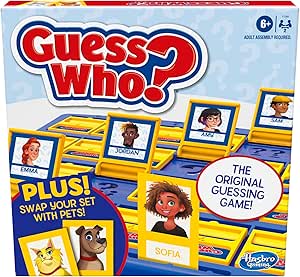 | Best for Question-Building | Brand: Hasbro Gaming | Players: 2 | Recommended age: 6 years and up | VIEW LATEST PRICE | See Our Full Breakdown |
| ThinkFun Zingo Bingo – Award-Winning Preschool Reading Game for Ages 4+ |  | Best for Group Word Practice | Manufacturer: ThinkFun | Age range: 4–10 years | Players: 2–6; up to 7 with extra card | VIEW LATEST PRICE | See Our Full Breakdown |
| educational board games for kid | Players | Material | Recommended age | Learning focus |
|---|---|---|---|---|
| Hasbro Gaming Scrabble Junior | 2–4 | Plastic | Ages 5+ | Spelling and vocabulary |
| Number Hunter Math Board Game | 2–5 | Cardstock | Listed for ages 4–8; title focuses on ages 5–7 | Addition, subtraction, and even and odd numbers |
| Junior Learning Social Skills | 2 or more | Cardboard | Ages 5–8; aligned to grades 1–2 | Empathy, friendship, manners, and emotions |
| Chuckle & Roar Alphabet Matchi | Up to 4; solo play is also listed | Cardboard | Ages 3+; product description highlights ages 3–5 | Uppercase and lowercase letter recognition and matching |
| Scholastic Race Across the USA | 2–4 | Paperboard | Ages 8+ | U.S. geography and cognitive skills |
| Jax Sequence for Kids | 2–4 | — | — | — |
| Learning Resources Sum Swamp A | 2–4 | Paper | 5 years and up | — |
| Hasbro Gaming Guess Who? Plus | 2 | Plastic | 6 years and up | — |
| ThinkFun Zingo Bingo | 2–6; up to 7 with extra card | Plastic | — | — |
More Details on Our Top Picks
Hasbro Gaming Scrabble Junior Board Game
Scrabble Junior earns its place for families who want a word game that can grow with a young reader. On one side, children match letter tiles to words already shown on the board, giving beginners support with letter recognition and spelling. Flip the board and players make their own words, a step up that gives the game more staying power than a single-level matching activity. Compared with Chuckle & Roar Alphabet Matching Memory Game, this pick moves from recognizing letters toward building words, while Chuckle & Roar is simpler for preschoolers and travel. The tradeoff is that the advanced side may be a stretch for new readers, and the grid-based first side offers less open-ended word play. Choose it when players are ready to progress at different speeds; skip it if they need a fully cooperative or math-focused game.
Pros:- Two-sided board offers a supported letter-matching mode and a more advanced word-making mode.
- Connects letter recognition with spelling and vocabulary practice.
- Includes four tokens and 105 letter tiles for repeat play with 2–4 players.
- No batteries or electronic components are needed.
Cons:- The advanced side may require adult help for children who are still developing reading and spelling skills.
- The beginner side relies on matching words printed on the board, so it offers less freedom than open-ended spelling.
- Small letter tiles can be easy to lose and are a choking hazard for young children.
Best for: Families with children learning to spell who want one game with an easier matching side and a more challenging word-building side.
Not ideal for: Preschoolers who are not ready to recognize letters, or families seeking a math, geography, or cooperative-learning game.
- Recommended age:Ages 5+
- Players:2–4
- Learning focus:Spelling and vocabulary
- Game modes:Two-sided board: letter matching and advanced word building
- Included components:Double-sided gameboard, 4 tokens, 105 letter tiles, and game guide
- Dimensions:13.11 × 10.51 × 1.89 inches
- Weight:1.6 pounds
- Material:Plastic
Our verdict“Choose Scrabble Junior for young readers who will benefit from moving from letter matching to making their own words on the same board.”
Number Hunter Math Board Game for Kids 5–7
Number Hunter is the math-focused choice here for children practicing addition, subtraction, and odd-versus-even recognition. Players roll dice, work out a calculation, and move along the route; star spaces add an action or math challenge. That repeated, short-form practice can make number work feel more like a turn in a game than a worksheet. Compared with Learning Resources Sum Swamp, another addition-and-subtraction option in this roundup, Number Hunter adds a race-to-the-finish structure and explicitly includes odd and even numbers. Its stated age range also reaches younger players. The tradeoff is that the supplied details describe a fairly standard roll-and-move format, so the math prompts—not a complex strategy system—do most of the teaching. It suits children who benefit from guided practice, but may feel too basic for older students who already calculate confidently.
Pros:- Provides practice with addition, subtraction, and even-versus-odd numbers.
- Dice and a clear finish-line goal make the basic turn structure easy for young children to follow.
- Accommodates 2–5 players, including a larger group than many small-family games.
- Compact square format and cardstock construction are suited to tabletop play.
Cons:- Roll-and-move play gives children limited strategic control over progress.
- The product information does not specify question counts or how difficulty changes as skills improve.
- Small components are a choking hazard and require care around younger siblings.
Best for: Parents and early-grade teachers looking for a simple, screen-free way for children ages 5–7 to practice basic calculations during short family or classroom games.
Not ideal for: Older children who have mastered basic addition and subtraction, or buyers who want detailed rules and a more strategy-led game.
- Recommended age:Listed for ages 4–8; title focuses on ages 5–7
- Players:2–5
- Learning focus:Addition, subtraction, and even and odd numbers
- Gameplay:Roll dice, calculate, move, and respond to star-space challenges
- Dimensions:9.21 × 9.21 × 0.04 inches
- Weight:1.4 pounds
- Material:Cardstock
- Power:Manual; no batteries required
Our verdict“Pick Number Hunter for straightforward arithmetic practice with young children, but choose a more advanced game if they already handle basic sums with ease.”
Junior Learning Social Skills Board Games, 4 Games for Kids Ages 5–8
Junior Learning Social Skills Board Games takes the roundup beyond academic drills, with four games centered on empathy, friendship, manners, and emotions. The mix of action and sentence-building activities gives adults different ways to prompt conversation, which can be useful in a classroom or at home when children are learning how to describe feelings and respond to others. Unlike Scholastic Race Across the USA, which teaches factual geography through quiz questions and a race, this set focuses on interpersonal skills and discussion. Its range of four games also offers more activity variety than a single-format matching game. The tradeoff is that social learning depends on how players talk through the prompts; children seeking a fast, independent challenge may find the play less direct. With only six counters listed, it is better suited to small groups than a large class playing as one group.
Pros:- Includes four games covering empathy, friendship, manners, and emotional understanding.
- Combines action play with sentence-building for varied ways to practice communication.
- Designed for home or classroom use with children ages 5–8.
- Includes a spinner, die, counters, and answer sheet for several play formats.
Cons:- Learning depends heavily on discussion, so some groups may need an adult to guide the conversation.
- The listed six counters may limit convenient play for larger groups.
- Social concepts can have nuanced answers and may not suit players looking for a clear right-or-wrong quiz.
Best for: Parents, counselors, and early-grade teachers who want guided activities for discussing emotions, friendship, empathy, and manners with children ages 5–8.
Not ideal for: Families seeking a competitive academic quiz or a game children can play independently without conversation or adult facilitation.
- Recommended age:Ages 5–8; aligned to grades 1–2
- Players:2 or more
- Learning focus:Empathy, friendship, manners, and emotions
- Games included:4
- Included components:6 counters, spinner, die, and answer sheet
- Gameplay types:Action and sentence-building games
- Dimensions:11.8 × 8.5 × 1.25 inches
- Material:Cardboard
Our verdict“Choose this set when the learning goal is conversation and social-emotional practice rather than spelling, arithmetic, or factual recall.”
Chuckle & Roar Alphabet Matching Memory Game
Chuckle & Roar Alphabet Matching Memory Game is the gentlest entry point in this group for preschoolers starting to recognize letters. Matching uppercase and lowercase pairs adds a useful early-literacy link, while the memory element asks children to remember where cards are placed. It can be played solo or with a group, making it more flexible for quiet practice than Scrabble Junior, which expects players to work with printed words and letter tiles. The age recommendation also starts earlier than the other word-focused pick. The tradeoff is a narrower learning target: it concentrates on identifying and matching letters rather than spelling words or building vocabulary. Cardboard tiles are portable and easy to set up, but a memory game can become frustrating for children who find recall difficult, and enthusiastic handling can wear the pieces.
Pros:- Practices matching uppercase and lowercase letters in the same activity.
- Memory play supports attention and recall alongside letter recognition.
- Can be played solo or with up to four players.
- Compact, lightweight format is convenient for travel and classroom use.
Cons:- Focuses mainly on letter matching and does not extend into spelling or vocabulary building.
- Memory-based turns can be challenging for children who have difficulty remembering card locations.
- Cardboard pieces may wear with heavy use by toddlers.
Best for: Caregivers and preschool teachers introducing uppercase and lowercase letter recognition to children ages 3–5 through short solo or group play.
Not ideal for: Children ready to spell and build words, or buyers seeking a game with math, geography, or broader literacy content.
- Recommended age:Ages 3+; product description highlights ages 3–5
- Players:Up to 4; solo play is also listed
- Learning focus:Uppercase and lowercase letter recognition and matching
- Gameplay:Memory matching
- Included components:Alphabet matching cards or tiles
- Dimensions:10.43 × 8.46 × 1.65 inches
- Weight:9.92 ounces
- Material:Cardboard
Our verdict“Choose this as a portable first alphabet game for preschoolers, then move to Scrabble Junior when they are ready to make words.”
Scholastic Race Across the USA Geography Board Game
Scholastic Race Across the USA makes geography the main event: players answer grade-level questions, visit six states, collect state cards, and race home. The grade-adjusted questions give children at different school levels a way to play together without relying on exactly the same question set, a useful distinction from Number Hunter, which concentrates on arithmetic practice for younger learners. The board also offers clues, so the game can connect factual recall with map-based reasoning rather than asking children to answer from memory alone. Its focus on U.S. states and geography is specific, though; this is not a broad social-studies game. The listed age starts at eight, and younger children may need help reading questions or using the clues. With a stated play time of about 20 minutes, it suits a focused family or classroom session better than a quick preschool activity.
Pros:- Combines U.S. geography questions with a route-based race and state-card collection.
- Grade-level questions help players from different grades participate together.
- Players can use the board as a clue source, supporting map reading as well as recall.
- Printed rules and an estimated 20-minute play time make the game straightforward to plan.
Cons:- The subject matter is focused on U.S. geography rather than broader world studies.
- Reading and interpreting questions may require adult support for younger or less-confident readers.
- The race format can reward movement and luck alongside geography knowledge.
Best for: Families and teachers seeking a geography-focused game for children ages 8+ and mixed-grade groups who can benefit from grade-level question adjustments.
Not ideal for: Preschoolers and early readers who need simpler prompts, or families looking for spelling, math, or non-U.S. geography practice.
- Recommended age:Ages 8+
- Players:2–4
- Estimated play time:20 minutes
- Learning focus:U.S. geography and cognitive skills
- Objective:Visit six states, answer geography questions, and return to the home state
- Question format:Questions geared to each player’s grade level
- Dimensions:10.5 × 10.5 × 2 inches
- Weight:2 pounds
- Material:Paperboard
Our verdict“Choose this for older children who enjoy learning U.S. geography through questions and map clues, not for younger players who need early-literacy or arithmetic practice.”
Jax Sequence for Kids – No Reading Required Strategy Game, Multicolor, 11″ (2–4 players)
Sequence for Kids makes strategic play accessible before children can read: players match animal cards to spaces and place chips to work toward a sequence. That visual loop gives ages 3–6 practice with planning and pattern recognition without asking them to decode words. Compared with Sum Swamp, which directly exercises addition and subtraction, this is a better fit for early strategy than math instruction. Its animal cards and colorful chips are easy to grasp, and the folding board supports storage between games. The tradeoff is limited variety once players learn the rules, and the small chips are a choking risk for children who still mouth objects. I’d choose it for a young child ready to take turns and make simple choices, not for focused number practice.
Pros:- Animal-card matching lets pre-readers participate independently
- Encourages simple planning and logical choices
- Folding board and compact format make storage easier
- Colorful chips and wild cards add visual interest
Cons:- Small chips pose a choking hazard for very young children
- Limited replay variety after players master the core rules
- Does not teach a specific academic skill such as arithmetic or reading
Best for: Families with children ages 3–6 who want a reading-free first strategy game and can supervise play with small pieces.
Not ideal for: Buyers seeking explicit math or reading practice, or households with children who may put small chips in their mouths.
- Brand:Jax
- Genre:Strategy
- Players:2–4
- Minimum age recommendation:3 years
- Board:Folding game board
- Playing cards:42 cards listed in the included components
- Chips:21
- Item dimensions:6.69 × 10.5 × 0.04 inches
- Weight:1.5 pounds
Our verdict“Choose Sequence for Kids for supervised, reading-free strategy practice with preschoolers; pick Sum Swamp instead when math skills are the priority.”
Learning Resources Sum Swamp Addition & Subtraction Game
Sum Swamp earns its place for families who want children to practice arithmetic during a shared game. Players roll two number dice and an operation die, then use the result to move; special even, odd, shortcut, and loop spaces add variation to the route. Compared with Sequence for Kids, which builds visual planning without reading, Sum Swamp offers more direct addition and subtraction practice for kindergarten and early elementary players. That focus is also its main limitation: children need enough number confidence to form equations, and a game can slow down if they are still learning the operations. The looping spaces can prolong a session, which may frustrate players who want a quick finish. I’d pick it for guided math practice, rather than broad reading or language development.
Pros:- Dice rolls give repeated practice with addition and subtraction
- Operation die supports learning how equations work
- Even, odd, shortcut, and loop spaces add rule variety
- Designed for two to four players and indoor play
Cons:- Players need basic number readiness to take part in the equation-making
- Endless-loop spaces can extend play and frustrate some children
- Its academic focus is narrower than language or general strategy games
Best for: Families and classroom teachers helping kindergarten through early elementary children practice basic addition, subtraction, and number recognition.
Not ideal for: Children who are not ready to work with number equations, or families seeking a short, low-friction game without occasional setbacks.
- Players:2–4
- Educational objectives:Addition and subtraction
- Game mechanics:Rolling and moving, multiplayer, strategy
- Recommended age:5 years and up
- Material:Paper
- Item dimensions:10 × 10 × 1.5 inches
- Item weight:0.61 kg
- Batteries:Not required
- Rulebook:Printed
Our verdict“Choose Sum Swamp when arithmetic practice is the goal and players can handle simple equations; choose Sequence for Kids for younger pre-readers not ready for that challenge.”
Hasbro Gaming Guess Who? Plus Board Game with People and Pet Cards
Guess Who? Plus turns deduction into practice asking focused yes-or-no questions. Players narrow down a mystery person or pet, making it a useful way to exercise observation, category sorting, and clear question phrasing. The two character sets give it more subject variety than a people-only version, while the fold-up boards and cases make storage and travel straightforward. Compared with Zingo, which emphasizes word recognition and matching in a group, Guess Who? is a quieter, head-to-head choice that rewards narrowing possibilities through conversation. Its two-player limit is a real constraint: it does not suit a larger family or classroom table unless players take turns. The educational benefit is also informal rather than a structured reading or math lesson. I’d choose it for two children who enjoy talking through clues.
Pros:- Yes-or-no questions encourage logical elimination
- People and pet card sets offer two themes
- Fold-up boards and cases support compact storage and travel
- Rules are easy to explain and begin playing
Cons:- Designed for only two players
- Educational practice is conversational rather than a structured academic lesson
- Repeated play depends on players enjoying the same guessing format
Best for: Households with two children ages 6 and up who want a portable game that encourages careful questions and deductive reasoning.
Not ideal for: Families or classrooms needing a game for three or more active players, or buyers looking for direct reading or math instruction.
- Brand:Hasbro Gaming
- Players:2
- Recommended age:6 years and up
- Included gameboards:2
- People cards:48 face cards and 24 mystery cards
- Pet cards:48 face cards and 24 mystery cards
- Material:Plastic
- Model number:F1360
- Edition:Standard Edition
Our verdict“Choose Guess Who? Plus for two children who like reasoning aloud; choose Zingo when you need word practice and room for a larger group.”
ThinkFun Zingo Bingo – Award-Winning Preschool Reading Game for Ages 4+
Zingo is the strongest fit here for early word and language practice in a group. Players match tiles to images and words on their cards, so children can work on recognition and matching without the slower, turn-by-turn deduction of Guess Who? Plus. Its preschool-friendly format also makes it easier to include several children at once, with capacity listed as two to six players and up to seven with the extra card. The tradeoff is that the game is built around indoor matching, not arithmetic or deeper strategy, and the fast pace may leave some children needing help to keep up. The components are primarily plastic, which may not suit buyers seeking less plastic play materials. I’d choose it for a family or classroom seeking lively early reading practice.
Pros:- Matching words and images supports early reading and language practice
- Quick rules make it approachable for preschoolers and early readers
- Can accommodate up to seven players with the extra card
- Also encourages attention and critical thinking while matching
Cons:- Fast-paced play may be challenging for children who need extra response time
- The learning focus is reading and matching rather than math
- Components are primarily plastic and the game is intended for indoor play
Best for: Parents and educators who want children ages 4–10 to practice word recognition and matching in a group of up to seven.
Not ideal for: Buyers prioritizing math instruction, outdoor play, or a slower game that gives each child more time to think.
- Manufacturer:ThinkFun
- Age range:4–10 years
- Players:2–6; up to 7 with extra card
- Item type:Reading game
- Material:Plastic
- Language:English
- Model name:97700
- Container type:Box
- Warranty:No warranty
Our verdict“Choose Zingo for lively group reading practice; pick Sum Swamp instead when children need hands-on addition and subtraction work.”
How We Picked
I compared these games by learning focus, age fit, and independence at the table. A useful educational game should give children a reason to practice a skill during play, but it also needs rules and reading demands that suit its intended players. I considered whether a game emphasizes literacy, math, geography, social skills, memory, or reasoning, and whether its play format can keep children involved rather than turning the session into a lesson.
The ranking reflects how clearly each option balances learning value with accessibility and replay potential for its likely audience. Games with a focused skill and a child-friendly entry point rise for families seeking a dependable starting choice; more specialized options rank well for a particular subject or age group, but may fit fewer households. I also weighed practical tradeoffs such as adult support, the child’s existing reading ability, and whether the game’s appeal depends on a specific interest. No single game is the right fit for every learner, so the list highlights distinct roles rather than treating the options as interchangeable.
| educational board games for kid | Learning focus | Material |
|---|---|---|
| Hasbro Gaming Scrabble Junior | Spelling and vocabulary | Plastic |
| Number Hunter Math Board Game | Addition, subtraction, and even and odd numbers | Cardstock |
| Junior Learning Social Skills | Empathy, friendship, manners, and emotions | Cardboard |
| Chuckle & Roar Alphabet Matchi | Uppercase and lowercase letter recognition and matching | Cardboard |
| Scholastic Race Across the USA | U.S. geography and cognitive skills | Paperboard |
| Jax Sequence for Kids | — | — |
| Learning Resources Sum Swamp A | — | Paper |
| Hasbro Gaming Guess Who? Plus | — | Plastic |
| ThinkFun Zingo Bingo | — | Plastic |
Factors to Consider When Choosing Educational Board Games For Kids
Choosing well means matching the game to a child’s current abilities and the kind of play they enjoy, not simply buying for the subject listed on the box. I’d start with the learning goal, then check the reading load, group size, and role adults may need to take.
Match the Skill to the Child’s Next Step
A game works best when its main skill is challenging without being frustrating. For a child still recognizing letters, repeated matching may be more useful than a word game that expects independent reading. Early math games can help make number practice feel active, but an activity that moves too quickly may leave a learner guessing rather than solving. Think about what your child can already do and choose a game that gives them a little room to grow. Avoid buying only for a broad label such as “educational”; check what the child actually does during a turn. A focused game is often more useful than one that claims to teach many skills at once.
Check Reading and Adult Support Needs
Age guidance offers a starting point, but children of the same age can have very different reading confidence and patience for instructions. A game with written prompts or word formation may call for an adult to explain choices, while a picture-led format can let younger players take turns more independently. If you want children to play without constant help, make sure they can understand the core action, not just recognize the theme. An adult can still add value by asking children to explain a choice or read a clue aloud. The tradeoff is that more support can turn a game into a shared learning activity, but it may make spontaneous play less likely. Choose based on who will usually be available to play.
Choose the Right Kind of Interaction
Educational games vary in whether players compete, cooperate, take turns solving prompts, or focus on individual matching. A child who enjoys lively group play may respond to a different format than one who prefers thinking quietly before making a move. Consider how your child handles winning and losing, waiting, and changing plans when another player acts. If sibling ages differ, a game with a simple core turn can be easier to share than one that depends on equal reading or math ability. Do not assume that a cooperative or low-pressure format is automatically better; some children enjoy a clear challenge. The best match is the one that keeps the intended players engaged together.
Think About Group Size and Replay
Check how many people can play and whether the game still works well with the group you have most often. A game meant for several players may be less useful if family play usually involves one adult and one child. Replay also depends on more than the number of cards or possible outcomes: familiar rounds can feel repetitive if the child masters the skill quickly. On the other hand, repetition is valuable when a learner needs practice and enjoys the routine. Consider whether the game can grow with the child through harder questions, more independent play, or a new way of approaching a turn. That can matter more than having the widest possible subject range.
Prioritize a Child’s Interests Alongside Learning
A strong learning goal will not help much if the theme fails to catch a child’s attention. Start with subjects and play styles they already enjoy, such as animals, word play, maps, or asking questions. Interest can encourage repeated play, which gives children more chances to practice without the activity feeling like extra work. Still, a familiar theme is not enough on its own: check that the game asks children to use the skill you want them to build. A geography game may appeal to a map-loving child but feel less inviting to someone drawn to storytelling or competition. The right balance is a theme that attracts them and a learning task they can take part in.
Know When a Specialized Game Is Worth It
Paying attention to a narrower subject can make sense when a child is keen to practice that skill or needs a more engaging alternative to worksheets. A dedicated literacy, math, or social-skills game may offer a clearer purpose than a general family game, but it can see less use if the child’s interest fades. Before choosing a specialized option, ask whether the learning goal is current and whether the format suits the child’s attention and confidence. If several children will share the game, a broader mix of play may be more practical than a narrowly targeted activity. A focused pick is most worthwhile when it fills a real gap rather than duplicating practice the child already enjoys elsewhere.
Frequently Asked Questions
Which game should I choose for a child who is not reading independently yet?
Look for a game where children can take part through pictures, matching, or simple turns rather than needing to read prompts on their own. In this roundup, Chuckle & Roar Alphabet Matching and Sequence for Kids are candidates for younger or less confident readers because their listed formats do not center on independent word reading in the same way as Scrabble Junior. Adult help may still be needed to explain rules or guide turns. Check whether your child can manage the main action, not just the game’s age label. If early reading is the goal, Zingo is the more direct literacy-focused option, with support suited to the play session.
Are math board games useful if my child already practices arithmetic at school?
They can be useful when they give a child a different way to use familiar skills, such as solving during a turn or explaining a choice aloud. The benefit is not simply doing more sums; a playful setting may help some children build confidence or stay engaged with repetition. Sum Swamp and Number Hunter both relate to early math, so choose based on the child’s current level and which game format seems more inviting. If schoolwork already feels tiring, avoid presenting the game as extra practice or insisting on long sessions. Let interest and willingness to play guide whether it is a good fit.
Can one game work for siblings with different ages or skill levels?
Sometimes, but the best fit depends on whether younger and older players can both make meaningful choices. A game that relies heavily on reading or arithmetic may give an experienced child an advantage, while a simpler matching game may not hold an older sibling’s interest. Look for a format where adults can help younger players without taking over their turns, and where older children still have room to plan or make decisions. Sequence for Kids may suit families seeking strategy without reading as the main barrier, but individual children vary. If the skill gap is wide, separate short play sessions can be more enjoyable than forcing one game to suit everyone.
Should I choose a game that teaches one skill or one that offers several kinds of play?
A focused game is usually easier to choose when you have a specific goal, such as early reading, arithmetic, or social skills. Broader play can be a better match when the main aim is family time and you want a game to appeal to different interests. The tradeoff is that a specialized option may be replayed less often if the child loses interest in that subject, while a broad game may offer less concentrated practice. Start with the child’s reason for playing: skill-building, shared interaction, or both. In this group, dedicated options like the social-skills set differ from geography or deduction games that teach through a narrower theme and play style.
How can I tell whether a board game is too easy or too hard?
Watch whether the child can take turns without repeated correction and whether they still need to think before acting. If every move is effortless, the game may have limited challenge unless the child enjoys its theme or social play. If they cannot follow the basic action or regularly guess without understanding, an adult may need to simplify the rules or choose a more accessible game. Age guidance can help narrow choices, but reading confidence, number sense, and patience matter just as much. A good match lets the child participate successfully while leaving room to learn something new.
Conclusion
My best overall pick for early reading is ThinkFun Zingo Bingo, while Sum Swamp is the strongest fit for families focused on addition and subtraction. For a value-minded choice, I’d look first at Junior Learning Social Skills Board Games, which bundles four games around one clear learning area; it makes the most sense when social practice is the priority. Beginners and younger children may prefer Chuckle & Roar Alphabet Matching for simple letter-and-memory play, while Scrabble Junior suits children ready for more direct word work. For a specific interest, choose Race Across the USA for geography, Guess Who? Plus for questioning and deduction, or Number Hunter for early math practice. I’d choose by the child’s current skill and preferred way to play, rather than by the broadest educational claim.
Halloween Picks
halloween
As an affiliate, we earn on qualifying purchases.