
Portable document scanners range from pocketable single-sheet models to faster desktop-friendly machines that can still travel. My best overall pick is the Canon imageFORMULA R10 because its duplex feeder handles multi-page paperwork without adding wireless setup or a separate power adapter. The Epson WorkForce ES-60W is the stronger field option when wireless scanning matters, while the ScanSnap iX1300 is my premium choice for heavier workloads and more polished document management. Buyers must weigh feeder capacity against size, wireless freedom against simplicity, and low purchase cost against better OCR and paper handling. Continue reading for my full breakdown of which design fits each buyer and which compromises may become frustrating.

Prime made for students and young adults
- Fast, free delivery for dorm and study essentials
- Prime Video and Amazon Music included
- Member-only deals
Key Takeaways
- The Canon imageFORMULA R10 leads this roundup because its duplex feeder saves more time on multi-page jobs than the slimmer manual-feed models, yet it remains practical to carry.
- The Epson WorkForce ES-60W is the mobility leader: its wireless design suits field capture better than USB-only rivals, though buyers pay extra for that freedom.
- The ScanSnap iX1300 earns the premium position through faster batch-oriented handling and a stronger workflow, but it is less bag-friendly than the R10, ES-50, or DS-640.
- Color duplicates do not create different performance tiers: the white and black iX1300 models are functionally equivalent, as are the two MUNBYN color choices, so price and availability should decide between them.
- The lineup splits into three distinct tools: duplex feeders suit contracts, slim sheet-fed scanners suit occasional travel, and MUNBYN wand models suit computer-free capture but demand steadier manual technique.
| Epson WorkForce ES-60W Wireless Compact Mobile Document Scanner |  | Best Wireless Travel Scanner | Scan Speed: As fast as 4 seconds per page | Connectivity: Wireless and USB | Supported Computers: Windows PC and Mac | VIEW LATEST PRICE | See Our Full Breakdown |
| Canon CanoScan LiDE 300 Scanner |  | Best for Home Desk Scanning | Scanner Type: Document scanner | Connectivity: USB | Auto Scan Mode: Yes | VIEW LATEST PRICE | See Our Full Breakdown |
| MUNBYN Portable Scanner, 900 DPI Handheld Wand Scanner, A4, 16GB SD, Black |  | Best Handheld Scanner for Books | Scanner Type: Handheld wand scanner | Maximum Resolution: 900 dpi | Maximum Paper Format: A4 | VIEW LATEST PRICE | See Our Full Breakdown |
| Canon imageFORMULA R10 Portable Document Scanner | 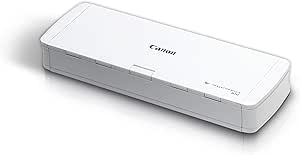 | Best Overall | Scanning Speed: Up to 12 pages per minute | Scanning Mode: Duplex | Automatic Document Feeder: 20 sheets | VIEW LATEST PRICE | See Our Full Breakdown |
| HP Small USB Document & Photo Scanner HPPS100 |  | Best for High-Resolution Single-Sided Scans | Model: HPPS100 | Scanner Format: Portable sheet-fed scanner | Scanning Speed: Up to 15 pages per minute | VIEW LATEST PRICE | See Our Full Breakdown |
| ScanSnap iX1300 Wireless or USB Double-Sided Color Document Scanner, White |  | Best for Desktop-to-Travel Versatility | Color: White | Connectivity: USB and Wi-Fi | Scan Speed: Up to 30 ppm | VIEW LATEST PRICE | See Our Full Breakdown |
| Brother DS-740D Duplex Compact Mobile Document Scanner |  | Best USB-Powered Duplex Pick | Scan Speed: Up to 16 ppm | Duplex Scanning: Yes | Color Scanning: Yes | VIEW LATEST PRICE | See Our Full Breakdown |
| Plustek Mobile Scanner S410 Plus Portable Sheet-Fed Document Scanner with OCR Software |  | Best for Editable Text | Scanner Type: Sheet-fed document scanner | Connection: USB | Resolution: 600 dpi | VIEW LATEST PRICE | See Our Full Breakdown |
| Brother DS-640 Compact Mobile Document Scanner (Renewed Premium) |  | Best Renewed Pick | Scan Speed: Up to 16 ppm | Weight: 1.5 pounds | Power Source: USB 3.0 | VIEW LATEST PRICE | See Our Full Breakdown |
| MUNBYN Portable Scanner, 900 DPI Handheld Wand Scanner, A4, 16GB SD, Silver |  | Best for Computer-Free Scanning | Scanner Type: Handheld wand photo scanner | Maximum Resolution: 900 dpi | Connection: USB | VIEW LATEST PRICE | See Our Full Breakdown |
| Brother DS-640 Compact Mobile Document Scanner |  | Best Cross-Platform Pick | Scan Speed: Up to 16 ppm | Weight: 1.5 lbs | Dimensions: Less than 1 foot long | VIEW LATEST PRICE | See Our Full Breakdown |
| Epson WorkForce ES-50 Compact & Lightweight Mobile Document Scanner for PC and Mac |  | Best for Receipts and Long Documents | Scan Speed: As little as 5.5 seconds per page | Maximum Document Size: 8.5 x 72 inches | Document Types: Standard pages, receipts, and ID cards | VIEW LATEST PRICE | See Our Full Breakdown |
| ScanSnap iX1300 Wireless and USB Double-Sided Color Document Scanner, Black |  | Best Premium Desktop-Mobile Hybrid | Scan Speed: Up to 30 ppm | Scanning Mode: Double-sided color scanning | Document Feeding: Automatic document feeder | VIEW LATEST PRICE | See Our Full Breakdown |
| portable document scanner | Connectivity | Scan Speed | Compatibility |
|---|---|---|---|
| Epson WorkForce ES-60W Wireles | Wireless and USB | As fast as 4 seconds per page | — |
| Canon CanoScan LiDE 300 Scanne | USB | — | — |
| MUNBYN Portable Scanner | USB | — | — |
| Canon imageFORMULA R10 Portabl | USB | — | Windows and Mac |
| HP Small USB Document & Photo | USB 2.0 | — | Windows and Mac |
| ScanSnap iX1300 Wireless or US | USB and Wi-Fi | Up to 30 ppm | — |
| Brother DS-740D Duplex Compact | Micro USB 3.0 | Up to 16 ppm | Windows, Mac, and Linux |
| Plustek Mobile Scanner S410 Pl | — | — | — |
| Brother DS-640 Compact Mobile | — | Up to 16 ppm | Windows, Mac, and Linux |
| MUNBYN Portable Scanner | — | — | — |
| Brother DS-640 Compact Mobile | — | Up to 16 ppm | Windows, Mac, and Linux |
| Epson WorkForce ES-50 Compact | USB 2.0 | As little as 5.5 seconds per page | Windows and Mac |
| ScanSnap iX1300 Wireless and U | Wi-Fi and USB | Up to 30 ppm | Mac, PC, mobile devices, Chromebook, and cloud services |
More Details on Our Top Picks
Epson WorkForce ES-60W Wireless Compact Mobile Document Scanner
I rank the Epson WorkForce ES-60W as the strongest travel pick for buyers who want to scan without remaining tethered to a laptop. Its wireless support reaches computers and mobile devices, while the four-second page speed keeps short jobs moving. Compared with the Canon imageFORMULA R10, the Epson is easier to carry and more flexible about connections, but its single-sheet feed makes multi-page reports far more laborious. The included OCR adds practical value by turning captured pages into searchable files, an advantage for expense records and client paperwork. Battery or USB power also suits mobile work, though wireless use can drain the battery at an unpredictable rate. I would choose it for scattered pages on the road, not recurring stacks; the R10 remains the better choice for duplex batch scanning.
Pros:- Four-second page scanning handles individual documents quickly
- Wireless and USB connections support both mobile and desk-based workflows
- Battery operation permits scanning away from an outlet
- Included OCR creates searchable digital documents
Cons:- Single-sheet feeding becomes tedious for longer documents
- Cloud scanning depends on an internet connection
- Battery runtime varies with connection type and workload
Best for: Traveling consultants, field representatives, and mobile workers who scan individual documents to a laptop, phone, or tablet
Not ideal for: Administrative teams processing multi-page packets, since every sheet must be fed separately
- Scan Speed:As fast as 4 seconds per page
- Connectivity:Wireless and USB
- Supported Computers:Windows PC and Mac
- Supported Mobile Devices:iOS and Android
- Maximum Document Size:8.5 × 72 inches
- Power:Battery or USB
- OCR Software:Nuance OCR included
- Operating Temperature:41°F to 95°F
Our verdict“I recommend the ES-60W for frequent travelers who value wireless freedom more than automatic batch feeding.”
Canon CanoScan LiDE 300 Scanner
I give the Canon CanoScan LiDE 300 a home-desk role because its simple USB connection and Auto Scan Mode reduce setup work for occasional documents and images. Unlike the Epson WorkForce ES-60W, it has no wireless link for sending scans directly from a flexible mobile setup, so portability here means easy storage rather than true field use. Automatic detection makes it more approachable for infrequent scanning, especially when the goal is digitizing household paperwork without learning many controls. Its image support also gives it broader desk utility than document-only travel models. The tradeoff is a workflow tied to a computer, and more advanced functions may depend on compatible software. I would pick it over the MUNBYN handheld scanner when consistent placement matters more than off-grid freedom, but not for scanning during travel.
Pros:- Auto Scan Mode detects documents and images with little manual setup
- USB connectivity provides a straightforward computer-based workflow
- Compact construction makes the scanner easier to store between jobs
Cons:- No wireless connection for phones, tablets, or cable-free scanning
- Computer dependence limits genuine mobile use
- Advanced functions may require compatible software
Best for: Home users and students who scan occasional documents or images at a computer and want automatic detection
Not ideal for: Mobile professionals who need wireless transfers or scanning away from a desk
- Scanner Type:Document scanner
- Connectivity:USB
- Auto Scan Mode:Yes
- Automatic Detection:Documents and images
- Supported Media:Documents and images
- Wireless Connectivity:No
Our verdict“I recommend the LiDE 300 for occasional home scanning, provided a USB-only desk workflow is acceptable.”
MUNBYN Portable Scanner, 900 DPI Handheld Wand Scanner, A4, 16GB SD, Black
I include the MUNBYN 900 DPI Handheld Wand Scanner for material that cannot pass through a sheet feeder, including book pages and documents encountered away from a desk. At 145 grams, with AA power and a 16GB SD card, it can capture files without a computer beside it. Compared with the Canon CanoScan LiDE 300, this model is far easier to take into libraries or archives, but hand movement controls the result, so skew and uneven scans are greater risks. Its 900 dpi setting also favors detailed photos and text over the speed-focused Canon imageFORMULA R10. No-driver USB transfer keeps file retrieval simple, yet there is no wireless sending and the batteries cost extra. I would reserve it for specialty capture rather than routine office stacks, where a feeder is faster and more repeatable.
Pros:- 900 dpi resolution supports detailed document and photo capture
- 145-gram handheld body is easy to carry
- Included 16GB SD card stores scans without an attached computer
- Driver-free USB connection simplifies file transfer
Cons:- Manual movement can produce skewed or uneven results
- AA batteries are required but not included
- No wireless transfer or automatic document feeding
Best for: Researchers, students, and genealogists who need to capture book pages, photos, or loose A4 documents away from a desk
Not ideal for: Office users scanning frequent multi-page packets, since handheld passes are slower and more prone to alignment errors
- Scanner Type:Handheld wand scanner
- Maximum Resolution:900 dpi
- Maximum Paper Format:A4
- Connectivity:USB
- Supported Media:Documents and photos
- Dimensions:0.84 × 10 × 0.7 inches
- Weight:145 grams
- Power:AA batteries, not included
- Included Storage:16GB SD card
Our verdict“I recommend this MUNBYN wand for portable book and photo capture, not for fast or uniform batch scanning.”
Canon imageFORMULA R10 Portable Document Scanner
I place the Canon imageFORMULA R10 first for buyers who need portable hardware without giving up an office-style feeder. Its 20-sheet capacity and duplex scanning handle reports, receipts, and cards with much less intervention than the single-sheet Epson WorkForce ES-60W or HP HPPS100. The 12-page-per-minute rate is not the fastest headline in this group, but capturing both sides in one pass can shorten real jobs more than the HP’s higher single-sided speed. USB power and built-in software also make temporary workstations easier to manage across Windows and Mac computers. The compromises are clear: there is no wireless connection, photographic media is a poor match, and the suggested 500-scan daily volume limits heavier operations. For mixed business paperwork, I think its feeder, duplex capability, and media flexibility form the best-balanced package.
Pros:- 20-sheet automatic feeder reduces hands-on work
- Duplex scanning captures both sides in a single pass
- Handles receipts, reports, legal documents, business cards, and plastic cards
- USB-powered design with built-in Windows and Mac software suits temporary workspaces
Cons:- No wireless connection for phone or tablet workflows
- Unsuitable for photographs printed on photographic media
- Suggested 500-scan daily volume falls short of production-level needs
Best for: Remote professionals and small offices that regularly process multi-page, double-sided business documents from a laptop
Not ideal for: Photo archivists and high-volume departments, because it is not intended for photographic media or workloads far beyond 500 daily scans
- Scanning Speed:Up to 12 pages per minute
- Scanning Mode:Duplex
- Automatic Document Feeder:20 sheets
- Suggested Daily Volume:500 scans
- Connectivity:USB
- Compatibility:Windows and Mac
- Supported Media:Receipts, business cards, reports, legal documents, and plastic or embossed cards
- Power Consumption:2.5W or less; 0.7W in Energy Saving Mode
- Energy Certification:ENERGY STAR certified
Our verdict“I recommend the R10 as the best-balanced choice for portable, double-sided document batches.”
HP Small USB Document & Photo Scanner HPPS100
I assign the HP HPPS100 to buyers who want speed and fine resolution from a compact sheet-fed design, yet rarely scan double-sided paperwork. Its 15-page-per-minute rating surpasses the Canon imageFORMULA R10’s stated page rate, and 1200 dpi gives photos or detailed originals more capture headroom than the 900 dpi MUNBYN wand. The HP also avoids the alignment demands of a handheld pass, making repeatable scans easier for small batches. That advantage narrows quickly with two-sided documents: every page needs manual flipping, while the R10 handles both sides automatically and adds a 20-sheet feeder. USB-only operation also keeps the HP tied to a Windows or Mac computer. I would choose it for sharp, one-sided documents and photos, but the R10 is the more productive business option for mixed stacks.
Pros:- 15-page-per-minute speed suits short one-sided batches
- Resolution up to 1200 dpi preserves detail in documents and photos
- Compact sheet-fed format is easier to transport than a desk scanner
- Windows and Mac compatibility supports common laptop workflows
Cons:- Single-sided scanning requires manual flipping for duplex documents
- USB-only connection rules out wireless mobile workflows
- Light-to-medium batch focus is poorly suited to heavy daily scanning
Best for: Solo professionals and small businesses that scan light or medium batches of one-sided documents and photos at high resolution
Not ideal for: Teams processing double-sided packets or scanning from mobile devices, due to one-sided capture and USB-only connectivity
- Model:HPPS100
- Scanner Format:Portable sheet-fed scanner
- Scanning Speed:Up to 15 pages per minute
- Scanning Mode:Single-sided
- Maximum Resolution:1200 dpi
- Paper Size Range:2 × 2.9 inches to 8.5 × 14 inches
- Connectivity:USB 2.0
- Compatibility:Windows and Mac
- Supported Media:Documents and photos
Our verdict“I recommend the HPPS100 when high-resolution, one-sided scanning matters more than duplex automation or wireless access.”
ScanSnap iX1300 Wireless or USB Double-Sided Color Document Scanner, White
I rank the ScanSnap iX1300 highest in this group for buyers who want portable dimensions without giving up office-level speed. Its 30 ppm duplex scanning makes multi-page jobs far quicker than the 16 ppm Brother DS-740D, while Wi-Fi supports phone, computer, and cloud workflows without a permanent cable. The return-feed design also saves desk space, and automatic de-skewing, color correction, and blank-page removal reduce cleanup after scanning. That versatility comes with limits: it lacks battery operation, so portability still depends on access to power, and ScanSnap Home setup adds more overhead than a basic USB model. Compared with the Canon imageFORMULA R10, this pick makes more sense when wireless access matters more than having a conventional document feeder.
Pros:- Scans both sides at up to 30 pages per minute
- Wi-Fi and USB connections support several working setups
- Compact return-feed design uses little desk space
- Automatic corrections reduce manual image cleanup
Cons:- No battery-powered operation for fully independent travel use
- ScanSnap Home must be installed and configured
- Less convenient than a simple wand scanner for bound pages
Best for: Home-office professionals who regularly scan multi-page files and want both wireless access and a compact footprint
Not ideal for: Field workers who need battery-powered scanning far from an outlet
- Color:White
- Connectivity:USB and Wi-Fi
- Scan Speed:Up to 30 ppm
- Duplex Scanning:Yes
- Automatic Processing:De-skew, color optimization, and blank-page removal
- Supported Media:Documents, photos, receipts, plastic cards, and thick items
- Software:ScanSnap Home
Our verdict“I recommend the iX1300 for buyers who want the strongest balance of speed, wireless flexibility, and space-saving design.”
Brother DS-740D Duplex Compact Mobile Document Scanner
The Brother DS-740D earns its place by putting automatic two-sided scanning into a body less than a foot long. At 16 ppm, it cannot match the ScanSnap iX1300’s 30 ppm pace, but it is easier to slip into a work bag and draws power directly from a computer. It is also a better fit than the single-sided Brother DS-640 Renewed Premium when contracts, forms, or identification copies often contain information on both faces. Windows, Mac, and Linux support broadens its appeal for mixed-device teams. I would skip it for large archives, since the slower speed and manual sheet handling become tedious. Its USB-only connection also means a laptop must remain nearby, unlike the wireless iX1300. This is a focused mobile tool rather than a replacement for a high-volume desktop scanner.
Pros:- Automatic duplex scanning captures both sides in one pass
- Compact body is less than one foot long
- USB power removes the need for a separate adapter
- Supports Windows, Mac, and Linux
Cons:- 16 ppm speed is modest for high-volume batches
- Requires a wired connection to a powered computer
- Lacks Wi-Fi and independent storage
Best for: Mobile professionals who scan two-sided contracts, forms, or receipts beside a laptop
Not ideal for: Teams digitizing large archives or anyone who needs wireless, phone-based, or computer-free scanning
- Scan Speed:Up to 16 ppm
- Duplex Scanning:Yes
- Color Scanning:Yes
- Connectivity:Micro USB 3.0
- Power Source:USB
- Compatibility:Windows, Mac, and Linux
- Length:Less than 1 foot
Our verdict“I would choose the DS-740D for laptop-based travel work where duplex scanning matters more than wireless freedom.”
Plustek Mobile Scanner S410 Plus Portable Sheet-Fed Document Scanner with OCR Software
I give the Plustek S410 Plus a distinct role for travelers who need scanned text turned into editable files, not merely stored as images. Its included OCR software is the main buying reason, while 600 dpi resolution provides enough detail for documents and occasional graphics. Button-free feeding also keeps one-page jobs simple. Against the Brother DS-740D, however, the Plustek is much less efficient with double-sided or multi-page paperwork: its one-sheet capacity requires repeated manual feeding, and the supplied data does not identify duplex operation. It also lacks the ScanSnap iX1300’s Wi-Fi access. The 0.41 kg body is easy to carry, but USB power ties it to another device. I place it behind faster duplex models for general business use, yet ahead of them when editable text extraction is the buyer’s main goal.
Pros:- Included OCR software converts scans into editable formats
- 600 dpi resolution captures detailed text and graphics
- Lightweight 0.41 kg body travels easily
- Automatic feeding starts scans without a button press
Cons:- Single-sheet capacity slows multi-page work
- USB power requires a connected device
- No Wi-Fi connection or stated duplex capability
Best for: Researchers, students, and traveling administrators who scan individual pages and need OCR-generated editable files
Not ideal for: Offices processing double-sided packets or multi-page batches, because every sheet must be fed individually
- Scanner Type:Sheet-fed document scanner
- Connection:USB
- Resolution:600 dpi
- Sheet Capacity:1 sheet
- Optical Sensor:CIS
- Light Source:LED
- Dimensions:1.6 x 11.7 x 1.9 inches
- Weight:0.41 kg
- Color Depth:48 bits
Our verdict“I recommend the S410 Plus when portable OCR matters more than duplex speed or batch convenience.”
Brother DS-640 Compact Mobile Document Scanner (Renewed Premium)
The Brother DS-640 Renewed Premium is my pick for buyers comfortable choosing refurbished hardware to get a small, straightforward travel scanner. Its 1.5-pound body and USB 3.0 power suit laptop bags, while 16 ppm scanning is adequate for receipts, forms, and short reports. Image rotation, bleed-through prevention, text enhancement, and OCR add useful processing after capture. Compared with the Brother DS-740D, though, this model gives up automatic duplex scanning, making two-sided paperwork slower and more error-prone. The standard non-renewed Brother DS-640 may also appeal more to buyers who prefer a new unit. Since it relies on a computer for power and software, it cannot match the MUNBYN wand scanner’s independent operation. I rank it as a selective purchase: compact and capable, but best when renewed condition and one-sided scanning fit the buyer’s expectations.
Pros:- Compact 1.5-pound design fits easily in a work bag
- Scans color and monochrome documents at up to 16 ppm
- Supports Windows, Mac, and Linux
- Includes OCR and several image-correction features
Cons:- No automatic duplex scanning
- USB power prevents independent operation
- Renewed condition may not suit buyers who want a new device
Best for: Budget-aware laptop users who accept renewed equipment and mainly scan one-sided receipts or forms
Not ideal for: Buyers who require automatic duplex scanning, wireless transfer, or the assurance of purchasing a new unit
- Scan Speed:Up to 16 ppm
- Weight:1.5 pounds
- Power Source:USB 3.0
- Color Scanning:Yes
- Compatibility:Windows, Mac, and Linux
- Image Processing:Color detection, image rotation, bleed-through prevention, and text enhancement
- OCR:Included through scanner software
Our verdict“I would buy this renewed DS-640 for light one-sided travel scanning, but choose the DS-740D when duplex capture is routine.”
MUNBYN Portable Scanner, 900 DPI Handheld Wand Scanner, A4, 16GB SD, Silver
The MUNBYN 900 DPI Handheld Wand Scanner fills the lineup’s most independent role. Two AA batteries and an included 16GB SD card let it capture A4 documents or photos without a laptop, which neither the Plustek S410 Plus nor Brother DS-740D can do. Its 900 dpi maximum resolution also favors detailed photo capture over rapid office processing. That freedom shifts more responsibility to the buyer: every scan depends on moving the wand steadily across a flat page, so alignment and consistency cannot match a sheet-fed model. Multi-page contracts will take far longer, and batteries are not included. It also offers no automatic duplex workflow or direct wireless transfer. At just 145 g, I rank it as the strongest field option for occasional pages, books, and photos, but one of the weakest choices here for repetitive business scanning.
Pros:- Operates without a computer using batteries and SD storage
- 900 dpi setting supports detailed document and photo capture
- Very light 145 g body is easy to carry
- Included 16GB SD card provides immediate local storage
Cons:- Manual wand movement can produce skewed or uneven scans
- Too slow for multi-page and duplex workloads
- Requires two AA batteries, which are not included
Best for: Field researchers, genealogy hobbyists, and travelers who need to capture flat pages or photos without a computer
Not ideal for: Office users scanning multi-page or double-sided files, because manual wand movement makes batch work slow and inconsistent
- Scanner Type:Handheld wand photo scanner
- Maximum Resolution:900 dpi
- Connection:USB
- Supported Size:Up to A4
- Storage:16GB SD card included
- Power Source:2 AA batteries, not included
- Weight:145 g
- Color:Silver
Our verdict“I recommend this MUNBYN wand for computer-free field capture, not for buyers who need fast and repeatable document batches.”
Brother DS-640 Compact Mobile Document Scanner
I rank the Brother DS-640 as the best cross-platform choice because its Windows, Mac, and Linux support gives buyers more flexibility than the Epson WorkForce ES-50. Its 16 ppm scan speed is well suited to contracts, forms, and expense documents, while OCR and image corrections reduce the work needed after capture. At 1.5 pounds and less than a foot long, it slips into a work bag without becoming a burden. The compromise is its single-sided manual feed: compared with the Brother DS-740D, it requires more handling when scanning two-sided or multi-page paperwork. It also lacks Wi-Fi and relies on micro USB 3.0, an aging connector that may require an adapter with newer laptops. I see it as a capable mobile workhorse for mixed-computer environments, but not the easiest choice for document batches.
Pros:- Scans color or black-and-white documents at up to 16 pages per minute
- Supports Windows, Mac, and Linux
- Compact 1.5-pound body fits easily in a work bag
- OCR and image-correction tools improve filing and text retrieval
Cons:- Single-sided manual feeding adds work for duplex or multi-page documents
- No Wi-Fi or direct mobile-device scanning
- Micro USB 3.0 connection may require an adapter with newer computers
Best for: Mobile professionals and IT-managed teams that need a lightweight scanner compatible with Windows, Mac, and Linux computers
Not ideal for: Travelers who routinely scan double-sided document batches and want wireless transfer without manually feeding and flipping pages
- Scan Speed:Up to 16 ppm
- Weight:1.5 lbs
- Dimensions:Less than 1 foot long
- Power:USB-powered
- Connection:Micro USB 3.0
- Compatibility:Windows, Mac, and Linux
- Document Processing:OCR, color detection, image rotation, bleed-through prevention, and text enhancement
Our verdict“I recommend the DS-640 to cross-platform users who value speed and low weight more than duplex feeding or wireless convenience.”
Epson WorkForce ES-50 Compact & Lightweight Mobile Document Scanner for PC and Mac
The Epson WorkForce ES-50 earns this role through its unusually flexible media handling: it accepts receipts, ID cards, and documents up to 8.5 by 72 inches. That makes it more useful for expense records and long forms than the Brother DS-640, while a 5.5-second page time keeps occasional jobs moving. Epson ScanSmart and OCR can turn captures into searchable PDFs or editable files, giving small-business buyers a practical filing workflow without a power brick. I would not choose it for a backlog, though. Its one-sheet-at-a-time feed demands constant attention, and unlike the ScanSnap iX1300, it has neither duplex scanning nor an automatic document feeder. USB 2.0 is also the only connection, ruling out cable-free phone or cloud workflows. This is the lineup’s nimble specialist, not its batch-scanning solution.
Pros:- Handles receipts, ID cards, and documents up to 72 inches long
- Scans a page in as little as 5.5 seconds
- OCR creates searchable PDFs and editable files
- USB power eliminates the need for a separate power adapter
Cons:- Single-sheet feeding makes multi-page jobs labor-intensive
- No automatic duplex scanning
- USB-only connection offers no wireless or direct mobile workflow
Best for: Traveling salespeople, bookkeepers, and sole traders who mainly capture receipts, ID cards, and occasional long documents
Not ideal for: Home offices digitizing stacks of double-sided paperwork, because every sheet must be fed and flipped manually
- Scan Speed:As little as 5.5 seconds per page
- Maximum Document Size:8.5 x 72 inches
- Document Types:Standard pages, receipts, and ID cards
- Connectivity:USB 2.0
- Power:USB-powered
- Compatibility:Windows and Mac
- Included Software:Epson ScanSmart with OCR
Our verdict“I would pick the ES-50 for lightweight receipt and long-document capture, but I would skip it for recurring multi-page jobs.”
ScanSnap iX1300 Wireless and USB Double-Sided Color Document Scanner, Black
I place the ScanSnap iX1300 above the basic travel scanners for buyers who want portability without giving up batch efficiency. Its 30 ppm duplex scanning captures both sides in one pass, and the automatic document feeder makes reports and household records far less tedious than on the single-sheet Epson WorkForce ES-50. Wi-Fi, USB, mobile-device support, and cloud destinations also provide more routing choices than the Brother DS-640. Automatic de-skewing, blank-page removal, and color optimization reduce cleanup, while one-touch controls keep routine jobs approachable. Those benefits come with a higher price, a larger body, and more software setup than the simpler USB models. It is compact enough to move between rooms or pack occasionally, but it is not the lightest everyday bag companion. Heavy production offices may also outgrow its compact feeder and duty profile.
Pros:- Scans both sides at up to 30 pages per minute
- Automatic document feeder reduces hands-on work for multi-page jobs
- Wi-Fi and USB support computers, mobile devices, and cloud workflows
- Automatic corrections reduce manual cleanup after scanning
Cons:- Costs more and occupies more bag space than basic single-sheet models
- Full functionality requires software and wireless setup
- Compact feeder is less suitable for sustained high-volume production scanning
Best for: Home-office professionals and small teams that need fast duplex batches, Wi-Fi sharing, and occasional room-to-room portability
Not ideal for: Minimalist travelers carrying a scanner every day or production offices processing very large document volumes
- Scan Speed:Up to 30 ppm
- Scanning Mode:Double-sided color scanning
- Document Feeding:Automatic document feeder
- Connectivity:Wi-Fi and USB
- Compatibility:Mac, PC, mobile devices, Chromebook, and cloud services
- Supported Media:Documents, photos, and cards
- Image Processing:Automatic de-skew and color optimization
- Page Processing:Automatic blank-page removal
Our verdict“I recommend the iX1300 to buyers willing to pay more for duplex batch speed and wireless flexibility in a still-compact scanner.”
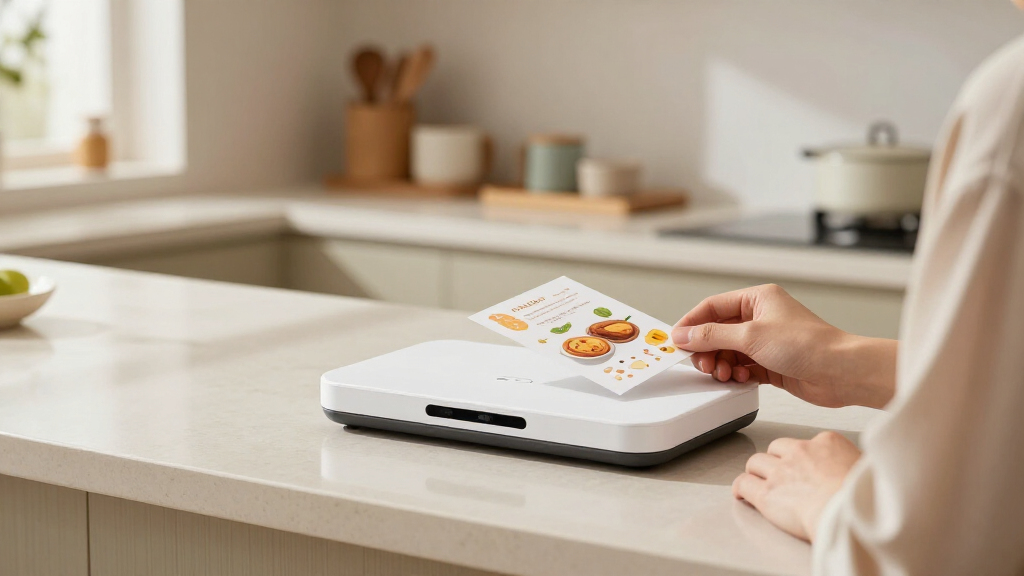
How We Picked
I ranked these models through a portable-first evaluation, giving the most weight to size, power requirements, setup burden, and the amount of paper each scanner can process without constant intervention. I then compared duplex capability, feeder design, scan destinations, OCR support, and compatibility with common computer workflows. A machine gained ground when its features reduced work away from a permanent desk, rather than merely adding resolution or software extras.
The ordering also reflects how costly each compromise becomes. The Canon R10 ranks above thinner single-sheet models because its feeder makes repeated scanning easier, while the Epson ES-60W rises for wireless field work and the ScanSnap iX1300 leads among higher-volume choices. I placed manual wand scanners and the Canon flatbed lower because they serve narrower scanning situations, not because those formats lack merit. Matching color variants received no artificial performance advantage, and the renewed Brother DS-640 sits behind the new model because warranty and condition uncertainty offset part of its savings.
| portable document scanner | Scan Speed | Connectivity | Compatibility |
|---|---|---|---|
| Epson WorkForce ES-60W Wireles | As fast as 4 seconds per page | Wireless and USB | — |
| Canon CanoScan LiDE 300 Scanne | — | USB | — |
| MUNBYN Portable Scanner | — | USB | — |
| Canon imageFORMULA R10 Portabl | — | USB | Windows and Mac |
| HP Small USB Document & Photo | — | USB 2.0 | Windows and Mac |
| ScanSnap iX1300 Wireless or US | Up to 30 ppm | USB and Wi-Fi | — |
| Brother DS-740D Duplex Compact | Up to 16 ppm | Micro USB 3.0 | Windows, Mac, and Linux |
| Plustek Mobile Scanner S410 Pl | — | — | — |
| Brother DS-640 Compact Mobile | Up to 16 ppm | — | Windows, Mac, and Linux |
| MUNBYN Portable Scanner | — | — | — |
| Brother DS-640 Compact Mobile | Up to 16 ppm | — | Windows, Mac, and Linux |
| Epson WorkForce ES-50 Compact | As little as 5.5 seconds per page | USB 2.0 | Windows and Mac |
| ScanSnap iX1300 Wireless and U | Up to 30 ppm | Wi-Fi and USB | Mac, PC, mobile devices, Chromebook, and cloud services |
Factors to Consider When Choosing Portable Document Scanners
I would start by identifying where the scanner will live and how many pages it must handle in one sitting. The smallest model is not automatically the best travel companion if it forces repeated rescans or needs a laptop for every job. A useful choice balances paper handling, connection method, software support, and the amount of equipment a buyer is willing to carry.
Match the Paper Path to Your Workload
A single-sheet scanner keeps weight down, but every page must be inserted by hand. That is manageable for receipts, forms, and a few letters, yet it becomes tedious when digitizing contracts or expense packets. A duplex automatic feeder captures both sides and advances a stack, turning a repetitive job into a mostly hands-off one. Manual-duplex models scan both sides but may still require feeding sheets individually, so the duplex label alone does not describe the full workflow. Wand scanners trade guided paper movement for freedom over bound or awkward material, while flatbeds are gentler with delicate originals. I would pay for a feeder when multi-page documents are routine, not merely an occasional task.
Choose Between USB Simplicity and Wireless Freedom
USB-powered scanners are often easier to manage because one cable supplies power and transfers the file. Their limitation appears when the only available device is a phone or tablet, or when a laptop cannot sit beside the paperwork. Wireless models can provide a cleaner field workflow, but they add battery management, pairing, and network setup. Some wireless scanners still depend on companion software, so a wireless logo does not always mean fully independent operation. A wand scanner with removable storage can work without a computer, though organizing files later becomes a separate step. I would choose wireless only when cable-free capture changes where the scanner can be used.
Judge Portability by the Full Travel Kit
Product dimensions tell only part of the story because cables, adapters, cases, and required devices also occupy bag space. A narrow scanner may fit beside a laptop, yet a wider feeder model can demand a clear table before it can accept paper. Weight matters most for daily commuting, while workspace depth matters more in hotel rooms, vehicles, and temporary offices. Buyers who scan one or two pages at a time may benefit from a slim manual-feed body more than from higher throughput. A larger model can still qualify as portable when it replaces several slow passes with one batch. My preference is to compare the complete working footprint, not just the scanner while packed.
Check OCR, File Handling, and Device Support
OCR turns page images into searchable text, which matters when scans will become invoices, client records, or an archive. Basic scanning software may save a PDF without naming, rotating, separating, or cleaning pages in a useful way. Buyers should check whether OCR runs locally, requires an account, or is limited to particular operating systems. Automatic cropping and blank-page removal can save more time than a higher resolution setting during everyday document work. Older or renewed hardware may also depend on drivers that receive less attention as operating systems change. I would value reliable software compatibility and searchable output above headline resolution for normal office paperwork.
Know When Paying More Produces Real Value
The least expensive scanner can become poor value when manual feeding doubles the labor required for every job. Higher prices make sense when they buy a feeder, duplex capture, wireless operation, or software that directly shortens a repeated workflow. They make less sense when the premium mainly covers a color variation or resolution beyond what text documents need. Renewed models can lower the entry price, but buyers should compare return coverage, included cables, roller condition, and warranty length with the new version. Replacement rollers and cleaning supplies also matter for scanners used weekly, even if the initial price looks attractive. I would judge value by cost per completed workload, not by the checkout price alone.
Frequently Asked Questions
Is a wireless portable scanner worth paying extra for?
Wireless is worth the added cost when scanning away from a laptop is a regular need. It can help field workers capture forms beside a client, in a vehicle, or anywhere a cable creates an awkward setup. For desk-adjacent scanning, a USB-powered model is simpler and avoids pairing or battery concerns. Buyers should also verify where wireless scans can be saved, since some models still rely on a computer application. In this lineup, I favor the Epson ES-60W for true mobile flexibility and the Canon R10 for a more straightforward wired workflow.
Do I need both duplex scanning and an automatic document feeder?
The two features solve different problems: duplex scanning captures both sides, while an automatic feeder advances multiple pages. A manual-feed duplex scanner can process a two-sided sheet efficiently but still needs attention for every new page. Buyers handling contracts, applications, or tax records will gain more from having both features together. For occasional receipts and one-page forms, a slimmer manual-feed model may be a better use of money and bag space. I rank the Canon R10 above basic mobile scanners because its combination addresses both sides of the workload.
Can a handheld wand scanner replace a sheet-fed scanner?
A wand scanner can replace a sheet-fed unit only for buyers who value computer-free capture and unusual surfaces more than repeatable alignment. It may work well for occasional pages, material that cannot pass through rollers, or trips where removable storage is convenient. The operator controls the movement, so uneven speed can produce distortion or force a rescan. Sheet-fed models provide straighter, more consistent document capture and are much easier for multi-page work. I would choose either MUNBYN color variant for a specialized standalone role, but not as the primary scanner for a busy paper workflow.
Is the Canon CanoScan LiDE 300 genuinely portable?
The LiDE 300 can be moved and powered by USB, but I view it as transportable rather than travel-first. Its flatbed protects photos, fragile papers, and items that should not pass through rollers, which gives it a capability the sheet-fed picks lack. The tradeoff is a wider body, slower page-by-page handling, and a greater need for clear desk space. It makes sense for buyers who move between a few fixed work locations rather than scan while traveling each day. For a laptop bag, I would choose a DS-640, ES-50, or ES-60W; for delicate originals, the flatbed design is the safer fit.
Should I buy the renewed Brother DS-640 or the new version?
The renewed DS-640 is attractive when its discount is large enough to offset condition risk. Scanners contain rollers and feed components that wear, so cosmetic appearance alone does not reveal how consistently a used unit will move paper. Buyers should compare the return window, warranty, included USB cable, and seller-backed refurbishment terms. A small discount favors the new DS-640 for stronger purchase protection, while a steep reduction may justify the renewed model for light use. I would avoid treating both listings as equal simply because their core scanning specifications match.
Conclusion
For most buyers, my best overall recommendation is the Canon imageFORMULA R10 because its duplex feeder offers the strongest balance of travel practicality and multi-page efficiency. The Brother DS-640 is my best-value pick for straightforward one-sided mobile scanning, while the renewed version is suitable only when its discount and coverage are convincing. Beginners who want a simple, light USB model should start with the Epson WorkForce ES-50. Buyers with larger workloads should choose either color of the ScanSnap iX1300 as the premium option, letting price decide between the identical black and white versions.
For more specific needs, I favor the Epson ES-60W for wireless field work, the Brother DS-740D for compact duplex capture, and the Plustek S410 Plus when bundled OCR is a priority. The HP PS100 suits occasional one-sided documents and photos, while the Canon LiDE 300 is the better match for fragile originals that need a flatbed. Either MUNBYN wand scanner fits computer-free capture, with color and price as the only meaningful separators. My final choice would follow the workload: R10 for balanced portability, iX1300 for volume, ES-60W for mobility, and a slim USB model for lighter jobs.
Fall Picks
fall essentials
As an affiliate, we earn on qualifying purchases.