
TL;DR

Prime made for students and young adults
- Fast, free delivery for dorm and study essentials
- Prime Video and Amazon Music included
- Member-only deals
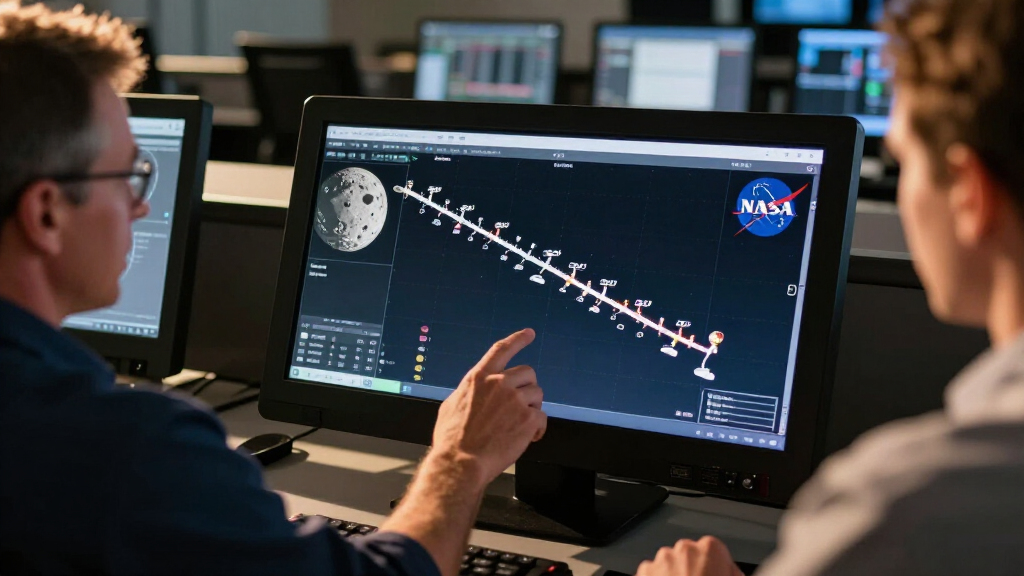
NASA Langley engineer Richard Spolzino helps document unanswered questions about the Moon and Mars so mission teams and partners can target the information they need. NASA’s published data gaps grew from about 25 last year, with the team on track to reach 60 by the end of this year, according to the agency’s profile.
NASA engineer Richard Spolzino is helping map what the agency still needs to learn about the Moon and Mars, using documented data gaps to guide research priorities and evaluate proposed instruments. In a profile published by NASA, the engineer at Langley Research Center said his team had about 25 published gaps last year and was on track to reach 60 by the end of the year described in the report.
A data gap records a specific unanswered question, why it matters, what existing information falls short and a measurable target for addressing the shortfall. Spolzino gave lunar soil, or regolith, as an example: its ability to bear weight and its shear strength affect decisions such as where a rover can travel and whether a habitat foundation can hold. The documentation is intended to give NASA, industry and international partners a clearer basis for deciding what information to gather.
Spolzino’s team has applied the work to both data return and instrument review. For the planned Griffin-1 lunar mission by the company formerly known as Astrobotic, now Voyager, the team helped prioritize which information should be sent to Earth first over a limited communications link. NASA’s account says the mission’s instrument selection was already set, so the team’s contribution focused on the order of data transmission.
Separately, Spolzino has evaluated proposed instruments, including spectrometers, sample-collection tools and technology demonstrations, against the documented gaps. He said proposals that address identified needs can help leadership decide what to advance, while industry partners are now asked to show how proposed instruments map to a data gap.
How Data Gaps Shape Mission Choices
The work connects broad exploration goals to practical decisions about what to measure, what to send home and which proposals merit further consideration. On the Moon, unanswered questions about soil, resources and terrain can affect the design and operation of equipment and habitats. Identifying those unknowns before a mission is in place may help teams target limited instruments, communications capacity and partner contributions.
NASA’s profile presents the gap list as a coordination tool, rather than a guarantee that each question will be answered on a particular mission. A shared list can make it easier for companies and international partners to see where their work could contribute, while giving NASA leadership a stated basis for comparing proposals. The practical effect depends on whether identified gaps lead to measurements that missions can collect and return.
As an affiliate, we earn on qualifying purchases.
From Systems Design to Lunar Data
Spolzino works at NASA’s Langley Research Center in Hampton, Virginia, in work the agency describes as part of Moon Base’s mission architecture and systems interoperability effort. His training combined aerospace engineering with space architecture, a systems-level field concerned with how components work together. In a lunar resource example, a processing plant, the rovers supplying it and the people using the resource all depend on connected systems.
He told NASA he initially studied history before switching to physics at Santa Clara University, then pursued graduate study at the University of Houston after an attempted path toward Navy flight training did not work out. He said he was drawn to work where he could affect multiple parts of a mission. The agency’s profile frames his career as an example of how systems analysis and documentation can support exploration planning, rather than as an announcement of a new NASA program or mission.
Mars and Moon research instruments
As an affiliate, we earn on qualifying purchases.
As an affiliate, we earn on qualifying purchases.
Open Questions About the Gap List
NASA’s profile does not identify the full set of published gaps, provide a breakdown by topic or explain how many have been resolved. The figure of 60 was a target the team was on track to reach by the end of the year covered in the report; the source does not confirm whether that total was ultimately reached.
The account also does not specify which Griffin-1 measurements will be prioritized for return, when that data will arrive, or which instrument proposals have advanced as a result of the reviews. It describes how the process informs decisions, but does not quantify its effect on mission costs, schedules or scientific outcomes.
space mission data collection tools
As an affiliate, we earn on qualifying purchases.
As an affiliate, we earn on qualifying purchases.
More Gaps and Mission Reviews
The work described by NASA points to two continuing tasks: adding documented questions to the gap list and comparing proposed instruments with those needs. The agency’s stated year-end target was 60 published gaps, but the profile gives no later count or date for a follow-up update.
For Griffin-1, the next relevant step is the mission’s collection and return of data, including the effects of the communications limit described by Spolzino. NASA’s source does not give a mission date or report the eventual data priorities. Future updates would clarify whether the gap process changes the information returned from lunar missions and how NASA partners use the published targets.
As an affiliate, we earn on qualifying purchases.
Key Questions
What is a NASA data gap?
It is a documented knowledge shortfall that identifies what is unknown, why the information matters, what current data lack and a measurable target for addressing the gap.
How can lunar soil data affect missions?
NASA engineer Richard Spolzino said information about lunar regolith, including its strength and ability to bear weight, can inform rover travel and whether a habitat foundation can hold.
What did Spolzino’s team do for Griffin-1?
According to NASA’s profile, the team helped prioritize which data should be transmitted first over the mission’s constrained communications link. The instrument selection was already set.
How many data gaps had NASA published?
The profile said the team started with roughly 25 published gaps the previous year and was on track to reach 60 by the end of the year covered. It did not confirm the final total.
Does the profile say the gap process has changed mission results?
It gives examples of the process informing data-return priorities and reviews of proposed instruments. It does not quantify effects on mission results, cost or schedule.
Source: primary
Evergreen bestsellers Picks
bestsellers
As an affiliate, we earn on qualifying purchases.