
TL;DR

Prime made for students and young adults
- Fast, free delivery for dorm and study essentials
- Prime Video and Amazon Music included
- Member-only deals
Sentinel Global Risks Watch, FutureSearch and Preseen each put the chance of more than 1,000 plague deaths worldwide in the next 12 months at 1% or less. Their estimates reflect the absence of reported onward transmission, but key details surrounding a technician’s death at a Russian laboratory remain uncertain.
Three forecasting sources estimate a 1% or lower chance of more than 1,000 plague deaths worldwide in the next 12 months, according to a report by Astral Codex Ten. The estimates follow reports that a technician at a laboratory in Irkutsk, Siberia, died after a yersinia infection; however, the circumstances of the death and whether it involved plague remain unclear.
Sentinel Global Risks Watch, a team of tournament-winning forecasters, put the probability at 0.7%, with a stated range of 0.1% to 2.0%. Its assessment cited the lack of known further cases, the reported isolation of contacts and the availability of antibiotics for treating typical plague outbreaks. Sentinel described the incident as serious and worth monitoring, but said it did not warrant alarm based on information then available.
Two AI forecasting services gave lower estimates. FutureSearch assigned 1%, while Preseen put the chance at 0.2%. FutureSearch said its estimate largely reflected the possibility of a severe regular plague epidemic, rather than an outbreak originating at the Russian laboratory. It characterized the probability of a pandemic beginning with the lab incident as “effectively zero.” These are forecasts, not official public-health findings.
The forecasts address a specific outcome: more than 1,000 plague deaths globally during the coming 12 months. They do not directly estimate every possible risk from the incident, nor do they establish what caused the technician’s illness. The source report says some articles quoted authorities describing the risk as small, but the supplied material does not identify those officials or provide direct statements from them.
What the Low Estimates Address
The forecasts offer readers a quantified assessment of a developing story that may otherwise be difficult to interpret. All three sources place the specified mortality threshold at 1% or below, which indicates that they regard a large global toll as unlikely on current information. The estimates are useful as a snapshot of forecasters’ judgments, not as a guarantee that an outbreak cannot occur.
The distinction between the forecast question and broader concerns matters. A scenario involving more than 1,000 deaths could result from plague outbreaks anywhere in the world, while a pandemic originating in the Irkutsk laboratory is a narrower and different possibility. Sentinel also raised concerns about the potential for laboratory accidents and possible bioweapons-related work, but the report provides no evidence that the facility was developing biological weapons or that an accident caused the death. Those concerns remain speculation, not established facts.
For readers, the immediate public-health signal in the supplied material is the lack of reported onward spread. That does not resolve the incident’s origin, but it helps explain why forecasters assessed the near-term risk as low. Sentinel suggested general household preparedness as a broad precaution, explicitly saying that this was not because the incident itself indicated an imminent threat.
As an affiliate, we earn on qualifying purchases.
How the Forecasts Were Framed
The forecasts were compiled in an Astral Codex Ten report titled “Top Forecasters On The Plague.” Sentinel Global Risks Watch was presented as a group of experienced forecasters who publish probabilities about future risks. The report also cited recent AI performance in the Metaculus Cup as a reason to consult AI forecasters, though competition results do not independently verify their estimates on this particular question.
FutureSearch compared the 1,000-death threshold with historical figures it attributed to a World Health Organization review covering 2019–2025: 3,847 suspected cases and 423 deaths across 10 countries over seven years, with 79 deaths in the highest single year, 2023. These figures were supplied by FutureSearch in the report; they are not independently verified here. The comparison was used to characterize the forecast threshold as substantially above recent annual totals.
The report also noted a Polymarket price of 5% for WHO declaring plague a “pandemic.” That market question is not identical to the forecasters’ question about deaths, and the report’s author cautioned that prediction markets can be unreliable at very low probabilities. The market figure should not be treated as a direct contradiction of the other estimates.
“We consider this a serious incident that merits monitoring but not alarm at this time.”
— Sentinel Global Risks Watch, as quoted by Astral Codex Ten
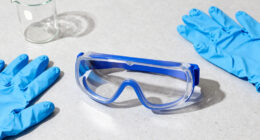
personal protective equipment for laboratory safety
As an affiliate, we earn on qualifying purchases.
As an affiliate, we earn on qualifying purchases.
Questions Around the Irkutsk Death
The supplied report says details of the technician’s death are unclear. Sentinel noted that the worker might have had an antibiotic-resistant plague strain, or a different disease that may or may not have been connected to her work. The report does not establish whether the infection was plague, whether the laboratory handled pneumonic plague, or whether a lab accident occurred.
Accounts cited by FutureSearch differ in emphasis: it said Russian authorities described the illness as “pneumonia of unknown aetiology” and denied a lab accident. It also attributed to the WHO an assessment of very low risk of broader spread and said Russia had reported no confirmed plague cases. Those statements are reported secondhand in the source material; the article does not include the underlying agency notices.
FutureSearch cited approximately 190 contacts as identified, monitored and tested, with no dangerous pathogens detected or secondary symptomatic cases reported. The timing and source documentation for those figures are not detailed in the material. It is also unclear whether all relevant authorities have published final findings or whether the monitoring period has ended.
As an affiliate, we earn on qualifying purchases.
Awaiting Public Health Findings
The immediate development to watch is whether Russian health authorities or international public-health agencies publish further information about the technician’s diagnosis, the laboratory’s work and the status of contacts. Any confirmed secondary cases, changes in testing results or evidence about the source of infection could alter the assessment. The report does not give a date for a final investigation or a scheduled update.
Until more evidence is released, the forecasts remain time-bound estimates, rather than official determinations of safety. They concern the next 12 months and the defined threshold of more than 1,000 global plague deaths. Readers should distinguish that measure from separate questions about a local outbreak, a laboratory accident or the possibility of deliberate biological research, none of which the forecast alone resolves.
As an affiliate, we earn on qualifying purchases.
Key Questions
What are forecasters estimating?
They are estimating the probability of more than 1,000 plague deaths worldwide in the next 12 months, not simply whether another case will occur.
What probabilities did the three sources give?
Sentinel Global Risks Watch estimated 0.7%, with a range of 0.1% to 2.0%. FutureSearch gave 1%, and Preseen gave 0.2%.
Has a plague outbreak at the Russian lab been confirmed?
The supplied report does not establish that the technician died of plague or that an outbreak began at the laboratory. It says Russian authorities denied a lab accident and described the illness as pneumonia of unknown cause, while FutureSearch reported no confirmed plague cases in Russia.
Do the estimates rule out a lab-related risk?
No. They assess a defined global death threshold and do not prove that a lab accident occurred or rule out other risks. The report says those questions remain unresolved.
Source: rss
Fall Picks
fall essentials
As an affiliate, we earn on qualifying purchases.