
TL;DR

Prime made for students and young adults
- Fast, free delivery for dorm and study essentials
- Prime Video and Amazon Music included
- Member-only deals
Infleqtion operated its Tiqker optical atomic clock aboard the U.S. Navy support vessel RV Merlin for more than two weeks during the Maritime Big Play Pacific and BARB-26 exercises. The company says the at-sea trial assessed performance under temperature changes and sustained vibration; public results, accuracy figures and plans for Navy adoption have not been provided.
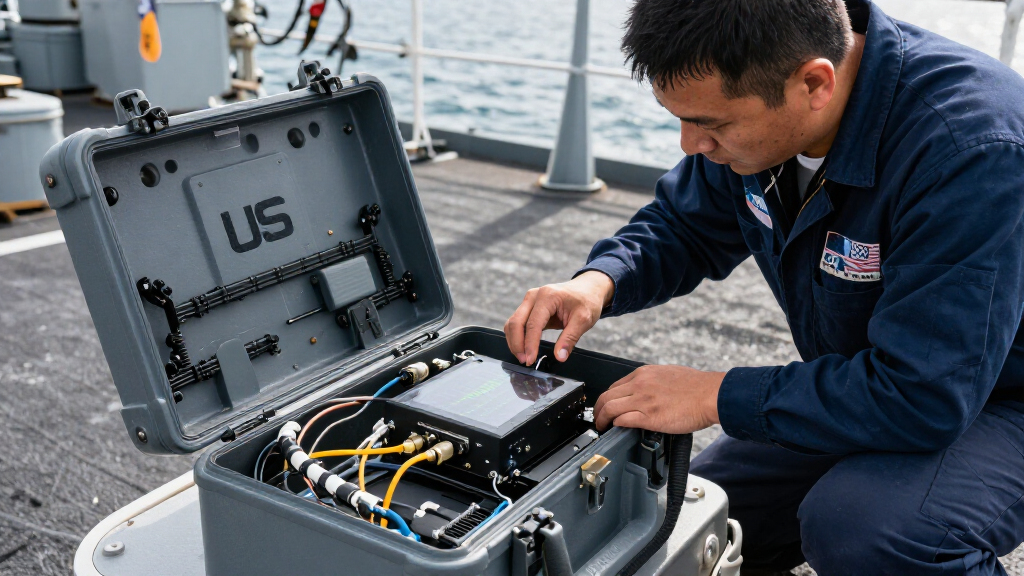
Infleqtion operated its Tiqker optical atomic clock aboard the U.S. Navy support vessel RV Merlin for more than two weeks during the Maritime Big Play Pacific exercise, the company said. The at-sea demonstration assessed whether the clock could maintain a precision timing reference amid maritime conditions, a capability that could help naval systems operate when GPS-derived timing is unavailable or disrupted.
The trial took place in the Southern California operating area and also supported BARB-26, a Navy exercise focused on emerging subsea and seabed warfare capabilities. Infleqtion said Tiqker ran continuously through temperature changes and sustained vibration. The company described the activity as an evaluation to inform possible future naval integration, not as a deployment decision or confirmation that the Navy has adopted the system.
The exercise was sponsored by the Office of the Under Secretary of War for Research & Engineering and involved participants from the U.S. Navy, U.S. Marine Corps and AUKUS partners, according to the company. Infleqtion said the demonstration was intended to examine the clock’s potential relevance across conditions involving above- and below-surface operations and manned and unmanned systems. The source material does not detail which systems were connected to the clock or what operational tasks it performed.
Tiqker is a compact optical atomic clock that uses atomic optical transitions as a timing reference. Infleqtion says the system is designed to provide local timing without relying on GPS, potentially supporting synchronization for communications, radar and other onboard systems. Those are described as possible applications; the company has not released test measurements or stated that the trial established performance in each of them.
GPS-Independent Timing at Sea
Navigation, communications and coordinated operations can depend on accurate timing. A clock able to maintain a reliable local reference could give a vessel or other platform another source of timing when satellite signals are unavailable, jammed or spoofed. That makes this trial relevant to efforts to reduce dependence on GPS for military operations.
The immediate significance is that Infleqtion reports running its clock for an extended period in a maritime environment rather than only describing its intended use. Temperature changes and sustained vibration are practical conditions that equipment must withstand at sea. However, the company has not published quantitative results, an independent evaluation or evidence that Tiqker is ready for operational deployment. The exercise is a test of potential capability, not proof of a fielded Navy system.
Popular right now

iRobot Roomba 105 Robot Vacuum with LiDAR Navigation

Apple AirPods Pro 3 Wireless Earbuds with Active Noise Cancellation

TCL 65-Inch QM6K QLED Mini-LED 4K HDR Smart Google TV, 144Hz
As an affiliate, we earn on qualifying purchases.
Earlier Tiqker Field Trials
The Navy exercise follows earlier trials cited by Infleqtion. The company said Tiqker was deployed aboard the UK Royal Navy’s uncrewed submarine testbed, XV Excalibur, in 2025 and operated during multiple dives. It also reported UK flight trials in 2024 aboard QinetiQ’s RJ100 Airborne Technology Demonstrator, in collaboration with QinetiQ and BAE Systems.
Those earlier activities provide a record of testing the clock outside a laboratory, but the available material does not provide comparable performance data or establish that the systems were adopted for routine service. The latest demonstration adds a sustained surface-vessel trial and links the evaluation to two U.S. Navy exercises.
““The Navy needs dependable timing to navigate, communicate and coordinate operations in the field.””
— Matthew Kinsella, Infleqtion chief executive
Quantitative performance results have not been published in the supplied report. It is not clear how accurately Tiqker kept time during the trial, what metrics were used, whether the clock was compared with other timing sources, or how its performance changed under different conditions.
The Navy’s role in evaluating the device, if any, beyond the exercise is also unspecified. Infleqtion has described possible applications and said the demonstration could inform future integration, but there is no announced procurement, operational deployment or timeline. The source material also does not identify specific onboard systems that used Tiqker’s timing reference during the exercise.
Further Evaluation and Integration
Infleqtion said the demonstration is intended to gather operational data that could advance Tiqker’s integration into naval platforms. Any next step would depend on further evaluation and decisions by the relevant military organizations; no follow-on test, adoption decision or schedule was announced in the supplied material.
Readers should look for published test measurements, details about system connections and any Navy statement on subsequent evaluation. Until those are available, the confirmed development is a company-reported, more-than-two-week at-sea demonstration during MBP-P and BARB-26, rather than a verified change to Navy operations.
Key Questions
What did Infleqtion test during the Navy exercise?
Infleqtion said it operated its Tiqker optical atomic clock aboard the Navy support vessel RV Merlin for more than two weeks, assessing the timing system in maritime conditions.
Which exercises included the demonstration?
The company said the trial took place during Maritime Big Play Pacific and also supported BARB-26, a Navy exercise focused on subsea and seabed warfare capabilities.
Why could an optical atomic clock matter to the Navy?
A precise local clock could provide timing for communications, radar and other systems when GPS signals are unavailable or disrupted. Infleqtion describes these as potential applications; the report does not confirm that the Navy used Tiqker to operate those systems during the trial.
Did the Navy adopt Tiqker after the test?
No adoption or procurement decision was announced in the supplied material. Infleqtion said the demonstration would provide operational data to inform possible future integration.
Were performance results released?
The company reported continuous operation for more than two weeks through temperature changes and sustained vibration, but did not provide accuracy figures, test comparisons or other detailed measurements.
Source: thequantuminsider.com