
For students choosing among engineering design books, I’d make Engineering Design: A Project-Based Introduction, 4th Edition my best overall pick for its hands-on, structured approach to learning design. Engineering Drawing and Design is a stronger fit when technical graphics are the immediate priority, while Shigley’s Mechanical Engineering Design suits students ready for detailed mechanical analysis. The main tradeoff is between practical project work, drawing skills, and the mathematical depth needed for advanced engineering courses. Some books teach a broad design process; others focus on a particular discipline or toolset. Read on for the full comparison and guidance on matching a book to your coursework.

Prime made for students and young adults
- Fast, free delivery for dorm and study essentials
- Prime Video and Amazon Music included
- Member-only deals
Key Takeaways
- Project-based learning stands out: Engineering Design: A Project-Based Introduction, 4th Edition is the strongest all-around choice for students who want to practice the design process, not just read about it.
- Drawing books serve a different need: Engineering Drawing and Design titles emphasize technical communication and drafting skills, so they may be a better course companion than a broad introduction to design.
- Shigley’s is a specialist pick: Shigley’s Mechanical Engineering Design is aimed at students prepared for substantial mechanical-design analysis, not readers seeking a gentle first overview.
- Practical and visual options fill the gap: Mechanical Engineering for Makers and 507 Mechanical Movements offer tangible mechanisms and examples, but neither replaces a structured engineering design text.
- Repeated titles call for edition checks: Several entries share the same book title, so students should compare edition, course requirements, and intended level before choosing between listings.
| 507 Mechanical Movements |  | Best for Visual Mechanism Reference | Title: 507 Mechanical Movements | Product type: Reference collection | Collection size: 507 mechanical movements | VIEW LATEST PRICE | See Our Full Breakdown |
| Engineering Drawing and Design |  | Best for Drawing-Focused Study | Title: Engineering Drawing and Design | Subject indicated by title: Engineering drawing and design | Product type: Book | VIEW LATEST PRICE | See Our Full Breakdown |
| Shigley’s Mechanical Engineering Design |  | Best for Mechanical Design Coursework | Title: Shigley’s Mechanical Engineering Design | Product type: Textbook | Subject: Mechanical engineering design | VIEW LATEST PRICE | See Our Full Breakdown |
| Engineering for Industrial Designers and Inventors: Fundamentals for Designers of Wonderful Things |  | Best for Industrial Design Students | Title: Engineering for Industrial Designers and Inventors: Fundamentals for Designers of Wonderful Things | Product type: Book | Stated audience: Industrial designers and inventors | VIEW LATEST PRICE | See Our Full Breakdown |
| Engineering Design |  | Best for Syllabus-Matched Selection | Title: Engineering Design | Product type: Book | Subject indicated by title: Engineering design | VIEW LATEST PRICE | See Our Full Breakdown |
| Engineering Drawing and Design |  | Best for Technical Drawing Foundations | Title: Engineering Drawing and Design | ASIN: 0073521515 | Subject indicated by title: Engineering drawing and design | VIEW LATEST PRICE | See Our Full Breakdown |
| Engineering Design: An Introduction |  | Best for a General Design Starting Point | Title: Engineering Design: An Introduction | ASIN: B00DF8GPUI | Subject indicated by title: Introductory engineering design | VIEW LATEST PRICE | See Our Full Breakdown |
| Mechanical Engineering for Makers: A Hands-On Guide to Designing and Making Physical Things |  | Best for Hands-On Makers | Title: Mechanical Engineering for Makers: A Hands-On Guide to Designing and Making Physical Things | ASIN: 1680455877 | Subject: Mechanical engineering for makers | VIEW LATEST PRICE | See Our Full Breakdown |
| Shigley’s Mechanical Engineering Design (2024 Release, ISE) |  | Best for Mechanical Design Reference Work | Title: Shigley’s Mechanical Engineering Design | ASIN: 1266929894 | Release: 2024 | VIEW LATEST PRICE | See Our Full Breakdown |
| Engineering Design: An Introduction |  | Best for a Syllabus-Verified Introductory Text | Title: Engineering Design: An Introduction | ASIN: B00B6F3GS6 | Subject indicated by title: Introductory engineering design | VIEW LATEST PRICE | See Our Full Breakdown |
| Engineering Design: A Project-Based Introduction, 4th Edition | 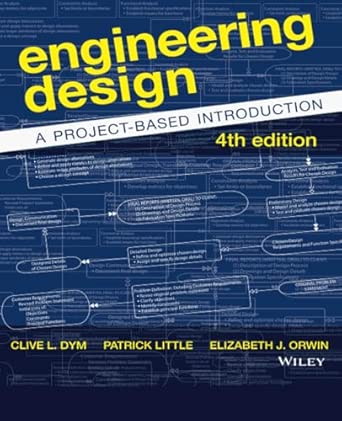 | Best for Project-Based Learning | Title: Engineering Design: A Project-Based Introduction | Edition: 4th Edition | Subject: Engineering design | VIEW LATEST PRICE | See Our Full Breakdown |
| Engineering Drawing and Design |  | Best for Technical Drawing Foundations | Title: Engineering Drawing and Design | Subject: Engineering drawing and design | Stated edition: Not provided | VIEW LATEST PRICE | See Our Full Breakdown |
| engineering design books for student | Title | ASIN | Edition | Format |
|---|---|---|---|---|
| 507 Mechanical Movements | 507 Mechanical Movements | 1614275181 | — | — |
| Engineering Drawing and Design | Engineering Drawing and Design | 1418029874 | Not specified in supplied data | Not specified in supplied data |
| Shigley’s Mechanical Engineeri | Shigley’s Mechanical Engineering Design | 0073398209 | Not specified in supplied data | Not specified in supplied data |
| Engineering for Industrial Des | Engineering for Industrial Designers and Inventors: Fundamentals for Designers of Wonderful Things | 1491932619 | Not specified in supplied data | Not specified in supplied data |
| Engineering Design | Engineering Design | B09HBFP6CR | Not specified in supplied data | Not specified in supplied data |
| Engineering Drawing and Design | Engineering Drawing and Design | 0073521515 | Not provided | Not provided |
| Engineering Design: An Introdu | Engineering Design: An Introduction | B00DF8GPUI | Not provided | Not provided |
| Mechanical Engineering for Mak | Mechanical Engineering for Makers: A Hands-On Guide to Designing and Making Physical Things | 1680455877 | Not provided | — |
| Shigley’s Mechanical Engineeri | Shigley’s Mechanical Engineering Design | 1266929894 | International Student Edition (ISE) | Not provided |
| Engineering Design: An Introdu | Engineering Design: An Introduction | B00B6F3GS6 | Not provided | Not provided |
| Engineering Design: A Project- | Engineering Design: A Project-Based Introduction | 1118324587 | 4th Edition | — |
| Engineering Drawing and Design | Engineering Drawing and Design | 1305659724 | — | Not provided |
More Details on Our Top Picks
507 Mechanical Movements
507 Mechanical Movements is the most focused choice here for students who learn by examining how parts move together. Its collection of mechanisms can help generate ideas for linkages, cams, gears, and other motion systems, making it a useful visual companion when developing a design concept. Compared with Shigley’s Mechanical Engineering Design, it is a narrower reference: it points toward possible mechanisms rather than serving as a broad mechanical design textbook. That focus is also its limitation. The available product information describes a collection of movements, not a course text with documented exercises, calculations, or step-by-step instruction. I would pair it with a fundamentals book rather than rely on it to teach engineering analysis. Choose it for mechanism inspiration; skip it if you need a structured class text.
Pros:- Centers on a substantial collection of mechanical movements.
- Useful for comparing mechanism concepts during early design work.
- Offers a visual-reference role distinct from broad design textbooks.
- Can complement a more analytical text such as Shigley’s Mechanical Engineering Design.
Cons:- The supplied product details do not confirm its instructional depth or whether it includes exercises.
- A movement collection alone does not provide a complete foundation in engineering design analysis.
Best for: Students developing mechanisms who want a reference collection to spark and compare motion-system ideas.
Not ideal for: Students seeking a complete course textbook, worked engineering calculations, or confirmed exercises and instructional coverage.
- Title:507 Mechanical Movements
- Product type:Reference collection
- Collection size:507 mechanical movements
- Subject:Mechanical movements
- Intended use:Mechanism reference
- ASIN:1614275181
Our verdict“Choose it as a mechanism-idea reference alongside a textbook, not as your sole engineering design book.”
Engineering Drawing and Design
Engineering Drawing and Design is the clearest fit in this group for students whose immediate challenge is communicating a design through engineering drawings. That makes it a different kind of study aid from 507 Mechanical Movements, which serves as a mechanism reference, and from Shigley’s Mechanical Engineering Design, which is identified as a mechanical design textbook. The title signals a drawing-centered focus, but the supplied listing gives no edition, syllabus, software coverage, or detail about exercises, so I would check those against a course requirement before choosing it. Its likely advantage is relevance to drawing and design coursework; its tradeoff is that the available information does not establish how much broader design analysis it covers. It suits students prioritizing drawing practice over mechanism inspiration or a general mechanical design text.
Pros:- Title directly matches drawing-focused engineering study.
- Offers a distinct emphasis from the mechanism collection in 507 Mechanical Movements.
- May fit coursework where technical drawing is the primary learning goal.
- Provides a drawing-oriented alternative to Shigley’s mechanical design textbook.
Cons:- The supplied product data does not identify an edition or its specific topics.
- Software coverage, exercises, and the depth of design analysis are not confirmed.
Best for: Students in engineering graphics or design courses who need a book centered on drawing and design.
Not ideal for: Students who specifically need confirmed CAD software instruction, a named edition, or a detailed mechanical design analysis text.
- Title:Engineering Drawing and Design
- Subject indicated by title:Engineering drawing and design
- Product type:Book
- Edition:Not specified in supplied data
- Format:Not specified in supplied data
- Software coverage:Not specified in supplied data
- ASIN:1418029874
Our verdict“Pick this when engineering drawing is your main study need, after checking that its edition and course coverage match your class.”
Shigley’s Mechanical Engineering Design
Shigley’s Mechanical Engineering Design is the strongest match here for students seeking a dedicated mechanical engineering design textbook rather than a visual reference or a general drawing title. Its stated subject makes it a more direct fit for mechanical design study than Engineering Drawing and Design, while 507 Mechanical Movements is more narrowly positioned around mechanisms. The tradeoff is that this is the most specialized option in the set: students looking for broad product-development methods or drawing practice may need another book alongside it. The supplied product details do not identify an edition, topics, or exercise format, so I would verify that the copy aligns with a course syllabus before buying. For a mechanical engineering student whose course explicitly uses Shigley’s, that subject focus is the main reason to choose it.
Pros:- Explicitly focused on mechanical engineering design.
- More directly aligned with mechanical design study than the drawing-centered alternative.
- Provides a textbook option distinct from the visual mechanism reference.
- A sensible candidate when a course specifies Shigley’s by title.
Cons:- The supplied data does not identify the edition or its specific technical coverage.
- Its mechanical focus may not suit students seeking broad design methods or drawing instruction.
Best for: Mechanical engineering students looking for a text specifically identified as mechanical engineering design coursework.
Not ideal for: Students seeking a broad introduction to product design, a drawing-first text, or confirmed edition-specific coverage without checking the listing.
- Title:Shigley’s Mechanical Engineering Design
- Product type:Textbook
- Subject:Mechanical engineering design
- Edition:Not specified in supplied data
- Format:Not specified in supplied data
- Course alignment:Mechanical engineering design
- ASIN:0073398209
Our verdict“Choose Shigley’s for a mechanical engineering design course, but confirm the edition against your syllabus.”
Engineering for Industrial Designers and Inventors: Fundamentals for Designers of Wonderful Things
Engineering for Industrial Designers and Inventors is the most clearly audience-specific title in this selection: its name addresses designers and inventors, rather than only mechanical engineering students. That makes it a more natural candidate for industrial design learners who want engineering fundamentals connected to designing physical products. By contrast, Shigley’s Mechanical Engineering Design is explicitly framed around mechanical engineering design, while Engineering Drawing and Design points toward drawing-centered study. The audience focus may make this title a better starting point for cross-disciplinary product work, but the supplied data does not confirm its chapters, math level, or project content. I would not assume it replaces a technical course text. Choose it for its stated design audience; pair it with more specialized material when a class requires detailed calculations or drawing standards.
Pros:- Title explicitly names industrial designers and inventors as its audience.
- Frames engineering fundamentals around design work.
- Offers a broader audience fit than the mechanically focused Shigley’s title.
- Distinct from a book whose title centers on engineering drawing.
Cons:- The supplied data does not confirm topics, math level, or project-based instruction.
- May not replace specialized mechanical design or engineering drawing coursework.
Best for: Industrial design students and inventors seeking engineering fundamentals framed for product designers.
Not ideal for: Students who need a specified mechanical design textbook, drawing-standard reference, or confirmed chapter-by-chapter course coverage.
- Title:Engineering for Industrial Designers and Inventors: Fundamentals for Designers of Wonderful Things
- Product type:Book
- Stated audience:Industrial designers and inventors
- Subject indicated by title:Engineering fundamentals for designers
- Edition:Not specified in supplied data
- Format:Not specified in supplied data
- ASIN:1491932619
Our verdict“Choose it if you are an industrial design student seeking engineering fundamentals, and supplement it for specialized technical coursework.”
Engineering Design
Engineering Design is the least specified option in this group, so I would treat it as a candidate to investigate rather than a confident pick based on the available listing. Its title is broad, unlike Engineering Drawing and Design, which signals a drawing focus, or Shigley’s Mechanical Engineering Design, which names a specific engineering discipline. That breadth could suit a general design course, but the supplied data includes no description, author, edition, or topic list to confirm that fit. This makes syllabus matching especially important: check the assigned title and edition before buying, and do not assume the book covers a particular design process or technical method. It earns a distinct role as a possible general-course selection, but it ranks behind the better-defined options for buyers choosing from titles alone.
Pros:- Broad title may align with a general engineering design course.
- Not limited by its title to mechanical design or engineering drawing.
- Can be a direct option if a syllabus specifies this exact book.
- Offers a contrast to the more narrowly titled reference and textbook choices.
Cons:- No product description or subject details were supplied.
- Author, edition, format, and instructional coverage are unconfirmed.
- Difficult to evaluate against a course requirement from the title alone.
Best for: Students whose course syllabus lists this exact Engineering Design title and who can verify its edition and format.
Not ideal for: Students choosing without a syllabus or listing details who need confirmed subject coverage, authorship, or edition.
- Title:Engineering Design
- Product type:Book
- Subject indicated by title:Engineering design
- Author:Not specified in supplied data
- Edition:Not specified in supplied data
- Format:Not specified in supplied data
- ASIN:B09HBFP6CR
Our verdict“Buy this only when you can match its exact identity and edition to your course materials.”
Engineering Drawing and Design
Engineering drawing as a focused study area gives this title a distinct place in a student shortlist: it points toward the visual language used to communicate designed parts and assemblies. Compared with Mechanical Engineering for Makers, which is explicitly framed around making physical objects, this book’s title suggests a stronger fit for students prioritizing drawing and design documentation. The available product information, however, provides no edition, topic list, exercises, or format details, so I can’t verify how deeply it treats drafting standards or modern tools. That uncertainty makes it a narrower, less evidence-backed choice than Shigley’s Mechanical Engineering Design, whose title identifies a specific mechanical-design focus. I’d shortlist it when drawing is the immediate coursework need, but check the syllabus match before buying.
Pros:- The title directly targets engineering drawing and design, making its apparent subject focus easy to identify.
- May suit coursework where visual communication and drawing are the main learning goals.
- Offers a drawing-focused alternative to the physical-making emphasis of Mechanical Engineering for Makers.
Cons:- No description, edition, contents, or exercise information is available to judge course coverage.
- The supplied data does not establish whether it covers current drafting tools or standards.
- Its fit for students seeking broad engineering design methods cannot be confirmed.
Best for: Students whose current engineering course centers on interpreting and producing engineering drawings and who can confirm the book matches their syllabus.
Not ideal for: Students seeking a verified, broad mechanical-design reference or hands-on making guidance, since the supplied product data does not confirm its topics, edition, or exercises.
- Title:Engineering Drawing and Design
- ASIN:0073521515
- Subject indicated by title:Engineering drawing and design
- Edition:Not provided
- Publication date:Not provided
- Format:Not provided
Our verdict“Choose it for drawing-centered coursework only after confirming its contents and edition align with your class.”
Engineering Design: An Introduction
A broad introductory design focus is the clearest reason to consider this title: its name suggests a starting point for students learning engineering design rather than a specialized mechanical reference. That makes it a different kind of choice from Shigley’s Mechanical Engineering Design, which is explicitly centered on mechanical engineering, and from Mechanical Engineering for Makers, which emphasizes designing and making physical things. The limitation is the lack of supplied description, edition, author, or contents. I can’t confirm whether this introduction covers a project process, technical analysis, or student exercises, so buyers should match it against course requirements before relying on it as a textbook. It is a plausible general-design candidate, but the available data does not support stronger claims about its depth or teaching approach.
Pros:- The title signals an introductory rather than narrowly specialized design focus.
- Could suit students seeking a general entry point before moving to discipline-specific references.
- Its stated scope contrasts with the mechanical emphasis of Shigley’s Mechanical Engineering Design.
Cons:- No author, edition, description, or contents are provided for evaluating academic fit.
- The supplied data does not confirm whether it includes worked examples or design projects.
- The exact format and publication details are unknown.
Best for: Students in an introductory, cross-discipline engineering design course who need a general-design text and can verify the contents against their syllabus.
Not ideal for: Students needing confirmed mechanical design calculations, drawing instruction, or a known project-based structure, because none of those details are supplied.
- Title:Engineering Design: An Introduction
- ASIN:B00DF8GPUI
- Subject indicated by title:Introductory engineering design
- Edition:Not provided
- Author:Not provided
- Format:Not provided
Our verdict“Consider it as a general design introduction only if its contents can be checked against your course.”
Mechanical Engineering for Makers: A Hands-On Guide to Designing and Making Physical Things
Designing and making physical things is this book’s defining appeal for students who learn through tangible projects. The supplied description specifically frames it as a practical guide to mechanical engineering for makers, giving it a clearer hands-on identity than Engineering Design: An Introduction, whose available data confirms only a general introductory subject. It also differs from Shigley’s Mechanical Engineering Design: the latter is positioned as a mechanical engineering design text, while this title foregrounds making. That practical orientation may be less suitable for students who need a formal course reference or verified coverage of calculations, standards, and assessment topics. The product information offers no chapter list, project examples, or edition details, so I’d choose it for its maker-centered focus, not assume it covers a complete mechanical engineering curriculum.
Pros:- Explicitly focused on mechanical engineering for makers.
- Connects design with making physical things, giving practical learners a clear reason to choose it.
- Offers a hands-on contrast to the broader introductory focus suggested by Engineering Design: An Introduction.
Cons:- No chapter list, project details, or technical topic coverage is supplied.
- The available information does not establish its suitability as a formal course textbook.
- Edition and publication details are not provided.
Best for: Engineering students, makers, and design learners who want a practical introduction centered on creating physical objects.
Not ideal for: Students who need a syllabus-verified textbook with confirmed coverage of mechanical design calculations, drawing standards, or a specific edition.
- Title:Mechanical Engineering for Makers: A Hands-On Guide to Designing and Making Physical Things
- ASIN:1680455877
- Subject:Mechanical engineering for makers
- Stated focus:Designing and making physical things
- Approach indicated by description:Hands-on guide
- Edition:Not provided
Our verdict“Pick this for maker-oriented learning about designing physical objects, not as a confirmed substitute for a course-specific reference.”
Shigley’s Mechanical Engineering Design (2024 Release, ISE)
A named mechanical engineering design reference makes this the most clearly specialized option in this group. Its 2024 international student edition gives buyers a stated release and edition, details missing from Engineering Drawing and Design and both listings for Engineering Design: An Introduction. That makes it easier to identify as a mechanical-design choice, though the supplied data does not include a contents list, chapter coverage, or information about the edition’s differences. Compared with Mechanical Engineering for Makers, Shigley’s title reads as a stronger fit for formal mechanical design study than maker-centered project learning; the maker book is the more direct match for creating physical things. I’d favor this for students seeking a discipline-specific reference, but not assume it teaches drawing or hands-on prototyping without confirming the book’s contents.
Pros:- Clearly identifies mechanical engineering design as its subject.
- Specifies a 2024 release and International Student Edition.
- Provides more edition information than the other titles in this batch.
Cons:- No description or contents are supplied to confirm topic coverage or learning features.
- The supplied data does not explain how the international student edition differs from other editions.
- Its formal mechanical-design focus may not match students seeking general design or maker projects.
Best for: Mechanical engineering students seeking a specifically identified design reference and who have confirmed the international student edition suits their course.
Not ideal for: Beginning makers seeking project-led instruction, or students whose course requires a drawing-focused book, since the supplied data does not verify those features.
- Title:Shigley’s Mechanical Engineering Design
- ASIN:1266929894
- Release:2024
- Edition:International Student Edition (ISE)
- Subject:Mechanical engineering design
- Format:Not provided
Our verdict“Choose this as a mechanical-design reference when the 2024 international student edition matches your course requirements.”
Engineering Design: An Introduction
An introductory engineering design title gives this listing a broad student-facing premise, but the available product data is exceptionally sparse: it provides no description, edition, author, or contents. That leaves it difficult to distinguish from the other listing, Engineering Design: An Introduction (ASIN B00DF8GPUI), whose supplied details are similarly limited. Compared with the clearly maker-oriented Mechanical Engineering for Makers, this title’s stated scope is less specific, which may suit a general design course but does not confirm hands-on projects or mechanical calculations. I would treat it as a candidate rather than a confident recommendation until the exact edition and course coverage are verified. Its role here is for students matching an introductory title to a syllabus, not buyers who need a known teaching structure.
Pros:- The title identifies an introductory engineering design focus.
- May fit a broad design course if the exact edition matches assigned materials.
- Its general framing differs from the maker-specific emphasis of Mechanical Engineering for Makers.
Cons:- No description, author, edition, or contents are supplied.
- The listing cannot be meaningfully distinguished from the other Engineering Design: An Introduction entry using the available data.
- The supplied information does not confirm exercises, project work, or technical coverage.
Best for: Students whose instructor lists this exact title or whose introductory design syllabus can be matched to a verified edition and contents.
Not ideal for: Buyers who need a clearly documented topic list, a specific instructional method, or confirmed mechanical and drawing coverage.
- Title:Engineering Design: An Introduction
- ASIN:B00B6F3GS6
- Subject indicated by title:Introductory engineering design
- Edition:Not provided
- Author:Not provided
- Format:Not provided
Our verdict“Buy only when you can confirm this exact listing matches the introductory design text required by your course.”
Engineering Design: A Project-Based Introduction, 4th Edition
Engineering Design: A Project-Based Introduction, 4th Edition is the clearest fit here for students who need to practice the design process through projects rather than focus mainly on drawing conventions or component calculations. Its project-based approach gives coursework a practical structure: students can connect design decisions to a sequence of work instead of treating concepts as isolated topics. Compared with Engineering Drawing and Design, this title is the stronger choice for broader design-process study, while the drawing-focused book is more directly suited to technical drafting skills. The tradeoff is that a project-led text may be less useful as a quick reference for a narrow engineering calculation or drafting question. The supplied listing confirms the title and fourth edition, but provides no contents, format, or scope details, so I would check the course syllabus before buying it as a required text.
Pros:- Project-based framing connects design concepts to applied coursework.
- The introductory positioning suits students building foundational design-process knowledge.
- The fourth edition is clearly identified, which helps students match a course reading list.
- Its focus complements drawing-centered texts such as Engineering Drawing and Design.
Cons:- The supplied product information does not identify specific topics, project examples, or learning materials.
- A project-centered approach may be less convenient than a focused reference for quick technical lookup.
- The listing does not specify format or edition-specific changes, so course compatibility should be checked.
Best for: Engineering students in project-based introductory courses who want a structured text centered on design work and decisions.
Not ideal for: Students seeking a drafting reference, a mechanical design calculation handbook, or a book matched to a syllabus without verifying its contents.
- Title:Engineering Design: A Project-Based Introduction
- Edition:4th Edition
- Subject:Engineering design
- Approach:Project-based introduction
- Intended level:Introductory
- ASIN:1118324587
Our verdict“Choose this for an introductory course built around engineering design projects, but verify its contents against your syllabus before relying on it as a technical reference.”
Engineering Drawing and Design
Engineering Drawing and Design is the more targeted choice for students whose immediate need is communicating engineering ideas through drawings. That makes it a useful counterpoint to Engineering Design: A Project-Based Introduction, 4th Edition, which is explicitly framed around projects and the broader design process. I would favor this title when a class emphasizes drawing and design representation, not as a substitute for a project-led introduction or a mechanical design reference such as Shigley’s Mechanical Engineering Design. The listing supplies only the title and ASIN, however, so it does not confirm edition, coverage, exercises, or whether the book suits a particular course’s drafting standards. That lack of detail makes syllabus matching especially important; students should confirm the assigned edition before purchasing.
Pros:- The title signals a direct focus on engineering drawing and design representation.
- Its apparent subject focus contrasts with project-process texts, helping students choose for drafting-oriented coursework.
- It may serve as a course text for students who need drawing skills rather than a broad survey of engineering design.
- The provided ASIN offers a specific identifier for checking a course’s required listing.
Cons:- No edition or publication details are supplied, making it difficult to confirm syllabus compatibility.
- The listing does not establish the specific drawing topics, standards, or exercises covered.
- Its drawing-centered focus may not meet needs for project-based design instruction or mechanical design analysis.
Best for: Students in engineering or technical programs whose coursework centers on engineering drawing and design communication.
Not ideal for: Students seeking a broad project-based design course text or a detailed mechanical engineering design calculation reference, especially when they cannot confirm the edition their class requires.
- Title:Engineering Drawing and Design
- Subject:Engineering drawing and design
- Stated edition:Not provided
- Format:Not provided
- Publication details:Not provided
- ASIN:1305659724
Our verdict“Pick this when engineering drawing is the main course need, after confirming the edition and coverage required by your instructor.”

How We Picked
I ranked these books by how directly they help students learn engineering design, weighing instructional structure, clarity for the intended level, practical application, and usefulness alongside coursework. I also considered whether a book teaches broadly applicable design methods or concentrates on a narrower skill such as technical drawing, mechanical analysis, or mechanisms.
The ranking favors books that connect concepts to student work without assuming advanced preparation. Specialized references remain valuable, but they rank lower as general recommendations when they serve a narrower audience or require more background. Where titles repeat, I treat the edition and course fit as decision points rather than assuming that similarly named listings are interchangeable.
| engineering design books for student | Subject | Subject indicated by title | Format |
|---|---|---|---|
| 507 Mechanical Movements | Mechanical movements | — | — |
| Engineering Drawing and Design | — | Engineering drawing and design | Not specified in supplied data |
| Shigley’s Mechanical Engineeri | Mechanical engineering design | — | Not specified in supplied data |
| Engineering for Industrial Des | — | Engineering fundamentals for designers | Not specified in supplied data |
| Engineering Design | — | Engineering design | Not specified in supplied data |
| Engineering Drawing and Design | — | Engineering drawing and design | Not provided |
| Engineering Design: An Introdu | — | Introductory engineering design | Not provided |
| Mechanical Engineering for Mak | Mechanical engineering for makers | — | — |
| Shigley’s Mechanical Engineeri | Mechanical engineering design | — | Not provided |
| Engineering Design: An Introdu | — | Introductory engineering design | Not provided |
| Engineering Design: A Project- | Engineering design | — | — |
| Engineering Drawing and Design | Engineering drawing and design | — | Not provided |
Factors to Consider When Choosing Engineering Design Books For Students
Before choosing a book, start with the task you need it to support: learning a design process, completing a drawing course, or analyzing mechanical components. The right choice depends less on the broad title and more on course level, prerequisites, and how you learn.
Match the Book to Your Current Course
Use the course syllabus as your first filter, especially if the instructor names a required text or edition. A broad design book may explain how to define a problem and compare concepts, while a drawing text may focus on communicating geometry through technical graphics. A mechanical design reference can be much more demanding than either, even when its title sounds suitable for a general student. A common mistake is buying the most advanced-sounding book before checking whether its methods match current assignments. If the book is supplementary, prioritize the skill you most need to strengthen rather than trying to cover every branch of engineering design at once.
Check Prerequisites Before Choosing a Technical Reference
Mechanical design texts may rely on prior knowledge of mechanics, materials, or mathematics, while introductory design books usually spend more time on framing problems and developing solutions. Check a sample chapter or the table of contents for equations, assumed knowledge, and worked examples. If you are still learning core engineering concepts, a reference that skips foundational explanations can slow your progress. On the other hand, students in an upper-level course may find an introductory text too light for calculations and component selection. Choose a level that stretches your skills without asking the book to replace prerequisite coursework.
Decide Whether You Need Process, Practice, or Visual Reference
Engineering design includes several kinds of learning, and one book rarely serves them all equally well. Project-based texts can help you practice moving from a need to a proposed solution, while drawing books support precise technical communication. Collections of mechanisms can prompt ideas and help readers recognize motion, but they are not necessarily step-by-step design courses. Makers’ guides may make fabrication choices feel tangible, though they may not provide the theory required for formal analysis. Identify the deliverable you need to produce—such as a project, drawing, or calculated design—and choose a book that supports that work.
Compare Editions and Similar Listings Carefully
Repeated book titles in a roundup can reflect different editions or listings, not identical course resources. Before buying, verify the author, edition, publication details, and whether the assigned chapters align with your class. This matters most when instructors use page numbers, problem sets, or examples from a specific edition. A newer release may be a better match for an updated course, but an older edition can still work for independent study if the learning goals and content align. Avoid choosing by title alone when several entries appear to offer the same book.
Think About How You Will Use the Book After Class
A required text may be used for a single assignment, while a reference book can stay useful across later courses and personal projects. For ongoing use, prioritize clear organization and material you can return to, such as design procedures, drawing conventions, or mechanical analysis methods. A visually rich idea source can be handy during concept generation but less useful when you need a complete explanation of a calculation. Students with limited study time may benefit more from a focused book that supports current coursework than a broad shelf reference. When choosing between depth and accessibility, let your likely future use decide.
Frequently Asked Questions
Which type of engineering design book should I buy for a first-year course?
Start by checking whether your course is centered on the design process, technical drawing, or a specific engineering discipline. For a general introduction, a project-based or introductory design text is more likely to match early assignments than an advanced mechanical design reference. If the course includes drafting or CAD work, a drawing-focused book may be the more useful companion. Do not assume that a book marked “engineering design” will cover the exact methods your instructor teaches. The syllabus and assigned edition should guide the final choice.
Is Shigley’s Mechanical Engineering Design suitable for beginners?
It is a better fit for students who already have some engineering foundation and need detailed mechanical-design material. Beginners may find the technical analysis demanding if they have not studied the relevant mechanics and mathematics. If you are early in your studies, pair your course requirements with an introductory or project-based text before choosing a specialist reference. A challenging book can be useful later, but it is not automatically the best starting point. Check sample chapters to see whether the explanations and prerequisites match your current level.
Should I choose a project-based design book or an engineering drawing book?
Choose based on the work you need to do. A project-based design text is a better match when you need to define a problem, generate concepts, and develop a solution through a structured process. An engineering drawing book is more relevant when assignments demand technical graphics, drafting conventions, or clear communication of parts and assemblies. These skills support each other, but one book may not teach both in enough depth. If your course includes both, use the required text first and treat the other as a targeted supplement.
How can I tell whether two listings with the same book title are different editions?
Compare the author, edition statement, publication year, and identifying details in the listing rather than relying on the title. Then check those details against your syllabus or the instructor’s reading list. Edition differences can affect page references, examples, exercises, and assigned chapters, which matters in a course that follows a specific text. For independent study, an earlier edition may still support the same broad learning goal, but confirm that it covers the topics you need. When the listing information is unclear, verify the edition before ordering.
Can a makers’ guide or a book of mechanical movements replace a design textbook?
Usually, these books serve as supplements rather than full replacements for a structured design text. A makers’ guide can connect design ideas to physical objects and fabrication choices, while a movements reference can help you explore mechanisms and motion. Neither necessarily follows a complete course sequence or covers the analysis and documentation your assignments require. They are useful when you want practical inspiration or a hands-on perspective alongside formal study. If you need one book for coursework, choose the text that matches the learning outcomes first.
Conclusion
For most students, I’d choose Engineering Design: A Project-Based Introduction, 4th Edition as the best overall option because it puts structured practice at the center. For best value as a course companion, Engineering Drawing and Design makes sense when technical graphics are the main gap to fill. Students seeking the best premium-level reference for advanced mechanical coursework should look to Shigley’s Mechanical Engineering Design, provided they have the background it expects. For beginners, an introductory design text is a gentler starting point than Shigley’s; for specific needs, choose 507 Mechanical Movements for mechanism ideas or Mechanical Engineering for Makers for a practical making perspective. Check the assigned edition and your course goals before deciding, particularly where the roundup includes repeated titles.