
Choosing a science kit for a teenager is less about picking the most impressive box and more about matching the activity to how they like to learn. Open-ended engineering kits, such as robotics, electronics, or mechanical construction sets, give teens a project to build and adapt. Guided experiment kits provide a sequence of investigations in areas such as chemistry, physics, or biology. The central tradeoff is freedom versus structure: engineering kits suit teens who enjoy solving design problems, while guided kits are a better fit for those who want clear instructions and a range of contained experiments. Neither format guarantees strong learning on its own; the best choice is the one the teen will use, with adult help where the instructions or safety requirements call for it.

Prime made for students and young adults
- Fast, free delivery for dorm and study essentials
- Prime Video and Amazon Music included
- Member-only deals
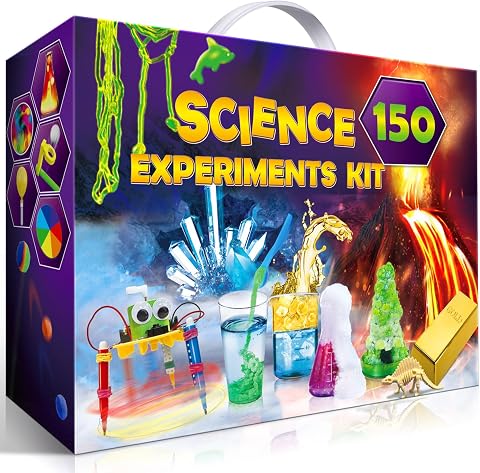
UNGLINGA 150-Experiment Science Kit for Kids
- ✔ Experiment count: 150
- ✔ Topics: Chemistry, physics, earth science, and surface tension
- ✔ Recommended age: 8 years and up
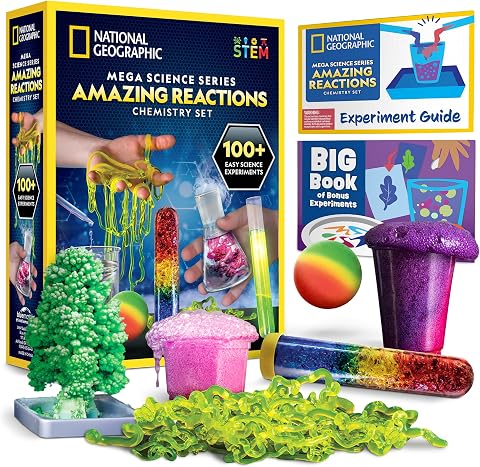
National Geographic Amazing Chemistry Set, 100+ Experiments
- ✔ Included-material experiments: 15
- ✔ Additional guide experiments: 85 using common household items
- ✔ Subject: Chemistry

ELEGOO UNO R3 Smart Robot Car Kit V4 with Camera
- ✔ Controller: UNO R3
- ✔ Camera and Wi-Fi module: ESP32-WROVER-based
- ✔ Sensors: Line-tracking and ultrasonic
At a Glance
| Criteria | Open-Ended Engineering Kits | Guided Science Experiment Kits | Winner |
|---|---|---|---|
| Activity style | Build a device or system, then test and modify it | Follow experiments or demonstrations with defined steps | Depends |
| Choice and creativity | High; the project can often be adapted or expanded | Moderate; teens can change questions or variables if the kit allows | A |
| Instruction and predictability | Instructions support a goal, but troubleshooting is part of the work | Usually more guided, with materials and steps grouped by activity | B |
| Repeat use | Often high if parts can be reused for new designs | Depends on consumable supplies and the number of included experiments | A |
| Subject range | Usually concentrated in engineering, mechanics, coding, or electronics | Can cover several branches of science in one box | B |
| Adult support and safety | Varies by project; tools, small parts, or electrical components may need supervision | Safety instructions and adult oversight matter, especially for chemical or heat-based activities | Depends |
| Value over time | Stronger when components are reusable and projects can grow in difficulty | Stronger when the kit includes many distinct experiments and affordable refills | Depends |
UNGLINGA 150-Experiment Science Kit for Kids
For teens who like moving from one question to another, UNGLINGA’s 150 experiments make this the most varied kit in the lineup. The stated subjects include chemistry, physics, earth science, and surface tension, giving learners more routes into science than the chemistry-focused National Geographic set. Its illustrated, step-by-step manual can make it easier to follow individual activities without needing to invent a procedure from scratch, and goggles help create a more lab-like setup.The breadth comes with a practical caveat: some activities need household items, so the full experiment count does not mean every activity can begin with only the box contents. That also means teens may need an adult to help gather supplies or prepare a workspace. Compared with the ELEGOO car, UNGLINGA is less of a long build and more of a collection of shorter investigations; compared with National Geographic, it trades a defined chemistry emphasis for a wider topic mix. We rank it first for learners who value choice across disciplines, not because its count alone guarantees the deepest treatment of any one subject.
Pros:
- Covers chemistry, physics, earth science, and surface tension
- Illustrated, step-by-step manual supports independent following
- Includes experiment tools and materials, plus goggles
- Offers a wide selection of activities
Cons:
- Some experiments require household items not included
- The broad collection may offer less focus than a subject-specific kit
Best for: Teens who want to sample several science topics through guided, hands-on activities.
Not ideal for: Learners looking for a focused chemistry course, a single extended build, or activities that require no extra household supplies.
Bottom line: We recommend UNGLINGA for teens who want the widest choice of guided science activities in one kit.
“We recommend UNGLINGA for teens who want the widest choice of guided science activities in one kit.”
National Geographic Amazing Chemistry Set, 100+ Experiments
When a teen is drawn to reactions, mixtures, and visible changes, National Geographic’s chemistry focus makes more sense than a kit spread across several scientific fields. The included materials support 15 experiments, including growing a crystal tree and making color-changing solutions. Test tubes, beakers, and pipettes give learners familiar lab-style tools to handle, which helps turn an activity into a more concrete introduction to chemical observation.The headline of 100-plus experiments needs context. Only 15 have materials included; the other 85 are described as bonus activities using common household items. That is a useful way to extend the guide, but it may mean collecting supplies before an experiment can begin. UNGLINGA includes a wider range of topics and more stated activities, so it suits a learner who wants variety. National Geographic is the better match for a teen who would rather stay with chemistry than jump between subjects. Its age range starts at eight, so older teens seeking advanced concepts or a substantial engineering challenge may find the activities introductory.
Pros:
- Includes materials for 15 chemistry experiments
- Adds 85 guide activities using common household items
- Provides test tubes, beakers, and pipettes
- Includes visually engaging activities such as crystal growing and color-changing solutions
Cons:
- Bonus experiments depend on household items not included
- Its chemistry focus covers fewer subjects than the UNGLINGA kit
Best for: Teens curious about chemistry who want hands-on demonstrations and familiar lab tools.
Not ideal for: Learners seeking broad coverage across science, advanced chemistry, or a large set of experiments with all materials supplied.
Bottom line: We choose this set when chemistry is the main interest and a focused collection matters more than broad subject variety.
“We choose this set when chemistry is the main interest and a focused collection matters more than broad subject variety.”
ELEGOO UNO R3 Smart Robot Car Kit V4 with Camera
The ELEGOO kit turns science learning into a project: teens assemble a robot car, work with an UNO R3 controller, and program it using Arduino IDE. Line tracking and ultrasonic sensing give the car practical behaviors to explore, while app and IR remote controls let learners try different ways of directing it. Camera and Wi-Fi features add an FPV view, making the result more interactive than a set of standalone experiments.This is the most involved choice here and the clearest option for a teen interested in engineering or coding. It asks for patience with assembly, wiring, and programming; first-time builders may need adult guidance. That makes it less suitable for a learner hoping to open a box and start a series of quick activities. UNGLINGA and National Geographic offer more accessible experiment collections, but neither has the same build-to-program progression. ELEGOO is recommended for ages 12 and up, yet the useful dividing line is readiness to troubleshoot and follow a project through, rather than age alone.
Pros:
- Supports FPV video, line tracking, and obstacle avoidance
- Offers app and IR remote control
- Guided wiring, illustrated instructions, and example programs support beginners
- Includes a rechargeable battery and key robotics components
Cons:
- Requires assembly and programming
- First-time builders may need adult guidance
Best for: Teens who want to assemble and program a working robot and are ready to follow wiring instructions.
Not ideal for: Learners seeking quick, low-setup experiments or those who are not interested in building and coding.
Bottom line: We recommend ELEGOO for teens who prefer one substantial robotics challenge to a varied set of shorter experiments.
“We recommend ELEGOO for teens who prefer one substantial robotics challenge to a varied set of shorter experiments.”
As an Amazon Associate we earn from qualifying purchases.
Key Differences
The biggest difference is what the teen does when the instructions stop. In an engineering kit, progress often depends on making a design work: a robot may need adjustments, a circuit may fail, or a structure may need to be rebuilt. That trial and error is part of the learning, but it can frustrate someone who expects each activity to produce a quick, reliable result. A guided experiment kit usually gives a clearer route from setup to observation. It can make a good first step for a teen who is curious about science but not yet sure which subject they want to pursue.
Engineering kits often offer better repeat use because their parts can support multiple builds, especially when a product is modular or includes coding challenges. Guided kits may provide broader subject variety, but some experiments use up materials that are difficult or costly to replace. The number of activities on the box is not a reliable measure of value by itself: check how many use distinct procedures, whether supplies are reusable, and whether the teen can work independently. For either type, age recommendations are only a starting point. Reading level, fine-motor demands, prior knowledge, and a teen’s willingness to troubleshoot all affect whether the kit feels engaging.
Detailed Comparison
Activity style (major difference)
Engineering kits center on creating a working object; experiment kits center on observing what happens when a teen follows a procedure. The winner depends on the teen’s motivation. A builder who likes mechanisms or coding will get more from a project with room to tinker, while a curious observer may prefer several short investigations. This is a major difference because it shapes nearly every session.
Choice and creativity (Open-Ended Engineering Kits wins — moderate)
Engineering kits usually win by a moderate margin: they invite changes to a design, alternative solutions, and repeated testing. Some guided kits also encourage changing one variable or forming a hypothesis, but tightly scripted activities leave less room to make the project one’s own. Choose A for a teen who likes to invent; choose B when open-ended tasks feel like a barrier.
Instruction and predictability (Guided Science Experiment Kits wins — moderate)
Guided experiment kits win by a moderate margin because the next step and expected observation are usually clearer. This can help teens begin independently and finish an activity in a single sitting. Engineering kits offer instructions too, but diagnosing a problem is part of the experience, so the result can take longer or require help. That tradeoff matters for teens who lose interest when progress is uncertain.
Repeat use (Open-Ended Engineering Kits wins — moderate)
Engineering kits tend to win by a moderate margin when parts are durable and can be assembled into different projects. Many experiment kits include consumables, so the same activity may not be repeatable without replacement materials. Check the actual contents: a kit with refillable supplies or many genuinely different procedures can narrow the gap. Reusability also depends on whether the teen wants to revisit the subject.
Subject range (Guided Science Experiment Kits wins — minor)
Guided experiment kits often win by a minor margin when they cover several topics in one package, such as light, reactions, and plant science. Engineering kits can teach across fields too, but usually through one connected theme like robotics or electronics. A broad kit is useful for exploration; a focused one may be better when a teen already has a clear interest.
Adult support and safety (major difference)
There is no universal winner. A simple construction kit may be manageable without much oversight, while one involving soldering, sharp tools, batteries, or small parts may need adult involvement. Experiment kits also vary: household-material activities differ from kits involving heat or chemical handling. Compare the specific safety guidance and required materials before purchase. The practical difference can be major for families seeking an activity a teen can do alone.
Value over time (moderate difference)
Neither format is automatically the better value. Engineering kits justify a higher price when they have robust reusable parts, meaningful expansion options, and challenges that suit the teen’s skill. Guided kits can be better value when they offer many distinct experiments with included supplies and clear instructions. The gap is moderate: compare usable activities and likely follow-through, not the headline activity count.
Open-Ended Engineering Kits: Pros and Cons
Pros:
- Encourages design choices, debugging, and iterative problem-solving
- Reusable components can support multiple builds
- Can connect mechanics, electronics, and coding in a concrete project
Cons:
- Troubleshooting may frustrate teens who want quick results
- Often concentrates on a narrower subject area
- Some projects need adult help, extra tools, or compatible devices
Guided Science Experiment Kits: Pros and Cons
Pros:
- Clear steps make it easier to start and complete an activity
- Can introduce several science topics in one kit
- A good fit for short sessions and teens new to hands-on science
Cons:
- Consumable materials can limit repeat use
- Highly scripted activities may leave little room for independent design
- The activity count may overstate variety if experiments repeat the same procedure
Who Should Choose What
Choose Open-Ended Engineering Kits if:
- The teen already enjoys building, coding, taking things apart, or figuring out why a mechanism fails.
- You want reusable parts that can support follow-up projects and increasing challenge.
- The goal is sustained work on a focused interest such as robotics, circuits, or mechanical design.
Choose Guided Science Experiment Kits if:
- The teen is curious about science but has not settled on a subject.
- They prefer clear instructions and a defined activity they can finish in one sitting.
- You want a varied introduction to science and have checked that the kit’s materials and supervision needs suit your household.
Skip both if: Skip both if the teen has little interest in hands-on activities, the kit’s reading or dexterity demands do not fit, or safe use requires supervision that is not available.
Value for Money
Pay more for an engineering kit only when its components are reusable, the project has enough depth to hold the teen’s attention, and the kit offers a sensible path to new builds. A high price for one short, fixed project is hard to justify. A guided experiment kit can be the better value for a teen who likes variety or needs a structured starting point, particularly when it includes supplies for many distinct activities. Check refill costs and whether common household items are required. In either case, the best value is the kit that will actually be used: a modest, well-matched set beats a feature-rich box that stays unopened.
Final Verdict
For a teen who likes making things and can tolerate setbacks, choose an open-ended engineering kit. Its reusable parts and design challenges are more likely to support repeated, self-directed work. Choose a guided science experiment kit for a beginner, a teen who prefers clear steps, or someone still exploring which subject interests them. The biggest deciding factor is the teen’s preferred way of working: building through trial and error or following an investigation to a clear observation. Pay a premium only when the kit’s contents support repeated use or a genuinely wider set of activities.
Frequently Asked Questions
Which kind of science kit is better for a teen who is new to science?
A guided experiment kit is usually the easier starting point because its steps and activity goals are clear. An engineering kit can work just as well if the teen already likes building or coding and has someone to help with troubleshooting.
Are engineering kits worth paying more for?
They can be, when parts are durable, reusable, and suitable for more than one build. Compare the included components and project options with the teen’s interests; a premium price alone does not promise more learning or use.
Can teens use science kits without adult supervision?
It depends on the specific kit. Review the age guidance, safety instructions, tools, and materials. Some activities are designed for independent use, while chemical handling, heat, sharp tools, or small parts may call for adult oversight.
Which kit type gets used more than once?
Engineering kits often have an advantage because reusable pieces can support new designs. Experiment kits vary: activities with consumable supplies may be one-time, while kits with refillable materials or many distinct procedures can offer repeat use.