
The right anatomy coloring book can turn memorizing hundreds of body structures into an active, hands-on process — but the options vary more than you’d expect. Some, like The Anatomy Coloring Book, pair every illustration with detailed explanatory text, while others are essentially activity books with thin labeling and little teaching support. For most health-science students, Netter’s Anatomy Coloring Book is the strongest all-around choice because its illustrations come from a trusted medical atlas, giving you accurate reference art alongside the coloring format. Students on a budget get nearly the same learning value from The Human Body Coloring Book: Anatomy Study Guide, Second Edition, while vet students need a specialty pick like the Veterinary Anatomy Coloring Book — human-focused books simply won’t cover their coursework. The main tradeoff across the category is depth versus accessibility: clinically precise books feel harder, while beginner-friendly ones may lack the rigor nursing and pre-med programs demand. Keep reading for the full breakdown of all 14 titles.

Prime made for students and young adults
- Fast, free delivery for dorm and study essentials
- Prime Video and Amazon Music included
- Member-only deals
Key Takeaways
- Books built around atlas-quality illustrations (Netter’s, The Human Body Coloring Book) teach more accurately than generic titles, because you memorize structures exactly as they’ll appear in textbooks and exams.
- The biggest quality gap in this category is explanatory text: titles like The Anatomy Coloring Book include full teaching paragraphs per page, while budget options give you only labels and blank spaces to color.
- Veterinary students are poorly served by human anatomy books — the two vet-specific titles in this lineup cover different animals and clinical angles, so matching the book to your species focus matters.
- Several similarly titled ‘Human Anatomy Coloring Book’ entries overlap heavily; the differences that matter are page count, quiz features, and whether terminology matches current medical standards.
- Books with built-in self-testing (the 450+ Illustrations title with quizzes, and the ‘Label It, Color It, Recall It’ workbook) close the loop between coloring and recall, which is where passive coloring books fall short.
| Anatomy Coloring Book: Human Body and Anatomy Coloring Book for Medical and Nursing Students |  | Best for Nursing Students | Format: Anatomy coloring workbook | Intended audience: Medical and nursing students | Coverage: Human body systems | VIEW LATEST PRICE | See Our Full Breakdown |
| Human Anatomy Coloring Book |  | Best Value Starter | Illustrations: 150 detailed illustrations | Fascinating facts: 70 | Format: Anatomy and physiology coloring workbook | VIEW LATEST PRICE | See Our Full Breakdown |
| Veterinary Anatomy Coloring Book: Animal Anatomy and Veterinary Physiology for Vet Techs | 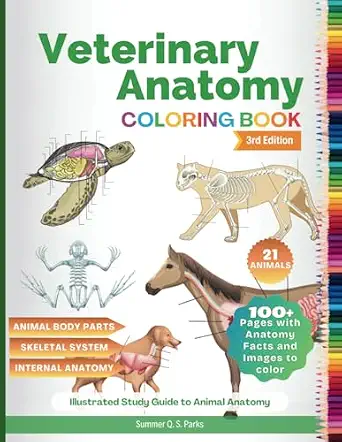 | Best for Vet Students | Focus: Animal anatomy and veterinary physiology | Intended audience: Veterinary technology students | Coverage: Multiple animal species | VIEW LATEST PRICE | See Our Full Breakdown |
| Anatomy Coloring Book: 450+ Realistic Medical Illustrations with Quizzes |  | Best Overall | Illustrations: 450+ realistic medical illustrations | Learning activities: Quizzes for each illustration | Publisher: Kaplan Test Prep | VIEW LATEST PRICE | See Our Full Breakdown |
| Anatomy Coloring Book: A Fun and Fast Way to Learn Human Anatomy (Bones Edition) |  | Best for Skeletal Mastery | Edition: Bones Edition | Illustrations: 500+ realistic medical illustrations | Flashcards: 120 bone flashcards | VIEW LATEST PRICE | See Our Full Breakdown |
| Veterinary Anatomy Coloring Book |  | Best for Vet Students | Subject: Veterinary anatomy | Species coverage: Multiple species including common companion animals | Format: Coloring workbook with labeled plates | VIEW LATEST PRICE | See Our Full Breakdown |
| The Anatomy Coloring Book |  | Best Overall | Subject: Human anatomy | Format: Coloring book with integrated study text | Learning features: Color-key system and self-test exercises | VIEW LATEST PRICE | See Our Full Breakdown |
| Netter’s Anatomy Coloring Book |  | Best Visual Learning | Subject: Human anatomy | Illustration source: Adapted from Netter atlas artwork | Format: Coloring book with summary text and review questions | VIEW LATEST PRICE | See Our Full Breakdown |
| Human Anatomy Coloring Book: An Educational Anatomy Study Guide and Workbook |  | Best for Beginners | Subject: Human anatomy | Format: Coloring book and study workbook | Coverage: Human body systems from basic to advanced | VIEW LATEST PRICE | See Our Full Breakdown |
| Human Anatomy Coloring Book: An Entertaining and Instructive Guide to the Human Body |  | Best Budget-Friendly Starter | Subject: Human anatomy | Topics: Bones, muscles, blood, and nerves | Format: Coloring book with instructive text | VIEW LATEST PRICE | See Our Full Breakdown |
| Human Anatomy Coloring Book and Study Guide |  | Best Value All-in-One | Illustrations: 150+ anatomical illustrations | Study guide pages: 50+ | Subject: Human anatomy and physiology | VIEW LATEST PRICE | See Our Full Breakdown |
| Human Anatomy and Physiology Coloring Book: A Visual Guide to the Structures and Systems of the Human Body |  | Best for Systems-Based Learning | Format: Coloring book | Subject: Human anatomy and physiology | Organization: Structures and systems of the human body | VIEW LATEST PRICE | See Our Full Breakdown |
| Human Anatomy Coloring Book and Study Guide: Label It, Color It, Recall It |  | Best for Exam Prep | Illustrations: 200+ anatomical illustrations | Numbered structures: 1,200+ | Learning method: Label It, Color It, Recall It | VIEW LATEST PRICE | See Our Full Breakdown |
| The Human Body Coloring Book: Anatomy Study Guide, Second Edition |  | Best Structured Self-Study | Edition: Second Edition | Series: DK Human Body Guides | Format: Coloring book | VIEW LATEST PRICE | See Our Full Breakdown |
| anatomy coloring books for student | Format | Subject |
|---|---|---|
| Anatomy Coloring Book: Human B | Anatomy coloring workbook | — |
| Human Anatomy Coloring Book | Anatomy and physiology coloring workbook | — |
| Veterinary Anatomy Coloring Bo | — | — |
| Anatomy Coloring Book: 450+ Re | — | — |
| Anatomy Coloring Book: A Fun a | — | — |
| Veterinary Anatomy Coloring Bo | Coloring workbook with labeled plates | Veterinary anatomy |
| The Anatomy Coloring Book | Coloring book with integrated study text | Human anatomy |
| Netter’s Anatomy Coloring Book | Coloring book with summary text and review questions | Human anatomy |
| Human Anatomy Coloring Book: A | Coloring book and study workbook | Human anatomy |
| Human Anatomy Coloring Book: A | Coloring book with instructive text | Human anatomy |
| Human Anatomy Coloring Book an | Coloring book and study guide | Human anatomy and physiology |
| Human Anatomy and Physiology C | Coloring book | Human anatomy and physiology |
| Human Anatomy Coloring Book an | Coloring book and study guide | — |
| The Human Body Coloring Book: | Coloring book | — |
More Details on Our Top Picks
Anatomy Coloring Book: Human Body and Anatomy Coloring Book for Medical and Nursing Students
This pick makes the most sense for nursing and medical students who want a general-purpose workbook tied to their coursework rather than a specialist volume. Its focus on body systems mirrors the way most nursing curricula are organized, which makes it easier to pair with lecture notes than broader titles like the Human Anatomy Coloring Book, which spreads its 150 illustrations across casual facts. Compared with Kaplan’s quiz-driven book, it leans more on systematic labeling practice than testing, so it works better as a daily companion than a self-assessment tool. The tradeoff: without published illustration counts or supplementary materials, students who want dense visual coverage may find it thinner than the 450+ image Kaplan option.
Pros:- Organized around body systems, matching standard nursing curricula
- Written specifically for medical and nursing students, not general hobbyists
- Works as a daily study companion alongside lecture notes
- Labeling-focused format supports active recall of terminology
Cons:- No published illustration count, so coverage density is unclear before purchase
- Lacks quizzes or flashcards found in competing titles
Best for: Nursing and pre-med students who want a systems-based coloring companion that matches their lecture structure
Not ideal for: Visual learners who need hundreds of plates per volume — this is lighter on illustration density than Kaplan’s 450+ illustration book
- Format:Anatomy coloring workbook
- Intended audience:Medical and nursing students
- Coverage:Human body systems
- Study approach:Systematic labeling and coloring
- Learning style:Active recall through labeling
- Supplementary materials:None included
Our verdict“A solid coursework-aligned choice for nursing students, as long as you don’t need the quiz-heavy structure of Kaplan’s edition.”
Human Anatomy Coloring Book
With 150 detailed illustrations plus 70 facts woven throughout, this book delivers the most balanced entry point for students who want anatomy and physiology coverage without committing to a heavyweight volume. The built-in facts give context that pure coloring books skip — you learn why a structure matters while you color it. Compared with the Anatomy Coloring Book: Human Body and Anatomy Coloring Book for Medical and Nursing Students, this option trades curriculum alignment for broader appeal, making it friendlier for adults returning to study. Against Kaplan’s 450+ illustration edition, it clearly offers less depth, but that smaller scope is exactly what keeps it approachable for first-year A&P students who would otherwise feel buried.
Pros:- Includes 70 facts that add physiological context to each illustration
- 150 illustrations cover the major body systems at a manageable pace
- Dual anatomy-and-physiology approach rather than pure structure memorization
- Accessible format for adults without a science background
Cons:- Smaller illustration count than premium competitors
- No self-quizzing or flashcard components
Best for: Adult learners and first-year anatomy students who want an affordable, approachable A&P workbook with factual context
Not ideal for: Advanced medical students who need exhaustive plate coverage — 150 illustrations is a fraction of what Kaplan or the Bones Edition provide
- Illustrations:150 detailed illustrations
- Fascinating facts:70
- Format:Anatomy and physiology coloring workbook
- Intended audience:Adults, medical students, and nurses
- Study approach:Coloring paired with factual context
- Supplementary materials:70 integrated facts
Our verdict“The smart first purchase for students starting A&P who want guided context rather than an exhaustive reference.”
Veterinary Anatomy Coloring Book: Animal Anatomy and Veterinary Physiology for Vet Techs
Every other book in this lineup covers the human body — this is the only option built for veterinary technology students, and that alone justifies its place. It combines animal anatomy with veterinary physiology, which matters because vet techs are tested on comparative structures across species, not just one body plan. Compared with the Human Anatomy Coloring Book, the illustration style favors clinically relevant animal systems over the polished human plates students may already own. The obvious tradeoff: it is useless as a human anatomy supplement, so pre-med or nursing students should skip it entirely. Vet students will still want a human-based volume alongside it for shared foundational concepts like cell biology.
Pros:- Only veterinary-focused option among human anatomy titles
- Covers comparative anatomy across animal species
- Includes veterinary physiology, not just structural labeling
- Tailored to vet tech curriculum expectations
Cons:- Cannot double as a human anatomy study resource
- Should be paired with a human anatomy book for shared foundational topics
Best for: Veterinary technology students and pre-vet undergrads who need species-based anatomy study human coloring books can’t provide
Not ideal for: Medical, nursing, and human A&P students — the entire content focus is animal anatomy
- Focus:Animal anatomy and veterinary physiology
- Intended audience:Veterinary technology students
- Coverage:Multiple animal species
- Study approach:Coloring with veterinary context
- Discipline:Veterinary science
- Supplementary materials:None specified
Our verdict“An essential buy for vet tech students — and a pointless one for anyone studying the human body.”
Anatomy Coloring Book: 450+ Realistic Medical Illustrations with Quizzes
This Kaplan title earns the top spot because it solves the biggest weakness of coloring books as a study method: passive learning. Every one of its 450+ realistic illustrations is paired with a quiz, so each coloring session ends with proof you actually retained the material. Compared with the Human Anatomy Coloring Book‘s 150 illustrations and 70 facts, this is nearly triple the visual coverage with a real assessment layer the fact-based approach lacks. Against the Bones Edition, it covers the full body rather than drilling one system, though it gives up that book’s 120 bone flashcards. The tradeoff is weight and pace — realistic medical-grade plates demand more time and finer coloring tools than simplified beginner books, and casual learners may find the density overwhelming.
Pros:- 450+ realistic illustrations offer the widest coverage in this batch
- Quizzes attached to every illustration turn coloring into active testing
- Backed by Kaplan’s test-prep editorial standards
- Realistic plates closely match textbook and exam figures
Cons:- Denser and more time-consuming than simplified beginner options
- Realistic detail requires fine-tipped coloring tools to do the plates justice
Best for: Serious medical and pre-med students who want the deepest illustration coverage with built-in self-assessment
Not ideal for: Casual or younger learners — the medical-grade plate density and quiz structure make it feel like coursework, not relaxation
- Illustrations:450+ realistic medical illustrations
- Learning activities:Quizzes for each illustration
- Publisher:Kaplan Test Prep
- Coverage:Full human body systems
- Study approach:Coloring paired with per-illustration quizzing
- Illustration style:Realistic medical-grade plates
Our verdict“The most complete learn-and-test package here — buy it if anatomy grades matter more than leisurely coloring.”
Anatomy Coloring Book: A Fun and Fast Way to Learn Human Anatomy (Bones Edition)
Where Kaplan’s edition spreads 500+ illustrations across the whole body, this Bones Edition concentrates its firepower on the skeletal system — and that focus is its entire value proposition. The inclusion of 120 bone flashcards is unique in this lineup: no other title here offers a portable recall tool you can drill during a commute, which is exactly how osteology actually gets memorized. Compared with Kaplan’s per-illustration quizzes, the flashcard-plus-self-quiz combination suits students who already understand concepts and need raw memorization reps. The obvious drawback is scope — students preparing for a full A&P exam will still need a whole-body book like the Human Anatomy Coloring Book alongside it, since non-skeletal systems get minimal treatment here.
Pros:- 500+ illustrations offer the largest plate count in this batch
- 120 bone flashcards provide unique portable memorization practice
- Self-quizzing activities reinforce retention without extra materials
- Deep skeletal focus matches how osteology is actually tested
Cons:- Single-system focus requires supplementing with a whole-body book
- Flashcards add bulk and cost compared with coloring-only titles
Best for: Students facing an osteology-heavy course or exam who need drill-friendly memorization tools for bones
Not ideal for: Students seeking full-body coverage — the skeletal focus leaves other body systems underrepresented
- Edition:Bones Edition
- Illustrations:500+ realistic medical illustrations
- Flashcards:120 bone flashcards
- Activities:Guided coloring and self-quizzing
- Focus:Skeletal system emphasis
- Supplementary materials:Bone flashcards and self-quizzes
Our verdict“The definitive skeletal-system drill book — pair it with a general anatomy title rather than expecting it to cover everything.”
Veterinary Anatomy Coloring Book
Most anatomy coloring books on this list assume you’re studying humans, which makes them nearly useless for anyone in veterinary school. This one fills that gap, covering comparative anatomy across multiple species — dogs, cats, horses, and common exotics — rather than a single animal. Compared with the Veterinary Anatomy Coloring Book: Animal Anatomy and Veterinary Physiology for Vet Techs elsewhere in this roundup, this edition leans more clinical and academic, which suits DVM-track students better than casual learners. The tradeoff is density: the plates are detailed to the point of overwhelming for someone without prior dissection experience, and the labeling assumes familiarity with anatomical terminology. Compared with The Anatomy Coloring Book by Kapit, the visual polish is also more utilitarian — function over beauty. For its intended audience, though, that rigor is exactly the point.
Pros:- Covers multiple species for comparative study
- Clinically rigorous labeling that mirrors vet school coursework
- Organized by body system for structured review sessions
- Reinforces terminology used in real veterinary practice
Cons:- Too dense for beginners without prior anatomy exposure
- Illustrations prioritize accuracy over visual appeal, making long sessions feel dry
Best for: Veterinary and pre-veterinary students who need species-comparative anatomy for coursework and clinical rotations
Not ideal for: Human-medicine, nursing, or pre-med students — every page covers animal anatomy that won’t appear on their exams
- Subject:Veterinary anatomy
- Species coverage:Multiple species including common companion animals
- Format:Coloring workbook with labeled plates
- Organization:By body system
- Audience:Veterinary students and professionals
- Detail level:Advanced / clinical
Our verdict“This is the clear pick only if your curriculum involves four-legged patients; everyone else should choose a human-anatomy title.”
The Anatomy Coloring Book
This is the title that basically defined the genre, and it still earns the top spot for serious students who learn by doing. What separates it from lighter options like the Human Anatomy Coloring Book: An Entertaining and Instructive Guide to the Human Body is its teaching structure: each plate pairs coloring with explanatory text and self-testing prompts, so you’re encoding information, not just filling in shapes. The hand-drawn plates also use a consistent color-key system across the entire book, which builds recall through repetition in a way most competitors don’t attempt. The tradeoffs are real, though. It’s text-heavy and dense — a pre-nursing student wanting something low-pressure may find it feels like a second textbook rather than a study break. And compared with Netter’s Anatomy Coloring Book, the artwork is more schematic than beautiful. But for exam performance, nothing else here matches its rigor.
Pros:- Each plate combines coloring with explanatory text for active learning
- Consistent color-key system builds memory across chapters
- Self-quizzing elements reinforce recall before exams
- Covers the full range of human body systems at college level
Cons:- Text-dense layout feels like a textbook rather than a fun activity book
- Schematic illustrations are less visually appealing than atlas-style artwork
Best for: Medical, nursing, and A&P students who want a structured, exam-oriented study tool rather than casual coloring
Not ideal for: Casual colorers or younger students — the dense text and clinical terminology make it feel like homework, not relaxation
- Subject:Human anatomy
- Format:Coloring book with integrated study text
- Learning features:Color-key system and self-test exercises
- Coverage:All major body systems
- Detail level:College / professional
- Audience:Medical, nursing, and A&P students
- Edition lineage:Long-established title in the genre
Our verdict“If your goal is passing an anatomy exam, this is the one to buy; if your goal is relaxing with colored pencils, look elsewhere on this list.”
Netter’s Anatomy Coloring Book
Netter’s name carries weight for a reason: the illustrations in this book are adapted from the same artwork that anchors many medical school anatomy atlases, giving you atlas-quality plates you can color. Compared with The Anatomy Coloring Book, this version trades some of the dense explanatory text for clearer, more beautiful imagery — which makes it the stronger choice for visual learners who remember what they’ve seen more than what they’ve read. Each plate also includes summary text and review questions, so it’s not purely decorative. The tradeoff is that its explanations are more condensed; a student who wants deep, textbook-style context per plate will get more from the Kapit title. It also jumps into fairly advanced detail quickly, so absolute beginners may prefer starting with the Human Anatomy Coloring Book: An Educational Anatomy Study Guide and Workbook before working up to this one.
Pros:- Illustrations adapted from the renowned Netter atlas artwork
- Clear, uncluttered plates that make spatial relationships easy to grasp
- Includes review questions with each plate for self-testing
- Visually memorable imagery aids long-term recall
Cons:- Condensed explanations may leave beginners wanting more context
- Advanced detail appears early, which can overwhelm first-time anatomy students
Best for: Visual learners and medical students who already own or study from Netter’s atlas and want a matching active-recall tool
Not ideal for: Students who rely on lengthy written explanations — the text here is condensed and assumes some baseline knowledge
- Subject:Human anatomy
- Illustration source:Adapted from Netter atlas artwork
- Format:Coloring book with summary text and review questions
- Coverage:All major body systems
- Detail level:Intermediate to advanced
- Audience:Medical and health-science students
Our verdict“The best pick if you learn by seeing — pair it with your atlas, but don’t expect it to teach from scratch.”
Human Anatomy Coloring Book: An Educational Anatomy Study Guide and Workbook
This entry positions itself as a workbook first and a coloring book second, and that framing matters. Where Netter’s Anatomy Coloring Book assumes you already speak the language of anatomy, this one scaffolds from basic concepts to advanced systems, making it far friendlier for pre-nursing students, career-changers, and adults returning to science after years away. The workbook structure means you’re labeling and recalling, not only coloring — a step up in accountability compared with the purely entertainment-oriented Human Anatomy Coloring Book: An Entertaining and Instructive Guide to the Human Body, which moves faster and explains less. The tradeoff is depth: advanced students preparing for gross anatomy practicals will find the detail level too shallow, and the illustration quality doesn’t match the atlas-grade plates in Netter’s. Think of it as an on-ramp — the book that gets you ready for the heavier titles on this list.
Pros:- Progresses from basic to advanced topics in a gradual learning curve
- Workbook format adds labeling and recall exercises beyond coloring
- Written in accessible language for readers without a science background
- Explicitly designed for mixed audiences from beginners to nursing students
Cons:- Detail level is too shallow for upper-level or professional exams
- Illustrations are simpler than atlas-style alternatives
Best for: Beginners — pre-nursing students, adult learners, and career-changers building anatomy knowledge from the ground up
Not ideal for: Medical or graduate students who need dissection-level detail — the coverage stays at an introductory depth
- Subject:Human anatomy
- Format:Coloring book and study workbook
- Coverage:Human body systems from basic to advanced
- Audience:Adults, medical students, nurses, and beginners
- Learning features:Labeling and recall exercises
- Detail level:Introductory to intermediate
Our verdict“The smart first purchase for anyone starting anatomy from zero — just plan to graduate to a deeper title later.”
Human Anatomy Coloring Book: An Entertaining and Instructive Guide to the Human Body
This Dover title is the lightest commitment on the list, and that’s its entire value proposition. It introduces bones, muscles, blood, and nerves with clear, simple plates and readable explanations, making it a good fit for high schoolers, curious adults, or anyone testing whether anatomy coloring actually works for them before spending on a bigger book. Compared with the Human Anatomy Coloring Book: An Educational Anatomy Study Guide and Workbook, it’s thinner on structure — there are no real workbook exercises — but it’s also less intimidating and easier to dip in and out of. Against The Anatomy Coloring Book, it simply isn’t in the same league for exam prep; the depth and system coverage stop well short of what an A&P course demands. Its economy cuts both ways: accessible and affordable, but a nursing student would outgrow it within weeks.
Pros:- Simple, clear plates that don’t overwhelm first-time learners
- Readable explanations of how body systems work alongside each image
- Inexpensive way to sample anatomy coloring before committing to a larger book
- Lightweight and portable for casual study anywhere
Cons:- Coverage of each system is shallow and abbreviated
- No workbook exercises or self-testing structure
Best for: High school students, hobbyists, and curious adults wanting a low-cost, low-pressure introduction to anatomy
Not ideal for: Nursing or medical students — the shallow coverage won’t support coursework or exam preparation
- Subject:Human anatomy
- Topics:Bones, muscles, blood, and nerves
- Format:Coloring book with instructive text
- ISBN-10:0486241386
- Detail level:Introductory
- Audience:Students and general readers
Our verdict“A cheap, friendly toe-in-the-water — buy it to explore, then upgrade if anatomy becomes serious study.”
Human Anatomy Coloring Book and Study Guide
This option stands out for p pairing a large illustration library with actual study guide pages, something most coloring-only competitors skip. With more than 150 anatomical illustrations plus 50+ pages of anatomy and physiology review material, it functions as both a workbook and a condensed reference, which makes it a smarter single purchase than buying a coloring book and a separate study guide. Compared with The Human Body Coloring Book from DK, it trades polished editorial design for raw student-focused volume, aiming squarely at coursework rather than casual interest. The tradeoff is depth per topic: because it spreads itself across both coloring and study content, neither side is as exhaustive as a dedicated resource. Students who want one affordable book covering two study modes will get the most from it.
Pros:- Combines coloring with 50+ study guide pages in one book
- Large library of 150+ anatomical illustrations
- Written specifically for medical, nursing, and healthcare coursework
- Covers both anatomy and physiology rather than structure alone
Cons:- Spreads content across two formats, so neither side is exhaustive
- Fewer numbered structures than competing guides built for intensive recall
Best for: Medical, nursing, and healthcare students who want a single budget-friendly book that combines coloring with written review
Not ideal for: Students preparing for demanding exams like the NCLEX or USMLE who need deeper, more granular labeling than 150 illustrations can provide
- Illustrations:150+ anatomical illustrations
- Study guide pages:50+
- Subject:Human anatomy and physiology
- Format:Coloring book and study guide
- Intended audience:Medical, nursing, and healthcare students
- Learning approach:Coloring plus written review
Our verdict“A practical two-in-one pick for healthcare students who want coloring and written review without buying two books.”
Human Anatomy and Physiology Coloring Book: A Visual Guide to the Structures and Systems of the Human Body
This pick makes the most sense for students who learn body system by body system, since its entire structure is organized around the systems of the human body rather than regional anatomy. Compared with Human Anatomy Coloring Book and Study Guide, it leans harder into the visual approach and physiological context, while skipping the dedicated study guide pages — that makes it lighter to carry but thinner as a standalone exam resource. Where The Anatomy Coloring Book is dense and reference-like, this one reads as a more approachable visual guide, better suited to early coursework. The honest tradeoff is transparency: publisher detail on content depth is limited, so buyers relying on precise illustration counts or labeled-structure totals should weigh that uncertainty before committing.
Pros:- Organized around body systems rather than isolated regions
- Integrates physiology alongside anatomical structure
- Approachable visual format for students new to A&P
Cons:- No study guide pages or built-in review material
- Limited publisher detail on illustration count and content depth
Best for: A&P students in early coursework who think in terms of body systems and want a visual, physiology-aware coloring format
Not ideal for: Buyers who need verified content depth — limited published detail on illustration counts makes it hard to compare against denser guides
- Format:Coloring book
- Subject:Human anatomy and physiology
- Organization:Structures and systems of the human body
- Learning approach:Visual, coloring-based
- Intended audience:Anatomy and physiology students
- Supplemental material:None included
Our verdict“A solid systems-first coloring guide for visual learners, provided you don’t need built-in review pages.”
Human Anatomy Coloring Book and Study Guide: Label It, Color It, Recall It
Of the student-focused options in this lineup, this is the one built for serious recall drilling. Its Label It, Color It, Recall It method — over 200 illustrations carrying 1,200+ numbered structures — turns passive coloring into active labeling practice, which is exactly the skill practical exams and lab practicals test. Compared with the Human Anatomy Coloring Book and Study Guide, it nearly doubles the illustration count and adds far more granular labeling, though it sacrifices the condensed written study pages that book provides. Against Netter’s Anatomy Coloring Book, it trades artistic reference-quality plates for sheer volume of testable labels. The pace is demanding: students wanting a relaxed coloring experience will find the density closer to a workbook than a pastime, and details on structured review material remain thin.
Pros:- 1,200+ numbered structures for high-volume recall practice
- 200+ illustrations, the deepest labeling in this batch
- Three-step method ties coloring directly to labeling and review
- Aimed squarely at nursing, medical, and A&P coursework
Cons:- Intensive workload that can overwhelm beginners
- Little detail available about structured review or summary material
Best for: Nursing, medical, and A&P students preparing for lab practicals who need to memorize a high volume of labeled structures
Not ideal for: Casual learners or younger students — the labeling density makes it feel like drill work rather than a relaxing coloring book
- Illustrations:200+ anatomical illustrations
- Numbered structures:1,200+
- Learning method:Label It, Color It, Recall It
- Intended audience:Anatomy and physiology, nursing, and medical students
- Format:Coloring book and study guide
- Learning approach:Active labeling and coloring
Our verdict“The strongest pick in this group for memorization-heavy exam prep, as long as you’re ready for workbook-level effort.”
The Human Body Coloring Book: Anatomy Study Guide, Second Edition
This entry earns its place through editorial polish and curricular structure: as part of the DK Human Body Guides series, it carries the kind of organized, carefully sequenced chapter design DK is known for, and the Second Edition status means the content has been revised rather than rushed to print. Compared with the self-published-feeling Human Anatomy and Physiology Coloring Book, this is the more trustworthy pick for self-study — the progression builds logically from foundational concepts upward, which matters for students without an instructor sequencing the material. Against the Label It, Color It, Recall It guide, it offers far fewer numbered structures, choosing clarity and presentation over raw labeling volume. That makes it friendlier for beginners and independent learners, but weaker as a brute-force memorization tool for exam-week cramming.
Pros:- Professionally edited DK series with logical chapter progression
- Updated Second Edition content
- Accessible structure well suited to independent study
- Balances coloring with study-guide framing
Cons:- Fewer labeled structures than denser exam-prep competitors
- Less specialized for medical and nursing coursework specifically
Best for: Self-directed learners and beginners who want a logically sequenced, professionally edited anatomy coloring guide
Not ideal for: Students who need maximum labeled structures for practical-exam drilling — this prioritizes clarity over volume
- Edition:Second Edition
- Series:DK Human Body Guides
- Format:Coloring book
- Function:Anatomy study guide
- Publisher:DK
- Learning approach:Structured coloring with study-guide framing
Our verdict“The best-structured choice for learning anatomy on your own, though exam crammers should opt for a denser labeling guide.”

How We Picked
I judged each book on four buyer-relevant criteria. Illustration accuracy came first: a coloring book is a study tool, so anatomical precision and clear structure separation matter more than decorative art. Learning structure was second — books that pair each plate with explanatory text, labeling exercises, or self-quizzes ranked above those that hand you outlines and nothing else. Course alignment was third: I checked whether terminology, depth, and body-system coverage matched what nursing, pre-med, A&P, and veterinary students actually encounter, since a beautiful book that skips the systems you’re tested on is a poor buy. Finally, I weighed value per page, comparing page counts, paper quality for markers versus pencils, and whether the book functions as a standalone study guide or needs a textbook alongside it.
The ranking order reflects a simple logic: books that work as genuine study tools come first, versatile mid-range options fill the middle, and thinner activity-style books land lower even when they’re pleasant to use. Where two titles seemed similar, I favored the one with clearer teaching support, because that’s the difference between a book you finish and a book you abandon after two chapters.
| anatomy coloring books for student | Subject |
|---|---|
| Anatomy Coloring Book: Human B | — |
| Human Anatomy Coloring Book | — |
| Veterinary Anatomy Coloring Bo | — |
| Anatomy Coloring Book: 450+ Re | — |
| Anatomy Coloring Book: A Fun a | — |
| Veterinary Anatomy Coloring Bo | Veterinary anatomy |
| The Anatomy Coloring Book | Human anatomy |
| Netter’s Anatomy Coloring Book | Human anatomy |
| Human Anatomy Coloring Book: A | Human anatomy |
| Human Anatomy Coloring Book: A | Human anatomy |
| Human Anatomy Coloring Book an | Human anatomy and physiology |
| Human Anatomy and Physiology C | Human anatomy and physiology |
| Human Anatomy Coloring Book an | — |
| The Human Body Coloring Book: | — |
Factors to Consider When Choosing Anatomy Coloring Books For Students
Before picking a title, it helps to understand what actually separates a useful study tool from a coloring activity. These are the factors that shaped my rankings and the ones most likely to affect whether a book works for your course.Text Support: The Difference Between Coloring and Learning
The most common mistake students make is buying on illustration count alone. A book with 450 beautiful plates but no accompanying explanations forces you to color blindly — you memorize shapes without understanding what each structure does. The strongest titles in this category include a teaching paragraph or summary beside every illustration, turning the coloring session into an active reading exercise. If your course already assigns a heavy textbook, a text-light coloring book works fine as a supplement. But if you’re using it as your primary review tool, choose one where the written content can stand on its own.
Terminology Standard and Depth Level
Not all anatomy books use the same vocabulary. Clinically oriented titles follow current medical terminology — directional terms, Latin names, and clinical correlations you’ll see on exams — while casual titles simplify or rename structures. That’s fine for a curious teenager, but a nursing student who learns simplified labels will have to relearn them later. Check whether the book uses terms like ‘myocardium’ versus just ‘heart muscle,’ and whether it includes systems your program tests on, such as lymphatic, endocrine, or neuroanatomy detail. Depth mismatch in either direction wastes study time.
Paper Quality and Your Coloring Tools
This sounds trivial until you ruin a plate. Thin paper lets markers bleed through, destroying the illustration printed on the reverse side — and in dense books, every page has print on both sides. If you prefer markers, look for single-sided pages or thicker stock; if you use colored pencils, almost any book works. Also check the level of detail in the line art: highly subdivided illustrations (tiny vessels, nerve branches) are great for advanced students but frustrating for beginners who can’t distinguish adjacent regions with a pencil tip.
Self-Testing Features and Recall Value
Coloring is a form of active recall, but it works far better when the book tests you afterward. Titles with built-in quizzes, labeling blanks, or review questions force you to retrieve information without the answer sitting in front of you — which is exactly how exams work. Books structured around a color-label-recall cycle consistently outperform pure coloring books for retention. If your shortlist has two similar titles, pick the one with practice questions every time. You can always add your own flashcards, but the built-in structure saves you prep hours during exam weeks.
Matching the Book to Your Program
The category splits into human A&P, medical-level, and veterinary tracks, and they are not interchangeable. Vet students need species-specific plates — canine, equine, feline anatomy — that no human book provides, and the two vet titles in this lineup differ in which animals and clinical contexts they emphasize. Pre-med and nursing students need deeper neuroanatomy and clinical correlations than a general A&P student. High schoolers and casual learners are usually better served by simpler, less expensive titles they’ll actually finish. Buying above your level creates frustration; buying below it creates false confidence before an exam.
Frequently Asked Questions
Can an anatomy coloring book actually replace my textbook?
For most students, no — and the books that claim otherwise oversell themselves. Coloring books excel at spatial learning and memorization, helping you internalize where structures sit relative to each other, which is genuinely hard to get from dense text. What they can’t do is explain physiology in depth, cover clinical applications, or provide the level of detail your lectures will demand. The best approach is pairing one with your assigned textbook: read the chapter, then color the matching plates to lock in the layout. Only the strongest titles in this roundup, like Netter’s or The Human Body Coloring Book, come close to functioning as standalone review tools, and even then they work best for revision rather than first exposure.
Should I buy the atlas-illustrated book or the cheaper activity-style one?
It depends on what happens after the coloring is done. Activity-style books are relaxing and fine for initial exposure, but simplified line art can teach you inaccurate proportions and relationships that you’ll have to unlearn when exams show realistic diagrams. Atlas-illustrated books use art derived from medical references, so what you color matches what you’ll be tested on. If you’re in any credit-bearing health program, the extra cost of an atlas-based title pays for itself in one exam cycle. If you’re learning for personal interest or introducing a younger student to anatomy, the activity-style options are a perfectly reasonable choice.
Do I need a veterinary-specific book if I’m a vet tech student?
Yes, and this is where students lose the most time. Human anatomy books teach you a single body plan, while veterinary coursework requires you to compare anatomy across species — the canine skeleton, the equine digestive tract, feline musculature all differ from human structures in ways exams specifically test. Coloring a human heart won’t help you identify the variations that matter in veterinary practice. The two vet titles in this lineup approach the subject differently, so check which one covers the species your program emphasizes. A general anatomy background helps, but it should come alongside, not instead of, species-specific plates.
Is one coloring book enough for a full A&P course?
Usually one well-chosen book is enough, provided it covers every system your syllabus includes. Before buying, skim the table of contents and compare it against your course outline — the most common complaint in this category is a book that skips lymphatic, endocrine, or reproductive detail. Where a second book earns its place is when your first is strong on structure but weak on physiology review, since no coloring book handles both equally. Students who buy three overlapping coloring books rarely finish any of them; one completed book beats two abandoned ones every time.
How long does it take to work through an anatomy coloring book?
Expect a thorough book to take a full semester at a steady pace — most quality titles contain 80 to 150 plates, and coloring a detailed plate properly takes 20 to 40 minutes once you add labeling and review. That pace is actually the point: the time spent is where the retention happens, and rushing through plates with flat colors defeats the method. Plan around your academic calendar rather than trying to finish before a single exam. If you only have two weeks before a test, focus on the specific system chapters you’re weakest in instead of starting from page one.
Conclusion
After comparing all 14 titles, the right choice comes down to what you’re studying and how you learn. For the best overall pick, Netter’s Anatomy Coloring Book pairs atlas-grade illustrations with solid teaching support, making it the safest bet for nursing, pre-med, and serious A&P students. The Human Body Coloring Book: Anatomy Study Guide, Second Edition takes best value, delivering textbook-style structure without the premium price. For beginners and casual learners, the friendlier ‘Fun and Fast Way to Learn’ title builds confidence before you commit to denser material. Students who want premium depth should look at The Anatomy Coloring Book with its text-rich plates, while self-testers will get the most from the quiz-based and ‘Label It, Color It, Recall It’ workbooks. And for specific needs, veterinary students must go with one of the two vet-focused titles — no human book substitutes for species-specific plates. Pick the one that matches your program, finish it plate by plate, and the coloring method will do what it promises.
Fall Picks
fall essentials
As an affiliate, we earn on qualifying purchases.