
Educational science reference kits turn abstract textbook concepts into hands-on learning, but the category spans everything from chemistry experiment sets to laminated periodic table flashcards, and the right choice depends heavily on your child’s age and learning style. My top overall pick is the National Geographic Amazing Chemistry Set, which balances experiment volume, instruction quality, and refill-friendly materials better than anything else in this lineup. For younger learners, the National Geographic Junior Chemistry Set scales the difficulty down without dumbing down the science, while the 50 PCS Prepared Microscope Slides kit is the standout choice for reference-style learning rather than experimentation. The main tradeoff you’ll face is breadth versus depth: big experiment counts look impressive on the box, but instruction quality and repeatability matter more for actual learning. Read on for the full breakdown of all seven kits.

Prime made for students and young adults
- Fast, free delivery for dorm and study essentials
- Prime Video and Amazon Music included
- Member-only deals
Key Takeaways
- National Geographic’s three kits dominated the top half of the rankings because their instruction booklets explain the underlying science, not just the steps, while cheaper kits often list procedures without context.
- Experiment count is the most misleading spec in this category: the UNGLINGA 40+ kit outperformed sets with bigger headline numbers because its experiments use household refills, making them repeatable.
- The two National Geographic chemistry sets are nearly identical in format — the Junior version simply pre-measures reagents and simplifies explanations, making the age rating the deciding factor, not price.
- The prepared microscope slides and periodic table flashcards are reference tools, not experiment kits — they suit structured study and homeschool curricula rather than open-ended exploration.
- Adult supervision requirements vary more than parents expect: several kits marketed to ages 8+ include reactions that realistically need an adult present the whole time, which affects how independently kids can use them.
| Carson Dellosa STEM Challenges, Hands-On Science Kits |  | Best for Classroom & Homeschool Teachers | Number of activity cards: 30 | Grade level: 2-5 | Topics covered: Physical, life, earth, and space science | VIEW LATEST PRICE | See Our Full Breakdown |
| 50 PCS Prepared Microscope Slides with Specimens STEM Kit |  | Best Biology Companion Kit | Number of slides: 50 | Slide size: 1 x 3 inches (25mm x 75mm) | Specimen types: Plants, animals, microorganisms, cells | VIEW LATEST PRICE | See Our Full Breakdown |
| UNGLINGA 40+ Experiments Science Kit for Kids Chemistry Set STEM Toy |  | Best Value Starter Kit | Number of experiments: 40+ | Suitable age: Children (adult supervision recommended for younger kids) | Materials included: Most experiment materials included | VIEW LATEST PRICE | See Our Full Breakdown |
| National Geographic Amazing Chemistry Set with 100+ Experiments for Ages 8-12 |  | Best Overall Chemistry Kit | Number of experiments: 100+ | Age range: 8-12 years | Included tools: Test tubes, beakers, pipettes | VIEW LATEST PRICE | See Our Full Breakdown |
| Periodic Table of Elements Laminated Flashcard Science Kit |  | Best Reference & Study Tool | Number of cards: 118 | Material: Matte laminated | Coverage: Full periodic table, chemical structures, bonds, molecular orbitals | VIEW LATEST PRICE | See Our Full Breakdown |
| National Geographic Junior Chemistry Set with 50 Experiments for Kids |  | Best for Youngest Learners | Age Range: 4+ | Number of Experiments: 50 | Lab Tools Included: 20+ | VIEW LATEST PRICE | See Our Full Breakdown |
| National Geographic Earth Science Kit with 100+ Activities for Kids 8-12 | 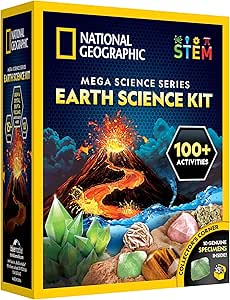 | Best for Earth Science Exploration | Recommended Age: 8-12 | Number of Activities: 100+ | Included Kits: 2 geologic dig kits | VIEW LATEST PRICE | See Our Full Breakdown |
More Details on Our Top Picks
Carson Dellosa STEM Challenges, Hands-On Science Kits
Carson Dellosa STEM Challenges takes a different approach than experiment-driven kits like the UNGLINGA Chemistry Set: instead of packaged chemicals, it gives you 30 activity cards spanning physical, life, earth, and space science, and you gather the materials yourself. That format makes it far more flexible for a teacher managing rotating learning centers, since cards can be reassigned year after year without consumables running out. The included divider keeps the set organized between units. The tradeoff is real, though — every activity depends on you sourcing common household items in advance, which means more prep work than an open-and-go kit. It’s also narrowly aimed at grades 2 through 5, so middle schoolers will outgrow it quickly. For educators who value curriculum breadth over convenience, this pick makes the most sense.
Pros:- Covers four science disciplines (physical, life, earth, space) in one set
- Non-consumable cards can be reused across classes and school years
- Includes organized storage with a divider for center-based learning
- Each card lists materials, instructions, and the science explanation
Cons:- Requires you to source additional common materials for every activity
- Age range stops at grade 5, limiting long-term value
- No physical experiment components included, unlike chemistry kits
Best for: Elementary teachers and homeschool parents managing multiple kids across grades 2-5 who want reusable, cross-topic science activities
Not ideal for: Parents wanting a ready-to-run kit for a single rainy afternoon, since every activity requires sourcing materials first
- Number of activity cards:30
- Grade level:2-5
- Topics covered:Physical, life, earth, and space science
- Card dimensions:7.75 x 5.5 inches
- Divider dimensions:7.75 x 8 inches
- Storage:Included divider for organization
- Format:Activity cards with instructions and materials lists
Our verdict“A reusable teaching resource for educators who plan ahead and want multi-subject science coverage rather than a single boxed experience.”
50 PCS Prepared Microscope Slides with Specimens STEM Kit
Most kits in this roundup create science; this one lets you observe it. With 50 prepared glass slides spanning plants, animals, microorganisms, and cells, it turns an existing microscope into a ready-made biology curriculum — a role no other product here fills. Compared with the Periodic Table Flashcard Kit, which is visual and abstract, these slides deliver actual specimens, which is what makes biology stick for visual learners. The five instructional guide cards help beginners interpret what they’re seeing, and the storage box protects the glass between sessions. Be clear about the dependencies, though: without a compatible microscope this set is useless, and it’s rated for ages 14 and up, so it skews older than the National Geographic Chemistry Set’s 8-12 range. It’s a supplement, not a standalone gift.
Pros:- 50 diverse specimens covering plants, animals, microorganisms, and cells
- Instructional guide cards help beginners identify structures
- High-transparency glass slides deliver crisp images
- Sturdy storage box with included cleaning cloths protects the set
Cons:- Requires a separate compatible microscope to be useful at all
- Not suitable for professional or advanced laboratory work
- Glass slides are fragile in the hands of younger kids
Best for: Teens and adult hobbyists who already own a microscope and want a broad, pre-prepared biology specimen library
Not ideal for: Families without a microscope or with children under 14, since the slides are glass and require magnification equipment
- Number of slides:50
- Slide size:1 x 3 inches (25mm x 75mm)
- Specimen types:Plants, animals, microorganisms, cells
- Included accessories:5 instructional guide cards, 2 cleaning cloths, storage box
- Material:High-transparency glass
- Intended age:14 and above
- Microscope required:Yes (not included)
Our verdict“A worthwhile add-on for anyone with a microscope on the shelf, but a poor first purchase for a household without one.”
UNGLINGA 40+ Experiments Science Kit for Kids Chemistry Set STEM Toy
This is the budget-friendly entry point of the chemistry kits here. Where the National Geographic Amazing Chemistry Set more than doubles the experiment count at a higher price, UNGLINGA delivers 40-plus activities like bouncy balls and lava lamps with most materials in the box — enough variety to keep a curious kid busy for weeks without a major investment. That makes it the smarter buy if you’re testing whether your child even likes chemistry before committing to a bigger set. The compromises are straightforward: a few experiments need household items, younger children will need an adult alongside them, and the instructions, while clear, are less polished than National Geographic’s. Compared with the card-based Carson Dellosa set, it wins on instant gratification — open the box and start — but loses on reusability once consumables run out.
Pros:- Over 40 experiments at a lower price per activity than larger sets
- Most materials included so kids can start immediately
- Clear, child-friendly instruction format
- Fun, tangible outcomes like bouncy balls and lava lamps
Cons:- Some experiments require household items not in the box
- Consumable materials limit how often experiments can be repeated
- Adult supervision needed for younger children
Best for: Parents buying a first science kit for an elementary-aged child without wanting to spend premium prices
Not ideal for: Kids who already burn through kits quickly and would exhaust 40 experiments fast, or anyone wanting professional-grade lab tools
- Number of experiments:40+
- Suitable age:Children (adult supervision recommended for younger kids)
- Materials included:Most experiment materials included
- Focus:Chemistry and STEM activities
- Format:Boxed kit with instructions
- Reusability:Limited by consumable supplies
Our verdict“The low-risk way to find out if hands-on chemistry clicks with your child before spending more.”
National Geographic Amazing Chemistry Set with 100+ Experiments for Ages 8-12
This is the headline pick for pure chemistry depth. With more than 100 experiments — crystal growing, color-changing solutions, glowing test tubes — it doubles the count of the UNGLINGA kit and includes real tools like test tubes, beakers, and pipettes, which makes kids feel like actual scientists rather than follow-along craft-makers. The bonus experiments using household items extend the value once packaged materials dwindle. Compared with the National Geographic Earth Science Kit, this one stays focused on chemistry, so reactions and mixtures get full attention rather than splitting time across geology activities. The drawbacks are the flip side of its ambition: younger kids need supervision throughout, some experiments still require pantry items, and the 8-12 age window is firm. It also costs noticeably more than budget alternatives.
Pros:- 100+ experiments provide months of structured activity
- Real lab tools (test tubes, beakers, pipettes) teach proper technique
- Bonus household-item experiments extend life beyond included materials
- Backed by the National Geographic brand’s polished instruction quality
Cons:- Firmly limited to ages 8-12
- Some experiments need household items not included
- Requires adult supervision for younger children in the range
- Higher price than entry-level kits like UNGLINGA’s
Best for: Parents of 8-12 year olds who want a long-lasting, tool-rich chemistry set with genuine replay value
Not ideal for: Children outside the 8-12 range, or buyers seeking a general science sampler covering biology and physics too
- Number of experiments:100+
- Age range:8-12 years
- Included tools:Test tubes, beakers, pipettes
- Key activities:Crystal growing, color-changing solutions, glowing test tubes
- Bonus experiments:Additional activities using household items
- Manufacturer:JMW Sales, Inc.
- Model number:NGMEGACHEMAR
- UPC:816448026607
Our verdict“If your 8-12 year old is serious about chemistry, this is the set with the depth and real equipment to justify its price.”
Periodic Table of Elements Laminated Flashcard Science Kit
Every other product in this lineup is about doing; this one is about knowing. The 118 laminated flashcards cover the full periodic table plus chemical structures, bonds, and molecular orbitals, making it the only option here that works as a durable study reference across years of science classes rather than a one-time activity kit. Compared with the Carson Dellosa card set, which targets grades 2-5 and focuses on experiments, this serves a much wider age range — from middle school through high school prep. The color coding and matte laminate genuinely help visual learners, and the included interactive game adds structure to review sessions. But it demands table space to spread cards out, the cards run large for small hands, and it won’t teach a child who needs hands-on experiments to stay engaged. It’s a supplement, and should be bought as one.
Pros:- Covers all 118 elements plus structures, bonds, and orbitals
- Laminated matte finish resists fingerprints and wear for years of use
- Color-coded design supports visual learning and quick recall
- Interactive game adds engagement to what could be dry memorization
Cons:- Cards are large and awkward for small hands
- Requires significant table space to use effectively
- Purely educational — no hands-on experiments included
Best for: Middle and high school students, tutors, and homeschool families who need a lasting chemistry study and memorization aid
Not ideal for: Young kinesthetic learners who need experiments to stay engaged, or anyone expecting a standalone activity kit
- Number of cards:118
- Material:Matte laminated
- Coverage:Full periodic table, chemical structures, bonds, molecular orbitals
- Suitable for:Teachers, students, homeschool kids, classrooms
- Includes:Storage box, interactive game
- Durability:Dirt- and fingerprint-resistant laminate
- Format:Color-coded flashcards
Our verdict“The right buy when the goal is mastering chemistry fundamentals over years, not running experiments over a weekend.”
National Geographic Junior Chemistry Set with 50 Experiments for Kids
Most chemistry kits in this roundup — including the National Geographic Amazing Chemistry Set — start at age 8, which leaves preschool families with few real options. This junior set fills that gap with 50 age-appropriate experiments and over 20 kid-safe lab tools, plus illustrated instructions that a 4-year-old can follow with a parent reading alongside. Compared with the UNGLINGA 40+ kit, the materials here are sturdier and the instructions are noticeably friendlier to pre-readers. The tradeoff is depth: this is chemistry as play, not science as study. Some experiments lean on household items you must supply yourself, and any child past second grade will outgrow the content quickly. For the target age band, though, nothing else in this lineup matches its accessibility.
Pros:- 50 experiments provide lasting value across many sessions
- 20+ durable, kid-safe tools sized for small hands
- Illustrated instructions work for pre-readers with parental help
- Genuinely age-appropriate content for the 4+ range, which most kits skip
Cons:- Requires constant adult supervision, so it isn’t an independent-play option
- Several experiments depend on household items not included in the box
- Content is too basic for older children interested in real chemistry concepts
Best for: Parents of children ages 4-7 who want a first chemistry set with safe tools and parent-guided experiments
Not ideal for: Kids 8 and up or those wanting advanced chemistry — the Amazing Chemistry Set or a flashcard-based reference like the Periodic Table kit will better hold their interest
- Age Range:4+
- Number of Experiments:50
- Lab Tools Included:20+
- Instruction Style:Illustrated, kid-friendly
- Additional Materials:Some household items required
- Availability:Amazon exclusive
Our verdict“If you’re buying for a curious 4-to-7-year-old, this is the chemistry set that actually meets them at their level instead of forcing them to grow into it.”
National Geographic Earth Science Kit with 100+ Activities for Kids 8-12
While most kits in this roundup stay in chemistry or biology, this one covers geology, meteorology, and earth processes — a subject nearly untouched elsewhere here. With over 100 activities, including two geologic dig kits, crystal growing, a water tornado experiment, and the classic volcano eruption, it offers far more variety than the Carson Dellosa STEM Challenges set, which focuses on engineering problems instead of earth science. The included learning guide gives kids context the microscope slides kit can’t match for this subject. The honest downside: mess is built in. Volcanoes and tornadoes mean setup, cleanup, and supervision, and the kit doesn’t clearly document every tool included, so expect some improvisation. Still, for a child who asks why mountains and crystals exist, this is the strongest pick.
Pros:- 100+ activities deliver exceptional long-term value per dollar
- Covers earth science, a subject most STEM kits in this price range ignore
- Detailed learning guide connects each activity to real geologic concepts
- Mix of instant-gratification and slow-reward projects like crystal growing
Cons:- Volcano and tornado experiments are messy and require advance planning
- Incomplete documentation of included tools means you may need to supplement
- Several activities need adult supervision, limiting independent use
Best for: Kids ages 8-12 fascinated by rocks, volcanoes, crystals, and weather who want variety across many sessions
Not ideal for: Tidy households or buyers wanting chemistry specifically — the mess and the earth-science focus make the Amazing Chemistry Set a better fit there
- Recommended Age:8-12
- Number of Activities:100+
- Included Kits:2 geologic dig kits
- Featured Experiments:Volcano eruption, water tornado, crystal growing
- Learning Materials:Detailed learning guide with instructions
- Subject Focus:Earth science and geology
- Supervision:Required for some activities
Our verdict“This is the pick for the kid whose curiosity runs toward volcanoes and crystals rather than beakers — just be ready for a messy kitchen table.”

How We Picked
I evaluated each kit against four criteria that directly affect whether a child actually learns from it: instruction quality (does the booklet explain the science behind each activity, or just the steps?), repeatability (can experiments be redone with household materials, or is the kit dead once consumables run out?), age-appropriate independence (how much adult supervision is genuinely required?), and value per activity (cost divided by meaningful experiments, not inflated activity counts). I also weighed durability of included tools like magnifiers, test tubes, and display materials, since these often outlive the kit itself.
The ranking logic favors kits that teach over kits that entertain. That’s why the National Geographic chemistry and earth science sets sit at the top — their reference-style booklets double as mini textbooks — while the Carson Dellosa STEM Challenges kit lands mid-pack despite solid engineering content, because it leans project-based rather than reference-based. The flashcard and slide kits rank lower for general buyers but are flagged as the right answer for specific use cases like homeschool study and microscope work.
Factors to Consider When Choosing Educational Science Reference Kits
Before picking a kit, it helps to understand what separates a genuinely educational science reference kit from a one-off toy. These are the factors that most often make or break the purchase.
Experiment Kits vs. Reference Materials
The biggest mistake buyers make is treating everything in this category as interchangeable. Experiment kits like the UNGLINGA and National Geographic chemistry sets are built around doing — mixing, reacting, observing — and they teach the scientific method through repetition. Reference kits like the periodic table flashcards and prepared slides are built around studying, and they support curriculum work, memorization, and microscope skills. A child who loves discovery will bounce off flashcards, while a child preparing for a science fair may find a fifth baking-soda volcano frustrating. Match the format to how your child actually learns, not to which box has the biggest number on it.
The Experiment Count Trap
Manufacturers know that “100+ experiments” sells, and they pad the count with variations that differ by one ingredient or a color change. A kit with 40 genuinely distinct experiments often teaches more than one with 100 near-duplicates. Read the activity list if it’s available, and check how many require materials not included in the box. The best kits, like the National Geographic sets, clearly mark which experiments need supplemental household items — the worst ones bury that detail until you’re mid-experiment with a missing ingredient.
Consumables and Refillability
Most chemistry kits are single-use by design: once the reagent packets are gone, the kit is finished. Before buying, check whether refill packs exist or whether the experiments can be recreated with grocery-store items like vinegar, baking soda, and dish soap. Kits built around common household chemicals effectively cost less per learning hour because they never truly run out. Also look at the durable components — test tubes, stands, magnifiers, and stirrers can anchor a home lab setup long after the original experiments end, which changes the long-term value math considerably.
Age Ratings and Real Supervision Needs
Age ratings on science kits tend to reflect safety compliance rather than true independence. A kit labeled 8+ may still require an adult to pre-measure chemicals, manage open flames or heat reactions, and interpret the instructions. If you’re buying for independent play during work hours, favor kits with pre-portioned materials and low-mess experiments — the Junior Chemistry format is built exactly for this. If you plan to do the kit together on weekends, the standard chemistry sets offer richer experiments that justify the supervision. Also consider whether younger siblings can be kept safely away from small parts and reactive materials.
Instruction Quality as the Real Product
In practice, the booklet is the product — the chemicals and tools are just props. A well-written guide explains why a reaction happens, introduces real scientific vocabulary, and suggests follow-up questions. Weak booklets give step-by-step instructions with no context, which produces a fun afternoon and zero retained knowledge. National Geographic consistently leads here with illustrated explanations of the underlying chemistry and geology. If your goal is education rather than entertainment, weigh instruction quality above experiment count, tool count, and even price.
Where It Fits in a Learning Plan
Think about whether the kit is a standalone gift or part of a structured learning plan. Homeschool families often get more from reference kits — slides, flashcards, and earth science sets with labeled specimens — because they align with lesson sequences and can be revisited across a school year. Gift-givers and parents of school-aged kids usually get more from big experiment kits, which create memorable one-time events. If you’re buying for a classroom or co-op, durability and group-friendly materials matter more than per-child consumables, which drives the value calculus toward the sturdier National Geographic offerings.
Frequently Asked Questions
Which kit is best if my child has never done science experiments before?
For a true beginner, the National Geographic Junior Chemistry Set is the easiest entry point because it pre-portions materials and keeps every experiment low-risk and low-mess. The UNGLINGA 40+ kit is a close second since most of its experiments use familiar household items, so a failed attempt costs nothing to retry. Avoid starting with the Amazing Chemistry Set’s more involved reactions — a child who struggles with multi-step instructions early on may lose confidence. The prepared slides kit is also beginner-friendly in a different way, since viewing requires no setup beyond a microscope, but it won’t teach experimental skills.
Are the National Geographic chemistry sets worth the premium over cheaper kits like UNGLINGA?
It depends on what you’re buying. The premium buys you substantially better instruction booklets with real scientific explanations, more durable tools, and brand-backed customer service if pieces arrive damaged. The UNGLINGA set, by contrast, wins on repeatability — most of its experiments can be redone indefinitely with kitchen supplies, so it often delivers more total learning hours despite the lower polish. If your child reads independently and asks “why” constantly, the National Geographic format pays for itself. If they just want to make things fizz and glow, the cheaper kit delivers most of the fun for less money.
Do I need to buy a microscope to use the prepared slides kit?
Yes — the 50 PCS Prepared Slides kit includes only the specimen slides and a storage box, so a microscope is required, and it should be a compound microscope with multiple magnification levels for the best results. This makes it a poor standalone gift unless you already own a microscope or plan to buy one, which effectively doubles the total cost. That said, if a microscope is already in the house, this kit is one of the cheapest ways to build a serious home biology library, covering plant tissue, animal cells, and insect parts. Check that your microscope’s stage clips hold standard 1″ x 3″ slides, which is what this kit uses.
How much parental supervision do these kits actually need?
Realistically, more than the boxes suggest. Kits rated for ages 8-12 with chemical reactions — especially the Amazing Chemistry Set — generally need an adult present for setup, measuring, and any heat-based experiments, even if the child does the hands-on work. The Junior Chemistry Set and UNGLINGA kit are the most independent-friendly, using mild reactions a careful 8-year-old can mostly manage alone. The earth science kit and Carson Dellosa challenges fall in between, with digging and building activities that need supervision mostly for mess control rather than safety. If independent play is a priority, weigh that heavily — a kit that sits unused because no adult is available teaches nothing.
Can these kits work for homeschool curricula, or are they just toys?
Several of them hold up well as curriculum supplements, but they serve different roles. The periodic table flashcard kit and prepared slides are the most curriculum-ready, functioning as genuine reference materials you can build lessons and quizzes around. The National Geographic earth science and chemistry sets work well as unit-by-unit activity drivers because their booklets explain concepts in a sequence you can follow. The Carson Dellosa STEM Challenges kit fits engineering and design units particularly well. For homeschooling, I’d prioritize the reference-style kits first and add one experiment kit per semester, rather than buying several experiment sets that overlap on content.
Conclusion
The right pick comes down to who’s receiving it. For best overall, the National Geographic Amazing Chemistry Set earns the top spot with the strongest combination of experiment variety, instruction quality, and replay value. For best value, the UNGLINGA 40+ Experiments Kit delivers repeatable experiments using household refills at a price that’s hard to beat. For beginners and younger kids, the National Geographic Junior Chemistry Set scales everything down to a manageable, confidence-building level. For premium buyers, the National Geographic Earth Science Kit offers the broadest subject coverage and the most durable materials, making it a long-term home lab anchor. And for specific needs: the prepared slides kit for microscope owners and homeschool biology, the periodic table flashcards for memorization and test prep, and the Carson Dellosa STEM Challenges kit for kids who learn by building rather than mixing. Whatever you choose, prioritize the booklet quality over the experiment count — that’s where the real education happens.
Fall Picks
fall essentials
As an affiliate, we earn on qualifying purchases.