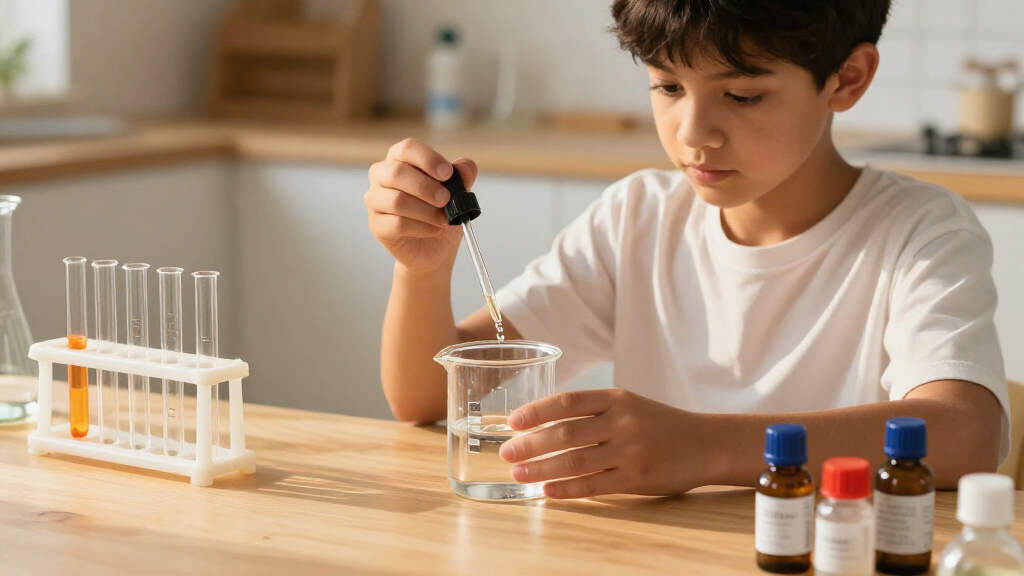
Choosing a chemistry set for a high school student comes down to how much structure, depth, and hands-on work they want—and how much adult supervision is available. I rank the CHEM C3000 first for ambitious students who want the broadest course-like range, while the CHEM C2000 is a more approachable intermediate option with substantial coverage. For a younger student or a first chemistry kit, the CHEM C1000 offers many guided activities without the C3000’s larger scope.

Prime made for students and young adults
- Fast, free delivery for dorm and study essentials
- Prime Video and Amazon Music included
- Member-only deals
These sets are not interchangeable. They range from 28 introductory experiments in the C500 to more than 333 in the C3000, and the bigger kits bring more equipment, chemicals, and safety demands. I weigh educational range against usability: a large experiment count is useful only if the student can follow the manual, obtain any extra household materials, and work with an adult when required. The right choice is the one that matches the student’s current confidence and the supervision their household can provide.
Key Takeaways
CHEM C3000 is the widest-ranging choice, with more than 333 experiments, 16+ chemicals, and coverage spanning inorganic, organic, and electrochemistry; it also calls for the most sustained supervision.
CHEM C2000 balances depth and approachability with 250 experiments and an intermediate level, but its alcohol burner makes attentive adult oversight especially important.
CHEM C1000 brings broad variety at a beginner level: 125 activities and seven chemicals make it a gentler starting point than either intermediate or advanced set.
CHEM C500 is the simplest commitment, with 28 guided experiments and a 48-page manual for students who want a compact introduction rather than a long program.
Experiment totals do not tell the whole story: compare topic range, included equipment, manual depth, extra-material needs, and whether your household can support supervised lab work.
| Thames & Kosmos CHEM C3000 Chemistry Set, 333+ Experiments, 103 Pieces, Ages 12+ |  | Best Overall for Advanced High School Learners | Experiments: More than 333 | Chapters: 27 | Pieces: 103 | VIEW LATEST PRICE | See Our Full Breakdown |
| Thames & Kosmos CHEM C2000 Intermediate Chemistry Set |  | Best Intermediate Set | Experiments: 250 | Chapters: 18 | Manual: 128-page full-color manual | VIEW LATEST PRICE | See Our Full Breakdown |
| Thames & Kosmos CHEM C1000 Beginner Chemistry Set, 125 Experiments, Ages 10+ |  | Best for Beginners | Experiments: 125 | Chapters: 10 themed chapters | Manual: 80-page full-color manual | VIEW LATEST PRICE | See Our Full Breakdown |
| Thames & Kosmos Chemistry C500 Science Kit, 28 Experiments |  | Best Compact Introduction | Experiments: 28 | Manual: 48-page full-color guide | Recommended age: 10–15 years | VIEW LATEST PRICE | See Our Full Breakdown |
| chemistry sets for high school student | Experiments | Manual | Chapters | Recommended age |
|---|---|---|---|---|
| Thames & Kosmos CHEM C3000 Che | More than 333 | 192-page full-color experiment manual | 27 | 12+ |
| Thames & Kosmos CHEM C2000 Int | 250 | 128-page full-color manual | 18 | — |
| Thames & Kosmos CHEM C1000 Beg | 125 | 80-page full-color manual | 10 themed chapters | 10+ |
| Thames & Kosmos Chemistry C500 | 28 | 48-page full-color guide | — | 10–15 years |
More Details on Our Top Picks
Thames & Kosmos CHEM C3000 Chemistry Set, 333+ Experiments, 103 Pieces, Ages 12+
The CHEM C3000 earns my top spot for breadth. More than 333 experiments, 27 chapters, and 16+ chemicals give it a much more sustained learning arc than the C2000’s 250 experiments or the C1000’s 125. Its topics range through inorganic, organic, and electrochemistry, so it has room to support a student who wants to connect classroom ideas to a varied program of practical work rather than repeat a short series of demonstrations.
The included setup is also the most like a small home lab in this group. The 103 pieces include an Erlenmeyer flask, tripod stand, alcohol burner, evaporating dish, electrodes, wiring, and safety goggles, alongside basic glassware and measuring tools. That range matters because it lets students try different styles of investigation, from solution work to electrical experiments. A 192-page illustrated manual supplies step-by-step procedures and scientific explanations, and the included periodic table poster and element reference can help students keep concepts in view between activities.
Compared with the C2000, the C3000 offers more experiments, chemicals, and reference material, making it the stronger fit for a student who will use the kit over time. The tradeoff is commitment: adult supervision is required, some activities need additional household materials, and a burner or chemical activity calls for careful procedure and storage. The C2000 may be more manageable for a student who wants a substantial but less expansive program. I would skip the C3000 for a casual experimenter or a home without a responsible adult available to oversee lab work.
Pros:- More than 333 experiments span inorganic, organic, and electrochemistry.
- The 192-page illustrated manual provides procedures, explanations, and safety guidance.
- Includes 16+ chemicals, 103 pieces of equipment, goggles, and reference materials.
- Its range gives an interested student more room to progress than the C2000 or C1000.
Cons:- Adult supervision is required, and some experiments need additional household materials.
- The equipment and topic range may be excessive for a student who only wants occasional activities.
- The alcohol burner and chemicals add handling and preparation demands.
Best for: A motivated high school student, especially age 12 or older, who wants a broad, long-running chemistry program and has an adult available for supervised experiments.
Not ideal for: A student seeking occasional, low-preparation activities, or a household unable to supervise burner and chemical work closely.
- Experiments:More than 333
- Chapters:27
- Pieces:103
- Manual:192-page full-color experiment manual
- Chemicals:16+
- Recommended age:12+
- Safety:Adult supervision required; EN 71-4
- Notable equipment:Glassware, tripod stand, alcohol burner, electrodes, circuit parts, and safety goggles
Our verdict“I recommend the C3000 for students ready to treat chemistry as a sustained, supervised learning project rather than a box of occasional demonstrations.”
Thames & Kosmos CHEM C2000 Intermediate Chemistry Set
The CHEM C2000 is my pick for a student who has outgrown a short introductory kit but does not need the C3000’s full scale. Its 250 experiments and 18 themed chapters provide much more runway than the C500’s 28 activities and go considerably beyond the C1000’s beginner program. The 128-page full-color manual guides students through topics such as acids and bases, gases, electrochemistry, chromatography, and food chemistry, giving the set a useful mix of core concepts and varied applications.
Its equipment supports more than simple liquid mixing. The kit includes an alcohol burner assembly, tripod components, wire mesh, a carbon electrode, and an immersion heater, as well as test tubes, beakers, and pipettes. For high school students, that creates opportunities to work with heat and electricity alongside familiar solution-based investigations. The inclusion of goggles and step-by-step explanations makes the program feel more developed than the C1000, while its experiment count and manual stay below the C3000’s larger, 27-chapter offering.
The main tradeoff is that its intermediate label comes with real supervision needs. Adult oversight is required, and experiments involving an alcohol burner or chemicals demand careful preparation and consistent attention to the instructions. If the student is new to lab routines, the C1000 is the more gradual entry point. If they already have confidence and want the widest possible set of subjects, the C3000 offers more material. I would choose the C2000 for a teen ready for a serious step up, not for a household that wants heat-based experiments without close adult involvement.
Pros:- 250 experiments across 18 chapters offer a substantial step beyond an introductory kit.
- The 128-page manual combines guided procedures with scientific explanations.
- Includes equipment for heat-based, electrochemical, and solution experiments.
- Its scope is more manageable than the C3000 while still offering extensive practice.
Cons:- Adult supervision is required, particularly for activities using the alcohol burner.
- The included equipment and chemicals call for careful handling and organized storage.
- Its topic and experiment range is smaller than the C3000’s.
Best for: A high school student with some interest in chemistry who wants a substantial intermediate program and can work under adult supervision.
Not ideal for: A beginner who needs a gentler first kit, or a household that prefers to avoid alcohol-burner experiments.
- Experiments:250
- Chapters:18
- Manual:128-page full-color manual
- Chemicals:13
- Age range:11+
- Safety:Adult supervision required; EN 71-4
- Notable equipment:Alcohol burner assembly, tripod components, immersion heater, tubing, electrodes, and goggles
- Topics:Acids and bases, gases, electrochemistry, chromatography, and food chemistry
Our verdict“I would choose the C2000 for an intermediate learner who wants substantial variety without stepping up to the C3000’s largest program.”
Thames & Kosmos CHEM C1000 Beginner Chemistry Set, 125 Experiments, Ages 10+
The CHEM C1000 is the most convincing first set for a high school student without much lab experience. Its 125 experiments cover a broad spread—indicators, fluids, metals, water chemistry, chromatography, crystal growing, electrochemistry, and electrolysis—while the beginner framing keeps it distinct from the more advanced C2000 and C3000. It is not a high-school-only kit, but a teen new to hands-on chemistry may benefit from beginning with a guided foundation rather than jumping directly into an intermediate set.
The 80-page, full-color manual organizes the program into 10 themed chapters with safety guidance and step-by-step instructions. Seven included chemicals and practical equipment—glass test tubes, graduated beakers, pipettes, a funnel, copper wire, filter paper, and a test tube brush—make the kit more substantial than the C500. The included Z87-rated safety goggles are a useful part of the equipment package, especially when a student is learning to prepare a work area and follow written procedures.
Compared with the C500, the C1000 offers considerably more activities and a wider topic mix; compared with the C2000, it is aimed at a more introductory level and has fewer chemicals and less manual depth. That is a strength for the right student, not a substitute for the C3000’s advanced scope. Adult supervision is required, and chemical activities need careful attention to instructions and disposal guidance. I would pass if the student already wants advanced material and can follow complex procedures; the C2000 or C3000 gives that learner more depth.
Pros:- 125 experiments introduce a wide range of chemistry topics and techniques.
- The 80-page illustrated manual gives structured instructions and safety guidance.
- Includes seven chemicals, practical lab equipment, and Z87-rated safety goggles.
- Offers a broader beginner program than the C500 without the C3000’s extensive scope.
Cons:- Adult supervision is required, and chemical handling and disposal instructions need attention.
- Its beginner level may not challenge a student with prior lab experience.
- It has fewer chemicals and a shorter manual than the C2000 and C3000.
Best for: A high school student who is new to practical chemistry and wants a guided, varied introduction with adult support.
Not ideal for: A student already seeking advanced topics, extensive chemical variety, or a more challenging multi-year program.
- Experiments:125
- Chapters:10 themed chapters
- Manual:80-page full-color manual
- Included chemicals:7
- Recommended age:10+
- Supervision:Adult supervision required
- Safety standard:EN 71-4
- Notable equipment:Glass test tubes, graduated beakers, pipettes, filter paper, copper wire, and Z87-rated goggles
Our verdict“I recommend the C1000 as a structured first chemistry set for teens who want variety but are not ready for an intermediate or advanced kit.”
Thames & Kosmos Chemistry C500 Science Kit, 28 Experiments
The Chemistry C500 is the smallest and most introductory choice in this group. Its 28 guided experiments focus on acids and bases, chemical reactions, and the properties of solids, liquids, and gases. That narrower scope can suit a student who wants a short, structured introduction before committing to a larger program. But for most high school students looking for a chemistry set to use across a term or longer, its activity count is modest beside the C1000’s 125 experiments, let alone the C2000 and C3000.
A 48-page full-color manual gives setup instructions and explanations of results, and the included beakers, test tubes, chemicals, stoppers, and pipettes cover basic experiment needs. This is a simpler equipment package than the C1000’s more varied lab tools, and it does not offer the same range of topics as the C2000’s program. That distinction matters: the C500 is better viewed as a taste of guided chemistry than as a deep home-study resource for a student already comfortable with science coursework.
Its listed recommended age range is 10–15, which can fit younger teens but may feel less tailored to an older high school learner. The product information describes it for indoor use and lists different dimensions in the title and item details, so I would not rely on the package-size figures without checking the seller’s current listing. Its strength is straightforwardness, not breadth. I would select it for a student who wants a modest first set, but choose the C1000 for a beginner who wants considerably more variety or the C2000 for an intermediate learner.
Pros:- 28 guided activities introduce acids and bases, reactions, and states of matter.
- The 48-page full-color manual explains procedures and experiment results.
- Includes basic lab items such as beakers, test tubes, stoppers, and pipettes.
- Its modest scope may suit a student who wants an introductory sampler.
Cons:- Its 28 experiments provide far less range than the C1000, C2000, or C3000.
- The listed age range tops out at 15, which may not suit older high school students.
- The product listing gives differing dimensions in the title and item details.
Best for: A younger teen or first-time experimenter who wants a limited, guided introduction to basic chemistry concepts.
Not ideal for: An older high school student seeking a sustained program, advanced topics, or a large range of experiments.
- Experiments:28
- Manual:48-page full-color guide
- Recommended age:10–15 years
- Included components:Beakers, test tubes, chemicals, stoppers, pipettes, and manual
- Material:Plastic
- Use:Indoor
- Model:Chemistry C500 (665012)
- Warranty:1 year against manufacturer defects
Our verdict“I would pick the C500 only for a student who wants a short introduction; most high school learners will get more lasting variety from the C1000 or a larger set.”
How We Picked
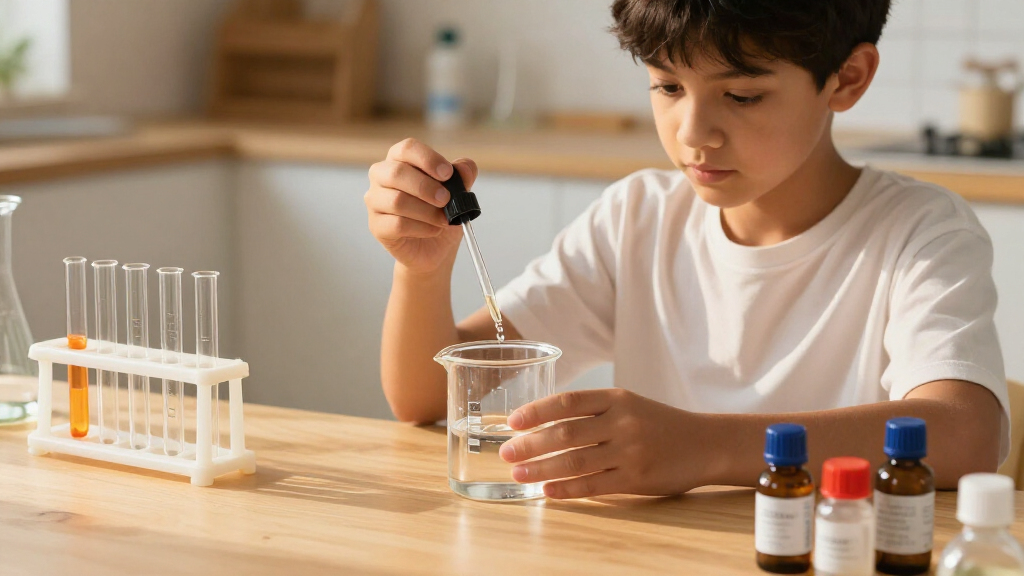
I ranked these four kits for high school learning rather than sheer activity count. A high school student may want a first look at acids and bases, a structured bridge from classroom concepts to experiments, or a long sequence that reaches into electrochemistry and organic chemistry. Those are different needs, so I gave weight to how clearly each kit serves a particular learner.
My comparison focuses on five practical factors: topic breadth, experiment depth, equipment and chemical range, manual support, and supervision demands. I looked at whether the manual offers step-by-step instructions and explanations, not just how many pages it has. I also compared the kind of work the included equipment makes possible: basic beakers and test tubes support a smaller introductory program, while burners, electrodes, and additional glassware open up more varied activities but add handling requirements.
I treated the recommended ages as a guide, not proof that a kit will suit every high school student. A younger or less experienced teen may prefer the C1000’s beginner framing, while a student who already follows lab procedures may get more from the C2000 or C3000. The C500’s listed age range is 10–15, so older high school students may find its 28 activities less substantial than the other options.
Finally, I considered what the kit asks of the household. All four are indoor-oriented science activities, and the larger sets require close attention to instructions and safety guidance; the C1000, C2000, and C3000 explicitly require adult supervision. Some C3000 experiments call for common household materials, and the C2000 adds an alcohol burner. That changes the practical fit. My ranking places the C3000 first for academic breadth, then the C2000 for intermediate depth, the C1000 for beginner range, and the C500 for limited, introductory use—not because a smaller set is inherently poor, but because its scope is more modest for most high school students.
| chemistry sets for high school student | Notable equipment |
|---|---|
| Thames & Kosmos CHEM C3000 Che | Glassware, tripod stand, alcohol burner, electrodes, circuit parts, and safety goggles |
| Thames & Kosmos CHEM C2000 Int | Alcohol burner assembly, tripod components, immersion heater, tubing, electrodes, and goggles |
| Thames & Kosmos CHEM C1000 Beg | Glass test tubes, graduated beakers, pipettes, filter paper, copper wire, and Z87-rated goggles |
| Thames & Kosmos Chemistry C500 | — |
Factors to Consider When Choosing Chemistry Sets For High School Students
I would choose a chemistry set by matching its learning level and supervision requirements to the student—not by selecting the largest experiment count automatically. These four kits form a rough progression, from the compact C500 to the extensive C3000, but the best starting point depends on prior experience, interests, and the kind of help available at home.
Match the kit to the student’s current experience
For a teen who has not handled lab equipment before, the C1000 offers the most balanced starting point: it is framed for beginners, includes 125 activities, and introduces varied topics through a structured manual. The C500 asks for a smaller commitment, but its 28 activities may leave a high school student wanting more. A student already familiar with basic procedures may find the C2000’s intermediate level more rewarding, while the C3000 makes the most sense for someone who will use a broad program over time.
Age labels do not capture reading ability, patience, or lab habits. I would check whether the student can follow multi-step directions, measure carefully, keep a workspace organized, and stop when an instruction is unclear. A lower-level set can be a sensible choice for an older beginner; the aim is to build confidence and safe routines, not to pick a kit based on age alone.
Compare scope, not just experiment totals
The C500’s 28 experiments focus on foundational ideas, whereas the C1000 expands into areas such as chromatography, crystal growing, and electrolysis. The C2000 adds 18 themed chapters and 250 activities; the C3000 pushes farther with more than 333 experiments across inorganic, organic, and electrochemistry. Those totals signal potential range, but they do not tell you whether a student will enjoy every activity or whether each one can be completed with what is in the box.
I would look at the topics the student wants to explore and the way the manual supports them. A student curious about basic reactions may not need the C3000’s breadth. Someone who wants to revisit concepts and try different methods may value its larger program and reference materials. The right kit is not automatically the one with the most experiments; it is the one whose subject range fits the student’s interest and available time.
Check equipment and materials before starting
All four kits include some basic lab tools, but their equipment is not equally extensive. The C500 supplies beakers, test tubes, stoppers, and pipettes. The C1000 adds items such as graduated beakers, a funnel, filter paper, copper wire, and goggles. The C2000 and C3000 include equipment for more varied activities, including burner-related components and electrical parts. That can widen what a student can do, while also making setup and safe storage more involved.
Some C3000 experiments may need common household materials beyond the kit. Before beginning, I would read the instructions for a selected activity and check that all required items are available. A clear workspace, appropriate containers, and a plan for cleanup matter as much as the equipment count. Avoid substituting materials or skipping a procedure because an activity appears familiar; follow the manual’s directions for each experiment.
Plan for adult supervision and safe handling
The C1000, C2000, and C3000 specify adult supervision. The C500’s product details describe guided experiments, but a responsible adult should still review the instructions and remain available, especially when a student is new to lab work. Supervision is not just a matter of staying in the room: it means reading the procedure first, helping set up, checking protective equipment, and remaining attentive while the experiment is underway.
The C2000 and C3000 include alcohol-burner equipment, which makes adult involvement especially important. Chemical handling and disposal also need to follow the kit’s safety directions; the C1000 notes safety and waste-disposal guidance, and the C3000 includes safety rules and disposal information. I would not start an experiment until the student and supervising adult understand its steps, required materials, and cleanup instructions.
Choose the manual and learning format that will get used
The manuals differ in depth as well as length: 48 pages for the C500, 80 for the C1000, 128 for the C2000, and 192 for the C3000. More pages can provide room for a longer program and fuller explanations, but they may also mean a greater commitment to working through the material. For a student who wants concise directions, the C500’s smaller program may be easier to start. A teen who enjoys reading scientific explanations and following a sequence may get more value from the larger manuals.
I would also consider whether the student prefers guided steps or open-ended exploration. These kits are presented as guided experiment programs, with the C500, C1000, and C2000 explicitly described as having instruction or explanation in their manuals. The C3000 offers the most extensive reference material in this lineup, including a periodic table poster and element reference. Choose a format the student will actually consult rather than assuming that a larger guide alone will make the kit more educational.
Think about storage, workspace, and ongoing use
A larger set brings more components to keep organized. Before choosing the C2000 or C3000, consider where glassware, chemicals, goggles, and other pieces can be stored safely and whether a suitable indoor work surface is available. The C500 has a basic equipment assortment, while the C1000 also includes several distinct tools that need to be returned to their proper places after use. Keeping the manual and components together can make later experiments easier to prepare.
The listed C500 product dimensions differ between the title and item details, so I would confirm package measurements with the current listing if shelf space is limited. More broadly, storage should not be an afterthought: a kit is more useful when the student can find parts, read the instructions, and prepare the workspace without improvising. For a buyer unsure how often the set will be used, the C1000 can provide a middle ground between the C500 sampler and the larger, more involved programs.
Frequently Asked Questions
Which chemistry set is the best fit for most high school students?
I would start with the student’s experience. The C2000 is my intermediate pick for a teen who wants a substantial, varied program and can work with adult supervision. The C1000 is a better first set for a high school student who is new to practical chemistry, while the C3000 suits a motivated learner who wants the broadest scope. The C500 is best treated as a short introduction rather than a full high school program.
Is the C3000 too advanced for a beginner?
It may be more kit than a beginner needs. The C3000 includes more than 333 experiments, 16+ chemicals, and equipment for a wide mix of activities, along with a requirement for adult supervision. A new learner may find the C1000’s beginner framing easier to start with. I would choose the C3000 for a beginner only if the student is highly motivated and an adult can guide setup, procedures, and cleanup.
Which set has the most experiments and the widest topic range?
The CHEM C3000 has the largest stated program, with more than 333 experiments across inorganic, organic, and electrochemistry. The C2000 follows with 250 experiments across 18 themed chapters, while the C1000 has 125 beginner activities. The C500 is the most limited at 28 guided experiments focused on introductory concepts. More activities can offer more learning paths, but they also ask for more time and organization.
Do these chemistry sets require adult supervision?
The C1000, C2000, and C3000 explicitly require adult supervision. The C2000 and C3000 include alcohol-burner equipment, which calls for particularly attentive oversight. Even for a kit described as introductory, an adult should review the manual, help prepare a safe workspace, and remain available while a young or inexperienced student works. Follow each kit’s own safety and cleanup directions rather than relying on general assumptions.
Should I choose a kit by the number of experiments?
Experiment count is useful, but it should not decide the purchase alone. Compare the manual’s explanations, topics, equipment, chemical range, age guidance, and supervision requirements. The C1000’s 125 activities may serve a beginner better than the C3000’s larger program, while an experienced student may welcome the C3000’s additional scope. I would also check whether the set’s materials and workspace needs fit the household before choosing.
Conclusion
For a motivated student who wants the broadest chemistry program, I recommend the C3000, provided an adult can supervise and the household can support its equipment and material needs. For a teen who wants substantial variety at an intermediate level, the C2000 is my pick; its 250 experiments make it a serious step up, with burner-related supervision as the main tradeoff.
For a high school beginner, I would choose the C1000 for its 125 guided experiments, broad introductory topics, and included goggles. Pick the C500 only if a compact, limited introduction is the goal or the student is younger and wants a short sampler. In my ranking, the C3000 leads on depth, the C2000 balances depth with a smaller program, the C1000 makes the strongest first-kit case, and the C500 is best for a modest start.