
The best overall pick is Everything You Need to Ace Geometry in One Big Fat Notebook, which pairs subject explanations with practice in a format suited to students building core math skills. For broad coverage, the 6th Grade All-Subjects Workbook with 30-Day Study Plan brings multiple subjects together, while Florida FAST Test Prep: Grade 5 English Language Arts focuses on a specific state assessment. These study guide workbooks for students vary widely: some teach and drill a subject, others support a novel or exam, and a few work mainly as quick-reference tools. The right choice depends on the student’s grade, current course, and need for guided instruction versus targeted practice. Read on for the full breakdown and help matching a workbook to a real learning goal.

Prime made for students and young adults
- Fast, free delivery for dorm and study essentials
- Prime Video and Amazon Music included
- Member-only deals
Key Takeaways
- Subject-specific practice leads this comparison: the Geometry notebook and Algebra 1 workbook offer more direct support for building skills than literature companions or a standalone reference sheet.
- Broad coverage trades depth for convenience: the 6th Grade All-Subjects Workbook can support a varied routine, but students who need focused instruction may benefit more from a dedicated subject workbook.
- Exam alignment matters more than a generic study label: the Florida FAST workbook is aimed at Grade 5 ELA assessment practice, so its value depends on the learner’s state and test.
- Literature workbooks serve a different job: titles for Harry Potter, Restart, The Alchemist, The Witch of Blackbird Pond, and Of Mice and Men connect study to specific texts rather than teach a broad school subject.
- Reference formats are not interchangeable with practice books: the laminated Anatomy 2 guide favors quick lookup, while the Anatomy & Physiology workbook and Chemistry Made Easy are better suited to active study.
| Study Guide Student Workbook for Harry Potter and the Order of the Phoenix |  | Best for Literature Companion Study | Format: Student workbook | Subject: Literature study | Companion work: Harry Potter and the Order of the Phoenix | VIEW LATEST PRICE | See Our Full Breakdown |
| Essential Calculus-Based Physics Study Guide Workbook: The Laws of Motion |  | Best for Step-by-Step Physics Study | Format: Study guide workbook | Subject: Calculus-based physics | Topic: Laws of motion | VIEW LATEST PRICE | See Our Full Breakdown |
| Student Study Guide with IBM SPSS Workbook for Research Methods, Statistics, and Applications |  | Best for Research Methods and SPSS | Format: Student study guide and workbook | Subjects: Research methods and statistics | Software: IBM SPSS | VIEW LATEST PRICE | See Our Full Breakdown |
| Study Guide Student Workbook for Restart |  | Best for a Focused Novel Companion | Format: Student workbook | Subject: Literature study | Companion work: Restart | VIEW LATEST PRICE | See Our Full Breakdown |
| Everything You Need to Ace Geometry in One Big Fat Notebook |  | Best for Geometry Review | Format: Notebook | Subject: Geometry | Purpose: Learning and review | VIEW LATEST PRICE | See Our Full Breakdown |
| The Big Fat High School Algebra 1 Workbook: 400+ Algebra 1 Practice Exercises | 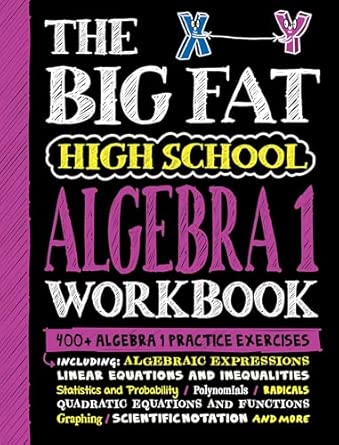 | Best for Extensive Algebra Practice | Subject: Algebra 1 | Format: Workbook | Practice exercises: 400+ | VIEW LATEST PRICE | See Our Full Breakdown |
| Study Guide Student Workbook for The Alchemist |  | Best for a Single-Book Literature Companion | Associated text: The Alchemist | Format: Student workbook | Purpose: Study guide companion | VIEW LATEST PRICE | See Our Full Breakdown |
| Study Guide Student Workbook for The Witch of Blackbird Pond |  | Best for Studying The Witch of Blackbird Pond | Associated text: The Witch of Blackbird Pond | Format: Student workbook | Purpose: Study guide companion | VIEW LATEST PRICE | See Our Full Breakdown |
| Florida FAST Test Prep: Grade 5 English Language Arts (ELA) Practice Workbook and Online Assessments | 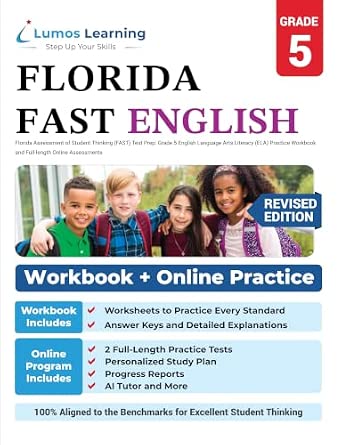 | Best for Florida Grade 5 Test Preparation | Grade: 5 | Subject: English Language Arts (ELA) | Assessment: Florida Assessment of Student Thinking (FAST) | VIEW LATEST PRICE | See Our Full Breakdown |
| Anatomy & Physiology Workbook For Dummies with Online Practice |  | Best for Anatomy and Physiology with Online Practice | Subject: Anatomy and physiology | Format: Workbook | Additional practice: Online practice | VIEW LATEST PRICE | See Our Full Breakdown |
| Chemistry Made Easy: An Illustrated Study Guide |  | Best for Visual Chemistry Learners | Subject: Chemistry | Format: Illustrated study guide | Audience: Students learning chemistry | VIEW LATEST PRICE | See Our Full Breakdown |
| Of Mice and Men GCSE/IGCSE Study Guide and Workbook |  | Best for GCSE/IGCSE Literature Exam Prep | Subject: Of Mice and Men | Level: GCSE/IGCSE | Format: Study guide, student workbook, and teacher’s notes | VIEW LATEST PRICE | See Our Full Breakdown |
| 6th Grade All-Subjects Workbook with 30-Day Study Plan |  | Best for Structured Multi-Subject Practice | Grade level: 6th grade | Subjects: Math, grammar, spelling, reading, and language arts | Practice questions: 1,100+ | VIEW LATEST PRICE | See Our Full Breakdown |
| Anatomy 2: Laminated Reference Guide, 8.5 x 11 inches |  | Best Compact Reference for Anatomy Review | Brand: QuickStudy | Format: Six-page laminated reference guide | Dimensions: 8.5 x 11 inches | VIEW LATEST PRICE | See Our Full Breakdown |
| U.S. Government & Civics Workbook for Grades 5–8 |  | Best for Middle-School Civics | Subject: U.S. government and civics | Grade levels: 5–8 | Format: Workbook | VIEW LATEST PRICE | See Our Full Breakdown |
| study guide workbooks for student | Format | Subject |
|---|---|---|
| Study Guide Student Workbook f | Student workbook | Literature study |
| Essential Calculus-Based Physi | Study guide workbook | Calculus-based physics |
| Student Study Guide with IBM S | Student study guide and workbook | — |
| Study Guide Student Workbook f | Student workbook | Literature study |
| Everything You Need to Ace Geo | Notebook | Geometry |
| The Big Fat High School Algebr | Workbook | Algebra 1 |
| Study Guide Student Workbook f | Student workbook | — |
| Study Guide Student Workbook f | Student workbook | — |
| Florida FAST Test Prep: Grade | Practice workbook and online assessments | English Language Arts (ELA) |
| Anatomy & Physiology Workbook | Workbook | Anatomy and physiology |
| Chemistry Made Easy: An Illust | Illustrated study guide | Chemistry |
| Of Mice and Men GCSE/IGCSE Stu | Study guide, student workbook, and teacher’s notes | Of Mice and Men |
| 6th Grade All-Subjects Workboo | All-subjects workbook | — |
| Anatomy 2: Laminated Reference | Six-page laminated reference guide | — |
| U.S. Government & Civics Workb | Workbook | U.S. government and civics |
More Details on Our Top Picks
Study Guide Student Workbook for Harry Potter and the Order of the Phoenix
This workbook is the most story-centered choice in this group: it is designed to accompany Harry Potter and the Order of the Phoenix, rather than teach a standalone academic subject. That makes it a better fit for students who want structured support alongside a specific novel than for learners seeking the practice focus of The Big Fat High School Algebra 1 Workbook or a topic-based reference like Everything You Need to Ace Geometry in One Big Fat Notebook. The supplied product information does not describe its questions, layout, or included topics, so I would not choose it on the assumption that it contains a particular type of exercise. Its main tradeoff is that its usefulness depends on reading the novel and wanting a companion workbook; students seeking broad language arts coverage should choose a more general resource.
Pros:- Designed to accompany a specific, substantial novel
- Keeps study tied to the assigned reading rather than a broad subject
- Offers a distinct literature-focused alternative to the math and science workbooks in this roundup
Cons:- Available product details do not identify its exercises, layout, or specific learning goals
- Its subject is limited to one novel, so it is not a broad literature or language arts workbook
- Students who are not reading the book may have little reason to use it
Best for: Students reading Harry Potter and the Order of the Phoenix who want a companion workbook tied to that novel.
Not ideal for: Students who need general English-language arts practice, a clearly specified exercise format, or a workbook usable without reading the novel.
- Format:Student workbook
- Subject:Literature study
- Companion work:Harry Potter and the Order of the Phoenix
- Intended audience:Students
- Exercise details:Not specified in the supplied product data
- Workbook contents:Not specified in the supplied product data
Our verdict“Choose this as a novel companion for a student reading Order of the Phoenix, not as a general English workbook.”
Essential Calculus-Based Physics Study Guide Workbook: The Laws of Motion
This is the clearest subject-specific choice for students working on calculus-based physics: its stated focus is the laws of motion, and its step-by-step study format is intended to help learners work through concepts rather than just consult a reference. That narrower scope makes it a more targeted pick than Everything You Need to Ace Geometry in One Big Fat Notebook, which covers a different school subject, and a much less suitable option for students who need broad all-subject review. The calculus-based approach also sets a higher entry point than a general physics resource might; it makes sense for learners whose course uses calculus, not for students seeking an introductory, non-calculus treatment. Product details do not specify the individual exercises or required background, so buyers should match it to their course before choosing.
Pros:- Targets the laws of motion rather than scattering attention across unrelated topics
- Uses a calculus-based approach suited to courses at that level
- Step-by-step study format supports working through concepts
- Provides a focused alternative to the literature companion workbooks in this roundup
Cons:- Narrow topic coverage may not support a full physics course on its own
- The calculus-based approach may not fit introductory or non-calculus classes
- The supplied data does not identify specific exercises or prerequisite knowledge
Best for: Students in a calculus-based physics course who want focused, step-by-step study support for the laws of motion.
Not ideal for: Students taking non-calculus physics or looking for a broad science workbook covering several physics topics.
- Format:Study guide workbook
- Subject:Calculus-based physics
- Topic:Laws of motion
- Study approach:Step-by-step
- Intended audience:Learners studying calculus-based physics
- ASIN:1941691153
Our verdict“Pick this for focused motion-law review when the student’s physics course uses calculus.”
Student Study Guide with IBM SPSS Workbook for Research Methods, Statistics, and Applications
Among these five options, this one has the broadest stated connection between an academic subject and a named software tool: it pairs research methods and statistics with IBM SPSS. That makes it a better match for students handling applied research coursework than the calculus-focused motion workbook, which addresses a different discipline and a defined topic. It also differs from the novel companion workbooks, which support reading rather than data analysis. The combination may be useful when a course expects students to connect statistical ideas with software, but the product information does not explain which SPSS tasks, methods, or applications are covered. I would verify that its course level and software content match the class; students wanting statistics practice without SPSS may prefer a resource with clearly described coverage.
Pros:- Combines a study guide and workbook
- Covers research methods and statistics
- Includes IBM SPSS-related material for applied coursework
- Serves a different academic need from the literature and physics workbooks in this group
Cons:- The supplied data does not describe its format or specific contents
- The SPSS functions and research applications included are not identified
- No course level or prerequisite knowledge is specified
Best for: Students in research methods or statistics courses who need study support connected to IBM SPSS.
Not ideal for: Students who need a clearly detailed SPSS tutorial, a specified course level, or statistics practice unrelated to IBM SPSS.
- Format:Student study guide and workbook
- Subjects:Research methods and statistics
- Software:IBM SPSS
- Applications:Included; details not specified in the supplied product data
- Intended audience:Students
- Workbook contents:Further details not specified in the supplied product data
- ASIN:1071817892
Our verdict“Choose this when research methods, statistics, and IBM SPSS all appear in the student’s coursework, after checking that the coverage fits the class.”
Study Guide Student Workbook for Restart
This is a targeted companion workbook for students reading Restart, making it a natural fit when the goal is to study one assigned book rather than build skills across a school subject. Compared with the Study Guide Student Workbook for Harry Potter and the Order of the Phoenix, it serves the same general purpose but follows a different novel; the choice between them should come down to the class reading list, not assumed differences in exercise quality. Unlike Everything You Need to Ace Geometry in One Big Fat Notebook, it is not presented as a broad instructional resource. The key limitation is the sparse product information: no exercise types, layout, or learning targets are supplied. I would treat it as a book-specific supplement and avoid relying on it as a complete language arts curriculum or general reading-skills workbook.
Pros:- Tied to a specific novel, keeping study connected to assigned reading
- Provides a literature-focused option alongside subject workbooks
- Can be matched directly to a student’s reading assignment
- Its role differs from the wider subject coverage of the geometry notebook
Cons:- The supplied product data does not describe its activities or format
- Its relevance is limited to students reading Restart
- It is not identified as a general language arts or reading-skills workbook
Best for: Students assigned Restart who want a workbook specifically associated with that reading.
Not ideal for: Students seeking broad reading-comprehension practice or a workbook with clearly listed exercises and learning objectives.
- Format:Student workbook
- Subject:Literature study
- Companion work:Restart
- Intended audience:Students
- Exercise details:Not specified in the supplied product data
- Workbook contents:Not specified in the supplied product data
Our verdict“Select this for a student reading Restart who wants a book-specific study companion, rather than broad language arts practice.”
Everything You Need to Ace Geometry in One Big Fat Notebook
For students who need help with geometry as a subject, this notebook has a more direct academic purpose than the novel-linked workbooks in this roundup. Its stated aim is to cover material needed to learn and review geometry, so it may suit students looking for a single subject-focused study resource rather than a companion to a reading assignment. Compared with Essential Calculus-Based Physics Study Guide Workbook: The Laws of Motion, it addresses a different course and is described broadly rather than as a step-by-step treatment of one topic. That breadth could be useful for review, but the supplied data does not list particular concepts, exercises, grade level, or lesson structure. Students who need extensive problem sets or exact alignment with a class syllabus should confirm the contents before relying on it.
Pros:- Focused on learning and reviewing geometry
- Notebook format offers a subject-centered alternative to book-specific workbooks
- Broader stated coverage than the motion workbook’s laws-of-motion focus
- Useful for students whose immediate study need is geometry
Cons:- The supplied data does not list specific geometry topics or exercises
- No grade level or course alignment is provided
- The format and learning structure are not described beyond being a notebook
Best for: Students reviewing geometry who want a subject-focused notebook rather than a novel companion or single-topic science workbook.
Not ideal for: Students who need a clearly specified geometry problem set, a confirmed grade-level match, or detailed syllabus alignment.
- Format:Notebook
- Subject:Geometry
- Purpose:Learning and review
- Coverage:Material described as needed to learn and review geometry
- Intended audience:Students
- Specific topics:Not specified in the supplied product data
- ASIN:1523504374
Our verdict“Choose this for general geometry learning or review, but check the contents if the student needs targeted practice or syllabus matching.”
The Big Fat High School Algebra 1 Workbook: 400+ Algebra 1 Practice Exercises
For students who learn by working through problems, 400+ Algebra 1 practice exercises give this workbook a clearer purpose than a literature companion such as Study Guide Student Workbook for The Alchemist. Its high school focus makes it a useful practice supplement for building repetition around Algebra 1, while its place in the Big Fat Notebook series may appeal to students already using that line of study materials. The tradeoff is scope: the supplied details confirm a large exercise count, but do not describe answer explanations, topic coverage, or a study plan. Compared with Everything You Need to Ace Geometry in One Big Fat Notebook, this title targets Algebra 1 practice rather than a different math course, so it suits students seeking subject-specific repetition, not broad all-subject review.
Pros:- More than 400 Algebra 1 practice exercises provide substantial material for repeated practice.
- Designed specifically for high school students.
- Focuses on a single course, keeping practice centered on Algebra 1.
- Part of the Big Fat Notebook series for students who use related study materials.
Cons:- The supplied details do not identify which Algebra 1 topics the exercises cover.
- Answer keys and worked explanations are not specified.
- No information is provided about lesson structure or a planned sequence of practice.
Best for: High school students taking Algebra 1 who want a dedicated workbook with a large volume of practice exercises.
Not ideal for: Students who need a clearly documented answer key, step-by-step explanations, or a structured study schedule; those details are not provided.
- Subject:Algebra 1
- Format:Workbook
- Practice exercises:400+
- Audience:High school students
- Series:Big Fat Notebook
- Product type:Algebra practice workbook
Our verdict“Choose this workbook if a high school Algebra 1 student needs lots of subject-specific practice and does not require confirmed explanations or a study schedule.”
Study Guide Student Workbook for The Alchemist
This workbook has a narrow, book-specific role: it is designed to accompany The Alchemist, rather than teach a school subject through broad practice. That makes it a more direct fit for students working on this novel than The Witch of Blackbird Pond’s matching study guide, which supports a different assigned text. The limitation is that the available product details say nothing about the workbook’s activities, format, or coverage. I would treat it as a possible companion to a class reading, not assume it includes chapter questions, vocabulary work, or essay preparation. Compared with Florida FAST Test Prep: Grade 5 English Language Arts (ELA) Practice Workbook and Online Assessments, it is tied to one literary title rather than a named assessment, so its usefulness depends on whether this novel is on the student’s reading list.
Pros:- Designed to accompany a specific literary work.
- Keeps the study focus on The Alchemist rather than unrelated subjects.
- Can be matched to a class reading assignment for the named novel.
Cons:- The supplied details do not describe its exercises or chapter coverage.
- Workbook format and length are not specified.
- No information is provided about answer keys, teaching notes, or assessment support.
Best for: Students assigned The Alchemist who want a companion workbook focused on that specific novel.
Not ideal for: Students seeking general English language arts practice, test preparation, or confirmed question types and activities.
- Associated text:The Alchemist
- Format:Student workbook
- Purpose:Study guide companion
- Subject area:Literature
- Audience:Students
- ISBN/ASIN:1976571588
Our verdict“Consider it for a student assigned The Alchemist, but seek more detail if specific activities or answer support are a requirement.”
Study Guide Student Workbook for The Witch of Blackbird Pond
Among the literature titles here, this workbook is the direct match for students reading The Witch of Blackbird Pond. Its role is distinct from Study Guide Student Workbook for The Alchemist: both are tied to one book, but each serves a different reading assignment. The available information confirms the companion purpose, not what students will actually do inside, so I cannot judge its chapter coverage, question style, or support for written analysis. That uncertainty makes it a less verifiable choice than Florida FAST Test Prep: Grade 5 English Language Arts (ELA) Practice Workbook and Online Assessments, whose stated format includes practice exercises and full-length online assessments. This workbook makes the most sense when the novel itself is the priority; students needing general reading practice or clearly listed activities should look for more detailed content information first.
Pros:- Explicitly supports study of The Witch of Blackbird Pond.
- Its single-title focus can keep review aligned with a specific reading assignment.
- Offers a literature-focused alternative to subject and test-prep workbooks in this roundup.
Cons:- The supplied details do not specify the workbook’s contents.
- Format, length, and chapter-by-chapter coverage are not described.
- Answer keys and other study supports are not confirmed.
Best for: Students studying The Witch of Blackbird Pond as a class or independent reading assignment who want a title-specific companion.
Not ideal for: Students looking for broad reading comprehension practice or a workbook with clearly documented exercises, format, and answer support.
- Associated text:The Witch of Blackbird Pond
- Format:Student workbook
- Purpose:Study guide companion
- Subject area:Literature
- Audience:Students
- ISBN/ASIN:1975919823
Our verdict“Pick this only when The Witch of Blackbird Pond is the assigned text and the unspecified workbook contents fit your needs.”
Florida FAST Test Prep: Grade 5 English Language Arts (ELA) Practice Workbook and Online Assessments
This is the most explicitly assessment-oriented choice in the group: it pairs Grade 5 ELA practice with full-length online assessments for Florida’s FAST test. That makes it a more targeted exam-prep option than The Big Fat High School Algebra 1 Workbook, which offers extensive practice but serves a different subject and grade range. The two formats may help students move from workbook exercises to a test-length practice experience, but the supplied details do not explain online access, device requirements, or how the assessments are delivered. Workbook length and the exact skills covered are also unspecified. Compared with the literature companions for The Alchemist and The Witch of Blackbird Pond, this title is aimed at a named state assessment, making it a stronger match for families seeking focused Florida Grade 5 ELA preparation.
Pros:- Targets Grade 5 English Language Arts rather than general study skills.
- Designed for the Florida Assessment of Student Thinking.
- Combines practice exercises with full-length online assessments.
- Pairs printed workbook practice with an online assessment component.
Cons:- Workbook length is not specified in the supplied details.
- Online access instructions and requirements are not provided.
- The exact ELA skills and question types covered are not described.
Best for: Florida fifth-grade students preparing for the FAST English Language Arts assessment, especially those who want both workbook practice and online assessments.
Not ideal for: Students outside Grade 5 or Florida, or families who need confirmed details about online access, workbook length, or exact skill coverage.
- Grade:5
- Subject:English Language Arts (ELA)
- Assessment:Florida Assessment of Student Thinking (FAST)
- Format:Practice workbook and online assessments
- Practice:Practice exercises
- Online assessment type:Full-length assessments
Our verdict“Choose this for Florida Grade 5 FAST ELA preparation if you want workbook exercises plus online assessments and can confirm access details.”
Anatomy & Physiology Workbook For Dummies with Online Practice
For students studying human biology, this workbook combines anatomy and physiology with online practice, giving it a different study mode from the paper-only practice emphasis described for The Big Fat High School Algebra 1 Workbook. The online component could suit learners who want practice beyond the workbook, but the product details do not say how many activities are included, which topics they cover, or how online access works. That leaves less to evaluate than with the Algebra 1 title’s stated exercise count. It is also a more specialized choice than the broad literature companions for The Alchemist and The Witch of Blackbird Pond: those support individual books, while this is aimed at a science subject. I would choose it for anatomy and physiology study, while checking the course level and digital access details before relying on it as a primary resource.
Pros:- Focused on anatomy and physiology.
- Workbook format supports practice alongside course study.
- Includes online practice as an additional study mode.
Cons:- The supplied details do not specify the course or reading level.
- Online practice quantity and access details are not provided.
- Topic coverage and answer or explanation support are not described.
Best for: Students taking an anatomy and physiology course who want a workbook paired with online practice.
Not ideal for: Students who need a specified grade level, detailed topic list, confirmed online access terms, or a workbook for another science subject.
- Subject:Anatomy and physiology
- Format:Workbook
- Additional practice:Online practice
- Series:For Dummies
- Audience:Students studying anatomy and physiology
- ISBN/ASIN:1119473594
Our verdict“This is a reasonable fit for anatomy and physiology students seeking print and online practice, provided the level and access details match their course.”
Chemistry Made Easy: An Illustrated Study Guide
Illustrations are the clearest reason to choose this guide: they can give students a visual route into chemistry concepts that may feel abstract in text alone. Compared with Anatomy 2: Laminated Reference Guide, which is a brief, labeled reference covering named body systems, this book is described as a study guide for learning chemistry rather than a compact anatomy reference. That makes it a better fit for students seeking subject-focused support, though the available details do not identify its specific topics, exercises, or level. I would choose it when visual presentation is the priority, but not as a substitute for a workbook with a documented practice schedule or question count. Its appeal is clear; its coverage is not.
Pros:- Illustrated format offers a visual way to approach chemistry material.
- Designed specifically for students learning chemistry.
- Subject-focused, unlike the cross-subject sixth-grade workbook.
Cons:- The available product details do not specify which chemistry topics it covers.
- No information is provided about practice questions, answers, or study plans.
- The intended grade or course level is not stated.
Best for: Students beginning or reviewing chemistry who prefer illustrated explanations and can check whether the guide matches their course topics.
Not ideal for: Students who need a clearly specified grade level, topic list, practice-question count, or exam-aligned workbook structure.
- Subject:Chemistry
- Format:Illustrated study guide
- Audience:Students learning chemistry
- Illustrated:Yes
- Specific topics:Not provided
- Grade or course level:Not provided
Our verdict“Choose this for an illustrated chemistry study aid, but verify its topic and level fit before relying on it as your main workbook.”
Of Mice and Men GCSE/IGCSE Study Guide and Workbook
This is the most exam-focused literature choice in this group, pairing a student workbook with guidance on themes, characters, quotations, essays, context, and exam skills. That breadth gives GCSE and IGCSE students more direct preparation than a general reading companion such as Study Guide Student Workbook for The Alchemist, which is centered on a different novel. The included teacher’s notes also make this a useful option for supported study at home or in class. Its narrow focus is also its main limit: it serves students studying Of Mice and Men, not general English or multiple set texts. I would pick it over a broader subject workbook when literary analysis and exam responses are the immediate need, but skip it if the student is not studying this text or programme.
Pros:- Addresses themes, characters, quotations, and context for the set text.
- Includes essay and exam-skills guidance rather than only plot support.
- Combines student workbook material with teacher’s notes.
- Identifies GCSE/IGCSE and Middle Years / Pre-IB as its programme context.
Cons:- Its usefulness is tied to studying Of Mice and Men.
- The provided details do not specify the number or format of workbook exercises.
- It does not serve as a general literature guide across multiple texts.
Best for: GCSE or IGCSE students studying Of Mice and Men who need structured practice with literary analysis and exam writing.
Not ideal for: Students studying another set text or seeking a general English workbook that covers multiple books and skills.
- Subject:Of Mice and Men
- Level:GCSE/IGCSE
- Format:Study guide, student workbook, and teacher’s notes
- Topics:Themes, characters, quotations, essays, context, and exam skills
- Programme:Middle Years / Pre-IB
- Workbook audience:Students
Our verdict“Choose this when Of Mice and Men and GCSE/IGCSE exam preparation are the priority; choose a broader English workbook for general practice.”
6th Grade All-Subjects Workbook with 30-Day Study Plan
Its standout advantage is breadth with a built-in routine: sixth graders get practice across math, grammar, spelling, reading, and language arts, plus more than 1,100 questions and answers and a 30-day plan. Compared with the narrower U.S. Government & Civics Workbook for Grades 5–8, this is the more practical pick for families who want one resource to organize several core subjects. The fixed grade level makes that convenience less flexible, and the supplied details do not break down how questions are distributed across subjects. The study plan can help turn a large set of exercises into daily work, but students needing deeper support in one subject may be better served by a dedicated workbook. I’d choose it for broad sixth-grade review, not targeted remediation.
Pros:- Covers math, grammar, spelling, reading, and language arts in one workbook.
- Includes more than 1,100 practice questions and answers.
- A 30-day study plan gives practice a clear schedule.
- Broader subject coverage than the civics-only workbook.
Cons:- Focused on sixth-grade material, limiting its fit for other grade levels.
- The supplied details do not explain how practice is divided among subjects.
- Broad coverage may offer less depth than a dedicated subject workbook.
Best for: Sixth graders and caregivers seeking a month-long routine for practicing several core academic subjects in one workbook.
Not ideal for: Students outside sixth grade or learners who need intensive, subject-specific instruction rather than broad practice.
- Grade level:6th grade
- Subjects:Math, grammar, spelling, reading, and language arts
- Practice questions:1,100+
- Answers:Included
- Study plan:30 days
- Format:All-subjects workbook
Our verdict“Pick this for scheduled, cross-subject sixth-grade review; choose a subject-specific workbook when one area needs deeper work.”
Anatomy 2: Laminated Reference Guide, 8.5 x 11 inches
This is a quick-reference aid, not a practice workbook. Its six laminated pages use labeled illustrations to cover muscles, joints, organs, nervous system structures, and circulatory and urinary systems, giving students a portable visual refresher for broad anatomy topics. Compared with Chemistry Made Easy: An Illustrated Study Guide, this guide is more specific about its subject coverage and format, but it is a reference sheet rather than a described learning sequence. The laminated construction suits repeated consultation, while the six-page limit leaves less room for detailed explanations or exercises. Its 8.5 x 11-inch size also makes it less pocketable than a small handout. I’d keep it alongside a fuller anatomy course or workbook, not rely on it alone to build understanding.
Pros:- Labeled illustrations cover multiple body systems and structures.
- Laminated six-page format is designed for repeated reference.
- Topic list is more specific than the chemistry guide’s available description.
- At 2.4 ounces, it is light despite its full-page dimensions.
Cons:- Six pages limit the depth available for each anatomy topic.
- The 8.5 x 11-inch format is less convenient to carry than a smaller guide.
- No practice questions or answer key are listed.
Best for: Anatomy students who want a durable, illustrated desk or classroom reference for reviewing labeled body structures.
Not ideal for: Learners seeking step-by-step anatomy lessons, extended explanations, or workbook questions for independent practice.
- Brand:QuickStudy
- Format:Six-page laminated reference guide
- Dimensions:8.5 x 11 inches
- Weight:2.4 ounces
- Number of items:1
- Illustrator:Vincent Perez
- Topics:Muscles, joints, organs, nervous system, circulatory system, urinary system, and other anatomical structures
Our verdict“Choose this as a durable visual anatomy reference, not as a stand-alone workbook for learning the subject from scratch.”
U.S. Government & Civics Workbook for Grades 5–8
Readings, activities, vocabulary, and review questions give this workbook a varied civics format, while the answer key lets students check their work. Its Grades 5–8 range is broader than the strictly sixth-grade focus of 6th Grade All-Subjects Workbook with 30-Day Study Plan, but it trades that book’s multi-subject practice and set schedule for a focused treatment of U.S. government and civics. That narrow scope is a strength for a social studies unit and a limitation for students seeking general study support. The provided details do not specify a study plan or the particular government topics covered, so buyers should not assume a specific sequence. I’d choose it for middle-school civics practice, especially when readings and activities are more useful than a simple reference sheet.
Pros:- Combines readings with activities for more than one mode of study.
- Includes vocabulary practice and review questions.
- Answer key supports independent checking.
- Grades 5–8 range covers a wider span than the sixth-grade all-subject workbook.
Cons:- Limited to U.S. government and civics rather than multiple subjects.
- The supplied details do not list specific civics topics or a lesson sequence.
- No study plan or practice-question count is provided.
Best for: Students in grades 5–8 who need a focused workbook for a U.S. government or civics course, with an answer key for checking work.
Not ideal for: Families seeking one workbook for multiple school subjects or students who need a clearly specified day-by-day study schedule.
- Subject:U.S. government and civics
- Grade levels:5–8
- Format:Workbook
- Content:Readings and activities
- Practice:Vocabulary and review questions
- Answer key:Included
Our verdict“Choose this for focused grades 5–8 civics practice with an answer key; pick the sixth-grade all-subjects workbook for broader daily review.”

How We Picked
I ranked these study guide workbooks for students by how clearly they support a defined learning task: understanding course material, practicing skills, preparing for an assessment, or studying a set text. I weighed the likely usefulness of guided explanations and exercises, how specific the workbook is to a grade or subject, and whether its format supports repeated study rather than a single lookup. I also distinguished workbooks from compact references, since a reference sheet can be handy but does not replace structured practice.
The ranking gives priority to books with a clear, reusable role for students, with the Geometry notebook as the strongest general subject-study pick and the Algebra 1 workbook and all-subjects workbook serving distinct needs. Specialized options rank for their intended learners, not as substitutes for general study support: test prep depends on exam fit, literature companions depend on the assigned text, and advanced science or research workbooks assume relevant coursework. I considered scope and likely audience alongside strengths, so no single title is treated as the right choice for every student.
Factors to Consider When Choosing Study Guide Workbooks For Students
Before choosing a workbook, match it to the student’s actual study task, not just a broad subject label. The points below help separate useful practice from a book that may be too broad, too advanced, or aimed at a different course.
Match the Workbook to the Assignment
Start with what the student needs to do: learn a topic, practice problems, prepare for a test, or analyze a particular book. These goals call for different formats, even when the titles all use the phrase “study guide.” A literature companion can help with a class novel but will not build general reading skills by itself. Likewise, an exam workbook is most useful when its grade, subject, and test match the student’s actual assessment. A common mistake is buying the broadest-sounding book when the need is narrow and time-sensitive. Pick the closest match to the upcoming unit or assignment, then use broader materials to fill gaps.
Check Grade and Course Level
Grade labels are useful starting points, but students in the same grade can have very different course placements and prior knowledge. A middle-school civics workbook is not automatically the right fit for every student in grades 5–8, and calculus-based physics assumes more preparation than a general science guide. Check the stated audience against the course syllabus, assigned topics, and the student’s comfort with prerequisites. If the student is struggling with foundational skills, a book pitched at an advanced level may create frustration rather than progress. If they already know the basics, a simpler workbook may offer too little challenge. Choose by current readiness and class content, not age alone.
Decide Whether You Need Teaching, Practice, or Both
Some students need explanations before they can benefit from exercises; others mainly need more chances to apply what they already learned. A workbook with guided instruction can support independent study, while a practice-heavy title works better alongside class notes or a teacher’s explanation. Avoid assuming that a high exercise count means a book teaches a concept well. For a difficult subject, check whether the workbook provides worked examples or a clear path from easier to harder tasks. For review before an exam, targeted questions may matter more than lengthy instruction. The best balance depends on whether the student is learning material for the first time or reinforcing it.
Choose the Right Scope for the Study Schedule
A single-subject workbook can provide focused repetition, while an all-subjects book spreads attention across several areas. Broad coverage is handy when a student needs a simple routine or help across a range of classes, but it may not give enough depth for a difficult unit. A specialized workbook can go further into one topic, though it may sit unused once that course ends. Think about the amount of time available each week and whether the book will support a recurring need or a short-term goal. One common buying mistake is choosing more material than the student can realistically complete. A manageable scope often supports steadier practice than an ambitious plan that gets abandoned.
Treat Online Extras and Reference Sheets as Add-Ons
Online practice can add variety, but it should not be the only reason to choose a workbook unless the student has reliable device and internet access. Check what the digital component is meant to provide and whether it supports the same course material as the printed pages. A laminated reference guide has a different role: it can make facts easier to consult, but it does not offer the sequence or repetition of a workbook. Students who need to solve problems or explain concepts should prioritize active exercises over quick-reference convenience. Those who already have a full course text may find a compact guide useful as a supplement. Treat format as part of the study plan, not a proxy for learning depth.
Pay for Fit, Not for the Broadest Promise
A workbook earns its place when it addresses the student’s real course or exam, not because it claims to cover many topics. Specialized materials can be the better choice when an assignment, certification, or test has a defined scope. Broader workbooks make more sense when the student needs ongoing practice in several areas and will use that coverage. Before buying, compare the book’s named topics and intended audience with the class materials the student already has. Avoid paying for overlap when a teacher’s resources already provide the same exercises or explanations. For an unfamiliar subject, a well-matched beginner resource may help more than a denser book packed with extra content.
Frequently Asked Questions
Should I choose a general study workbook or one tied to a specific subject?
Choose a general workbook when the student needs regular practice across several subjects and does not have one pressing weak area. Choose a subject-specific book when a particular course, unit, or skill is causing difficulty, since focused coverage can give more room to practice it. A broad workbook may be easier to fit into a routine, but it can leave less space for challenging topics. A specialized title is less flexible and may have a shorter useful life. If the student’s needs are mixed, pair one focused workbook with class materials rather than expecting a single book to do everything.
How can I tell whether a workbook matches the student’s level?
Compare the listed grade or course level with the student’s current classes and the topics they have already studied. Look for prerequisites, terminology, and the kind of problems or reading tasks the book expects. A book can be labeled for a broad age range while still assuming familiarity with particular concepts. If the student can follow the examples but needs practice, the level may be suitable; if the explanations rely on unfamiliar foundations, it may be too advanced. When uncertain, match the workbook to the course syllabus and ask the teacher which topics need reinforcement.
Are literature study guides useful if the student has already read the book?
They can be useful after reading because they may help students review characters, themes, plot details, or class discussion material. Their value depends on the assignment: a guide for a named novel is more relevant to a literature unit than a general reading workbook. It should support the student’s own interpretation rather than replace reading the original text. If the goal is improving reading fluency or general comprehension, a single-book guide is too narrow. Check that the title matches the assigned edition or class text and that its focus fits the teacher’s expectations.
Is an online-practice workbook a good choice for a student who prefers paper?
It can still work if the printed pages provide enough instruction and practice to meet the student’s needs. Treat online activities as an extra rather than the core benefit unless the student is comfortable using them and has dependable access to a device. Some learners prefer paper because it is easier to annotate, track steps, and study without screen distractions. Before choosing, check whether digital exercises are required or optional and whether they add material not found in print. If online access will be inconvenient, a print-first workbook is usually a simpler fit.
Can a laminated reference guide replace a workbook for studying anatomy?
A reference guide can help a student quickly look up terms or review a visual summary, but it usually cannot replace structured practice. Workbooks are better suited to recalling information, applying concepts, and finding topics that need more study. The two formats can complement each other when a student is taking anatomy and wants both active exercises and a quick lookup aid. If choosing only one, base the decision on the task: use a workbook for learning and practice, and a reference guide for convenient review. Confirm that the material matches the course’s level and topics.
Conclusion
For most students focused on a core subject, I recommend Everything You Need to Ace Geometry in One Big Fat Notebook as the best overall pick because it centers on a clear course need and combines study support with practice. The Big Fat High School Algebra 1 Workbook is my best value-style choice for students who need repeated algebra exercises, while the 6th Grade All-Subjects Workbook with 30-Day Study Plan makes more sense for beginners seeking a structured, broad routine. For a premium-style specialist choice, consider the Essential Calculus-Based Physics Study Guide Workbook only when the student is already taking a course at that level; it is not a general science workbook. For specific needs, choose the Florida FAST Test Prep for the matching Grade 5 ELA assessment, a named literature guide for its assigned novel, or an anatomy reference for quick lookup rather than full practice. Match the title to the student’s course and goal, and the best choice becomes much clearer.