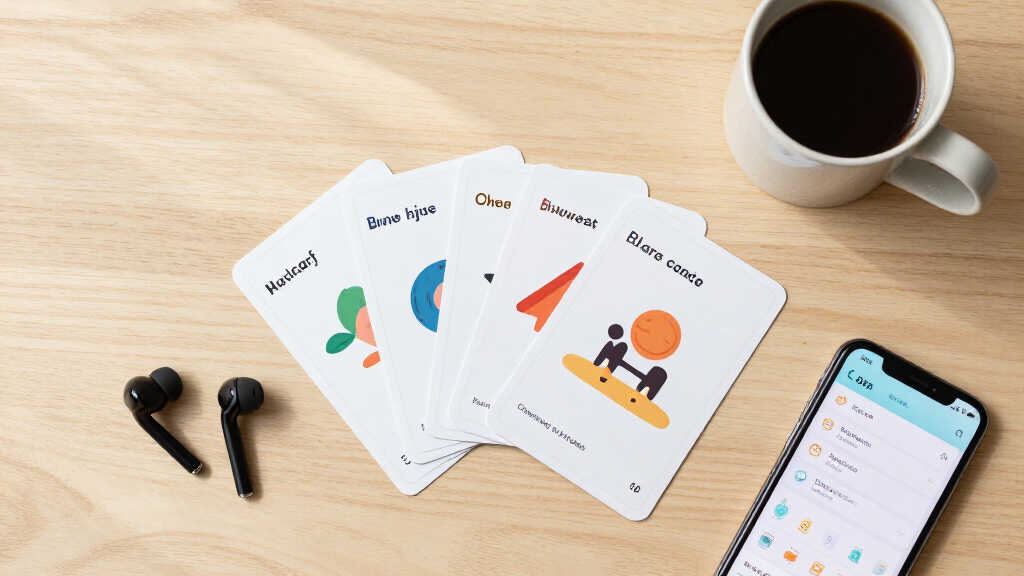

Language learning flashcard sets come in a few distinct flavors — physical picture cards for young learners and speech development, bilingual English-Spanish decks for families and adult beginners, ASL sign language sets, and phonics flip books that teach word families instead of isolated vocabulary. Across this lineup, the ThinkPsych Advanced Language Learning Cards Bundle stands out as the best overall pick for its structured 300-card curriculum and evidence-based progression, while the American Sign Language Flashcards: 500 Words and Phrases is the deepest ASL resource here and the Airbution Bilingual Talking Flash Cards offer the best audio reinforcement for Spanish learners on a budget. The main tradeoffs you’ll face are card stock durability versus price, whether you want electronic audio feedback or screen-free simplicity, and whether a set targets early vocabulary builders or genuine second-language acquisition. Read on for the full breakdown, including which sets belong in a speech therapy toolkit and which are better as toddler entertainment.

Prime made for students and young adults
- Fast, free delivery for dorm and study essentials
- Prime Video and Amazon Music included
- Member-only deals
Key Takeaways
- Curriculum structure separated the top picks: the ThinkPsych 300-card bundle and the 500-word ASL set organize vocabulary into progressive lessons, while most cheaper decks are shuffled grab bags with no learning sequence.
- Talking flashcards (Aullsaty and Airbution) trade durability and card quality for audio reinforcement — a real advantage for pre-readers and pronunciation practice, but a drawback for families wanting screen-free, battery-free learning.
- Picture-word decks overlap heavily: the SpriteGru 140 Noun set, the 50 Noun Language Builder, and the SpriteGru 100 Verb set serve similar speech-therapy and ESL purposes, and the right choice depends mostly on deck size and verb versus noun coverage rather than quality gaps.
- Flip books (Trendify and HAIYANG) are not traditional flashcards at all — they teach phonics patterns and rhyming word families, making them a better fit for early readers than for vocabulary building or second-language learners.
- ASL buyers face a clear split: card-based decks like Carson Dellosa suit visual learners and classroom walls, while the book-format 500 Words and Phrases set offers far more vocabulary plus phrase-level signing for serious learners.


| language learning flashcard set | Brand |
|---|---|
| ASL Flash Cards | YIYDONG |
| 300 Bilingual English-Spanish | Study Key |
| Quokka 225 First Sentence Flas | Quokka |
| 50 Noun Flashcards | — |
| ASL Flash Cards | Aizweb |
| Trendify Read and Rhyme Flip B | Trendify |
| SpriteGru 140 Noun Picture-Wor | SpriteGru |
| ThinkPsych Advanced Language L | ThinkPsych |
| Carson Dellosa American Sign L | Carson Dellosa Education |
| American Sign Language Flashca | — |
| Aullsaty Talking Flash Cards f | Aullsaty |
| Scholastic Early Learners: Veh | — |
| SpriteGru 100 Verb Flashcards | SpriteGru |
| Airbition Bilingual Talking Fl | Airbition |
| HAIYANG Phonics Word Family Fl | HAIYANG |
More Details on Our Top Picks
ASL Flash Cards – 500 American Sign Language Flash Cards for Beginners and Toddlers
This YIYDONG bundle earns the top spot among ASL options because it pairs sheer vocabulary volume with genuinely usable organization. Ten color-coded packs spanning verbs, nouns, calendar terms, and sight words mean a family can move from labeling mealtime foods to building full phrases without buying add-ons. Compared with the Aizweb 240-card starter bundle, it more than doubles the word count and adds grammar-adjacent categories like verbs, though it gives up the larger 5.71-inch card format that classrooms prefer. The self-checking backs let older students drill independently while parents guide toddlers through the picture sides. The tradeoff is weight: at 3.7 pounds with a storage box, this is a shelf set rather than a purse set.
Pros:- 500 words across 10 themed, color-coded packs
- Self-checking answers support independent study
- Waterproof, tear-resistant 350gsm laminated cardstock
- Rings and storage box keep the set sorted
Cons:- Content skews past true toddler level despite the 12-month label
- Bulky 3.7-pound set is far less portable than ring-only sets
Best for: Homeschool families and ASL beginners who want one purchase that carries them from first signs to intermediate vocabulary
Not ideal for: Anyone wanting a grab-and-go travel set — the full box is heavy and the ten packs are awkward to carry together
- Brand:YIYDONG
- Number of Cards:500
- Number of Packs:10 themed, color-coded packs
- Card Size:2.8″ x 4.3″
- Material:350gsm laminated cardstock
- Included Components:10 binder rings, storage box
- Weight:3.7 pounds
- Age Range:3+ (manufacturer lists 12 months and up)
Our verdict“Buy this if you want the deepest ASL vocabulary coverage in a single organized box and don’t need to carry it daily.”
300 Bilingual English-Spanish Flash Cards for Adults & Kids Ages 12+
What separates this Study Key set from other bilingual options is that each card teaches how to use the word, not just what it means — pronunciation guides, example sentences, and gender markers appear alongside every image. That makes it far more useful for actual Spanish progress than the Airbition talking flash cards, which rely on audio playback but offer less grammatical context per word. Six everyday noun categories keep sessions focused, and the key-ring design invites group games and car-ride drills. The honest limitation: this is a noun-only set, so learners hoping to conjugate verbs or build grammar will hit a ceiling, and the 12+ age recommendation makes the “kids” in the title misleading for preschool parents.
Pros:- Pronunciation, example sentences, and gender identification on every card
- 300 words across 6 practical everyday topics
- Key-ring design is genuinely pocket-portable
- Works well for group and family study, not just solo drilling
Cons:- Nouns only — no verbs, grammar, or sentence construction
- Age 12+ recommendation limits use for younger kids
Best for: Teens and adults beginning Spanish (or English) who want structured, sentence-level practice on a budget
Not ideal for: Parents of young children expecting a toddler-friendly set — the content and card design target ages 12 and up
- Brand:Study Key
- Number of Cards:300
- Topics:Body Parts, Fruits, Animals, Transportation, Foods & Spices, Vegetables (50 each)
- Card Dimensions:8.5″L x 4″W
- Age Range:12+
- Format:Double-sided with images, pronunciation, sentences, and gender
- Portability:Key-ring attachment
Our verdict“The strongest pick in this lineup for bilingual families with tweens, teens, or adults studying side by side.”
Quokka 225 First Sentence Flash Cards for Toddlers with Rings – Montessori Learning Toy
Most sets in this roundup teach words; this Quokka deck teaches word combination, walking toddlers from single labels toward simple everyday sentences about routines and actions. That progression makes it a better bridge to speech than the Scholastic Vehicles 50 First Words cards, which stop at vocabulary and lack rings for organization. The realistic imagery aligns with Montessori preferences for real-life reference over cartoons, and the large cards survive toddler handling. Two real frustrations: the packaging shows three different age ranges across sections, so buyers must judge readiness themselves, and there’s no storage box — just the rings, which means loose packs on a shelf.
Pros:- Teaches sentence-building, not just single words
- Realistic images that match Montessori principles
- Large, durable cards sized for small hands
- Rings make it easy to bring a few packs anywhere
Cons:- Conflicting age labeling across packaging
- No storage box included
Best for: Parents of 2-4 year olds working on speech delays or moving from first words to two- and three-word phrases
Not ideal for: Buyers who want an organized, boxed curriculum — the ring-only design scatters easily without a dedicated storage spot
- Brand:Quokka
- Card Count:225
- Recommended Age:24 months and up
- Educational Objective:Early language, speech, and communication skills
- Format:Cards with organizing rings
- Style:Montessori-inspired, realistic imagery
- Part Number:FCFSent225
Our verdict“The best choice in this roundup for toddlers who already label objects and need help stringing words together.”
50 Noun Flashcards – Picture & Word Photo Cards Language Builder for Autism, ESL, and Vocabulary Learning
Small can be a feature. Where the SpriteGru 140-card noun set offers breadth, this 50-card deck offers manageability — a size that speech therapists and special-ed teachers can actually finish in a session without overwhelming a learner. Real-life photos rather than illustrations matter here: for autism support and dementia care, photographic realism aids recognition in ways drawings sometimes don’t. The photo-front, word-back format supports both receptive and expressive drills, mirroring the Language Builder approach at a lower commitment level. The obvious cost of the small footprint is scope — it covers only nouns, and pairing it with the SpriteGru 100 Verb Flashcards would be needed for fuller sentence work. No storage box means cards live in a baggie.
Pros:- Real-life photos rather than illustrations
- Session-sized deck that avoids overwhelming learners
- Large 4″ x 5.8″ cards easy to see and handle
- Double-sided design supports recognition and recall drills
Cons:- Only 50 cards, all nouns
- No storage box or organizer included
Best for: Speech therapists, ESL tutors, and caregivers who need a focused, low-overwhelm deck for one-on-one sessions
Not ideal for: Learners building broad vocabulary — 50 nouns runs out quickly and there’s no organizational storage included
- Card Count:50
- Design:Double-sided — photo front, word back
- Card Size:4″ x 5.8″
- Imagery:Real-life photographs
- Use Cases:ESL, autism support, speech therapy, kindergarten, homeschooling, dementia care
- Portability:Lightweight, travel-friendly
Our verdict“A purpose-built therapy tool rather than a general study set — buy it for targeted sessions, not comprehensive vocabulary.”
ASL Flash Cards – Large-Sized American Sign Language Flashcards for Beginners
This Aizweb bundle wins on visibility. At 5.71 inches wide, its cards are nearly double the display area of the YIYDONG 500-card set, which matters when a teacher holds cards up for a whole room or a child needs to study handshape detail from arm’s length. The written descriptions of handshape, location, and movement on each card go beyond simple illustrations, giving self-learners corrective feedback the smaller set doesn’t provide. Five themed packs cover fundamentals — alphabet, numbers, emotions, greetings — rather than deep vocabulary. That’s the tradeoff: you get clarity and classroom durability over the breadth of the YIYDONG set, and anyone past beginner ASL will outgrow it within months.
Pros:- Extra-large cards readable at classroom distance
- Written handshape, location, and movement descriptions
- Wipe-clean, tear-resistant laminated cardstock
- Rings and storage box included
Cons:- Only 240 foundational words — limited long-term depth
- Too basic for learners beyond beginner ASL
Best for: Preschool and elementary teachers, plus therapists, who need cards visible from across a room
Not ideal for: Intermediate ASL students — the 240 foundational words will be familiar territory and offer little growth
- Brand:Aizweb
- Number of Cards:240
- Number of Packs:5 themed, color-coded packs
- Card Size:5.71″ x 3.94″
- Material:350gsm laminated cardstock
- Included Components:5 metal binder rings, storage box
- Recommended Age:3 years and up
- Educational Objective:Language skills (ASL fundamentals)
Our verdict“Choose this over larger ASL sets when card size and sign-detail clarity matter more than total vocabulary count.”
Trendify Read and Rhyme Flip Books – 30 Word Family Phonics Flip Books & Flash Cards for Kids
Most flashcard sets in this roundup teach single words; this one teaches reading mechanics. The 30 flip books drill word families, rhyming patterns, and sight words so a child starts recognizing that “-at” builds cat, hat, and mat. Compared with picture-noun sets like the SpriteGru 140 Noun cards, this is a step further along the literacy path — less about vocabulary, more about decoding. The flip format is genuinely interactive, which keeps fidgety preschoolers engaged longer than loose cards. The tradeoff is durability: thin cardboard won’t survive a determined toddler the way laminated ThinkPsych cards would, and the content tops out once a child reads fluently. This pick makes the most sense for parents and kindergarten teachers actively teaching phonics, not for general vocabulary building.
Pros:- Interactive flip-book format keeps young learners engaged better than loose cards
- Combines word families, phonics, sight words, and vocabulary in one set
- Vivid illustrations reinforce rhyming and pattern recognition
- Works equally well in classrooms, homeschools, and at home
Cons:- Thin cardboard construction won’t withstand heavy toddler use
- Limited to early reading skill levels — quickly outgrown
Best for: Parents and kindergarten teachers actively teaching word families, rhyming, and early reading skills to ages 3-6
Not ideal for: Toddlers who bend cards roughhousing, or older kids who already read — the content ceiling is low
- Brand:Trendify
- Number of Pieces:30 flip books
- Dimensions:8.7 x 6.5 x 0.1 inches
- Material:Cardboard
- Educational Objective:Phonics, rhyming, sight words
- Recommended Age:36 months and up
Our verdict“Buy this if your goal is teaching a preschooler to read through word patterns, not just naming pictures.”
SpriteGru 140 Noun Picture-Word Flash Cards – Language Builder for Speech Development, Autism, ESL, and Toddler Vocabulary
This set delivers something most competitors don’t at this tier: real depth per card. Each of the 140 cards pairs a real-life photo on the front with the word, a description, category, and function on the back — so a speech session can move from naming to describing without swapping materials. Compared with the smaller 50 Noun Flashcards set elsewhere in this roundup, doubling to 140 cards across animals, foods, vehicles, and household objects means far more session variety. The tear-resistant cardstock with rounded corners is sturdy enough for daily therapy or classroom rotation, though it falls short of the ThinkPsych bundle’s laminated, wipe-clean build if sanitize-ability matters in your setting. For therapists, ESL teachers, and parents building a foundational noun vocabulary, the price-to-content ratio here is hard to beat.
Pros:- 140 cards covering a wide range of everyday vocabulary categories
- Double-sided design layers images, words, descriptions, and functions for deeper learning
- Tear-resistant cardstock with rounded corners for safe, repeated handling
- Compact enough for therapy sessions, classrooms, and travel
Cons:- Cardstock can wear down under very rough long-term handling
- Nouns only — no verbs, actions, or sentence-building content
Best for: Speech therapists, ESL teachers, and parents of toddlers or autistic learners building core noun vocabulary on a budget
Not ideal for: Learners past basic nouns who need verbs, sentences, or advanced concepts — pair it with a verb set instead
- Brand:SpriteGru
- Number of Cards:140 double-sided cards
- Model Number:Gru560
- Age Range:3 years and up
- Educational Objective:Speech development, vocabulary, ESL
- Content:Common nouns: animals, foods, furniture, vehicles, household items
Our verdict“The smartest starting point for foundational vocabulary work where card count and teaching depth matter more than premium materials.”
ThinkPsych Advanced Language Learning Cards Bundle – 300 Flashcards (Level 2 Nouns + People Set)
Where the SpriteGru 140-card set builds nouns, this bundle expands the whole curriculum: 150 advanced nouns plus 150 cards on actions, body parts, and emotions. That emotional and action vocabulary is what makes this set stand out for speech therapy and ESL contexts where learners need to express states, not just label objects. The build quality is the other differentiator — laminated cards three times thicker than standard, non-toxic, BPA-free, and CPSIA compliant, which matters for shared classrooms and younger special-needs learners who mouth or bend materials. The tradeoffs are real: Level 2 nouns include only one example per word, giving less context than the SpriteGru’s description-backed cards, and beginners may find the advanced vocabulary frustrating without scaffolding. Compared with cheaper sets, you’re paying for durability and breadth rather than guided instruction.
Pros:- 300 cards spanning nouns, actions, body parts, and emotions in one bundle
- Laminated cards 3X thicker than standard, easy to sanitize
- Non-toxic, BPA-free, and CPSIA compliant for classroom safety
- Scales from preschool through adult learners and cognitive rehabilitation
Cons:- Level 2 nouns offer only one example per word, limiting context
- Too advanced for true beginners without supplementary materials
Best for: Speech therapists, ESL/EFL instructors, and special education programs needing durable, high-volume vocabulary materials spanning preschool through adult learners
Not ideal for: Beginners and toddlers just starting vocabulary — the Level 2 content assumes existing foundational words
- Brand:ThinkPsych
- Set Name:Level 2 Nouns + People Set
- Unit Count:300 flashcards
- Card Sets:150 Level 2 Nouns cards; 150 People Set cards (actions, body parts, emotions)
- Material:Laminated, 3X thicker than standard flashcards
- Safety Certification:Non-toxic, BPA-free, CPSIA compliant
- Educational Objective:Language skills, speech therapy, ESL/EFL
Our verdict“The premium choice when durability, safety certification, and vocabulary breadth across ability levels justify the investment.”
Carson Dellosa American Sign Language Flash Cards (105 pc, 122 ASL Signs)
This is the friendliest entry point into sign language for children in the roundup. The 105 cards cover 122 signs — alphabet, numbers to 20, animals, feelings, and everyday words — with a colorful signing illustration on one side and the word on the other, so kids can self-check. What separates it from the larger 500-word ASL sets listed alongside it is the included resource card with games and skill-building activities, which turns a deck into a lesson plan. The 3 x 5.9-inch glossy cards sort easily and hold up to classroom shuffling. Drawbacks: unlike the more adult-oriented 500 Words and Phrases set, the vocabulary skews basic, so dedicated learners outgrow it. And very young toddlers will need adult guidance since the handshape illustrations require some coordination to mimic. It’s a structured starter kit, not a reference library.
Pros:- 122 signs spanning alphabet, numbers, animals, feelings, and everyday words
- Double-sided illustration-to-word design supports independent practice
- Resource card includes games and skill-building activities
- Glossy cardstock with rounded corners for easy sorting and durability
Cons:- Handshape illustrations require adult guidance for very young toddlers
- No manufacturer warranty included
Best for: Parents, elementary teachers, and speech therapists introducing ASL basics to children ages 4 and up
Not ideal for: Serious ASL students or adults wanting extensive vocabulary — the sign count and depth are entry-level
- Brand:Carson Dellosa Education
- Card Count:105 cards (122 signs)
- Card Size:3 x 5.9 inches
- Age Range:Ages 4+
- Material:Glossy cardstock
- Model Number:CD-3927
- Included Extras:Resource card with games and activities
Our verdict“The best kid-oriented ASL starter deck thanks to its built-in activity guidance, as long as basic vocabulary is your goal.”
American Sign Language Flashcards: 500 Words and Phrases, Second Edition
Serious learners need volume, and 500 words and phrases is the largest ASL offering in this lineup — roughly four times the vocabulary of the Carson Dellosa kids’ deck. The flashcard format supports active recall and self-paced study, which suits older students, homeschoolers preparing for ASL coursework, and adults committed to real conversational competence rather than a handful of animal signs. The second edition also means refreshed content rather than an aging reprint. The honest tradeoff: unlike the Carson Dellosa set, there’s no activity guide or game structure here, so you supply the study discipline. And sparse published detail on card materials and design makes it harder to verify durability before buying. Compared with the beginner- and toddler-focused ASL sets in this roundup, this one demands more from the learner and returns more vocabulary in exchange.
Pros:- Largest ASL vocabulary coverage in the category at 500 words and phrases
- Flashcard format enables active recall and self-paced learning
- Updated second edition with refreshed content
- Includes phrases, not just single words, for conversational practice
Cons:- No activity guide or structured games for younger or casual learners
- Limited published detail on card materials and construction quality
Best for: Teen and adult learners, homeschool families, and students building substantial ASL vocabulary for coursework or fluency
Not ideal for: Young children or casual learners — no games, large volume, and self-directed pacing assume study discipline
- Edition:Second Edition
- Content:500 ASL words and phrases
- Format:Flashcard set
- Educational Objective:American Sign Language vocabulary
- Learning Style:Active recall, self-paced study
Our verdict“Choose this when ASL vocabulary volume matters more than hand-holding — it’s a study tool for committed learners, not a kids’ toy.”
Aullsaty Talking Flash Cards for Toddlers 1-5 Years, 536 Sight Words with 6 Songs
Among the audio-based options in this roundup, the Aullsaty Talking Flash Cards stands out for sheer content volume: 536 sight words spread across 268 double-sided cards, plus nursery song cards that the Airbition bilingual reader doesn’t offer. Because the reader pronounces each word when a card is inserted, a toddler can build vocabulary without a parent narrating every card — a genuine advantage over silent sets like the SpriteGru verb cards, which depend entirely on adult involvement. The screen-free format and USB rechargeable design make it practical for car rides and waiting rooms, and the included dinosaur storage bag addresses the card-loss problem that plagues most physical sets.
The tradeoffs are real, though. Younger toddlers still need an adult nearby to keep the activity focused, and the advertised word count differs slightly between listings, which some buyers find confusing. Compared with simpler picture-only sets, this is more gear to charge, store, and keep track of.
Pros:- Massive 536-word library across everyday themes like animals, vehicles, foods, and shapes
- Clear audio pronunciation lets children practice independently of an adult narrator
- Screen-free format with realistic sound effects that hold toddler attention
- Comes with a storage bag, USB cable, and lifetime warranty against defects
Cons:- Advertised word count varies between listings (530 vs 536), which can be confusing
- Younger toddlers need adult supervision to get meaningful practice rather than random card-inserting
Best for: Parents of toddlers aged 1-5 who want a screen-free, self-directed vocabulary tool for home and travel
Not ideal for: Families who want a minimalist, no-batteries learning tool — the reader needs charging and cards need active organizing
- Brand:Aullsaty
- Age Range:12 months – 6 years
- Cards Included:268 double-sided cards
- Sight Words:536
- Songs:6 nursery song cards
- Power:USB rechargeable
- Included Components:Card reader, 268 cards, USB cable, user guide, dinosaur storage bag
- Warranty:Lifetime warranty against manufacturer defects
Our verdict“This is the pick for parents who want an all-in-one talking vocabulary machine that a toddler can largely operate solo.”
Scholastic Early Learners: Vehicles 50 First Words Flashcards
Sometimes the right flashcard set is the smallest one. The Scholastic Vehicles 50 First Words cards do one narrow job — vehicle-themed first vocabulary from a publisher with decades of curriculum credibility — and that focus is its strength. Where the Aullsaty talking set bundles hundreds of words, a reader, and a charging cable, this deck requires nothing but a lap and a few minutes, which makes it the easiest option in the roundup to actually use daily with a very young child. The vehicle theme is a smart hook for toddlers obsessed with trucks and trains, a lever that general-purpose decks like the SpriteGru noun cards can’t pull as directly.
The flip side of simplicity is ceiling. Fifty words get exhausted quickly, there’s no bilingual or audio component, and published detail on card stock quality is thin, so durability is an open question compared with the coated, rounded-edge cards elsewhere in this guide.
Pros:- Trusted educational publisher with proven early-learning design
- Vehicle theme strongly appeals to young children who resist generic flashcards
- No setup, charging, or supervision architecture required
- Compact deck travels easily in a diaper bag or purse
Cons:- Only 50 words, so content is exhausted quickly by an engaged child
- Limited published detail on card durability and finish quality
Best for: Parents of vehicle-obsessed toddlers who want a cheap, low-commitment first flashcard deck with no batteries or setup
Not ideal for: Anyone building a sustained vocabulary or phonics program — 50 picture words won’t carry a child past the earliest stage
- Publisher:Cartwheel Books
- Series:Scholastic Early Learners
- Format:Flashcards
- Card Count:50
- Theme:Vehicles / first words
- Language:English
Our verdict“A no-frills first deck best treated as a gateway product rather than a core curriculum.”
SpriteGru 100 Verb Flashcards – Picture & Word Action Language Builder Cards
Most flashcard sets in this roundup lean on nouns — the SpriteGru 140 Noun cards and the 50 Noun Flashcards both stop at labeling objects. The SpriteGru 100 Verb Flashcards fills the gap that matters most for sentence construction: action words. Each double-sided card pairs the printed verb with a vivid illustration of the action, which is exactly the format speech therapists and ESL teachers rely on, because verbs unlock sentence-building, acting-out games, and storytelling in ways static noun decks can’t. The oversized 4″ x 5.8″ cards are easier for small hands and group settings than standard-size decks like the Scholastic vehicles set.
The tradeoff is scope. A child working only with this deck learns 100 actions and nothing else — no nouns, no phonics, no bilingual support — so it works best as a deliberate supplement rather than a standalone program. Buyer feedback on this set is also limited, so quality consistency is less documented than with bigger, longer-established brands.
Pros:- Verb-focused content that complements noun-heavy decks and enables sentence construction
- Double-sided picture-and-word design reinforces meaning through visual association
- Large 4″ x 5.8″ cards work well in classrooms and group therapy settings
- Versatile across matching games, charades-style acting, storytelling, and travel
Cons:- Covers only verbs, so it can’t serve as a complete vocabulary curriculum on its own
- Limited buyer feedback makes long-term durability harder to judge
Best for: Speech therapists, ESL teachers, and parents of autistic children who need verb-specific cards for sentence building and action games
Not ideal for: Families seeking a single comprehensive vocabulary set — this covers verbs only and assumes you’ll pair it with a noun deck
- Brand:SpriteGru
- Model Number:Gru720
- Card Count:100 flashcards + 2 instruction cards
- Card Size:4″ x 5.8″
- Educational Objective:Language skills, verbs and sentence building
- Recommended Age:3 years and up
- Intended Contexts:Homeschool, ESL, speech therapy, autism support, travel
Our verdict“The strongest choice when your child can label objects but struggles to build sentences — buy it alongside a noun set, not instead of one.”
Airbition Bilingual Talking Flash Cards, 510 Spanish-English Words
For families raising bilingual children, the Airbition Bilingual Talking Flash Cards solves a problem no English-only product here can touch: consistent, correctly accented pronunciation in both Spanish and English. Compared with the 300 Bilingual English-Spanish Flash Cards aimed at ages 12+, this reader skews younger — the insert-a-card operation is simple enough for a 2-year-old to use without help, and the standard American-accent voice means non-fluent parents aren’t teaching their children incorrect pronunciation. Content runs from basics like colors and numbers through more advanced words, giving the set a longer useful life than the Scholastic 50-word deck.
It’s not self-teaching, though. Parents still have to curate which cards match their child’s developmental stage, and the physical card collection is easy to scatter — the reusable box helps, but unlike the Aullsaty set’s dinosaur bag, storage discipline still falls on the adult.
Pros:- Native-quality pronunciation in both Spanish and English builds correct accents from the start
- Card-insert design allows independent toddler play without adult narration
- 512 words spanning basic to advanced levels extend the set’s useful lifespan
- Gift-ready reusable storage box keeps the collection organized
Cons:- Parents must supervise and filter cards to match the child’s developmental stage
- Loose cards are easy to misplace despite the included storage box
Best for: Bilingual or monolingual families introducing Spanish to children aged 2+ who want correct pronunciation without needing a fluent parent
Not ideal for: Adult or teen learners — the toddler-oriented design and basic interface make the 300 Bilingual card set for ages 12+ a better fit
- Brand:Airbition
- Word Count:512 words (basic to advanced)
- Languages:Spanish and English
- Voice:Clear standard American accent
- Recommended Age:2+ years
- Card Operation:Insert card to hear pronunciation
- Includes:Card reader, cards, reusable storage box
Our verdict“The clear choice for households where a second language is the goal and accurate audio matters more than a fluent parent’s own pronunciation.”
HAIYANG Phonics Word Family Flip Books – 40 Read and Rhyme Flip Book Set
Every other product in this roundup teaches vocabulary — recognizing and saying words. The HAIYANG Phonics Flip Books target the harder skill of decoding, walking children through 5 progressive levels from simple CVC words to long vowels, Magic E, digraphs, and blends across 320+ words. The “change the onset” flip mechanism makes the phonics pattern visible and tactile in a way flat flashcards like the Aullsaty sight-word reader can’t replicate, since sight words are memorized whole while these books teach a child to actually sound words out. Compared with the Trendify 30-book flip set, this one goes further — 40 books, 5 levels instead of fewer, plus A/B review sheets for tracking progress against Pre-K through 3rd grade standards.
The structure demands more from everyone involved. Very young children will flounder without adult guidance, and this is a curriculum to work through over months, not a toy to hand a toddler. Feedback on the set is also drawn from a small pool of buyers, so real-world durability reports are thinner than for established brands.
Pros:- Systematic 5-level progression from CVC words through digraphs and blends
- Tactile flip mechanism makes phonics patterns physically visible and memorable
- A/B review sheets let parents and teachers track measurable progress
- Aligned with Pre-K to 3rd grade reading standards and backed by a 1-year warranty
Cons:- Too advanced for very young children without sustained adult guidance
- Limited buyer feedback makes long-term quality harder to verify
Best for: Parents and teachers of children ages 3-7 who are past vocabulary drills and ready for a structured, step-by-step reading program
Not ideal for: Toddlers and families wanting casual pick-up-and-play learning — this is a guided curriculum that needs adult time and consistency
- Brand:HAIYANG
- Number of Items:40 flip books
- Levels:5 progressive levels
- Phonics Patterns Covered:53 (short vowels, long vowels, Magic E, digraphs, blends)
- Total Words:320+
- Recommended Age:3 years and up (Pre-K to 3rd grade)
- Includes:40 flip books, A/B review sheets
- Warranty:1 year
Our verdict“The right buy once your child can speak in sentences and needs to learn how reading actually works, not just what words mean.”

How We Picked
I evaluated each set against four criteria that actually drive learning outcomes. Instructional design came first: does the set have a logical vocabulary progression, clear illustrations or photos that work without translation, and enough repetition built in? Physical build quality was next — card stock thickness, lamination, corner rounding for toddlers, and whether organizing rings or storage boxes are included, because flimsy cards get destroyed by the exact audience they’re made for. Audience fit mattered as much as quality: a brilliant toddler deck is useless to an adult Spanish learner, so I judged each set against its intended user rather than a single standard.
The ranking also reflects versatility and long-term value. Sets that support multiple use cases — speech therapy, ESL classrooms, home practice, and sibling hand-me-downs — placed higher than single-purpose novelty decks. Where two products covered the same niche, I favored the one with better organization and clearer differentiators, and I flag the overlaps openly so you don’t buy two decks that do the same job. No set is perfect, and every entry below includes the tradeoff that might make you skip it.
Factors to Consider When Choosing Language Learning Flashcard Sets
Before picking a specific set, it helps to understand what actually separates a flashcard set that gets used weekly from one that ends up in a drawer. These are the factors I weighed most heavily, and the mistakes I saw buyers make repeatedly.Match the Format to the Learner’s Age and Reading Level
The single biggest mistake in this category is buying cards the learner can’t interact with yet. Pre-readers (roughly ages 1-4) need photo-realistic pictures and audio — they can’t decode text, so a word-heavy deck gives them nothing to anchor to. That’s why talking flashcards and Montessori ring sets dominate the toddler end of this list. Early readers (5-7) benefit from phonics flip books that connect spelling patterns to sounds, while older kids and adults do fine with text-forward bilingual decks. A related trap: decks labeled ‘and up’ often skew far younger than expected, so check card count and vocabulary difficulty rather than trusting the age range on the box.
Curriculum Structure Beats Card Count
A 500-card pile with no organization is harder to learn from than a 105-card set grouped into logical lessons. When comparing decks, look for categorized sections, difficulty levels, or themed groupings — food, actions, family, colors — because spaced repetition works only when you can re-test small, coherent batches. The best sets in this roundup bundle cards into teachable units; the worst mix unrelated words randomly. This is also where speech therapy and ESL buyers should be pickiest: therapists typically need to target specific vocabulary categories per session, and a well-sorted deck saves real prep time. If a product description doesn’t mention organization, assume there isn’t much.
Durability Determines Whether the Set Survives Its Audience
There’s a cruel irony in this category: the cards most likely to be chewed, bent, and thrown are the ones made cheapest. Laminated or coated card stock is non-negotiable for toddler sets, and rounded corners prevent both injuries and peeling. Ring-bound sets (like the Quokka and Trendify options) solve the scattering problem entirely — you’ll never re-sort a floor’s worth of dropped cards. For adult and classroom use, standard card stock is acceptable since the handling is gentler, but thin paper-flashcard sets still warp quickly with frequent shuffling. Storage matters too: a sturdy box or tuck-tab case keeps a set usable for years and for younger siblings.
Decide Whether Audio Is a Feature or a Distraction
Talking flashcard readers are the fastest-growing segment here, and they genuinely help with pronunciation and independent play — a child can self-check without an adult, and a Spanish learner hears native-adjacent audio instead of guessing at phonetics. But there are real downsides: these devices need batteries or charging, add a plastic device to lose or break, and their audio quality varies from pleasant to robotic. Families committed to screen-free, device-free Montessori-style learning should skip them entirely. My rule of thumb: audio shines for pronunciation-heavy languages and pre-readers, and adds little for picture-based vocabulary where a parent or teacher is present anyway.
Bilingual and ASL Sets Have Different Standards Than Picture Cards
A bilingual deck lives or dies on accurate translation and gendered-article correctness — a common complaint with budget Spanish-English sets where direct translations miss context. Check whether the deck includes phonetic pronunciation guides, which matter enormously for adult learners without a speaking partner. ASL buyers face a different issue: static drawings can’t capture motion, so any card-based ASL set is a supplement to video, not a replacement. The better ASL resources in this list acknowledge that by including arrows, multiple-sign phrases, and clear hand-shape breakdowns. If your goal is conversational ASL or Spanish, plan on pairing cards with video or audio content and treat the deck as your practice and review layer.
Avoid Redundant Purchases
Several sets in this roundup cover nearly identical ground, and buying two of them wastes money without doubling learning. The noun-picture niche alone has three strong entries (SpriteGru 140, the 50-card Language Builder, and ThinkPsych Level 2), so pick one based on size and level rather than stacking them. Similarly, the Trendify and HAIYANG flip books teach the same phonics skill at slightly different scales. A smarter spread looks like: one picture-vocabulary deck, one phonics or sentence-building set, and optionally one talking deck for audio reinforcement. That combination covers listening, speaking, and reading without redundancy — and leaves room to add a second language later.
Frequently Asked Questions
Are talking flashcards better than regular flashcards for language learning?
It depends on who’s using them and for what. Talking cards shine for pre-readers and pronunciation-sensitive languages, because a child can learn independently and hear consistent audio without a parent repeating words all day — a genuine sanity-saver for busy households. For Spanish learners specifically, hearing spoken words beats guessing at pronunciation from text. The tradeoffs are real, though: talking systems require batteries, the audio can sound robotic on budget models, and the card stock is often thinner since the device does the heavy lifting. If you already sit and practice with your learner daily, a well-made physical deck with photos will serve you just as well and last longer.
Can flashcard sets alone teach my child a second language?
No set in this roundup will produce fluency on its own, and it’s better to know that going in. Flashcards excel at vocabulary acquisition and retention — they’re genuinely one of the best tools for building a base of nouns, verbs, and common phrases through repetition. But language requires hearing it in context and producing sentences, so bilingual families typically pair decks with books, videos, or conversation. Where cards do carry more of the load is ASL: since sign language is visual and physical, illustrated cards with motion arrows can teach a surprising number of signs effectively. Think of any deck here as the practice layer of a bigger routine, not the whole routine.
What’s the difference between the noun-picture sets for speech therapy versus ESL?
The decks look similar — photos, single words, sturdy stock — but they’re optimized for different failure points. Speech therapy sets emphasize clear, uncluttered photo backgrounds so attention lands on the object, and they often include photo-realistic (rather than cartoon) images because some learners with autism connect better with real-world pictures. ESL-oriented decks lean toward categorized vocabulary with more words per deck, since adult and classroom learners move faster and need thematic batches. If you’re a therapist or ABA provider, the Language Builder and ThinkPsych lines follow that clinical design philosophy. If you’re teaching classroom English, the SpriteGru decks give you more cards per dollar with solid categorization.
Which type of set is best for a toddler just starting to talk?
For the under-four crowd, ring-bound photo cards and talking flashcards are the two formats that actually work. Rings keep cards together and portable — the Quokka first-sentence set is built exactly for stroller and car-seat moments — and they survive being handled by small, imperfect hands. Talking decks like the Aullsaty add audio reinforcement and songs, which holds attention longer but introduces a device to manage. What you want to avoid at this age is text-heavy vocabulary decks meant for older kids; a two-year-old gets nothing from a printed word and will scatter loose cards within minutes. Simple nouns, realistic images, and physical durability are the three things that matter most.
How many cards do I actually need in a flashcard set?
More is not automatically better, and oversized decks can actually slow learning down. Research on spaced repetition favors small, mastered batches over giant shuffled piles, so a 105-card organized set can outperform a 500-card grab bag for retention. Large decks make sense when the vocabulary is genuinely needed — a serious ASL learner will use all 500 words and phrases, and a bilingual household will work through a 500-word deck over a year. For toddlers and early vocabulary builders, 50 to 150 cards is plenty, because you’ll cycle the same core words for months. Judge card count against organization: 500 well-sorted cards beat 500 loose ones every time.
Conclusion
After comparing all fifteen sets, the right choice comes down to who’s learning and how they learn best. Best overall goes to the ThinkPsych Advanced Language Learning Cards Bundle — its 300-card, two-level structure, clinical-grade photo quality, and dual suitability for speech therapy and ESL make it the most versatile and durable pick here. Best value is a close call between the SpriteGru 140 Noun set and the Airbution Bilingual Talking Flash Cards: the SpriteGru wins for pure card-per-dollar durability in speech and ESL settings, while the Airbution wins if audio reinforcement matters more to you than premium card stock.
Best premium pick is the American Sign Language Flashcards: 500 Words and Phrases — no other ASL product in this lineup matches its vocabulary depth and phrase-level instruction. Best for beginners splits by age: the Quokka 225 First Sentence ring set for toddlers taking their first steps into language, and the Carson Dellosa ASL set for adults starting sign language with a manageable, wall-displayable format. For specific needs: speech therapists and ABA programs should look at the 50 Noun Language Builder and SpriteGru 100 Verb set for targeted category work, early readers building phonics skills belong with the HAIYANG 40-book flip set, and households wanting independent, device-driven practice for little ones will get the most from the Aullsaty Talking Flash Cards. Whatever you choose, buy one set per learning goal rather than stacking near-duplicates — the deck that gets used daily beats three that don’t.
Fall Picks
fall essentials
As an affiliate, we earn on qualifying purchases.