
For anatomy flash cards for students, Netter’s Anatomy Flash Cards is my best overall pick for learners who want detailed visual study, while TribeRN Anatomy and Physiology Flash Cards stands out for its large 320-card set and Anatomy Flash Cards: Latin Nomenclature focuses on terminology. The main tradeoff is between broad course coverage and a narrower set that targets a specific subject or study task. Card count alone does not show whether a deck matches your syllabus, explains structures clearly, or suits quick review between classes. I compare all 13 options by their stated focus, study format, portability, and usefulness for different student needs. Read on for the full breakdown and help choosing a deck that fits the way you study.

Prime made for students and young adults
- Fast, free delivery for dorm and study essentials
- Prime Video and Amazon Music included
- Member-only deals
Key Takeaways
- Netter’s Anatomy Flash Cards leads for students prioritizing detailed visual reference, while its specialist focus may not suit learners seeking a compact introductory set.
- TribeRN’s 320-card set offers the largest stated card count in this lineup; students should still check whether its anatomy and physiology emphasis matches their course.
- The two 30-piece sets favor portability and a smaller study load over the breadth offered by larger decks.
- Latin Nomenclature and Anatomy 2 are focused supplements, not interchangeable replacements for a broad anatomy and physiology resource.
- The lineup includes several decks with overlapping anatomy-and-physiology labels, so the deciding factors are stated scope, illustration style, and fit with the learner’s level.
| Anatomy Flash Cards: Latin Nomenclature |  | Best for Latin Terminology | Format: Flash cards | Subject: Anatomy | Terminology: Latin nomenclature | VIEW LATEST PRICE | See Our Full Breakdown |
| 30-Piece Human Anatomy and Physiology Flashcard Set |  | Best for Pocket-Sized Visual Review | Number of cards: 30 | Card size: 2.52 × 3.5 inches (6.4 × 8.9 cm) | Material: Paper | VIEW LATEST PRICE | See Our Full Breakdown |
| Anatomy Flash Cards: QuickStudy Reference and Study Tool |  | Best for Quick Reference | Product type: Flash cards | Subject: Anatomy | Stated use: Quick reference and study tool | VIEW LATEST PRICE | See Our Full Breakdown |
| Anatomy Flash Cards (Barron’s Test Prep) |  | Best for Test-Prep Shoppers | Format: Flash cards | Subject: Anatomy | Series: Barron’s Test Prep | VIEW LATEST PRICE | See Our Full Breakdown |
| Anatomy Flashcards |  | Best for a Simple Anatomy-Only Format | Product type: Flashcards | Subject: Anatomy | Card count: Not specified | VIEW LATEST PRICE | See Our Full Breakdown |
| Anatomy 2 Flash Cards: A QuickStudy Reference Tool |  | Best for Quick Reference | Format: Flash cards | Subject: Anatomy | Product type: QuickStudy reference tool | VIEW LATEST PRICE | See Our Full Breakdown |
| Anatomy Flashcards: 300 Flashcards with Anatomically Precise Drawings and Detailed Descriptions |  | Best for Visual Anatomy Review | Format: Flashcards | Number of flashcards: 300 | Subject: Anatomy | VIEW LATEST PRICE | See Our Full Breakdown |
| Netter’s Anatomy Flash Cards (Netter Basic Science) |  | Best for Netter Series Seekers | Format: Flash cards | Subject: Anatomy | Series: Netter Basic Science | VIEW LATEST PRICE | See Our Full Breakdown |
| Anatomy & Physiology Flash Cards | 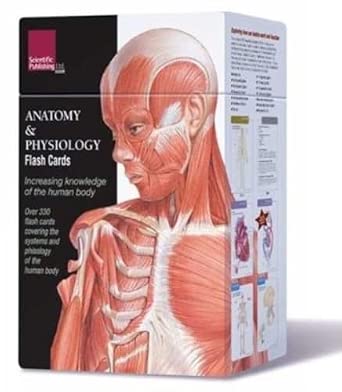 | Best for Combined-Subject Review | Format: Flash cards | Subjects: Anatomy and physiology | Intended use: Studying anatomical and physiological concepts | VIEW LATEST PRICE | See Our Full Breakdown |
| TribeRN Anatomy and Physiology Flash Cards, 320-Card Set |  | Best for Exam-Focused Coverage | Brand: Tribe RN | Number of cards: 320 | Terms covered: Over 1,800 | VIEW LATEST PRICE | See Our Full Breakdown |
| Human Anatomy and Physiology Flashcards, 30-Piece Pocket-Sized Study Set |  | Best for Pocket-Sized Review | Card count: 30 | Card dimensions: 3.5 × 2.52 inches (8.9 × 6.4 cm) | Material: Cardstock | VIEW LATEST PRICE | See Our Full Breakdown |
| Human Anatomy and Skeleton Flashcards, 42-Piece Study Set |  | Best for Anatomy Plus Bone Review | Card count: 42 | Included cards: 30 human anatomy cards and 12 skeleton and bone cards | Dimensions: 3.5 × 2.52 × 0.1 inches | VIEW LATEST PRICE | See Our Full Breakdown |
| Anatomy and Physiology Flashcards for Nursing and Medical Students |  | Best for System-by-System Exam Review | Card count: 53 | Information sides: 106 | Body systems covered: 11 | VIEW LATEST PRICE | See Our Full Breakdown |
| anatomy flash cards for student | Card count | Format | Subject |
|---|---|---|---|
| Anatomy Flash Cards: Latin Nom | Not specified | Flash cards | Anatomy |
| 30-Piece Human Anatomy and Phy | — | — | — |
| Anatomy Flash Cards: QuickStud | Not specified | — | Anatomy |
| Anatomy Flash Cards | Not specified | Flash cards | Anatomy |
| Anatomy Flashcards | Not specified | — | Anatomy |
| Anatomy 2 Flash Cards: A Quick | Not specified | Flash cards | Anatomy |
| Anatomy Flashcards: 300 Flashc | — | Flashcards | Anatomy |
| Netter’s Anatomy Flash Cards | Not specified | Flash cards | Anatomy |
| Anatomy & Physiology Flash Car | Not specified | Flash cards | — |
| TribeRN Anatomy and Physiology | — | — | Anatomy and physiology |
| Human Anatomy and Physiology F | 30 | Vertical cards | — |
| Human Anatomy and Skeleton Fla | 42 | — | — |
| Anatomy and Physiology Flashca | 53 | Double-sided flashcards | — |
More Details on Our Top Picks
Anatomy Flash Cards: Latin Nomenclature
Latin nomenclature is the focus here, making this set a targeted choice for students who need to connect anatomical terms with their formal names. Its portable flash-card format suits short study sessions away from a desk, while the narrow subject focus makes it less of a general anatomy reference than the 30-Piece Human Anatomy and Physiology Flashcard Set, which lists structures, organs, and body systems with color-coded illustrations. That specialization can help students reviewing terminology, but the available product details do not specify card count, image style, or how much information appears on each card. I would choose it as a terminology supplement rather than a student’s only anatomy resource, especially when visual coverage or a broad system-by-system review is a priority.
Pros:- Focused on anatomy terminology and Latin nomenclature
- Flash-card format supports brief recall sessions
- Designed for portable study on the go
Cons:- Card count and coverage are not specified in the available product details
- No illustration or card-layout information is provided
- Its terminology focus may leave broader anatomy review needs unmet
Best for: Anatomy students who want a portable set centered on Latin terminology for brief recall practice
Not ideal for: Students seeking a clearly documented, illustrated overview of organs and body systems, since the available details focus on nomenclature and do not describe the card content or count
- Format:Flash cards
- Subject:Anatomy
- Terminology:Latin nomenclature
- Study format:Portable
- Card count:Not specified
- Card dimensions:Not specified
Our verdict“Choose this as a portable Latin terminology supplement, not as a fully specified visual survey of anatomy.”
30-Piece Human Anatomy and Physiology Flashcard Set
Color-coded, labeled illustrations give this set a clear advantage for students who learn by matching names to visual structures. The 30 cards cover anatomical structures, organs, and body systems, and the 2.52 × 3.5-inch portrait format is easy to carry between class, study sessions, or clinical rotations. Compared with Anatomy Flash Cards: Latin Nomenclature, this set describes a broader visual scope rather than a terminology-first approach. Its compact size and card count also limit how much detail and coverage it can offer, so I would treat it as a quick-review aid rather than a substitute for a detailed course resource. Paper construction keeps the format straightforward, but the product details do not describe durability or any protective finish.
Pros:- Color-coded, labeled illustrations support visual recall
- Includes structures, organs, and body systems
- Compact 2.52 × 3.5-inch cards are easy to carry
- Useful for short review sessions between classes or during rotations
Cons:- The 30-card set offers limited coverage compared with larger study collections
- Small cards may restrict the detail visible in illustrations
- Paper material may be less suited to frequent handling than a more durable format
Best for: Visual learners in anatomy or nursing courses who want labeled structure and system prompts small enough for a pocket or study pouch
Not ideal for: Students who need extensive topic coverage or large, highly detailed diagrams, since this set has 30 small paper cards
- Number of cards:30
- Card size:2.52 × 3.5 inches (6.4 × 8.9 cm)
- Material:Paper
- Orientation:Vertical portrait
- Theme:Science
- Educational objective:Science
- Recommended age:3 years and up
- Included components:Human Anatomy Flashcards
Our verdict“Pick this for portable, illustrated refreshers, but choose a larger or more detailed set for broad course coverage.”
Anatomy Flash Cards: QuickStudy Reference and Study Tool
Quick reference and study use are the stated strengths of this set, so it may suit students who want cards to consult alongside class notes. The portable format shares a practical advantage with Anatomy Flash Cards: Latin Nomenclature, but this listing does not identify a terminology specialty or name specific topics. That makes it harder to judge whether the cards match a particular course, and the missing card count and coverage details make it less predictable than the 30-Piece Human Anatomy and Physiology Flashcard Set, which specifies both its size and subject scope. I would consider this when a general anatomy card format is the priority and the buyer can verify the edition or contents before purchase. Without those details, it is a less certain choice as a stand-alone study set.
Pros:- Designed for both study and quick reference
- Portable flash-card format
- Anatomy subject focus
Cons:- Card count is not specified in the available product details
- Topics and content coverage are not described
- Illustration style and card dimensions are not provided
Best for: Students who want a portable anatomy card set for quick reference and can confirm that its contents align with their course
Not ideal for: Buyers who need a known card count, named topics, or confirmed visual coverage before choosing study materials
- Product type:Flash cards
- Subject:Anatomy
- Stated use:Quick reference and study tool
- Card count:Not specified
- Topics covered:Not specified
- Card dimensions:Not specified
Our verdict“Consider it for general portable reference only if you can confirm the contents match your course needs.”
Anatomy Flash Cards (Barron’s Test Prep)
Barron’s Test Prep branding makes this the most explicitly exam-oriented option in this group by title, which may appeal to students looking for cards to add to a test-prep routine. The available details, however, do not state which exam or course it targets, nor do they describe card count, topics, or illustrations. That leaves more unanswered questions than with the 30-Piece Human Anatomy and Physiology Flashcard Set, whose listing at least identifies its card count and broad visual scope. Compared with Anatomy Flash Cards: QuickStudy Reference and Study Tool, this option has a clearer test-prep identity but similarly sparse content information. I would select it only after checking the edition and sample contents; the label alone cannot establish whether its coverage matches a student’s syllabus.
Pros:- Clearly identified as part of Barron’s Test Prep
- Flash-card format can fit short recall sessions
- Anatomy-specific title makes the subject focus clear
Cons:- The available product data do not name a target exam
- Card count and topic coverage are not specified
- No illustration style or card dimensions are provided
Best for: Students already comparing Barron’s study materials who want an anatomy flash-card supplement for an exam-prep routine
Not ideal for: Students who need confirmed exam alignment, a known card count, or a detailed description of topics before buying
- Format:Flash cards
- Subject:Anatomy
- Series:Barron’s Test Prep
- Card count:Not specified
- Target exam:Not specified
- Card dimensions:Not specified
Our verdict“Choose it only if the Barron’s edition and its contents match your exam plan, since the listing leaves scope unclear.”
Anatomy Flashcards
A straightforward anatomy-only title makes this a broad-format option for students who want flashcards without a stated specialization. That flexibility contrasts with Anatomy Flash Cards: Latin Nomenclature, which is explicitly focused on terminology, and with the 30-Piece Human Anatomy and Physiology Flashcard Set, which lists color-coded illustrations and named body-system coverage. Here, the available details do not establish what topics appear, how many cards are included, or whether the cards use diagrams. I would treat the plain title as a starting point, not evidence of comprehensive course coverage. It may suit a student seeking a general anatomy supplement after checking the contents, but buyers who need a predictable syllabus match should favor a set with documented scope.
Pros:- Clearly centered on anatomy
- Flash-card format can support active recall
- Does not specify a narrow terminology or physiology focus
Cons:- Card count is not provided in the available data
- Topics and level of detail are unspecified
- Illustrations, dimensions, and material are not described
Best for: Students looking for a general anatomy flash-card supplement who can review the contents before choosing
Not ideal for: Course-focused learners who need a verified topic list, a known card count, or confirmed diagrams for visual study
- Product type:Flashcards
- Subject:Anatomy
- Card count:Not specified
- Topics covered:Not specified
- Illustration details:Not specified
- Card dimensions:Not specified
Our verdict“Buy it as a general anatomy supplement only after checking its contents, since the listing does not show its scope.”
Anatomy 2 Flash Cards: A QuickStudy Reference Tool
Anatomy 2 Flash Cards is the most reference-oriented choice in this group based on its QuickStudy title, making it a reasonable fit for students who want a card-based prompt alongside coursework. The supplied details do not specify card count, topics, illustrations, or how information is divided between sides, so I would not choose it over Anatomy Flashcards: 300 Flashcards if a clearly documented visual resource is the priority. It also lacks the stated physiology coverage and organization features of the TribeRN 320-Card Set. Its appeal is a potentially straightforward anatomy review format, but the limited product information makes it difficult to judge whether it matches a particular class syllabus. Check the actual edition and sample content before relying on it as a main study tool.
Pros:- Flash-card format can support short review sessions
- QuickStudy branding identifies it as a reference-oriented study aid
- Anatomy focus may suit students reviewing course terminology
- Can be compared with other anatomy card formats before choosing a primary resource
Cons:- No card count or content breakdown is provided
- Illustration style and level of detail are unspecified
- The available information does not establish whether it includes physiology or exam-focused material
Best for: Students seeking a QuickStudy-branded anatomy card resource to supplement lectures or textbook review, who can verify the edition’s contents before buying
Not ideal for: Students who need a confirmed card count, topic list, detailed illustrations, or a syllabus-matched resource, since those details are not supplied
- Format:Flash cards
- Subject:Anatomy
- Product type:QuickStudy reference tool
- Series or brand:QuickStudy
- Card count:Not specified
- Illustrations:Not specified
Our verdict“Choose this as a possible anatomy review supplement only if you can confirm its contents and format before purchase.”
Anatomy Flashcards: 300 Flashcards with Anatomically Precise Drawings and Detailed Descriptions
With 300 cards pairing anatomically precise drawings and detailed descriptions, this set gives visual learners a more clearly documented study format than Anatomy 2 Flash Cards: A QuickStudy Reference Tool, whose supplied listing omits its card count and content details. The illustrations can help students connect names with structures rather than relying on isolated term recall, while the descriptions offer context for reviewing each image. Compared with the broader TribeRN Anatomy and Physiology Flash Cards, this set is presented specifically as an anatomy visual reference; the listing does not claim physiology coverage, mnemonics, or a ring for organization. That makes it easier to identify its study focus, but leaves unanswered questions about topic scope, card size, and portability. It suits students who value labeled visual learning more than extra study accessories.
Pros:- Includes 300 flashcards
- Pairs anatomically precise drawings with written descriptions
- Visual reference format supports linking structures to terminology
- Its anatomy-centered description makes the study focus clear
Cons:- The supplied details do not identify specific systems or topics covered
- Physiology coverage is not stated
- Card dimensions and storage or portability features are unspecified
Best for: Visual learners in anatomy courses who want a defined 300-card set with drawings and explanatory descriptions
Not ideal for: Students who need a confirmed anatomy-and-physiology scope, portable ring organization, or a stated topic-by-topic syllabus breakdown
- Format:Flashcards
- Number of flashcards:300
- Subject:Anatomy
- Visual content:Anatomically precise drawings
- Written content:Detailed descriptions
- Intended use:Visual reference for studying anatomy
Our verdict“Pick this for a substantial, illustration-led anatomy review set, but look elsewhere if you need confirmed physiology coverage or portable organization.”
Netter’s Anatomy Flash Cards (Netter Basic Science)
Netter’s Anatomy Flash Cards is the clearest choice here for students specifically seeking a title within the Netter Basic Science series. That series identification may help buyers align this resource with other materials they already use, but the supplied product data does not describe its illustrations, card count, or subject coverage. In contrast, Anatomy Flashcards: 300 Flashcards explicitly promises drawings and detailed descriptions, while the TribeRN set lists card count, terms, mnemonics, and a ring. Those alternatives are easier to evaluate from their descriptions. Netter’s named series is a useful point of distinction, not proof of a particular visual style or depth in this edition. I would treat it as a candidate for students already looking for Netter materials and verify sample cards and edition details first.
Pros:- Identified as part of the Netter Basic Science series
- Flash-card format suits brief recall practice
- Its named series distinguishes it from the more generically described anatomy sets
- May fit students already seeking related Netter study materials
Cons:- The supplied information gives no card count
- Illustrations and description style are not specified
- Topic coverage and physical format are not documented
Best for: Anatomy students who specifically want a flash-card title from the Netter Basic Science series and can check its sample content
Not ideal for: Buyers who need a known card count, documented illustrations, physiology content, or detailed format information before choosing
- Format:Flash cards
- Subject:Anatomy
- Series:Netter Basic Science
- Card count:Not specified
- Illustration details:Not specified
- Content scope:Not specified
Our verdict“Consider this if the Netter Basic Science series is your priority, but verify the cards’ scope and format before making it your main study set.”
Anatomy & Physiology Flash Cards
This set is described as covering both anatomy and physiology, giving it a broader stated subject range than the anatomy-only Anatomy Flashcards: 300 Flashcards. That distinction may matter to students whose coursework asks them to connect body structures with physiological concepts, rather than memorize anatomy terms alone. The tradeoff is that the listing does not say how many cards are included, which systems appear, or whether diagrams and definitions are provided. The TribeRN 320-Card Set offers more concrete scope information, including major body systems, over 1,800 terms, illustrations, and mnemonics, so it is easier to evaluate as an exam-oriented option. This title’s combined-subject focus is appealing, but students should confirm the depth and format before counting on it for a full course review.
Pros:- Description explicitly includes both anatomy and physiology
- May support review across connected structure and function topics
- Flash-card format lends itself to short study sessions
- Offers a broader stated subject scope than anatomy-only sets
Cons:- No card count or topic breakdown is supplied
- Illustrations, definitions, and other card features are unspecified
- The available details do not establish how deeply either subject is covered
Best for: Students in introductory courses that cover both anatomical structures and physiological concepts and who want a combined-subject card resource
Not ideal for: Students who need a documented card count, named body systems, visual details, or a confirmed exam-focused feature set
- Format:Flash cards
- Subjects:Anatomy and physiology
- Intended use:Studying anatomical and physiological concepts
- Card count:Not specified
- Illustrations:Not specified
- Topic breakdown:Not specified
Our verdict“Choose this for a stated anatomy-and-physiology focus, but confirm its topic depth and card contents if you need a dependable course-wide resource.”
TribeRN Anatomy and Physiology Flash Cards, 320-Card Set
TribeRN’s 320-card set has the most detailed stated study toolkit in this group: it covers major body systems and more than 1,800 terms, with illustrations, labels, definitions, and mnemonics. Color coding and the included ring can help students group cards and carry a working selection, features not specified for Anatomy Flashcards: 300 Flashcards. It also names both anatomy and physiology, making its scope more explicit than the QuickStudy and Netter listings. The tradeoffs are the paper construction, which may be less suited to damp study spaces, and dimensions listed as 5.27 x 4.58 x 4 inches, which could make the set less convenient than a slim pocket deck. Its breadth may also feel like more material than a student seeking a narrow anatomy review needs.
Pros:- 320 cards cover major body systems and more than 1,800 terms
- Combines illustrations, labels, definitions, and mnemonics
- Color coding can help separate topics during review
- Hole punch and ring support organized, portable card selection
Cons:- Paper cards may be less resistant to moisture than plastic alternatives
- Listed dimensions may make it less compact than pocket-sized formats
- Broad anatomy-and-physiology coverage may exceed what students need for a narrow anatomy course
Best for: Healthcare and anatomy-and-physiology students who want broad, organized system coverage, memory aids, and a ring-bound set for study sessions
Not ideal for: Students seeking a small pocket deck, a moisture-resistant card material, or a narrowly focused anatomy-only set
- Brand:Tribe RN
- Number of cards:320
- Terms covered:Over 1,800
- Subject:Anatomy and physiology
- Material:Paper
- Features:Color-coded, illustrated cards with mnemonics, labels, and definitions
- Organization:Hole punch and ring
- Intended audience:Adult students and healthcare learners
- Item dimensions:5.27 x 4.58 x 4 inches
Our verdict“Choose TribeRN for the most explicitly detailed, organized anatomy-and-physiology study set here, unless compact size or moisture resistance is your priority.”
Human Anatomy and Physiology Flashcards, 30-Piece Pocket-Sized Study Set
For students who want a small visual refresher between classes, this 30-card set keeps major organs, body structures, and terminology within easy reach. Its colorful, labeled diagrams support quick self-quizzing, while the 3.5 × 2.52-inch format slips into a pocket or study pouch more readily than the larger Anatomy and Physiology Flashcards for Nursing and Medical Students. A storage box helps keep the cards together in a bag. The tradeoff is breadth: 30 cards offer less room for topic coverage than the 42-card Human Anatomy and Skeleton Flashcards, and far less system-by-system material than the 53-card set. I’d treat this as a portable review aid, not a stand-in for course notes or a detailed reference.
Pros:- Colorful labeled diagrams make visual review and self-testing straightforward.
- Pocket-sized cards are easy to carry between classes or clinical training.
- Cardstock construction is intended for repeated handling.
- A storage box keeps the 30 cards together.
Cons:- The small card count limits topic breadth compared with the 42-card skeleton set.
- Pocket-sized dimensions leave less room for detailed explanations or diagrams.
- It is a supplement rather than a comprehensive course resource.
Best for: Nursing, EMT, pre-med, or biology students who want labeled anatomy visuals for brief study sessions away from a desk.
Not ideal for: Students seeking broad skeletal coverage or detailed review across body systems; the 30-card scope is limited compared with larger sets.
- Card count:30
- Card dimensions:3.5 × 2.52 inches (8.9 × 6.4 cm)
- Material:Cardstock
- Format:Vertical cards
- Included components:30 anatomy flashcards and storage box
- Topics:Human anatomy, physiology, and medical terminology
- Recommended age:18 years and up
- Intended learners:Nursing, medical, EMT, pre-med, and biology students
Our verdict“Choose this set for portable, diagram-led refreshers, but pick a larger collection if you need wider anatomy coverage.”
Human Anatomy and Skeleton Flashcards, 42-Piece Study Set
The distinguishing advantage here is the split between 30 anatomy cards and 12 skeleton and bone cards. That gives students a dedicated skeletal component without requiring a separate deck, making this a more rounded choice than the 30-card Human Anatomy and Physiology Flashcards, which focuses on broader anatomy and terminology. Labeled illustrations support visual recall, and the pocket-size cardstock format suits short review sessions on campus or during training. The limit is detail: at 3.5 × 2.52 inches, each card has little space for extended explanations. It also covers fewer total study sides than the larger, system-organized Anatomy and Physiology Flashcards for Nursing and Medical Students. I’d choose this for students who want a compact anatomy-and-bones mix, not as their only resource for a full course.
Pros:- Combines 30 general anatomy cards with 12 skeleton and bone cards.
- Labeled illustrations and diagrams support visual studying.
- Pocket size makes the set convenient to carry.
- Cardstock is designed for repeated handling.
Cons:- The small format limits diagram size and the amount of information on each card.
- Its 42-card scope is narrower than the 53-card system-organized set.
- It is a study reference, not a replacement for comprehensive course materials.
Best for: College, nursing, or pre-med students who want portable anatomy review with a specific set of cards devoted to bones and the skeleton.
Not ideal for: Learners who need extensive explanations or broad, detailed coverage across all body systems; the compact cards and study-set scope may fall short.
- Card count:42
- Included cards:30 human anatomy cards and 12 skeleton and bone cards
- Dimensions:3.5 × 2.52 × 0.1 inches
- Size:Pocket size
- Material:Cardstock
- Educational subjects:Anatomy and physiology, human anatomy, human skeleton, and skeletal system
- Intended audience:Adult learners, college students, medical school students, and nursing school students
Our verdict“Pick this deck if you want a portable anatomy set with dedicated bone coverage, and look elsewhere for deeper system-by-system study.”
Anatomy and Physiology Flashcards for Nursing and Medical Students
For students who need more than quick labels, this deck offers 53 double-sided cards and 106 information sides organized across 11 major body systems. The larger 12 × 8.5 cm cards provide more room for diagrams and concepts such as homeostasis, the cardiac cycle, and metabolism. Compared with the 30-card Human Anatomy and Physiology Flashcards, it gives students a wider review framework; unlike the 42-card Human Anatomy and Skeleton set, its stated emphasis is system-wide anatomy and physiology rather than a dedicated bone-card section. That extra content comes with a size tradeoff: these cards are less pocket-friendly than the smaller decks. The focus also remains anatomy and physiology, so students needing other medical subjects will need another resource. I’d favor it for structured exam review over ultra-compact carry.
Pros:- Covers 11 major body systems in one collection.
- Double-sided format provides 106 information sides across 53 cards.
- Larger cards allow more room for diagrams and study material than pocket-sized alternatives.
- System-based organization supports structured review and exam preparation.
Cons:- The 12 × 8.5 cm format is less compact than the other two sets in this batch.
- Its subject focus does not extend deeply into other medical topics.
- More information per card may be less suited to very quick, single-fact drills.
Best for: Nursing, medical, EMT, or paramedic students who want system-organized anatomy and physiology review with enough card space for diagrams and core concepts.
Not ideal for: Students prioritizing the smallest possible deck or seeking detailed coverage of medical subjects beyond anatomy and physiology.
- Card count:53
- Information sides:106
- Body systems covered:11
- Card size:12 × 8.5 cm
- Format:Double-sided flashcards
- Organization:By body system
- Intended audience:Nursing, medical, EMT, paramedic, and other adult students
Our verdict“Choose this deck for broader, system-organized anatomy and physiology review, unless pocket portability matters more than content space.”

How We Picked
I compared the 13 named products by the information their titles and stated formats make clear: subject focus, card count where specified, portability, visual emphasis, and intended study audience. I gave greater weight to options that appear suited to sustained course review and made specialist choices distinct when their focus points to a narrower use, such as Latin terms, a second anatomy course, or skeleton study. Card quantity was treated as one factor rather than a proxy for quality; a smaller set may be easier to carry, while a larger one may offer more material to sort through.
The ranking reflects likely usefulness across student needs, not a claim that every deck covers the same syllabus or has been tested side by side. I favored recognizable visual study and broad study utility for the overall position, then placed more specialized, compact, or narrowly described sets where they make the most sense. Because listing details alone cannot confirm diagram accuracy, course alignment, or the exact topics included, I recommend checking the current product contents against your syllabus before choosing.
| anatomy flash cards for student | Format | Subject |
|---|---|---|
| Anatomy Flash Cards: Latin Nom | Flash cards | Anatomy |
| 30-Piece Human Anatomy and Phy | — | — |
| Anatomy Flash Cards: QuickStud | — | Anatomy |
| Anatomy Flash Cards | Flash cards | Anatomy |
| Anatomy Flashcards | — | Anatomy |
| Anatomy 2 Flash Cards: A Quick | Flash cards | Anatomy |
| Anatomy Flashcards: 300 Flashc | Flashcards | Anatomy |
| Netter’s Anatomy Flash Cards | Flash cards | Anatomy |
| Anatomy & Physiology Flash Car | Flash cards | — |
| TribeRN Anatomy and Physiology | — | Anatomy and physiology |
| Human Anatomy and Physiology F | Vertical cards | — |
| Human Anatomy and Skeleton Fla | — | — |
| Anatomy and Physiology Flashca | Double-sided flashcards | — |
Factors to Consider When Choosing Anatomy Flash Cards For Students
Choosing a deck is less about finding the one with the most cards and more about matching its scope and format to how your course teaches anatomy. These checks can help you avoid buying a supplement when you need a main study resource, or carrying a large deck when you only need targeted practice.
Match the Deck to Your Course Scope
Start with your syllabus: a general anatomy course, anatomy and physiology sequence, nursing program, and skeletal unit may demand different material. A deck labeled for Latin nomenclature or Anatomy 2 can help with a particular learning goal, but its narrow focus may leave gaps if you need whole-course review. Look for the systems and structures your instructor covers rather than relying on a broad title. If your course spans both anatomy and physiology, confirm that the deck addresses both rather than assuming the label guarantees balanced coverage. A focused deck can work well alongside lecture notes or a main text, but it is a risky sole resource when the syllabus is broad. Choosing by course fit helps prevent spending study time on material that is not part of your assessments.
Choose Visual Detail That Supports Recall
Anatomy depends on spatial relationships, so diagrams need to help you identify a structure in context, not merely name it. More detailed artwork can support close visual study, but crowded labels may slow down quick self-quizzing. Simpler illustrations can be easier for a first pass, though they may not show enough detail for advanced coursework. If possible, inspect sample cards or current listing images before buying, especially when a product title makes a strong claim about precise drawings. Check whether the card format lets you cover labels and test yourself without seeing the answer. The right illustration style is the one that supports the level of recognition your course expects.
Treat Card Count as a Workload Signal
A larger deck can provide more prompts and coverage, but it also creates a bigger sorting and review task. A compact set may be easier to keep in rotation, yet it may omit systems or detail that your course requires. Before choosing, ask whether you want a core deck for regular practice or a larger bank for selective review. A high card count is most useful when you can organize cards by system, unit, or exam schedule. Avoid assuming that fewer cards mean better focus or that more cards mean better coverage; check what each card actually teaches. For a busy term, a manageable deck that you revisit consistently may serve you better than an extensive one left unused.
Balance Portability With Study Space
Pocket-sized cards are handy for short study sessions between classes, but their smaller format can limit diagram visibility and room for explanations. Larger cards may make visual details easier to examine, though they take more space in a bag and on a desk. Think about where you actually study: commuting favors compact materials, while a quiet study area can accommodate larger cards and sorting piles. Also check whether the set is described as cards only or includes another organization or study aid; do not assume accessories are included. If you use a digital study routine, decide whether physical cards will fill a real gap or duplicate your existing tools. Portability matters most when it makes regular retrieval practice easier.
Decide Whether You Need a Main Deck or a Supplement
Students often buy a specialized set expecting it to replace a broad course resource, then find that its subject focus is too narrow. A terminology deck, a second-course deck, or a skeleton-focused set may be valuable precisely because it concentrates on one challenge. For a first anatomy course, a wider-ranging deck is usually a safer starting point, with specialist cards added when a weak area becomes clear. If you already own a textbook or course platform, compare its coverage before adding another broad set. Consider how you will use the cards: naming structures, learning relationships, or revisiting specific terminology each call for different prompts. Buying a supplement for a defined gap can be more useful than collecting several overlapping decks.
Check Course Level and Learning Demands
Titles aimed at nursing or medical students may signal a particular audience, but the title alone cannot confirm that the material matches your program’s depth. Beginners may benefit from clear, less crowded prompts and a manageable topic range, while advanced students may need detailed identification and terminology practice. Ask whether the deck supports recall in both directions: recognizing a structure from an image and naming it from a term. If your exams emphasize application or physiology, anatomy identification cards may need to sit alongside other study methods. Check current contents and sample cards against the learning outcomes rather than relying only on audience labels. A deck that matches your course’s level can save time; one that is too basic or too specialized can leave important gaps.
Frequently Asked Questions
Should I choose a large deck or a 30-card set for my first anatomy course?
Choose based on the scope of your course and how you plan to review, not card count alone. A 30-card set is easier to carry and may feel manageable for quick practice, but it may not cover a full term’s material. A larger deck can offer more prompts, though you will need a system for sorting and revisiting them. Compare the listed topics with your syllabus before treating either size as a complete course resource. If the smaller set matches only one unit, use it as a supplement rather than your only deck.
Are anatomy flash cards enough to study for anatomy and physiology exams?
Flash cards are useful for retrieval practice, especially for names, locations, and identification, but they may not explain every relationship or process your exams test. Anatomy and physiology courses can include mechanisms and applied questions that require more than recognizing a label. Pair cards with lecture notes, diagrams, or assigned reading when you need to explain how structures relate or function. Check that a deck covers both anatomy and physiology if your course assesses both. Use cards to reveal what you can recall, then return to course materials for gaps.
Is a Latin nomenclature deck a good choice for beginners?
It can help beginners who are already expected to learn anatomical terms, but it may not provide the broad visual and systems coverage needed for a first course. A terminology-focused deck is most useful when vocabulary is a clear weakness or a course requirement. If you are still learning where structures are and how they relate, start with a broader visual resource or use nomenclature cards alongside one. Check whether unfamiliar terms are supported by context rather than presented in isolation. The right choice depends on whether terminology practice is your main need or just one part of it.
What should I check before choosing cards for nursing or medical study?
Compare the deck’s stated audience and topic coverage with your program’s learning outcomes; a nursing or medical label does not guarantee a match for every course. Look for the systems, structures, and level of detail your instructors expect you to identify. If exams use detailed diagrams, inspect sample artwork and see whether labels can be concealed for self-testing. Consider whether the set covers physiology as well as anatomy if both are part of your assessments. When listing information is limited, treat the cards as a possible supplement until you can verify their contents.
Can I use a skeleton-focused set as my only anatomy deck?
A skeleton-focused set can be a strong fit for a unit centered on bones, but its narrow subject area makes it a poor stand-in for a full anatomy course. It may help you practice bone names and related identification without adding unrelated material to every session. For exams covering muscles, organs, or physiology, you will need other study resources. Check whether your course is a dedicated skeletal unit or a broader survey before choosing. A specialist deck works best when it fills a defined gap in your study plan.
Conclusion
Best overall: I recommend Netter’s Anatomy Flash Cards for students who want visual detail as a central part of studying. Best value: TribeRN Anatomy and Physiology Flash Cards is the standout for those seeking a large stated card set, provided its contents match the course. Best for beginners: start with a broad, manageable option such as Anatomy Flash Cards: QuickStudy Reference and Study Tool, then check its coverage against your syllabus. For a specialized need, choose Latin Nomenclature for terminology practice or the 42-piece Human Anatomy and Skeleton Flashcards for a skeletal focus. I would pay for a more extensive or detailed deck only when its scope and artwork fit your coursework; before ordering, verify the current card contents and use the syllabus as your final filter.