Memoir ’44 is my best overall pick for families seeking military history with approachable rules, scenario variety, and room for younger players. Tank Wars is a simpler two-player option, while Axis & Allies 1941 suits families ready for a longer, broader strategy game. The main tradeoff is between quick access and historical detail: lighter games are easier to teach, while deeper wargames ask for more time and patience. Player count, reading demands, and comfort with conflict also shape which title will work at your table. Read on for my full comparison and recommendations by family type.

Prime made for students and young adults
- Fast, free delivery for dorm and study essentials
- Prime Video and Amazon Music included
- Member-only deals
Key Takeaways
- Memoir ’44 leads for mixed-age groups because its scenario-based battles offer a more accessible entry point than the large-scale Axis & Allies games.
- Conflict of Heroes: Awakening the Bear and Undaunted: Stalingrad suit families who want more tactical detail, but their heavier decisions and rules ask more of players.
- Tank Wars is the simplest focused two-player choice in this lineup; it does not fill the same role as a game for a larger family group.
- Axis & Allies 1941 is the more approachable global strategy pick beside Axis & Allies 1942 Second Edition, which is better suited to groups prepared for a fuller commitment.
- The lighter themed options trade battlefield depth for accessibility: Army Opoly and Monopoly World War II use familiar formats, while the card game offers a compact route into historical strategy.
| Conflict of Heroes: Awakening the Bear (3rd Edition) Board Game |  | Best for Fast-Taught Tactical Play | Players: 2–4 | Recommended age: 14 years and up | Edition: Third Edition | VIEW LATEST PRICE | See Our Full Breakdown |
| Battles of the American Revolution – Oriskany & Freeman’s Farm |  | Best Compact History Pick | Players: 2; solo play possible | Recommended age: 15+ | Playing time: 60 minutes or less | VIEW LATEST PRICE | See Our Full Breakdown |
| MasterPieces U.S. Army Opoly Board Game |  | Best for Larger Family Groups | Players: Up to 6 | Minimum age: 8 years | Dimensions: 2 × 15.5 × 10.5 inches | VIEW LATEST PRICE | See Our Full Breakdown |
| Axis & Allies 1941, WWII Strategy Board Game |  | Best for a Shared World War II Campaign | Players: 2–5 | Recommended age: 12 years and up | Estimated playing time: 120 minutes | VIEW LATEST PRICE | See Our Full Breakdown |
| Undaunted: Stalingrad |  | Best for Older Players Who Want a Campaign | Players: 2 | Recommended age: 14+ | Playing time: 45–75 minutes | VIEW LATEST PRICE | See Our Full Breakdown |
| Tank Wars – The War Game – Strategy Board Game for 2 Players, Ages 8+ |  | Best for Younger Two-Player Tacticians | Players: 2 | Recommended age: 8+ | Estimated playing time: 30 minutes | VIEW LATEST PRICE | See Our Full Breakdown |
| Quartermaster General: Eastern Front (2nd Edition) |  | Best for Focused Eastern Front History | Players: 2 | Recommended age: 13+ | Estimated playing time: 60 minutes | VIEW LATEST PRICE | See Our Full Breakdown |
| World War II Card Game – Historical Strategy for 2-5 Players |  | Best for Larger Card-Game Groups | Players: 1–10 listed in specs; title states 2–5 | Recommended age: 18+ | Estimated playing time: 45 minutes | VIEW LATEST PRICE | See Our Full Breakdown |
| Monopoly World War II – We Are All In This Together |  | Best for Broad-Age Family Play | Players: 2–6 | Minimum age: 8+ | Game mechanics: Area control | VIEW LATEST PRICE | See Our Full Breakdown |
| General Orders: World War II – 2-Player Worker-Placement Wargame, Ages 14+, from the Designers of Undaunted |  | Best for Strategic Teen-and-Adult Duels | Players: 2 | Minimum age: 14 | Playing time: 30 minutes | VIEW LATEST PRICE | See Our Full Breakdown |
| Memoir ’44 Board Game – WWII Historical Strategy Game for Kids & Adults, Ages 8+, 2-8 Players | 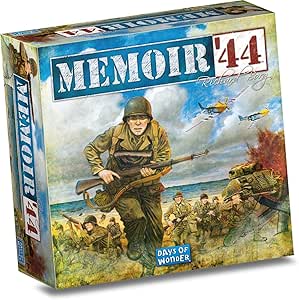 | Best for Family-Friendly Tactical Play | Age range: 8+ years | Players: 2-8 | Manufacturer: Days of Wonder | VIEW LATEST PRICE | See Our Full Breakdown |
| Axis & Allies 1942 Second Edition Board Game |  | Best for Older Families Seeking a Long Campaign | Players: 2-5 | Age range: 12+ | Edition: Second Edition | VIEW LATEST PRICE | See Our Full Breakdown |
| military history board games for familie | Players | Recommended age |
|---|---|---|
| Conflict of Heroes: Awakening | 2–4 | 14 years and up |
| Battles of the American Revolu | 2; solo play possible | 15+ |
| MasterPieces U.S. Army Opoly B | Up to 6 | — |
| Axis & Allies 1941 | 2–5 | 12 years and up |
| Undaunted: Stalingrad | 2 | 14+ |
| Tank Wars | 2 | 8+ |
| Quartermaster General: Eastern | 2 | 13+ |
| World War II Card Game | 1–10 listed in specs; title states 2–5 | 18+ |
| Monopoly World War II | 2–6 | — |
| General Orders: World War II | 2 | — |
| Memoir ’44 Board Game | 2-8 | — |
| Axis & Allies 1942 Second Edit | 2-5 | — |
More Details on Our Top Picks
Conflict of Heroes: Awakening the Bear (3rd Edition) Board Game
Simultaneous play is the defining advantage here: players can act without waiting for every opponent’s turn, keeping a history-themed session moving. The rules are described as teachable in under five minutes, which gives this tactical World War II game an easier entry point than the campaign-heavy Undaunted: Stalingrad. Its historically accurate forces and tactics also give families a way to connect decisions on the board with military history, rather than relying only on military-themed flavor.
The tradeoff is audience and scale. At ages 14 and up and two to four players, it suits older children and smaller groups, not a family gathering with younger kids or many players. Compared with MasterPieces U.S. Army Opoly, this is more focused on tactical conflict and less suited to casual, larger-group play.
Pros:- Simultaneous actions reduce downtime between turns.
- Rules can be taught in under five minutes, according to the product description.
- Historically accurate forces and tactics support discussion of military history.
- Supports two to four players.
Cons:- The 14+ age recommendation limits its fit for families with younger children.
- A maximum of four players excludes larger family groups.
Best for: Families with teens who want a quick-to-teach, historically grounded tactical game for two to four players.
Not ideal for: Families with younger children or groups larger than four; the listed age recommendation is 14+, and the player count is limited.
- Players:2–4
- Recommended age:14 years and up
- Edition:Third Edition
- Genre:Wargame
- Brand:Academy Games
- Model number:AYG-5016
- Dimensions:15.13 × 2.88 × 10 inches
- Weight:2325 g
Our verdict“Choose this for older family members who want a fast-to-teach tactical history game, but pick MasterPieces U.S. Army Opoly for a larger, more casual group.”
Battles of the American Revolution – Oriskany & Freeman’s Farm
This set earns its place for families who want a short, focused look at two Revolutionary War battles without committing to a sprawling campaign. Oriskany and Freeman’s Farm come as separate hex-and-counter games, giving repeat sessions a change of setting while keeping each game to 60 minutes or less. Its double-sided hardmounted board and travel-sized format make it easier to take along than the larger, more component-rich Axis & Allies 1941.
The format asks players to be comfortable with small counters and a two-player contest; solo play is possible, but the product notes that it can feel less dynamic. Its 15+ age recommendation also makes this a less natural fit for younger children than the more family-oriented U.S. Army Opoly. I’d choose it for historically curious teens or adults, not as a broad all-ages family game.
Pros:- Includes two distinct American Revolution battles.
- Games are designed to finish in 60 minutes or less.
- Compact double-sided board is suited to travel and limited storage.
- Includes player aids, dice, and a custom counter tray.
Cons:- Designed for two players, with solo play described as less dynamic.
- Small counters may be difficult for some players to handle.
- The 15+ age recommendation makes it a poor fit for younger family members.
Best for: Two-player families with history-minded teens who want compact American Revolution scenarios that fit into an hour.
Not ideal for: Families with younger children, groups seeking a multiplayer game, or players who find small counters hard to handle.
- Players:2; solo play possible
- Recommended age:15+
- Playing time:60 minutes or less
- Board:14 × 7 inches, double-sided hardmounted
- Battles:Oriskany and Freeman’s Farm
- Components:Game board, counter sheets, player aids, rules, two six-sided dice, custom tray
- Brand:Worthington Publishing
- Model number:WPUB113
Our verdict“Pick this for a compact, short two-player history session; choose MasterPieces U.S. Army Opoly if you need a more accessible game for a larger family group.”
MasterPieces U.S. Army Opoly Board Game
For families whose priority is getting more people around one board, U.S. Army Opoly supports up to six players, more than any other game in this five-product group. Its military-vehicle trivia and officially licensed U.S. Army theme offer approachable ways to bring military history into a family game night, while the metal playing pieces give the set a tactile touch. Compared with the two-player Revolutionary War scenarios in Battles of the American Revolution – Oriskany & Freeman’s Farm, this is built for a broader, more social table.
That accessibility comes with a different kind of history experience: trivia and strategic board play take precedence over detailed battlefield tactics. The large 15.5-by-10.5-inch footprint may also make storage less convenient, and the product lists no manufacturer warranty. I’d choose it for mixed-age groups and skip it if the family wants a focused historical simulation.
Pros:- Supports up to six players, suiting larger family groups.
- Trivia cards introduce U.S. Army vehicle history and facts.
- Officially licensed U.S. Army branding gives the theme a clear historical focus.
- Metal playing pieces add a more substantial feel than basic tokens.
Cons:- Trivia and general strategic play offer less battlefield detail than Conflict of Heroes: Awakening the Bear.
- The 15.5-by-10.5-inch board dimensions may be awkward to store.
- The product data lists no manufacturer warranty.
Best for: Families who want a military-themed game for up to six players, with vehicle trivia and accessible strategic play.
Not ideal for: History-focused players seeking detailed battle tactics, or households short on storage space for a larger board.
- Players:Up to 6
- Minimum age:8 years
- Dimensions:2 × 15.5 × 10.5 inches
- Weight:2.5 pounds
- Brand:MasterPieces
- Theme:Military
- Game mechanics:Area control, auction, modular board
- Educational objectives:U.S. Army history and vehicles, strategic thinking, basic math skills
- Warranty:No manufacturer warranty listed
Our verdict“Choose U.S. Army Opoly for a larger family group and accessible military trivia, not for a detailed tactical history game.”
Axis & Allies 1941, WWII Strategy Board Game
Axis & Allies: 1941 gives families a broad World War II strategy experience, with players commanding major powers and moving among decisions shaped by a larger conflict. Its 160 plastic miniatures help make those forces visible on the board, while streamlined rules are intended to bring new players in more readily than the deeper, branching campaign of Undaunted: Stalingrad. Support for two to five players also makes it more flexible for a family group than the two-player Conflict of Heroes: Awakening the Bear.
The tradeoff is a substantial time commitment: listed playtime is about two hours, with the description giving a one-to-three-hour range. At ages 12 and up, it may also be too demanding for younger children. This is a better fit for a family ready to share a long strategy session than for a quick weeknight game.
Pros:- Includes 160 plastic miniatures to represent forces on the board.
- Supports two to five players.
- Streamlined rules are designed to make the game more accessible to new players.
- Centers play on command of major powers in World War II.
Cons:- A one-to-three-hour session may be too long for casual family play.
- The 12+ age recommendation leaves out younger children.
- Its broad strategy scope may suit players seeking a full campaign better than those after short historical scenarios.
Best for: Families with players aged 12+ who want a longer, shared World War II strategy game for two to five people.
Not ideal for: Families with younger children or limited playtime; a session can run up to three hours.
- Players:2–5
- Recommended age:12 years and up
- Estimated playing time:120 minutes
- Playing time range in description:1–3 hours
- Miniatures:160 plastic miniatures
- Language:English
- Manufacturer:Renegade Game Studios
- Model number:RGS02553
Our verdict“Choose Axis & Allies: 1941 for a family ready to spend a longer session on World War II strategy, rather than a quick game like the Oriskany and Freeman’s Farm set.”
Undaunted: Stalingrad
Branching scenarios with lasting consequences set this apart from one-off historical battles: the campaign can change as players move through up to 15 missions. More than 300 illustrations and a large mix of cards, map tiles, and tokens give the Battle of Stalingrad a detailed presentation. Compared with Axis & Allies: 1941, which covers a wider World War II conflict for as many as five players, Undaunted: Stalingrad narrows the focus to an ongoing two-player experience.
That depth is a tradeoff for families. The game is limited to two players aged 14+, and its extensive components and complex rules can make it harder to teach than the quick-start Conflict of Heroes: Awakening the Bear. Sessions run 45–75 minutes, but the campaign asks for a greater commitment than a single short game. I’d reserve this for older players who want continuity between sessions.
Pros:- Up to 15 branching scenarios give campaign decisions ongoing consequences.
- More than 300 unique illustrations support a detailed Stalingrad setting.
- Large card and map-tile set supports varied campaign play.
- Listed playing time of 45–75 minutes can fit a session better than a longer Axis & Allies: 1941 game.
Cons:- Designed for two players, limiting its use for family groups.
- The 14+ age recommendation excludes younger children.
- Complex rules and extensive components create a steeper learning curve than Conflict of Heroes: Awakening the Bear.
Best for: Two-player families with older teens or adults who want a detailed World War II campaign that carries consequences across scenarios.
Not ideal for: Families seeking a simple introduction, play for more than two people, or sessions with younger children.
- Players:2
- Recommended age:14+
- Playing time:45–75 minutes
- Campaign scenarios:Up to 15 branching missions
- Cards:375
- Map tiles:129
- Tokens:204
- Dice and booklets:4 dice and 4 booklets
- Manufacturer:Osprey Games
Our verdict“Pick Undaunted: Stalingrad for an older two-player pair ready for a complex, continuing campaign; choose Axis & Allies: 1941 for a larger group.”
Tank Wars – The War Game – Strategy Board Game for 2 Players, Ages 8+
Tank Wars is a more approachable fit for younger families than Quartermaster General: Eastern Front, with an age recommendation of 8+ and a listed playtime of about 30 minutes. Its modular board plates and terrain cards change the battlefield between games, while warcards add surprises that can keep a rematch from feeling scripted. The tank theme gives children a concrete way into positional choices and area control without asking them to manage the larger historical conflict represented by some other picks. The tradeoff is a strict two-player limit, so it cannot serve a whole family game night on its own. Expansion also depends on connecting additional sets, and the supplied details do not establish how much historical context the cards teach. Choose it for a parent-child duel, not a history lesson for a group.
Pros:- Modular board plates and dynamic terrain cards vary the battlefield from game to game.
- Warcards add tactical surprises beyond the dice-and-movement foundation.
- The 8+ recommendation and 30-minute playtime suit shorter family sessions.
- Additional sets can connect for larger engagements.
Cons:- Supports only two players, leaving larger families out of the game.
- Expansion for larger engagements requires additional sets.
- The supplied product information emphasizes fictionalized tank tactics rather than specific historical events.
Best for: A parent and child aged 8 or older who want a short, tactical tank-themed game with changing layouts.
Not ideal for: Families looking for a game that seats three or more players or gives a detailed account of a specific historical campaign.
- Players:2
- Recommended age:8+
- Estimated playing time:30 minutes
- Game mechanics:Area control, modular board, roll and move
- Additional features:Dynamic terrain cards, warcards, expandable board plates
- Included components:Board plates, dice, game cards, rule book, tanks
- Dimensions:9.13 x 5.7 x 0.1 inches
- Weight:14.4 ounces
Our verdict“Choose Tank Wars for a short, replayable duel with a younger player, but skip it if your table needs room for the whole family.”
Quartermaster General: Eastern Front (2nd Edition)
Quartermaster General: Eastern Front offers a more history-centered duel than Tank Wars: its German and Soviet sides use distinct event-card decks, and the conflict turns on supply, strategy, and survival. Those unequal sides give each player different decisions, making the matchup about more than moving pieces toward an opponent. At a listed 60-minute playing time, it stays shorter than many sprawling war games while offering more historical specificity than the broad tank battles in Tank Wars. The tradeoff is its 13+ recommendation and two-player-only format, which make it a poor fit for younger children or a larger family table. Its serious Eastern Front subject matter may also be a heavier choice for a casual game night. I’d place it ahead of lighter options for teens who want asymmetry and campaign context, but not for the youngest players.
Pros:- Distinct German and Soviet decks create different strategic roles.
- Supply lines and survival make the conflict more historically grounded than Tank Wars’ general tank battles.
- A listed 60-minute playtime keeps the duel relatively contained.
- The second edition is identified as an English-language release.
Cons:- Limited to two players, so it cannot include a larger family group.
- The 13+ recommendation excludes many younger family members.
- Its focused and brutal Eastern Front theme may be too serious for a light family session.
Best for: Two players aged 13 or older, especially teens or adults who want an asymmetrical World War II game centered on the Eastern Front.
Not ideal for: Families with younger children or groups who need a game for more than two players.
- Players:2
- Recommended age:13+
- Estimated playing time:60 minutes
- Edition:Second Edition
- Language:English
- Theme:Military; World War II Eastern Front
- Dimensions:11.61 x 11.61 x 2.76 inches
- Weight:2.9 pounds
Our verdict“Pick Quartermaster General: Eastern Front for a history-minded teen-and-adult duel, not for mixed-age family play.”
World War II Card Game – Historical Strategy for 2-5 Players
World War II Card Game is the group-oriented choice here: its description presents battles, alliances, and decisions from 1939–1945, while the supplied player-count field lists 1–10 players. That breadth makes it a more natural candidate for a crowded table than the two-player General Orders: World War II or Quartermaster General. The card format and listed 45-minute playtime may also suit families or classrooms that want a shorter historical activity rather than a detailed campaign game. There is an important age mismatch, though: the description calls it family-friendly, but the product data recommends 18+. The title also says 2–5 players while the spec says 1–10, so buyers should verify the actual player limit before planning a group session. Its educational positioning sounds promising, but the supplied details do not identify specific learning materials or mechanics.
Pros:- Card-based format focuses on World War II battles, alliances, and decisions.
- The supplied player-count spec lists a range broader than the two-player alternatives.
- A listed 45-minute playtime can fit a shorter group session.
- Includes both a rules sheet and an instruction manual.
Cons:- The 18+ recommended age conflicts with the family-friendly description and rules out younger players by the listed guidance.
- The title says 2–5 players while the specs say 1–10, creating uncertainty about group size.
- The supplied information does not detail specific historical lessons or card mechanics.
Best for: Adults, teachers, or older family groups seeking a card-based World War II activity and willing to confirm the player limit before playing.
Not ideal for: Families with children or teens who need a clearly age-appropriate recommendation, or buyers who require consistent player-count information.
- Players:1–10 listed in specs; title states 2–5
- Recommended age:18+
- Estimated playing time:45 minutes
- Edition:Standard Edition
- Language:English
- Genre:War, strategy, historical, educational, and military games
- Included components:Game rules sheet, instruction manual, playing cards
- Manufacturer part number:Wwii-cg-001
Our verdict“Consider this card game for adult-led groups only after confirming its player limit, and skip it if you need a clearly suitable game for children.”
Monopoly World War II – We Are All In This Together
Monopoly World War II is the clearest fit for a mixed-age family table in this group, with a stated 8+ age range and room for two to six players. That makes it more inclusive than the teen-focused Quartermaster General: Eastern Front and the 14+ General Orders. Its Pearl Harbor, D-Day Normandy, and Battle of the Bulge references, plus six custom historical tokens, give the familiar Monopoly framework a World War II theme without demanding a dedicated two-player matchup. The tradeoff is that it remains a Monopoly-style family game rather than a focused military simulation: buyers seeking supply-line strategy or tactical combat should look to Quartermaster General or General Orders instead. The listing also names area control as a mechanic and requires an AAA battery, a practical quirk for a largely cardboard game. I’d rank it for accessibility and group size, not tactical depth.
Pros:- Supports two to six players, unlike the two-player-only Tank Wars and General Orders.
- The 8+ age recommendation makes it more accessible to younger families than the 13+ and 14+ wargames.
- Named events and six custom historical tokens add WWII references to a familiar format.
- Cardboard construction keeps the listed components in a conventional board-game format.
Cons:- The Monopoly framework offers less focused military strategy than Quartermaster General: Eastern Front or General Orders.
- Requires one AAA battery despite being primarily a board game.
- The supplied details do not specify playing time.
Best for: Families with children aged 8+ who want a familiar, themed game that can include up to six players.
Not ideal for: Players looking for detailed military tactics, a close simulation of World War II campaigns, or a game with no battery requirement.
- Players:2–6
- Minimum age:8+
- Game mechanics:Area control
- Theme:World War II
- Material:Cardboard
- Battery requirement:1 AAA battery; included
- Dimensions:19.7 x 9.8 x 1.4 inches
- Weight:2.2 pounds
Our verdict“Choose Monopoly World War II when broad age access and a six-player table matter more than tactical historical depth.”
General Orders: World War II – 2-Player Worker-Placement Wargame, Ages 14+, from the Designers of Undaunted
General Orders: World War II suits older players who want a compact, decision-heavy duel rather than the broad family access of Monopoly World War II. Its blend of worker placement and tactical combat asks players to weigh how they use their available actions, and the listed 30-minute playtime makes that focused contest easier to fit into a short session. Compared with Quartermaster General: Eastern Front, which builds its identity around distinct national decks and supply lines, General Orders offers a different strategic hook; the supplied description does not name a specific campaign or historical event. The game is limited to exactly two players and carries a 14+ age recommendation, so it is not a whole-family choice. Worker placement may also take explanation for newcomers. Choose it for a teen or adult who enjoys tactical decisions, not for younger children or a larger group.
Pros:- Combines worker placement with tactical combat for a distinct decision-making style.
- A listed 30-minute playtime suits short sessions.
- The designers are also identified with the Undaunted series.
- Its focused duel offers a more tactical alternative to Monopoly World War II.
Cons:- Supports exactly two players, excluding larger family groups.
- The 14+ recommendation makes it less suitable for younger children than Monopoly World War II or Tank Wars.
- The worker-placement system may take extra explanation for players new to the mechanic.
- The supplied description does not identify a specific WWII campaign or event.
Best for: Two players aged 14 or older who enjoy tactical World War II games and want a short session built around worker placement.
Not ideal for: Families with younger children, groups larger than two, or players who prefer very simple rules and a strongly specified historical campaign.
- Players:2
- Minimum age:14
- Playing time:30 minutes
- Genre:Wargame
- Edition:Standard Edition
- Mechanics:Worker placement and tactical combat
- Brand:Osprey Games
- Model number:OSPGOWW2
Our verdict“Pick General Orders for a short, tactical duel between older players, but choose a different game for younger children or a group.”
Memoir ’44 Board Game – WWII Historical Strategy Game for Kids & Adults, Ages 8+, 2-8 Players
Memoir ’44 is the more approachable pick for families who want World War II tactics without committing to a full evening. Its scenario-based battles use command cards to shape which units can move, while terrain and miniatures help younger players follow what is happening on the board. That gives it a more focused, quicker-playing feel than Axis & Allies 1942 Second Edition, whose world-spanning campaign and three-to-four-hour sessions call for older, more patient players. The included scenarios and card combinations also give families reasons to revisit the game. The tradeoff is a substantial supply of miniatures, tiles, and cards: setup, sorting, and storage take effort, and the tactical focus is narrower than a campaign game. Its listed age range starts at eight, but adults may need to guide younger players through card choices.
Pros:- Scenario-based WWII battles give the game a clear historical setting and defined objectives.
- Command cards create tactical choices while keeping play easier to approach than a large campaign game.
- Miniatures and terrain tiles make unit positions and battlefield features easy to see.
- Multiple scenarios and card combinations support repeat play.
Cons:- The many miniatures, tiles, and cards make setup, cleanup, and storage more involved.
- Its battle-by-battle format is less suited to players who want one continuous campaign across the war.
- Younger children may need help weighing command-card choices and tactical consequences.
Best for: Families with children around age eight and up who want guided WWII battles, tactile pieces, and replayable sessions without a long global campaign.
Not ideal for: Players seeking a broad, multi-hour war campaign, or households without space to sort and store a large set of miniatures and terrain.
- Age range:8+ years
- Players:2-8
- Manufacturer:Days of Wonder
- Brand:Asmodee
- Board:1 double-sided board
- Army miniatures:144 Axis and Allied miniatures
- Command cards:60
- Terrain:44 double-sided terrain tiles
- Other included components:36 obstacles, 22 summary cards, 8 attack dice, 6 activation tokens, 2 cardholders, 1 rulebook, and 1 scenario
Our verdict“Choose Memoir ’44 for families who want accessible, scenario-based WWII tactics and can accommodate a sizeable collection of components.”
Axis & Allies 1942 Second Edition Board Game
Axis & Allies 1942 Second Edition suits families who want to manage a global WWII conflict rather than play a single battlefield scenario. With 2–5 players, major powers to command, and a large map, it asks players to think across multiple fronts; the estimated 210-minute session makes those decisions a substantial shared event. Compared with Memoir ’44, this is a broader and longer commitment, while Memoir ’44 is a better fit for shorter, focused battles and younger players. The updated rulebook and reference cards can help players track the system, and resealable bags support repeat setup. Still, the lengthy playtime and 12+ age guidance make it a harder family choice for casual evenings. The product description lists a 40-by-26-inch board, so check table space before choosing it.
Pros:- Major-power play covers a broad WWII conflict rather than a single battle.
- Supports two to five players, making it suitable for a larger family group.
- Updated rulebook and reference cards offer guidance during play.
- Resealable bags help keep components organized between sessions.
Cons:- The estimated 210-minute session is too long for many casual family game nights.
- The 12+ age recommendation makes it less suitable for younger children than Memoir ’44.
- The 40-by-26-inch board requires substantial table space.
Best for: Families with teens and adults who enjoy extended strategic sessions, have room for a large board, and want several players to command major WWII powers.
Not ideal for: Families with younger children, short game nights, or limited table space; the 12+ age guidance and roughly three-and-a-half-hour playing time are significant commitments.
- Players:2-5
- Age range:12+
- Edition:Second Edition
- Estimated playing time:210 minutes (about 3 hours)
- Board dimensions:40 x 26 inches
- Pieces:410
- Language:English
- Manufacturer:Renegade Game Studios
- Set name:1942
Our verdict“Pick Axis & Allies 1942 Second Edition when your older family wants a lengthy, large-scale WWII campaign and has the time and table space for it.”

How We Picked
I ranked these games for family fit first: how readily a group can learn the rules, whether the stated player count can include the family, and how much time and attention the game is likely to ask from players. I also weighed how military history shapes play, from scenario-based tactical choices to broader strategic themes, rather than treating a historical setting alone as a sign of depth.
Memoir ’44 ranks first because its stated ages, broad player range, and recognizable scenario format make it a flexible family starting point. Games such as Tank Wars and the World War II card game offer narrower or more compact formats, while Axis & Allies, Conflict of Heroes, and Undaunted: Stalingrad ask for more sustained strategic engagement. The lighter Monopoly-style choices may be easier to approach, but they provide a different kind of military-history experience. I considered these differences alongside likely teaching effort and audience fit; I did not rank by theme alone.
Factors to Consider When Choosing Military History Board Games For Families
Before choosing, match the game to the group that will actually sit down together—not only to the person most interested in military history. Rules weight, player count, and comfort with the theme can matter more than the historical period printed on the box.
Match Rules to the Least Experienced Player
Choose for the player who is least familiar with strategy games, since that person often sets the pace of a family session. A game with a short teach can keep everyone involved, while a dense rules system may leave younger or newer players waiting for explanations. Check whether the complexity comes from many special rules, a large map, or a long sequence of decisions; those challenges feel different at the table. A familiar format can ease entry, though a familiar theme does not automatically mean the game is easy to play. Avoid buying a demanding title solely because one adult wants greater historical detail. If the group is split, start with a more accessible game and save the heavier one for players who ask for more depth.
Treat Age Guidance as a Starting Point
Age labels can help flag reading or strategic demands, but they cannot tell you whether a particular child will enjoy competitive conflict or long waits between turns. Think about attention span, reading confidence, and comfort with abstract military themes as separate questions. Younger players may handle a game’s rules yet still find its subject matter unsettling; adults should describe the theme plainly before choosing. A broad player range can help a family gather around one box, but it does not guarantee that every player will be equally engaged. Check whether the game supports meaningful choices for each participant rather than simply allowing more people to join. That distinction matters when the goal is shared play, not just fitting everyone at the table.
Choose the Player Count You Will Use Most
Buy for your usual group size, not the biggest gathering you might host once a year. A two-player game can be an excellent fit for a parent and child, but it will not replace a game that includes siblings or visiting relatives. At the other end, a game listing a wide player range may change pace or responsibilities as more people join. Before buying, check how teams, turns, and downtime work at the player count you expect to use. Families with changing attendance may prefer a flexible format, while a regular two-person pair can prioritize focused head-to-head play. This simple check prevents an appealing historical theme from ending up mismatched with the household’s routine.
Decide How Much History You Want in the Decisions
Military history games vary in how directly their subject shapes what players do. Some focus on specific battles or tactical choices, while others use the period as a setting for broad strategy or familiar board-game mechanics. Ask whether your family wants to discuss terrain, units, and battlefield decisions or simply enjoy a themed contest. Greater historical texture can bring more rules and context, so it is not automatically a better fit for younger players. A lighter treatment may be easier to teach, but buyers seeking a detailed wargame could find it too indirect. Choosing the level of historical engagement upfront helps set expectations for both adults and children.
Set a Realistic Session-Length Expectation
A game that sounds appealing may still be a poor choice if the family rarely has a long stretch of uninterrupted time. Consider setup, explanation, and cleanup as part of the commitment, not just the play itself. Longer strategic games often reward repeat sessions, but families with busy evenings may get more use from a compact game that can reach the table more often. Ask whether players can pause and resume comfortably if plans change. Do not assume that a familiar brand or a smaller box means a short game; check the product’s play guidance and rule structure. Regular play usually matters more than theoretical depth when choosing a family game.
Spend More for Depth Only When Your Group Wants It
Decide what added complexity will give your family before choosing a more involved title. Detailed scenarios and wider strategic systems can offer fresh decisions across repeat plays, but only if the group enjoys learning and revisiting rules. For a family still testing its appetite for military history games, an accessible format may be a better first step than buying for depth that goes unused. Conversely, a group that already enjoys strategy games may outgrow a lighter treatment quickly. Consider whether the game serves one regular pair or a range of ages and player counts; flexibility can matter more than a larger rule set. The best fit is the one your household will want to play again.
Frequently Asked Questions
Which game in this roundup is the safest first purchase for a family new to wargames?
Memoir ’44 is my clearest starting point for a family that wants battlefield scenarios without beginning with the larger systems in Axis & Allies or the more involved tactical play of Conflict of Heroes. Its listed age range and player range make it a flexible option for mixed groups. If your family mainly wants a short two-player contest, Tank Wars may fit better, though it serves a narrower audience. Families drawn to familiar board-game formats can also consider the themed Monopoly titles, while recognizing that they offer a different style of play. Choose based on the group’s interest in strategy, not just the military theme.
Are military history board games suitable for children who dislike realistic war themes?
Not every child responds to military themes in the same way, so talk plainly about the subject before buying. Some games focus on strategic choices and abstract pieces, while others place players directly in named battles or wartime settings. A less detailed treatment may feel more comfortable, but the word “family” on a product page does not settle that question. Let a child’s comfort with competition, conflict, and historical discussion guide the choice. If the theme itself is a concern, choose a different kind of strategy game rather than hoping the mechanics will make the subject disappear.
Should I choose Axis & Allies 1941 or Axis & Allies 1942 Second Edition?
Choose Axis & Allies 1941 if your family wants to try a global WWII strategy game with a more approachable entry point. Axis & Allies 1942 Second Edition makes more sense for a group already prepared to spend more time learning and playing a broad strategic system. The best choice depends on your household’s tolerance for longer sessions and layered decisions, not simply which title sounds more complete. If you are unsure, start with the less demanding option rather than assuming the more involved game will be more enjoyable. A group that rarely plays long games may find either title a bigger commitment than a scenario-based alternative.
What should I choose if we usually have only two players?
Tank Wars is an explicitly two-player choice, and General Orders: World War II is also listed for two players. They suit a regular pair better than a game selected mainly for a larger family gathering. Memoir ’44 can accommodate more players according to its listed range, so it may offer more flexibility if attendance changes. Think about whether your pair prefers a focused contest or a scenario-led game, and check the stated ages and rules demands before deciding. A two-player format is not a drawback when it matches who will actually play.
How can I tell whether a game’s historical depth will be worth the extra learning effort?
Ask whether players want history to shape tactical decisions, or whether a wartime setting is enough to make the game appealing. Titles centered on battles or strategic campaigns may reward players who like discussing units, choices, and historical context, but they ask for more attention than a familiar themed format. A heavier game is more likely to earn repeat sessions if the group already enjoys learning rules together. If the family mostly wants an easy shared activity, that extra detail may slow play without adding much enjoyment. Start from the group’s play habits and choose depth only when it serves them.
Conclusion
Best overall: I recommend Memoir ’44 for families wanting a flexible, approachable entry into historical battles. Best for beginners: Tank Wars is a straightforward fit for a regular two-player pair, while Memoir ’44 is the better starting point for a group. Best value in play flexibility: the World War II card game is worth a look for families drawn to a compact card-based format, though it is not a substitute for a detailed battlefield game. Best premium-style depth: I’d point experienced groups toward Undaunted: Stalingrad or Conflict of Heroes: Awakening the Bear, depending on whether they prefer campaign-driven strategy or tactical battles. For broad global strategy, choose Axis & Allies 1941 before stepping up to Axis & Allies 1942 Second Edition; for a lighter themed night, consider Army Opoly or Monopoly World War II. My final advice is to prioritize who will play, how long they can focus, and how much history they want built into each decision.