
TL;DR

Prime made for students and young adults
- Fast, free delivery for dorm and study essentials
- Prime Video and Amazon Music included
- Member-only deals
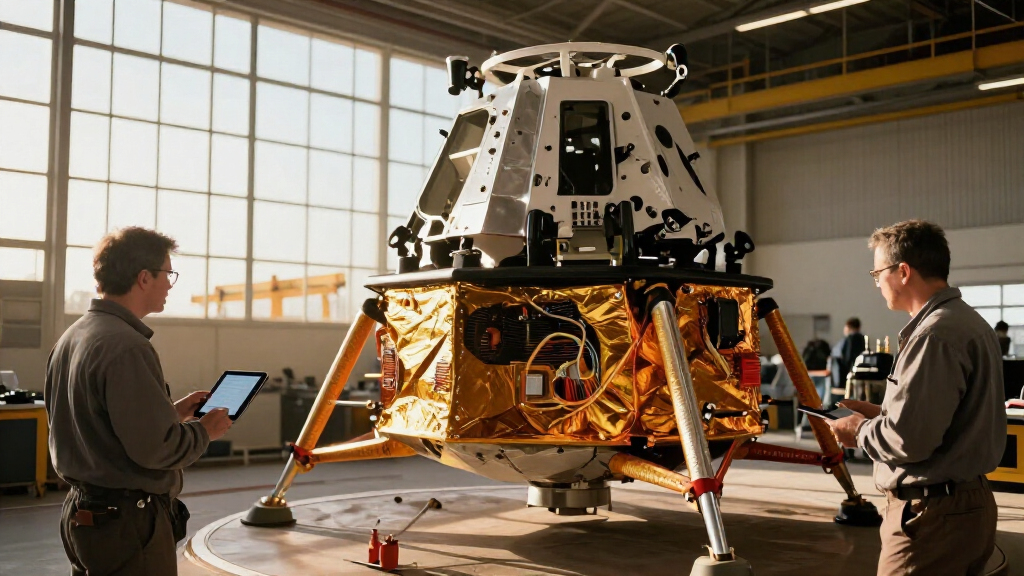
NASA and its commercial partners SpaceX and Blue Origin have revised lander designs and mission operations as the agency targets crewed lunar landings in 2028. Artemis III is now planned as a low Earth orbit rendezvous and docking test next year, while each company must complete an uncrewed lander demonstration before a crewed mission.
NASA has revised the mission plans for lunar landers being developed by SpaceX and Blue Origin, shifting the rendezvous and docking operations away from lunar orbit as it targets crewed Moon landings in 2028. The agency now plans for Artemis III to test docking between Orion and test versions of both companies’ landers in low Earth orbit next year, rather than conduct the previously planned lunar-orbit demonstration.
Under the broader Artemis plan described by NASA, astronauts will launch from Kennedy Space Center in Florida aboard the agency’s Orion spacecraft, atop the Space Launch System (SLS). A commercial lander will link up with Orion, carry two astronauts to the lunar surface, and return them to Orion; two other crew members will remain aboard the spacecraft. NASA says the revised operations are intended to accelerate development toward the 2028 landing target.
The two companies will follow different routes. SpaceX’s Starship Human Landing System is planned to meet Orion in Earth orbit after a series of Starship tanker vehicles transfer cryogenic propellant to an orbital depot. The lander would then perform a burn to send the docked spacecraft toward low lunar orbit. NASA says it is working to modify Orion so Starship can push it to the Moon. SpaceX is to demonstrate its propellant-aggregation approach in an uncrewed mission.
Blue Origin’s Blue Moon Mark 2 plan for the accelerated 2028 mission defers propellant transfer and instead uses three transfer stages. After launching to low Earth orbit and joining the lander, the stages would carry it toward an elliptical polar orbit around the Moon, separating as their propellant is used. Two crew members would descend to the lunar South Pole and later return to Orion. Blue Origin is to conduct an uncrewed demonstration of the transfer-stage mission profile.
How the New Routes Could Save Time
The changes affect more than the location of a spacecraft rendezvous: they set out different operating plans for each lander and alter the sequence required to reach the lunar surface. NASA says SpaceX’s shift to a trans-lunar injection burn by the lander and a destination in low lunar orbit will reduce the amount of propellant Starship needs to aggregate in space. The agency also says that route should reduce the time astronauts could wait after leaving the surface to reunite with Orion.
For Blue Origin, NASA says the elliptical polar orbit can offer faster returns from the surface to Orion, lower the lander’s propellant requirements compared with the previously planned near-rectilinear halo orbit, and make use of SLS performance. These are NASA’s stated reasons for the revised architectures, not evidence that either lander has completed its flight tests or is ready to carry people.
The program matters because the landers are a necessary link between Orion and the lunar surface. NASA’s plan depends on commercial systems completing uncrewed demonstrations and passing agency certification before astronauts fly. The agency says it will choose which provider is ready to make the first crewed landing in 2028, with a second landing opportunity planned afterward. The update therefore describes a revised route to the goal, not a completed mission or a final provider selection.
NASA Artemis lunar lander model kit
As an affiliate, we earn on qualifying purchases.
As an affiliate, we earn on qualifying purchases.
Artemis III Becomes a Docking Test
NASA says it has redefined Artemis III from its earlier role in the lunar mission sequence. The mission is now intended to demonstrate rendezvous and docking between test versions of the SpaceX and Blue Origin landers and Orion in low Earth orbit next year. The agency’s announcement does not describe this as a lunar landing. The revised test is meant to exercise a key capability before crews rely on the systems farther from Earth.
For the near-term crewed missions, NASA previously planned for Orion and the landers to meet in a near-rectilinear halo orbit around the Moon. The revised arrangements instead use an orbit suited to each provider’s system: low lunar orbit for the SpaceX plan and an elliptical polar lunar orbit for Blue Origin’s accelerated 2028 plan. NASA says each company must fly an uncrewed demonstration with its crewed lander before a crewed lunar mission, and the agency will certify the systems for safety and mission success.
NASA also says initial surface missions are expected to include two moonwalks of about two hours each. Astronauts would collect lunar samples and test spacesuit capabilities supplied by Axiom Space. Those activities are part of the stated mission plan; the source does not provide a final landing date or a detailed surface schedule.
As an affiliate, we earn on qualifying purchases.
Readiness and Selection Remain Open
Neither provider has been selected to make the first crewed landing under the updated plan. NASA says the choice will depend on lander readiness, and it must certify each system before a crewed mission. The announcement does not establish that either company has completed its required uncrewed demonstration.
The 2028 landing remains a NASA target, not a confirmed launch or landing date. The source provides no specific dates for the uncrewed demonstrations or a final decision on which company will fly first. It also does not give a detailed schedule for resolving the required Orion modifications or the full sequence of launches involved in SpaceX’s propellant-transfer plan.
NASA’s source material ends with an incomplete reference to an earlier update, so it does not provide further details about what the agency changed earlier in the year. The eventual mission timing, provider selection and operational readiness remain dependent on development, demonstrations and NASA’s safety certification.
Blue Origin Blue Moon lunar lander model
As an affiliate, we earn on qualifying purchases.
As an affiliate, we earn on qualifying purchases.
Demonstrations Before Crewed Landings
The next stated milestone is the Artemis III low Earth orbit docking demonstration, planned for next year. NASA’s update says test versions of the landers and Orion are to demonstrate rendezvous and docking there, while the companies continue developing crew and cargo lander versions for upcoming Artemis missions.
SpaceX is expected to demonstrate orbital propellant aggregation in an uncrewed mission. Blue Origin is expected to test the full lander transfer-stage mission profile without a crew. NASA will then assess readiness and certify lander systems before crewed flights. Based on those readiness assessments, the agency will determine which company gets the first opportunity to deliver astronauts to the lunar surface and back to lunar orbit in 2028; a second crewed landing opportunity is planned to follow.
Moon exploration astronomy book Artemis program
As an affiliate, we earn on qualifying purchases.
As an affiliate, we earn on qualifying purchases.
Key Questions
What changed in NASA’s Artemis lander plans?
NASA has moved the planned Artemis III docking test to low Earth orbit and revised the later rendezvous and lunar-orbit plans for both commercial landers. SpaceX’s plan uses a lander burn toward low lunar orbit; Blue Origin’s accelerated 2028 plan uses transfer stages and an elliptical polar orbit.
Are astronauts landing on the Moon during Artemis III?
No lunar landing is described for the revised Artemis III plan. NASA says the mission is to demonstrate rendezvous and docking between Orion and test versions of the landers in low Earth orbit next year.
Which company will make the first 2028 landing?
NASA has not yet selected a provider. The agency says the decision will depend on lander readiness after development and required uncrewed demonstrations.
What must SpaceX and Blue Origin do before carrying crews?
Each company must conduct an uncrewed demonstration mission with its crewed lander. NASA says it will certify lander systems for safety and mission success before crewed lunar missions.
What are astronauts expected to do on the lunar surface?
NASA says initial surface missions are expected to include two moonwalks of about two hours each, during which astronauts would collect lunar samples and test spacesuit capabilities provided by Axiom Space.
Source: primary
Halloween Picks
halloween
As an affiliate, we earn on qualifying purchases.