
TL;DR

Prime made for students and young adults
- Fast, free delivery for dorm and study essentials
- Prime Video and Amazon Music included
- Member-only deals
Google says it will contribute $1.2 million to Aguas Andinas to fund concrete lining for 2.5 kilometers of an irrigation canal in Chile’s Maipo River Basin. The project is estimated to save up to 7.4 million cubic meters of water annually, though a timeline for construction and details on how the savings will be measured were not provided.
Google is contributing $1.2 million to Aguas Andinas for an upgrade to an irrigation canal in Chile’s Maipo River Basin, the watershed that supplies Santiago. The funding will help line a 2.5-kilometer section of the Unidos de Buin Canal Association’s main canal with concrete, a project Google estimates could save up to 7.4 million cubic meters of water annually.
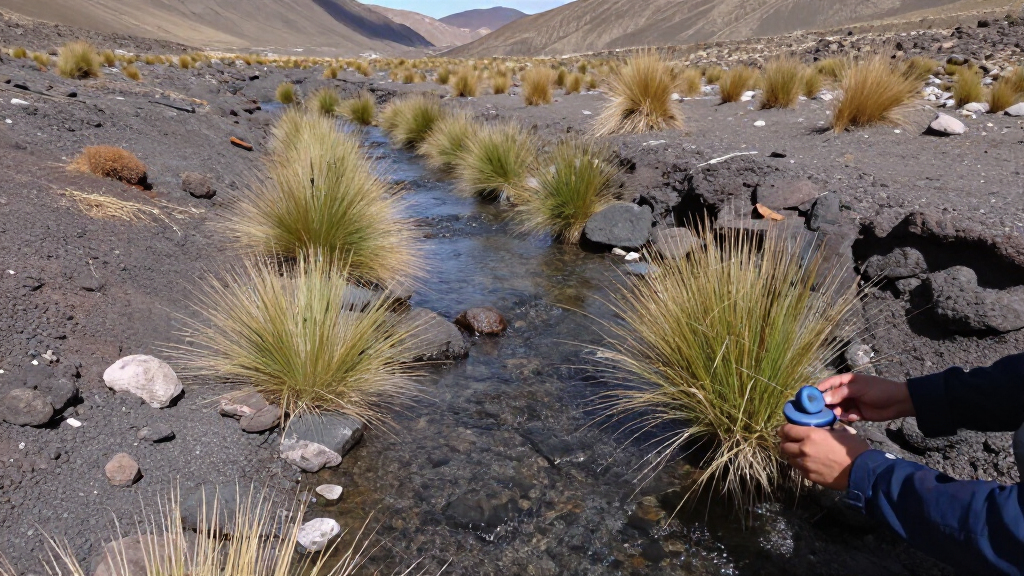
The canal is currently an unlined earthen channel. Google says lining it with concrete is intended to reduce seepage, leaving more water available for local agricultural irrigation. The company also says the work is expected to reduce sedimentation and erosion, which it says would improve water quality.
The contribution is being made to Aguas Andinas, which will use the funding to help finance the canal work. Google describes the projected savings as an estimate of up to 7.4 million cubic meters per year, equivalent to about 1.9 billion gallons. The report does not specify how that estimate was calculated or what share of the project cost Google’s contribution covers.
Google also reported that in 2025 its water stewardship efforts replenished more water to the Maipo River Basin than was consumed by its Quilicura data center. That is the company’s account of its replenishment activities; the report does not provide a breakdown of the replenished volume or an independent assessment of the comparison.
More Irrigation Water in the Maipo
The canal upgrade is intended to address water lost before it reaches farms. If the projected reduction in seepage is achieved, more water could remain available for irrigation along this part of the basin. Google also points to possible water-quality benefits from reduced erosion and sedimentation, linking the project to both water availability and watershed health.
The announcement also connects a company’s local data center water use to a watershed project. Google says its 2025 replenishment efforts in the basin exceeded the Quilicura facility’s consumption, while the canal investment supports infrastructure used for agriculture. The figures describe different parts of the company’s stewardship effort; the announcement does not establish that the canal project’s estimated savings are the same as, or included in, the replenishment total.
Google’s Maipo Water Commitments
Google says it is committed to replenishing more water than it consumes and improving watershed health in communities where it operates. In Chile, the company identifies the Maipo River Basin as a priority because it supplies Santiago and is also important for local agriculture.
The canal contribution follows Google’s reported 2025 replenishment activity in the same basin. The company has not supplied further detail in this announcement about other projects included in that activity. The canal work is a separate infrastructure measure: it aims to reduce water lost through seepage in an existing irrigation channel.
“In 2025, our water stewardship efforts replenished more water to the Maipo River Basin than was consumed at our Quilicura, Chile data center.”
Project Timing and Savings Evidence
Google’s announcement does not state when construction will begin or finish, how the work will be scheduled, or how the canal will be maintained after the lining is installed. It also does not explain the assumptions behind the estimate of annual savings, including how seepage losses will be measured before and after the upgrade.
The report does not give the project’s total cost, the amount contributed by other funders, or details on how any water retained in the canal will be allocated among users. Google’s 2025 replenishment comparison is presented by the company, but the announcement does not provide volumes or third-party verification.
Construction and Measurement Details
The next concrete milestone is the canal lining work itself. Google has not announced a start date, completion date, or schedule for publishing progress. Further project information could clarify how Aguas Andinas and the canal association will carry out the upgrade and track changes in seepage, sedimentation, and erosion.
Evidence after construction would help show whether the project reaches its estimated annual water savings and whether the expected water-quality improvements occur. Until those details are available, the 7.4 million cubic meter figure remains a projection attributed to Google.
Key Questions
What is Google funding in Chile?
Google is contributing $1.2 million to Aguas Andinas to help fund concrete lining for a 2.5-kilometer section of the Unidos de Buin Canal Association’s main irrigation canal.
Where is the canal project located?
The canal is in the Maipo River Basin, a watershed that supplies Santiago and supports local agricultural irrigation.
How much water could the project save?
Google estimates savings of up to 7.4 million cubic meters annually, or about 1.9 billion gallons. The announcement does not describe the method used to produce the estimate.
When will construction be completed?
The announcement does not give a construction start date or completion timeline.
What benefits does Google expect from lining the canal?
Google says concrete lining is expected to reduce water lost through seepage and lessen sedimentation and erosion, supporting irrigation water availability and water quality.
Source: rss
Halloween Picks
halloween
As an affiliate, we earn on qualifying purchases.