
TL;DR

Prime made for students and young adults
- Fast, free delivery for dorm and study essentials
- Prime Video and Amazon Music included
- Member-only deals
A study published in the Journal of Hazardous Materials reports that six radioactive particles from the 1986 Chernobyl accident retained largely intact nuclear-fuel crystal structures four decades later. The result suggests the particles may hold fission products more tightly than expected, but the small sample cannot establish regional health risks or justify changes to access restrictions.
Researchers from Leibniz University Hannover and the Helmholtz-Zentrum Dresden-Rossendorf found that the nuclear-fuel crystal structures in six radioactive particles from the 1986 Chernobyl accident remained largely intact about 40 years later. Published in the Journal of Hazardous Materials, the results suggest these particles may retain radioactive fission products, but the researchers say the small sample is not enough to draw broad conclusions about contamination or health risks.
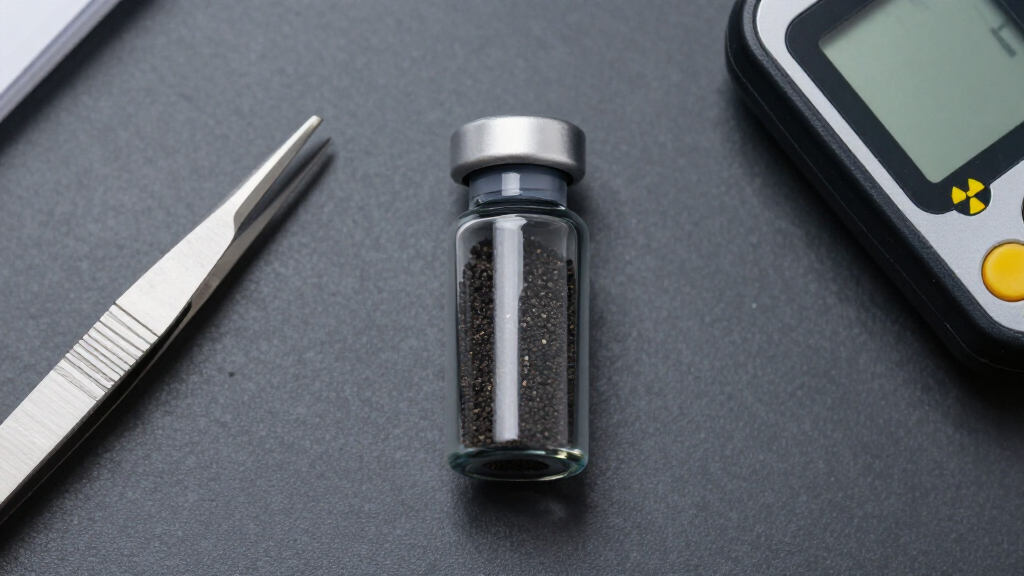
The team examined six so-called hot particles, tiny fragments measuring about 8 to 50 micrometers that were released during the reactor disaster. Researchers isolated the fragments from Ukrainian soil samples, secured them on tungsten electrodes and analyzed them at the Rossendorf Beamline in Grenoble using synchrotron X-ray diffraction. The technique reveals the phases and crystal structures inside a material.
According to the study, the scientists rotated each particle in a focused X-ray beam and measured it from 2,000 angles to capture diffraction patterns. The analysis detected different uranium oxide phases. In the particles examined, the nuclear-fuel crystal structure had remained largely intact, a finding the researchers describe as evidence that the fragments are chemically more stable than previously assumed.
The researchers say this stability may mean the particles retain fission products—radioactive materials created during nuclear fission—rather than releasing them quickly into surrounding soil and water. That is a potential implication, not a direct measurement of health outcomes or a broad assessment of contamination. The paper is Tobias Weissenborn and colleagues’ “X-ray diffraction phase analysis of single hot particles from Chornobyl,” published in 2026.
What Particle Stability Could Mean
The finding may improve how scientists estimate the movement of radioactive material from individual fuel fragments. If a particle remains structurally intact, it may hold some radionuclides within its fuel matrix for longer than assumed. That could affect models of how contamination moves through soil and water, and how long different forms of radioactive debris persist.
But the result does not establish that the area is safe, that all Chernobyl particles behave similarly, or that people face lower health risks than previously thought. Researchers studied only six particles from two locations, and each had a distinct structure. The work is an initial structural analysis, not a regional exposure survey or a change in public-health guidance.
synchrotron X-ray diffraction equipment
As an affiliate, we earn on qualifying purchases.
As an affiliate, we earn on qualifying purchases.
How Chernobyl Hot Particles Formed
The 1986 reactor accident scattered radioactive debris beyond the destroyed plant. The report describes several types of hot particles: fragments that remain similar to uranium dioxide fuel; particles partly or fully encased in, or fused with, zirconium from the fuel’s protective layer; and particles formed as burning graphite helped oxidize fuel into other uranium compounds. The graphite fire lasted 10 days, according to the report.
Some oxidized uranium compounds can form mechanically unstable microscopic dust that may be carried by wind. How quickly different particles weather—and how readily they release radioactive substances—has remained uncertain. Their small size and high radioactivity make structural analysis difficult, which is why the researchers’ single-particle X-ray diffraction method is relevant. The study builds a measurement approach; it does not resolve the full range of particle behavior across the exclusion zone.
““Every single particle has a different structure.””
— Tobias Weissenborn, physicist and doctoral candidate at Leibniz University Hannover
nuclear fuel crystal structure analysis kit
As an affiliate, we earn on qualifying purchases.
As an affiliate, we earn on qualifying purchases.
Six Particles Leave Key Questions
The study does not show how representative the six fragments are of the many types of radioactive particles in the wider region. Samples came from two locations, and the researchers say more particles from more locations are needed to establish broader patterns. It is also unclear how the observed crystal structures change over time under different local environmental conditions.
The reported structural stability does not quantify how much radioactivity each particle releases, the dose people may receive, or the health effects of exposure. The researchers caution that even a future average pattern would not account for more persistent outliers. The findings therefore do not support universal claims about risk, and the report says they will not lead to the lifting of Chernobyl Exclusion Zone restrictions.
radioactive particle analysis tools
As an affiliate, we earn on qualifying purchases.
As an affiliate, we earn on qualifying purchases.
Broader Sampling and Follow-Up Tests
Weissenborn and Hennig are conducting follow-up experiments on transuranic phases in material from the accident, according to the report. The present study does not specify when those results will be published.
For a clearer picture of how hot particles vary, researchers say they would need to examine many more fragments collected from additional locations. Further work could test how particle composition relates to the release of radioactive substances. Until such evidence is available, this six-particle study remains a limited structural finding, not a basis for revising access rules or making general statements about health risk.
radiation detection and measurement devices
As an affiliate, we earn on qualifying purchases.
As an affiliate, we earn on qualifying purchases.
Key Questions
What did researchers find in the Chernobyl particles?
X-ray analysis found that the nuclear-fuel crystal structures in the six particles studied remained largely intact about four decades after the accident. The team also detected different uranium oxide phases.
Does the study show that Chernobyl is safe?
No. The research examined particle structure, not regional exposure or health outcomes. The authors say the small sample cannot support broad conclusions about health risks, and the findings do not change exclusion-zone restrictions.
Why might stable particles matter?
Researchers say structurally intact fuel may retain some radioactive fission products. If so, particle stability could inform estimates of how radioactive substances move through soil and water, though this study does not measure regional release rates.
How many particles were examined?
The team analyzed six particles from two locations. The researchers say a larger sample from more places is needed to assess how representative the results are.
What happens next?
The researchers are carrying out follow-up experiments on transuranic phases in accident remnants. The report gives no publication date; broader conclusions will also require analysis of more particles and locations.
Source: hn
Fall Picks
fall essentials
As an affiliate, we earn on qualifying purchases.