
TL;DR

Prime made for students and young adults
- Fast, free delivery for dorm and study essentials
- Prime Video and Amazon Music included
- Member-only deals
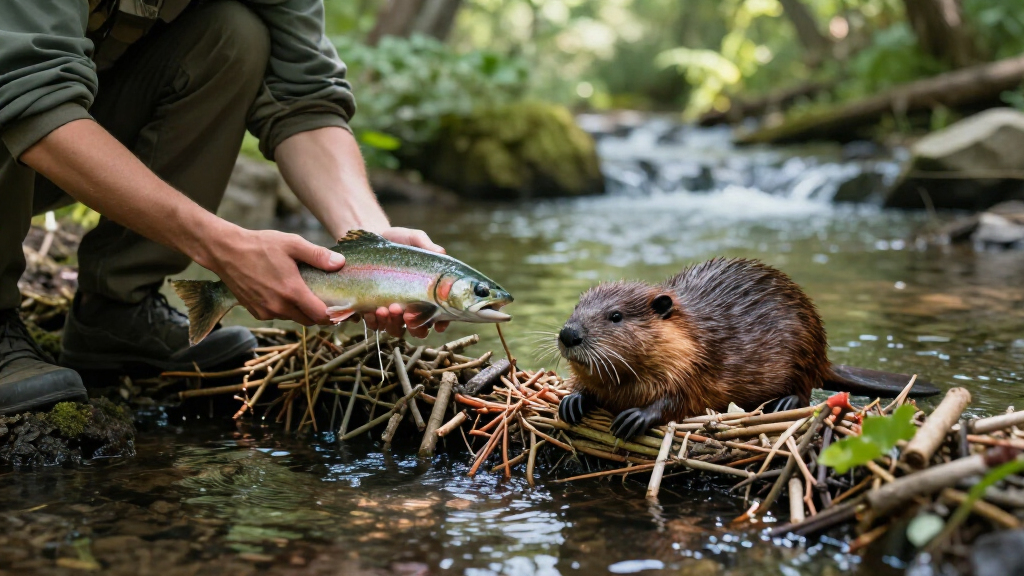
Artificial beaver dams have significantly increased juvenile coho salmon survival rates from 8% to 60%. This development suggests a promising method for salmon conservation efforts, though further research is needed to confirm long-term impacts.
Recent findings indicate that installing artificial beaver dams can increase juvenile coho salmon survival rates from 8% to 60%. This development is based on early data from pilot projects aimed at restoring salmon habitats and improving ecological health. The results highlight a potential new strategy for salmon conservation, especially in regions where natural beaver populations are declining or where habitat restoration is critical.
In a series of pilot projects conducted in Pacific Northwest waterways, researchers installed artificial beaver dams designed to mimic natural structures. These structures aim to improve stream conditions by increasing water retention, reducing erosion, and creating more complex habitats for juvenile salmon. According to initial reports, juvenile coho salmon survival rates in these modified streams increased from a baseline of 8%—the typical survival rate in degraded habitats—to approximately 60% after dam installation.
Experts involved in the project attribute the improvement to enhanced stream stability, increased availability of refuge areas, and better food availability for young salmon. The project is still in early stages, with ongoing monitoring to assess long-term impacts and scalability. The data was collected over a period of several months, with survival rates measured through tagging and tracking juvenile salmon as they migrated downstream.
Implications for Salmon Conservation Strategies
The observed increase in juvenile coho salmon survival rates suggests that artificial beaver dams could become a valuable tool in restoring salmon populations, which have faced declines due to habitat loss, climate change, and human development. If these results are confirmed through further research, this approach could be adopted widely to improve stream health and support biodiversity. The potential to significantly boost survival rates at a low cost makes this method especially appealing for conservation agencies and local communities aiming to meet recovery targets.
However, experts caution that the long-term ecological impacts and potential unintended consequences need further study. The success of these pilot projects could influence policy decisions related to habitat restoration and beaver management, emphasizing the importance of natural and artificial structures in ecosystem resilience.
Popular right now

Dyson V15 Detect Cordless Vacuum

Dyson Ball Animal 3 Upright Vacuum – Corded, 290 AW, De‑tangling Motorbar Cleaner Head, 3 Suction Modes

Ninja Flip Toaster Oven & Air Fryer, 8-in-1, Stainless Steel, SP151
As an affiliate, we earn on qualifying purchases.
Background on Beavers and Salmon Habitats
Beavers are known as ecosystem engineers because of their ability to modify waterways through dam-building activities, which create wetlands vital for many species. Historically, beaver populations declined sharply due to trapping and habitat loss, reducing their ecological influence. In recent years, conservation efforts have aimed to restore beaver populations to leverage their natural habitat benefits for fish and other wildlife.
Juvenile coho salmon depend on healthy stream conditions for survival during their freshwater migration stages. Habitat degradation, including sedimentation, low water flow, and loss of refuge areas, has contributed to declining survival rates. Previous studies have shown that natural beaver dams can improve stream conditions, but in many areas, natural beaver activity is insufficient or absent due to human impacts.
The current pilot projects involve constructing artificial beaver dams to replicate these natural effects, aiming to restore habitat complexity and improve juvenile salmon survival in degraded streams. These efforts are part of broader ecosystem restoration initiatives across the Pacific Northwest and other salmon-bearing regions.
Long-Term Effects and Broader Applicability Still Unclear
While initial data on survival improvements are promising, it is not yet confirmed whether these gains will persist over multiple years or in different geographic regions. The long-term ecological impacts of artificial beaver dams, including effects on stream flow, sediment transport, and other species, remain under study. Researchers acknowledge that further monitoring is necessary to validate the sustainability and scalability of this approach.
It is also unclear how these artificial dams will interact with existing natural beaver populations and whether they could influence broader ecosystem dynamics, positively or negatively.
Planned Monitoring and Expansion of Trials
Researchers and conservation agencies plan to continue monitoring the pilot sites over the next several years to assess the durability of the survival rate improvements and ecological impacts. Additional sites are expected to be selected for testing, with variations in dam design and placement to optimize results. Funding and policy support are likely to influence the scale-up of these efforts, especially if long-term benefits are confirmed.
Further studies will also explore the integration of artificial dams with natural beaver activity and broader habitat restoration strategies, aiming to develop best practices for widespread implementation.
Key Questions
How do artificial beaver dams differ from natural beaver dams?
Artificial beaver dams are man-made structures designed to mimic the ecological functions of natural dams. They are typically constructed using natural materials like wood and vegetation, and are engineered to replicate the water-retention, habitat complexity, and flow regulation of natural beaver dams.
Are there any risks associated with installing artificial beaver dams?
Potential risks include unintended changes in stream flow, sedimentation issues, or impacts on other species. However, early monitoring has not indicated significant negative effects, and ongoing research aims to identify and mitigate possible concerns.
Can artificial beaver dams be used in all salmon habitats?
It is not yet clear if this approach is universally applicable. Effectiveness may depend on local stream conditions, existing ecosystem dynamics, and beaver activity levels. Further testing across diverse environments is planned.
How might this method influence current salmon recovery policies?
If proven effective long-term, artificial beaver dams could become a key component of habitat restoration strategies and influence policies aimed at ecosystem-based management and species recovery efforts.
Source: hn