
TL;DR

Prime made for students and young adults
- Fast, free delivery for dorm and study essentials
- Prime Video and Amazon Music included
- Member-only deals
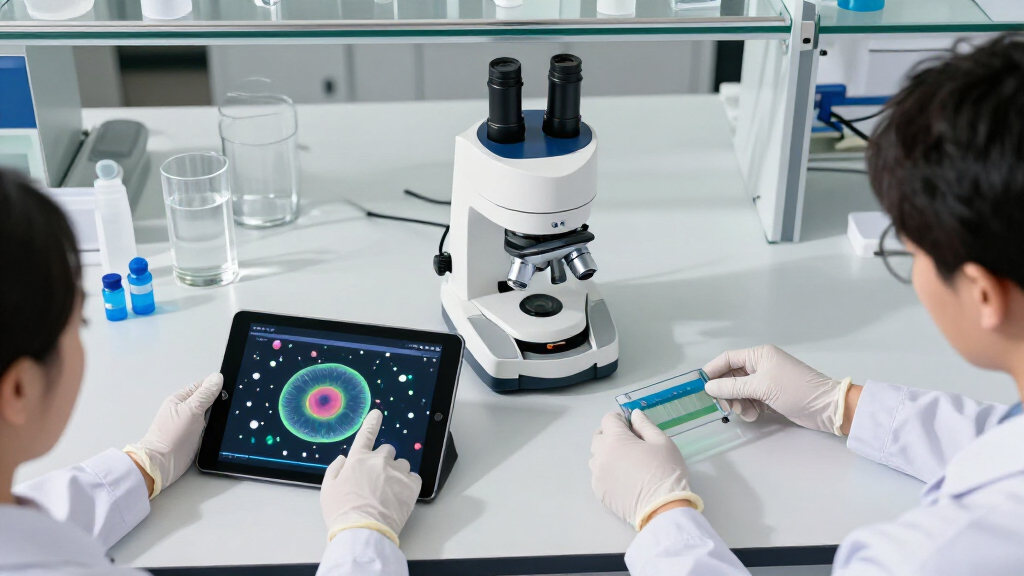
Google.org announced 17 organizations selected for a $36 million AI-for-science funding challenge. The projects span climate forecasting, fusion energy, batteries, genetics and drug design; the announcement describes intended work, not demonstrated research results.
Google.org announced on October 14, 2026, that 17 organizations will share $36 million through its Impact Challenge: AI for Science, funding projects that apply artificial intelligence to research in climate, energy, health and other fields. The selected teams aim to use AI to speed up scientific work, but the announcement outlines proposed projects and goals rather than results already achieved.
The challenge received applications from organizations in 30 countries, Google.org said. The recipients include universities, research institutes and other organizations working on problems ranging from severe-storm warnings to computer-guided drug design. Participants may also choose to join a six-month Google.org Accelerator, which offers engineering support, technical mentorship and access to Google infrastructure.
Seven projects are grouped under climate resilience and environmental science. AfriClimate AI Limited aims to identify atmospheric signals that precede deadly storms in Africa, with the goal of extending flash-flood warning times from under three hours to more than six. Other projects include an ocean ecosystem digital twin from Inria Chile Research Center, AI-assisted materials research at MIT, and work on fusion-reactor modeling by the Max Planck Institute for Plasma Physics with TU Eindhoven and by the University of Texas at Austin.
The environmental group also includes UC San Diego’s proposed AI pipeline for finding interpretable climate physics and guiding ocean observations, the University of Cambridge’s research on sodium-ion battery durability, and University of Washington work on protein design for sustainability, including potential plastic degradation. The remaining health and life sciences projects address areas such as genetics, cancer treatment, DNA damage, cardiac regeneration and peptide-based medicines.
AI Projects Target Climate and Health
The announcement shows how a major technology company is directing funding and technical support toward research that often depends on large or complex datasets, simulations and repeated experiments. If the proposed methods work as intended, they could help researchers test ideas, identify patterns or make predictions more quickly. The projects also address problems with practical stakes, including flood preparedness, energy storage, disease research and treatment decisions.
Those potential benefits are not yet established by the announcement. The challenge’s recipients are developing or applying research approaches; Google.org has not reported comparative results showing that these projects have already shortened research timelines, improved forecasts or changed clinical outcomes. The grant totals and stated aims provide a measure of the initiative’s scale, not evidence of scientific impact.
The work also covers different stages of research. Some teams seek to improve models or interpret existing data, while others aim to develop tools that could inform later experiments or clinical choices. That distinction matters: a promising prediction or designed molecule still needs validation before it can be treated as a reliable scientific or medical result.
scientific calculator for students 2027
As an affiliate, we earn on qualifying purchases.
As an affiliate, we earn on qualifying purchases.
How the Challenge Selects Research
Google.org said it launched the Impact Challenge: AI for Science earlier in 2026 as an open call for organizations using AI in scientific research. Applications came from 30 countries and covered climate, health and foundational science. The October announcement named the 17 recipients and set out the areas each project plans to address.
The organization’s global head and vice president, Maggie Johnson, framed the effort as support for research on challenges including human disease and environmental change. The structure combines funding with an optional accelerator, rather than announcing a single shared research program. Each team retains a distinct project focus, from mapping genetic variation in African drug-metabolizing genes at the University of Cape Town to modeling brain-cell targeting at the Allen Institute.
“We’re standing at a profound inflection point in scientific discovery.”
— Maggie Johnson, Google.org global head and vice president
As an affiliate, we earn on qualifying purchases.
Project Results Still Ahead
The announcement does not disclose how much of the $36 million each recipient will receive, or provide project-by-project budgets, timelines or measurable evaluation criteria. It also does not say which organizations will join the optional accelerator. Google.org’s descriptions set out intended applications and, in some cases, target outcomes; they do not confirm that those targets have been met.
It remains unclear how the teams will validate AI-generated predictions or designs, how they will measure progress, and when findings or tools will be made public. Several projects relate to health and clinical decisions, but the announcement does not describe clinical testing, regulatory review or plans for deployment. Those details would be needed to assess whether the research leads to practical use.
As an affiliate, we earn on qualifying purchases.
Teams Begin Funded Research
The selected organizations can begin work supported by the challenge funding, and those opting in can participate in the six-month accelerator. Google.org says the accelerator will provide engineering assistance, technical mentorship and Google infrastructure. The announcement does not give a shared start date or schedule for later project updates.
Readers can expect the next meaningful evidence to come from the teams’ published methods, validated findings and reported progress against their stated aims. For projects involving medical applications, further research and appropriate clinical evaluation would be necessary before any prospective tool could guide patient care.
As an affiliate, we earn on qualifying purchases.
Key Questions
What did Google.org announce?
Google.org named 17 recipients of its Impact Challenge: AI for Science and said they will receive a combined $36 million to support AI-related scientific projects.
What kinds of research will the funding support?
The projects cover climate and environmental science, energy, batteries, materials, genetics, cancer research, DNA damage, cardiac therapies and drug design. Examples include storm-warning research in Africa and studies of genetic variation that may inform treatment choices.
Have the organizations already achieved scientific breakthroughs?
The announcement describes funded projects and their aims, not completed breakthroughs. It does not report evidence that the teams have met their targets or that their methods have improved clinical or environmental outcomes.
What support will recipients receive beyond funding?
Recipients may choose to take part in a six-month Google.org Accelerator, which the company says will provide engineering support, technical mentorship and access to Google infrastructure.
Source: rss
Fall Picks
fall essentials
As an affiliate, we earn on qualifying purchases.