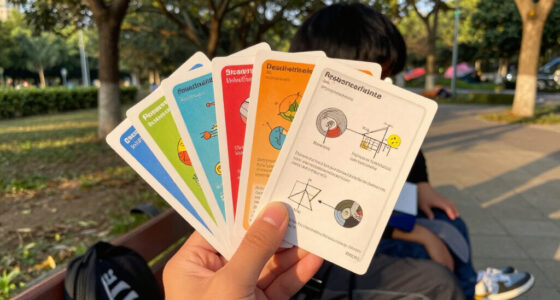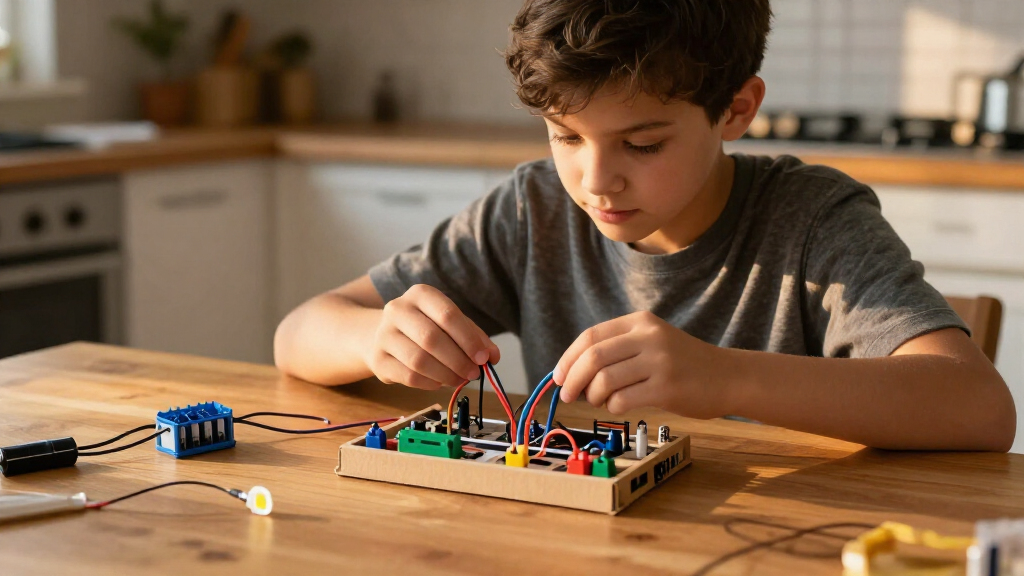

For most middle school students, the National Geographic Mega Science Lab is the best overall pick in this roundup, with a broad mix of activities that can suit several interests. The Thames & Kosmos Structural Engineering: Bridges & Skyscrapers is a stronger match for learners who want to build and test designs, while the Physics Mechanics Kit focuses on forces and simple machines. The main tradeoff is breadth versus depth: large experiment collections offer variety, while focused kits can give students more room to explore one subject. Age labels also matter, since some options are aimed at younger children or high school students rather than middle school. Read on for the full breakdown and guidance on choosing a kit that fits your student’s interests and support needs.

Prime made for students and young adults
- Fast, free delivery for dorm and study essentials
- Prime Video and Amazon Music included
- Member-only deals
Key Takeaways
- The Mega Science Lab leads for variety: its 75 experiments cover more ground than the smaller chemistry set, making it a flexible shared kit for students still exploring their interests.
- Focused projects can teach more deeply than big activity counts: the bridge-building, mechanics, and electricity kits center on specific ideas students can construct, test, and compare.
- Age labels do not always match middle school: several National Geographic kits are marked for ages 8–12, while the EUDAX electricity kit is labeled for high school students; check task difficulty and supervision needs, not age alone.
- Microbiology requires extra planning: the bacteria and microbiology kits use agar plates, so buyers should review handling, disposal, and adult-supervision instructions before choosing them.
- The best pick depends on the learning goal: forensic investigation suits evidence-minded readers, Earth science favors broad topic exploration, and robotics or circuits fit students who want to build working systems.
| Mark Twain Forensic Investigations Workbook: Using Science to Solve High Crimes |  | Best for Forensic Science | Format: Workbook | Subject: Forensic science | Featured activities: DNA analysis and handwriting examination | VIEW LATEST PRICE | See Our Full Breakdown |
| National Geographic Chemistry Set with 45 Experiments for Kids 8-12 |  | Best for Guided Chemistry Basics | Brand: National Geographic | Age range: 8 years and up | Number of experiments: 45 | VIEW LATEST PRICE | See Our Full Breakdown |
| National Geographic Mega Science Lab with 75 Experiments for Kids 8-12 |  | Best for Science Variety | Brand: Blue Marble | Age range: 8 years and up | Number of experiments: 75 total: 45 kit-based and 30 using household items | VIEW LATEST PRICE | See Our Full Breakdown |
| Butterfly EduFields 10-in-1 STEM Electronics Robotics Kit for Kids Ages 8-12 |  | Best for Hands-On Electronics | Brand: Butterfly EduFields | Age range: 8–12 years | Projects: 10-in-1 STEM electronics and robotics kit | VIEW LATEST PRICE | See Our Full Breakdown |
| National Geographic Amazing Chemistry Set with 100+ Experiments for Ages 8-12 |  | Best for Chemistry Depth | Brand: Blue Marble | Age range: 8 years and up | Number of experiments: 100+ | VIEW LATEST PRICE | See Our Full Breakdown |
| National Geographic Earth Science Kit with 100+ Activities for Kids 8-12 | 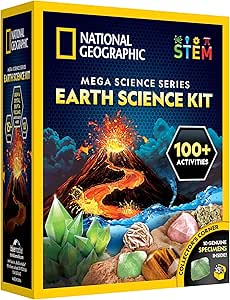 | Best for Earth Science Variety | Number of activities: 100+ | Recommended age: 8–12 | Included experiments: Water tornadoes, erupting volcano, crystal growing, and geologic dig kits | VIEW LATEST PRICE | See Our Full Breakdown |
| Thames & Kosmos Structural Engineering: Bridges & Skyscrapers |  | Best for Engineering and Model Building | Model count: 20 | Building pieces: 287 plastic pieces | Manual: 36 pages | VIEW LATEST PRICE | See Our Full Breakdown |
| National Geographic Science Magic Kit with 100+ Experiments for Kids 8-12 |  | Best for Magic-Style Demonstrations | Number of experiments: 100+ | Recommended age: 8–12 | Theme: Science magic | VIEW LATEST PRICE | See Our Full Breakdown |
| Bacteria Science Kit with LB-Agar Plates and Science Fair E-Book |  | Best for Advanced Microbiology Projects | Age range: 13 years and above | Set name: Single Set | Packs: 15 | VIEW LATEST PRICE | See Our Full Breakdown |
| Physics Mechanics Kit with Pulley, Balance, Force Gauge, 26 Experiments |  | Best for Older Students Studying Mechanics | Number of experiments: 26 | Recommended age: 14+ | Included components: Storage box, pulley, balance, force gauge, lever ruler, pressure gauge, spring dynamometer, trolley, and ramp | VIEW LATEST PRICE | See Our Full Breakdown |
| Carson Dellosa STEM Challenges, Hands-On Science Kits for Grades 2-5 |  | Best for Guided Group Activities | Brand: Carson Dellosa Education | Format: STEM challenge learning cards | Number of challenges: 30 | VIEW LATEST PRICE | See Our Full Breakdown |
| EUDAX School Physics Labs Basic Electricity Discovery Circuit and Magnetism Experiment Kits for High School Students |  | Best for Older Students Exploring Electricity | Brand: EUDAX | Number of items: 79 | Listed age range: 8–18 years | VIEW LATEST PRICE | See Our Full Breakdown |
| Evviva Sciences Microbiology Science Project Kit with Pre-Poured Agar Plates |  | Best for Advanced Teen Biology Projects | Listed age range: 15+ | Agar plates: 10 pre-poured plates | Included tools: Cotton-tipped sticks, pipette, and plastic vial | VIEW LATEST PRICE | See Our Full Breakdown |
| science kits for middle school student | Age range |
|---|---|
| Mark Twain Forensic Investigat | Not specified |
| National Geographic Chemistry | 8 years and up |
| National Geographic Mega Scien | 8 years and up |
| Butterfly EduFields 10-in-1 ST | 8–12 years |
| National Geographic Amazing Ch | 8 years and up |
| National Geographic Earth Scie | — |
| Thames & Kosmos Structural Eng | 8–14 years |
| National Geographic Science Ma | — |
| Bacteria Science Kit with LB-A | 13 years and above |
| Physics Mechanics Kit with Pul | — |
| Carson Dellosa STEM Challenges | — |
| EUDAX School Physics Labs Basi | — |
| Evviva Sciences Microbiology S | — |
More Details on Our Top Picks
Mark Twain Forensic Investigations Workbook: Using Science to Solve High Crimes
I’d choose this workbook for a middle school student more interested in evidence and deduction than erupting volcanoes or building circuits. Its activities introduce forensic ideas through DNA analysis and handwriting examination, giving students practice reasoning from clues rather than simply following a demonstration. Compared with the National Geographic Chemistry Set, it offers less variety in physical experiments, but a more focused path into a real-world science topic. The workbook format also suits classroom lessons and homeschool schedules, though the supplied information does not identify how many activities it contains or what materials are needed. That uncertainty makes it harder to plan than a packaged experiment kit, and adult guidance may be needed for younger students. I’d skip it for buyers seeking equipment or broad coverage across science subjects.
Pros:- Explores forensic science through DNA analysis and handwriting examination
- Activities encourage critical thinking and problem-solving
- Workbook format can fit classroom or homeschool lessons
Cons:- Product details do not specify activity count or required materials
- Focused forensic subject matter offers less variety than the National Geographic Mega Science Lab
- Younger students may need adult supervision
Best for: Middle school students drawn to crime-scene reasoning, forensic science, and workbook-based classroom or homeschool activities
Not ideal for: Families seeking a box of lab materials, a stated experiment count, or broad coverage of chemistry, physics, and earth science
- Format:Workbook
- Subject:Forensic science
- Featured activities:DNA analysis and handwriting examination
- Learning focus:Critical thinking and problem-solving
- Intended settings:Classroom or homeschool
- Age range:Not specified
Our verdict“Choose this workbook for a middle schooler who prefers solving evidence-based forensic puzzles to performing a broad range of hands-on experiments.”
National Geographic Chemistry Set with 45 Experiments for Kids 8-12
This set is a practical pick for students who want a clear introduction to chemistry without the larger experiment count of the National Geographic Amazing Chemistry Set. Its 45 activities include volcano eruptions, geysers, and rocket launches, so lessons have visible outcomes that can help keep a younger middle schooler engaged. Illustrated, easy-to-follow instructions make it more approachable for families starting out with home experiments. The tradeoff is a narrower subject focus: unlike the National Geographic Mega Science Lab, it does not offer the same mix of earth science and science magic. Some activities may need adult supervision, and the listed dimensions may make storage awkward in a crowded space. I’d choose this over a broader kit when a student wants a guided chemistry sampler rather than several branches of science.
Pros:- Includes 45 hands-on experiments with recognizable chemistry demonstrations
- Illustrated instructions support independent participation
- Activities introduce fundamental chemistry and STEM concepts
- Does not require batteries
Cons:- Chemistry-only focus may not suit students looking for varied science topics
- Some experiments may require adult supervision
- Its listed dimensions may be inconvenient for compact storage
Best for: Families seeking a guided first chemistry kit for an 8–12-year-old who enjoys visible experiments and illustrated instructions
Not ideal for: Students wanting robotics, forensic science, or a mix of earth science and chemistry in one kit
- Brand:National Geographic
- Age range:8 years and up
- Number of experiments:45
- Item dimensions:8.78 x 3.19 x 11.93 inches
- Item weight:2.9 pounds
- Material:Rubber
- Battery required:No
Our verdict“Pick this set for an accessible, chemistry-focused introduction, but choose the Mega Science Lab for broader subject variety.”
National Geographic Mega Science Lab with 75 Experiments for Kids 8-12
I’d rank this lab above the narrower chemistry sets for families who want one kit to sample several subjects. Its stated 75 experiments cover earth science, chemistry, and science magic: 45 are included in the kit, while 30 use household items. That mix can give a middle school student more ways to explore than the National Geographic Chemistry Set’s single-subject lineup, while also making the household-item activities useful when packaged materials run out. The main tradeoff is that “75 experiments” does not mean every activity comes with its own supplies; some require items from home. The kit is designed for ages 8 and up, but it may feel introductory to students ready for more advanced investigations. Adult supervision may be needed for some activities, so this is better for supported exploration than fully independent lab work.
Pros:- Combines earth science, chemistry, and science magic
- Offers 45 kit-based activities plus 30 using household items
- Activities support observation and critical thinking
- Provides broader subject variety than the chemistry-only National Geographic sets
Cons:- Some of the stated experiments require household items
- The introductory scope may not satisfy advanced science enthusiasts
- Some activities may need adult supervision
Best for: Families wanting a single introductory kit that spans earth science, chemistry, and science magic, with some activities using household supplies
Not ideal for: Students seeking advanced experiments, a dedicated robotics project, or a kit where every activity uses included materials
- Brand:Blue Marble
- Age range:8 years and up
- Number of experiments:75 total: 45 kit-based and 30 using household items
- Subjects:Earth science, chemistry, and science magic
- Educational objectives:Critical thinking, observation skills, and STEM
- Included components:Earth science kit, chemistry kit, and science magic kit
- Manufacturer:JMW Sales, Inc.
Our verdict“Choose the Mega Science Lab when range across science topics matters more than a deep focus on chemistry or electronics.”
Butterfly EduFields 10-in-1 STEM Electronics Robotics Kit for Kids Ages 8-12
Unlike the National Geographic Amazing Chemistry Set, this kit turns science time toward electronics, mechanics, and building. More than 100 components—including wires, switches, connectors, and LED lights—give students parts to assemble into robotics projects, making it a stronger fit for a middle schooler who learns by making a working object. The included instructions are described as beginner-friendly, though assembly can still challenge some children; adult help may be useful, especially for younger users. The tradeoff is a more constrained kind of exploration than the Mega Science Lab: it centers on construction rather than mixing subjects or running a range of chemistry demonstrations. It also asks for patience with assembly, so it is not the pick for casual, open-ended play. I’d choose it when a student’s curiosity is specifically about how circuits and mechanisms work.
Pros:- Includes more than 100 components for project building
- Introduces electronics, engineering, and mechanics through hands-on assembly
- Instruction manual supports beginner projects
- Offers a distinct alternative to experiment-focused chemistry kits
Cons:- Assembly may be challenging for some users
- Younger children may need adult supervision
- Project-building focus is less suited to students seeking varied experiments
Best for: Ages 8–12 who enjoy assembling projects and want a hands-on introduction to electronics, mechanics, and robotics
Not ideal for: Students who prefer quick chemistry demonstrations, broad science topics, or play without structured assembly
- Brand:Butterfly EduFields
- Age range:8–12 years
- Projects:10-in-1 STEM electronics and robotics kit
- Components:Over 100
- Included components:Wires, switches, connectors, LED lights, and instruction manual
- Model number:506
Our verdict“Pick this kit for a student who would rather build and explore electronic mechanisms than conduct chemistry experiments.”
National Geographic Amazing Chemistry Set with 100+ Experiments for Ages 8-12
For a middle schooler who wants to keep returning to chemistry, this set’s 100+ experiments offer more activity volume than the 45-experiment National Geographic Chemistry Set. Listed examples include crystal growing and chemical reactions, giving students different ways to observe how materials change and form. The product data says necessary materials are included, which may make it a more self-contained option than the Mega Science Lab, where some experiments rely on household items. Its focus is also its main limitation: students looking for forensics, earth science, or robotics will get more subject variety elsewhere in this lineup. Some activities take time, and younger users may need adult supervision, so it is not the quickest choice for a short activity session. I’d select it for chemistry-minded students who value a longer sequence of hands-on projects over a multi-subject sampler.
Pros:- Includes more than 100 chemistry experiments
- Features crystal growing, chemical reactions, and STEM projects
- Product description says necessary materials and tools are included
- Offers more listed experiments than the 45-activity National Geographic Chemistry Set
Cons:- Focuses on chemistry rather than multiple science disciplines
- Some experiments may take a while to complete
- Younger students may need adult supervision
Best for: Chemistry-curious students ages 8 and up who want many hands-on activities, including crystal growing and reactions
Not ideal for: Families seeking robotics, forensic investigations, or a balanced kit spanning several science subjects
- Brand:Blue Marble
- Age range:8 years and up
- Number of experiments:100+
- Set name:Amazing Chemistry Set
- Educational objective:STEM
- Included components:Chemistry kit with 100+ science experiments
- Item dimensions:8.78 x 3.19 x 11.93 inches
- Item weight:1.8 pounds
Our verdict“Choose this set for a chemistry-focused student who wants a larger collection of projects than the 45-experiment alternative.”
National Geographic Earth Science Kit with 100+ Activities for Kids 8-12
I’d choose this kit for a middle schooler who is drawn to geology and natural processes more than building or mechanics. Its mix of volcanoes, crystal growing, water tornadoes, and geologic digs gives students several ways to explore Earth science, while the learning guide and straightforward instructions help make the activities approachable. Compared with the Thames & Kosmos Structural Engineering: Bridges & Skyscrapers, this is broader in its Earth-science themes but less focused on developing and testing one set of engineering skills. The listed age range is 8–12, so older middle school students may find the activities less demanding. Some experiments also call for adult supervision, and the kit stays within Earth science rather than spanning multiple disciplines.
Pros:- Includes more than 15 experiments across several Earth-science themes.
- Offers a learning guide that connects activities to science concepts.
- Easy-to-follow instructions can help younger students work with more confidence.
- Combines hands-on activities such as crystal growing and geologic digs.
Cons:- The 8–12 age range may feel less challenging for older middle school students.
- Some activities may need adult supervision.
- The subject matter is limited to Earth science.
Best for: Families with younger middle school students who want guided, varied activities focused on geology and Earth science.
Not ideal for: Older students seeking advanced or open-ended work, or buyers who want a kit spanning several science fields.
- Number of activities:100+
- Recommended age:8–12
- Included experiments:Water tornadoes, erupting volcano, crystal growing, and geologic dig kits
- Experiment count detail:Over 15 experiments
- Learning material:Detailed learning guide
- Instruction style:Easy-to-follow instructions
Our verdict“Choose this for an 8–12-year-old who wants varied, guided Earth-science activities rather than a focused engineering or physics kit.”
Thames & Kosmos Structural Engineering: Bridges & Skyscrapers
This is my pick for students who learn best by building, adjusting, and seeing how a structure responds to a load. The 287 interchangeable pieces support 20 models, while the manual introduces forces such as tension and compression through bridges and skyscrapers. Compared with the National Geographic Earth Science Kit, it offers a narrower subject area but a more sustained engineering challenge: students can apply related structural ideas across multiple builds. Its age range reaches 14, making it a better fit for many middle schoolers than kits aimed only at younger children. The tradeoff is that activities depend on the supplied pieces and manual; this is not a broad survey of science, and small parts or more complex builds may frustrate younger users.
Pros:- Supports 20 structural models, providing repeated practice with engineering ideas.
- 287 interchangeable pieces allow students to build different structures.
- The manual guides learners through concepts including tension, compression, and load.
- Age range of 8–14 includes much of middle school.
Cons:- Focuses on structural engineering rather than a range of science subjects.
- Small parts and complex models can challenge younger builders.
- Projects are limited to the included pieces and manual.
Best for: Middle school students who enjoy construction challenges and want to explore how forces affect bridges and buildings.
Not ideal for: Students who prefer experiments in biology, chemistry, or Earth science, or younger children who need simpler builds and larger parts.
- Model count:20
- Building pieces:287 plastic pieces
- Manual:36 pages
- Age range:8–14 years
- Concepts covered:Force, load, tension, compression, and structural principles
- Model number:625414
- Manufacturer:Thames & Kosmos
- Warranty:1-year manufacturer warranty
Our verdict“Pick this for a hands-on middle schooler who would rather build and test structures than rotate through unrelated science experiments.”
National Geographic Science Magic Kit with 100+ Experiments for Kids 8-12
I’d put this kit on the shortlist for a student who is more likely to engage when science comes with a surprise or performance angle. The description promises 100+ experiments and emphasizes imagination and creativity, giving it a playful pitch compared with the more concept-specific Thames & Kosmos Structural Engineering: Bridges & Skyscrapers. That breadth may suit a younger middle schooler who wants variety instead of repeated building challenges. But the available product details do not identify the experiments, included materials, or safety features, so it is harder to judge whether the activities will match a particular student’s interests or work well without help. I’d treat it as a broad, curiosity-led option—not the clearest choice for a student seeking a defined science curriculum.
Pros:- Advertises more than 100 experiments for a wide range of activities.
- Uses a magic-themed approach to encourage curiosity and creativity.
- Designed for ages 8–12, which suits younger middle school students.
Cons:- The available details do not name specific experiments.
- Included materials and safety features are not specified.
- The description does not establish a clear subject focus or learning sequence.
Best for: Younger middle school students who enjoy demonstrations and want a playful set of science activities.
Not ideal for: Parents or teachers who need a clear experiment list, detailed materials information, or a defined subject focus before choosing.
- Number of experiments:100+
- Recommended age:8–12
- Theme:Science magic
- Intended outcomes:Education, imagination, and creativity
- Specific experiments:Not specified in the provided product details
- Included materials:Not specified in the provided product details
Our verdict“Choose this for a younger student attracted to science demonstrations, but pick a more clearly documented kit if experiment details matter to you.”
Bacteria Science Kit with LB-Agar Plates and Science Fair E-Book
This kit makes the most sense for an older student ready to investigate microorganisms as a structured project, rather than for a typical younger middle schooler. It includes sterile LB-agar plates, cotton swabs, and a step-by-step science fair e-book, with PhD scientist support available for troubleshooting. Compared with the National Geographic Science Magic Kit, it offers a much clearer subject and project direction, but it is less suited to casual, low-preparation activities. The stated minimum age is 13, and handling microbial samples calls for careful procedures and adult guidance. That age limit puts it near the upper edge of middle school, so I would not choose it for younger students simply because it is labeled a science kit.
Pros:- Includes sterile LB-agar plates and cotton swabs for the described activities.
- Provides a step-by-step science fair e-book.
- PhD scientist support is available for troubleshooting.
- The focused subject can support a more developed microbiology project.
Cons:- The stated age range begins at 13, excluding many middle school students.
- Setup and handling require careful procedures and adult guidance.
- Its microbiology focus offers less subject variety than broad activity kits.
Best for: Students aged 13 or older who are preparing a guided microbiology or science-fair project with responsible adult oversight.
Not ideal for: Younger middle school students, or families seeking a low-preparation kit that does not involve handling environmental samples.
- Age range:13 years and above
- Set name:Single Set
- Packs:15
- Items:10
- Included materials:Sterile LB-agar plates and cotton swabs
- Learning material:Science fair e-book with step-by-step experiments
- Manufacturer:EZ BioResearch
- Model number:KAP-20
- Item dimensions:6.9 x 6.3 x 6.2 inches
Our verdict“Choose this for a responsible student aged 13 or older who wants a guided microbiology project, not for a younger or casual experimenter.”
Physics Mechanics Kit with Pulley, Balance, Force Gauge, 26 Experiments
For a middle schooler already comfortable with science equipment, this kit offers a more lab-like route into Newton’s laws, motion, gravity, and simple machines. Its pulley, force gauge, balance, trolley, and ramp give students tools to examine mechanics through practical experiments, while the manual provides operating steps and principles. Compared with the Thames & Kosmos Structural Engineering: Bridges & Skyscrapers, this set shifts from building structures to measuring and exploring physics concepts. The tradeoff is a notably older recommended age: 14+ makes it a better match for advanced students at the edge of middle school or high school than for a typical younger middle schooler. Its 26 experiments are focused on mechanics, not a general science curriculum.
Pros:- Includes several tools for exploring mechanics, including a pulley, force gauge, trolley, and ramp.
- Supports hands-on study of Newton’s laws, gravity, kinematics, and simple machines.
- The manual includes operation steps and explanations of principles.
- Storage box and portable design suit classroom or family use.
Cons:- Recommended age is 14+, so it may not suit younger middle school students.
- The 26 experiments focus on mechanics rather than varied science topics.
- Small parts may call for supervision with younger learners.
Best for: Older or advanced students aged 14 and up who want hands-on mechanics experiments using measurement tools.
Not ideal for: Younger middle school students or buyers looking for a broad, introductory science kit with activities across multiple subjects.
- Number of experiments:26
- Recommended age:14+
- Included components:Storage box, pulley, balance, force gauge, lever ruler, pressure gauge, spring dynamometer, trolley, and ramp
- Educational focus:Mechanics, physics, and STEM
- Concepts covered:Newton’s laws, kinematics, gravity, and simple machines
- Manufacturer:Matifaner
- Model number:1
Our verdict“Pick this for an older student who wants focused, equipment-based physics practice and is ready for mechanics beyond a general science activity kit.”
Carson Dellosa STEM Challenges, Hands-On Science Kits for Grades 2-5
For middle school students who benefit from short, structured prompts, this set offers 30 challenge cards spanning physical, life, earth, and space science. Each card lists materials and includes hints and explanations, giving a teacher or parent a ready-made starting point for a group activity. Compared with the more specialized EUDAX electricity and magnetism kit, these cards cover more fields but offer less depth in any one topic. The age range is the main limitation: it is listed for ages 7–10 and grades 2–5, so many middle schoolers may find the challenges too basic. Some projects also call for materials not in the box. I’d choose it for younger learners or mixed-age groups needing accessible prompts, not as a standalone middle school science course.
Pros:- 30 cards provide a clear prompt for each activity
- Covers physical, life, earth, and space science
- Materials lists, hints, and explanations support guided learning
- Works for classrooms, learning centers, and homeschooling
Cons:- Designed for ages 7–10 and grades 2–5, which may feel young to many middle schoolers
- Some activities require extra common materials
- Thirty challenges may not provide enough material for extended study
Best for: Parents and educators leading younger middle school students or mixed-age groups who want short, adaptable science prompts across several subjects
Not ideal for: Older middle school students seeking advanced, age-matched experiments or a deep sequence in one science topic
- Brand:Carson Dellosa Education
- Format:STEM challenge learning cards
- Number of challenges:30
- Subject coverage:Physical, life, earth, and space sciences
- Listed age range:7–10 years
- Educational objectives:Critical thinking and problem-solving
- Included components:33 pieces
- Item weight:16 ounces
Our verdict“Choose this card set for accessible, teacher-guided variety with younger learners, but pick a more advanced kit for most middle school students.”
EUDAX School Physics Labs Basic Electricity Discovery Circuit and Magnetism Experiment Kits for High School Students
This is the most focused option here for students ready to work through circuits, electromagnets, and generators. Its 79 items and full-color manuals support repeated experiments, making it a better fit for a curious older middle schooler with adult guidance than a broad introductory set such as the Carson Dellosa STEM Challenges cards. That specialization is also the tradeoff: it concentrates on electricity and magnetism rather than offering a tour of several science fields. The listing reaches from ages 8 to 18, but the instructions and setup may challenge younger users, so supervision matters. Batteries are not included, adding a required supply before the experiments can begin. I’d rank it for students who want to investigate physics hands-on, not for families looking for a simple, all-purpose science kit.
Pros:- 79 items support a range of electricity and magnetism experiments
- Projects include circuits, electromagnets, and generators
- Full-color manuals provide guidance for the activities
- Narrow subject focus allows more practice with core physics ideas
Cons:- Batteries are not included and must be supplied separately
- Setup may be complex for younger students without adult help
- Covers electricity and magnetism rather than a broad range of science topics
Best for: Older middle school students with adult support who want a sustained, hands-on introduction to circuits and magnetism
Not ideal for: Younger beginners or families seeking a broad science sampler with minimal setup and all required supplies included
- Brand:EUDAX
- Number of items:79
- Listed age range:8–18 years
- Topics:Electricity and magnetism
- Example projects:Circuits, electromagnets, and generators
- Materials:Copper, plastic, iron, paper, and plastic/fabric
- Item weight:1.43 kg
- Power:Batteries not included
Our verdict“Pick this kit for a supervised, physics-focused project experience, especially for an older student interested in circuits and magnetism.”
Evviva Sciences Microbiology Science Project Kit with Pre-Poured Agar Plates
Among these three picks, this is the most specialized and age-restricted: it is designed for students aged 15 and older, not the typical middle school buyer. The 10 pre-poured agar plates remove the need to prepare and pour agar, while the swabs, pipette, vial, instructions, and ebook provide a defined starting set for a microbiology project. Compared with the EUDAX kit, which explores physical science through reusable components, this kit centers on biological sampling and has a finite supply of plates. That makes it a better match for an older student working on a specific project than for broad science exploration. Its age guidance deserves attention, and the limited plate count may constrain repeated trials. I’d reserve it for older teens with appropriate adult oversight rather than buy it as a general middle school kit.
Pros:- Pre-poured plates avoid the agar-melting and pouring steps
- Includes 10 agar plates for a defined set of experiments
- Swabs, pipette, and vial provide basic project tools
- Instruction manual and educational ebook offer guidance
Cons:- Designed for ages 15 and older, making it unsuitable for most middle schoolers
- Ten plates limit the number of trials and repeated investigations
- Specializes in microbiology rather than covering multiple science subjects
Best for: Students aged 15 and older preparing a focused microbiology project at home or in a classroom with suitable adult oversight
Not ideal for: Most middle school students, younger learners, or buyers wanting a broad kit with supplies for many repeated experiments
- Listed age range:15+
- Agar plates:10 pre-poured plates
- Included tools:Cotton-tipped sticks, pipette, and plastic vial
- Included learning materials:Instruction manual and educational ebook
- Subject:Microbiology
- Suggested settings:Home or classroom
Our verdict“Choose this only for an older teen pursuing a focused microbiology project; it is not a general-purpose kit for middle school students.”
How We Picked
I compared these 13 kits by how well their activities fit middle school learning: whether they let students observe, build, test, or explain a scientific idea rather than only follow a short demonstration. I also weighed subject range, clarity of the stated age or grade guidance, the likely need for adult help, and how much practical work a student can do with the included materials. A kit with many experiments is not automatically a better learning choice; variety matters most for undecided learners, while a focused kit can be a better fit for a student ready to stick with one subject.
The ranking gives priority to kits with a strong match for middle school interests, usable hands-on activities, and a reasonable balance of guidance and student independence. Broad, flexible options rank ahead for general use, while more specialized kits earn a recommendation when their subject or project style fits a particular learner. I also account for mismatches: products labeled for younger children may feel simple to older students, and high-school-oriented or microbiology activities may need added adult support. The roundup includes those options because they may still suit some middle schoolers, but their narrower fit affects where they belong.
Factors to Consider When Choosing Science Kits For Middle School Students
Before choosing a kit, I would start with the student’s preferred way to learn, then check the real demands of the activities. A striking experiment can lose its appeal if it depends on supplies you do not have, adult help at every step, or a level that does not match the student. These broader checks help distinguish a kit that will get used from one that merely sounds exciting.
Match the challenge to the student, not just the age label
Age ranges are useful starting points, but they do not tell you how much reading, precision, or independent problem-solving a kit requires. A confident student may enjoy a kit labeled for older learners, while a younger middle schooler may prefer more guided steps. Look for clues such as whether instructions explain the science behind each activity, whether students must record results, and whether a project has a clear stopping point. If those details are not available, favor kits that offer a range of activities rather than one complex build. A common mistake is buying by age number alone and overlooking the child’s patience, reading comfort, or experience with tools. Matching the challenge well helps maintain interest without turning the activity into an adult-led task.
Choose breadth for exploration and focus for follow-through
A kit covering chemistry, earth science, and other topics can help an undecided student discover what they enjoy. A focused engineering or physics kit gives a student more chances to test variations within one subject, which can make cause and effect easier to grasp. Consider whether the student tends to sample activities or return to a favorite project and improve it. Large experiment counts may include short demonstrations that use similar steps, so count the types of skills and questions involved rather than relying on the number alone. Focused kits can feel limited if the subject is not already appealing. The right balance depends on whether your goal is discovery, sustained practice, or a mix of both.
Check what the activities ask the student to do
Hands-on can mean very different things: mixing materials, assembling circuits, building a structure, or recording observations over time. If you want stronger science practice, look for opportunities to make a prediction, change one variable, compare results, and explain what happened. Some kits are designed mainly for demonstrations, which can be engaging but may leave less room for independent investigation. Others require careful assembly or repeated trials, rewarding students who like troubleshooting. Think about whether the student wants a quick activity or a project that unfolds over several sessions. This distinction can matter more for lasting engagement than the subject printed on the box.
Plan for adult help, workspace, and cleanup
Some experiments are easy to start at a kitchen table, while others may call for close supervision, careful handling, or a dedicated work area. Before buying, check the instructions for safety guidance, setup steps, cleanup, and any supplies that are not included. Microbiology kits deserve particular attention to handling and disposal directions; do not assume that plates or cultures can be treated like ordinary craft materials. Circuits, construction projects, and messy experiments also benefit from a stable workspace where components can stay organized between sessions. A kit that fits your household’s supervision capacity is more likely to be used regularly. If adult time is limited, prioritize clear instructions and activities the student can manage safely with appropriate oversight.
Look beyond included materials to repeatability
A kit may contain enough materials for several activities but still depend on household items or consumables that run out. Check whether a project can be repeated, modified, or extended after the first attempt, and whether replacement supplies are practical to obtain. Reusable components such as building pieces or circuit parts can support repeated experiments, while consumable materials may limit how often a student can repeat a result. This does not make a consumable kit a poor choice; it simply changes how much ongoing use you can expect. One common buying error is treating a long activity list as a promise of long-term use without checking what each activity consumes. Think about whether your student values variety in one sitting or the chance to revisit experiments over time.
Consider whether the kit supports a school project
If the student needs a science fair project, choose a kit that encourages a question, a test, and recorded observations rather than only a sequence of preset demonstrations. A ready-made activity can help a student get started, but the project becomes more personal when they can change a condition and compare outcomes. Check whether the kit includes guidance for documenting work or whether you will need a notebook and a separate plan. Do not assume that a kit marketed around science projects automatically meets a school’s rules for original work or safety. Ask the teacher about restrictions, especially for biological materials or activities involving chemicals. This extra check can save time and help the student choose a project they can explain themselves.
Frequently Asked Questions
Which type of science kit is best for a middle schooler who has not chosen a favorite subject?
I would start with a broad kit that offers several kinds of activities, since it gives the student room to find a subject that holds their attention. The National Geographic Mega Science Lab is the roundup’s broad-use choice, while the Earth Science Kit is more suitable if the student already likes natural-world topics. A large activity count alone does not guarantee variety, so check whether the experiments cover meaningfully different ideas. If your student prefers making and testing objects, a focused engineering or mechanics kit may hold interest better than a set of demonstrations. Choose the style that matches how they like to learn, not just how many projects are listed.
Are kits labeled for ages 8–12 too easy for a middle school student?
Not automatically: a student’s reading level, prior experience, and interest in the topic all affect how challenging a kit feels. Some kits aimed at ages 8–12 may work well as independent introductions or as a starting point for a student who enjoys guided experiments. A more experienced middle schooler may want room to change variables, repeat trials, or build beyond the instructions. Look for activities that invite questions rather than only asking students to copy a result. If you are unsure, choose a kit with varied difficulty or plan an extension, such as having the student record and compare different outcomes.
What should I check before buying a microbiology kit for a student?
Read the handling and disposal instructions before purchase, and confirm that an adult can supervise the work as directed. Check what materials are included, what the student is expected to observe, and whether the kit gives clear boundaries for safe use. Agar plates and microbial projects call for more planning than a typical construction or chemistry activity, so consider your household’s comfort with setup and cleanup. Ask the school about its science fair or classroom rules if the project is connected to schoolwork. If you want a lower-preparation introduction to life science, an earth science or general experiment kit may be a more practical starting point.
Should I choose a broad experiment set or a focused kit for a science fair?
For a science fair, a focused kit often makes it easier to stay with one question and test variations, but only if its activities allow the student to make meaningful choices. A broad set can be useful for finding a topic, especially when the student has not settled on a subject. In either case, the student should be able to explain what they changed, what they observed, and what the results suggest. Check school rules and the kit instructions before committing, since some activities may need adult oversight or may not suit a classroom presentation. A kit can provide materials and a starting point, but the student’s own question and records are what make the project their work.
How can I tell whether a kit will be usable without constant adult help?
Look for clear setup steps, safety guidance, and activities that can be completed in short stages. Kits involving circuits, construction, or routine observations may be manageable for many students with an adult available nearby, while biological experiments or more involved lab-style procedures can call for closer supervision. Product age guidance offers a clue, but it does not replace reading the instructions or checking the specific tasks. Consider whether you can help with setup and cleanup even if the student does most of the activity. If your schedule makes regular supervision difficult, favor a kit with reusable parts and straightforward activities over one with more demanding handling requirements.
Conclusion
For a flexible first choice, I recommend the National Geographic Mega Science Lab as best overall because its range can suit students who are still exploring. The National Geographic Chemistry Set with 45 Experiments is my best value-style pick for families seeking a more focused introduction without choosing the larger experiment collection; the 100+ experiment chemistry set is a better premium-style choice for a student who already wants to spend time on chemistry. For beginners, the Mega Science Lab or the National Geographic Science Magic Kit offers approachable ways into hands-on activities, depending on whether they prefer variety or playful demonstrations. For specific interests, choose Thames & Kosmos Structural Engineering for building, the Physics Mechanics Kit for forces, Butterfly EduFields for robotics, and the Earth Science Kit for natural-world topics. I would reserve the bacteria and microbiology kits for households ready to follow their handling and disposal directions, and check the high-school label on the EUDAX kit before choosing it for a younger student.
Fall Picks
fall essentials
As an affiliate, we earn on qualifying purchases.