TL;DR

Prime made for students and young adults
- Fast, free delivery for dorm and study essentials
- Prime Video and Amazon Music included
- Member-only deals
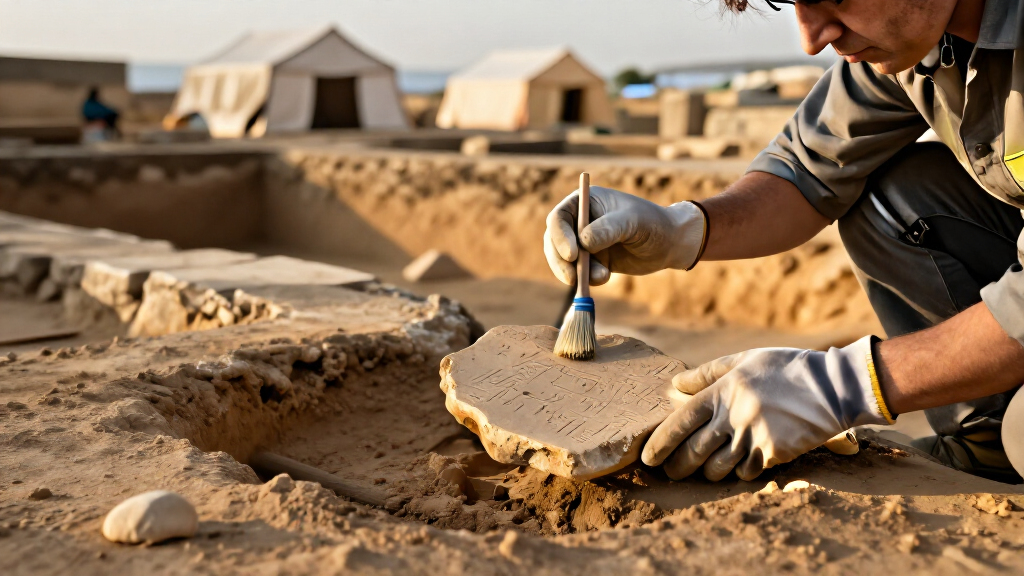
Archaeologists excavating the ancient Hittite city of Samuha in central Turkey recovered 131 cuneiform tablets and fragments this season, adding to 53 found the previous year. The texts, dated to King Tudhaliya II’s reign and written in Hittite and Hurrian, include records of a fever epidemic, military requests, rituals and divination.
Archaeologists excavating the ancient Hittite city of Samuha in modern-day Sivas, central Turkey, have recovered 131 cuneiform tablets and fragments in this year’s work, adding records of royal life, military logistics and religious practice from about 3,400 years ago. The discoveries expand an archive associated with King Tudhaliya II and include texts in Hittite and Hurrian.
The new material follows the recovery of 53 tablets and fragments last year. According to the report by The History Blog, the latest season’s finds bring the number of pieces described from the excavations to 184. The report characterizes the collection as the largest and most comprehensive archive of Hittite-language documents found in the 21st century; that description is attributed to the source report, rather than an independently cited archaeological assessment here.
Among the texts is an account of a fever epidemic affecting the king’s infant daughter. The report says the nursing child did not recover and that a tablet records the funerary ritual performed after her death. Other records show that the health of royal children and the children of senior officials was a concern into adulthood. Because illness was understood as an expression of divine will, religious specialists conducted rituals connected with monitoring and protecting children’s health.
A letter from generals serving in western Anatolia asks the king for additional men, horses and chariots to resist enemy forces. The generals warn that their army could be destroyed without reinforcements and disclaim responsibility for a possible failure if aid is not sent. Another text tracks bird diviners traveling from Samuha, listing routes, places where they stayed and birds they observed. Together, these documents offer evidence about the administration of distant military forces and the recording and interpretation of omens.
What the Samuha Archive Reveals
The tablets matter because they preserve administrative and personal details that are rarely visible together in a single ancient archive. The generals’ appeal shows the practical pressures of maintaining forces far from the king and court: armies needed personnel, horses and chariots, and commanders had to communicate those needs to the ruler. The letter also places Tudhaliya II at Samuha when the appeal arrived, supporting the city’s role as a royal center during a period of military and political uncertainty.
The family and ritual records add another perspective on royal government. The account of the king’s daughter’s illness is not simply a medical note; it is linked to a funeral rite and a religious understanding of disease. The divination itinerary, meanwhile, documents how specialists traveled and gathered observations. These details can help researchers study Hittite religious practice, language and scribal culture, while the mix of Hittite and Hurrian texts reflects the cultural and administrative setting of the city.
The archive also provides material for examining how information moved between the royal court, military commanders and religious practitioners. The surviving records do not represent every aspect of Hittite life, and their focus on the palace and its officials is selective. Even so, the texts bring specific voices and tasks into view: a commander requesting reinforcements, diviners recording observations, and officials attending to the health and rites of royal children.
As an affiliate, we earn on qualifying purchases.
Samuha’s Royal and Religious Role
Samuha was an important Hittite city in what is now central Turkey. The report describes it as a royal stronghold for Tudhaliya II during military and political upheaval. Its importance continued under his successor, Suppiluliuma I, who used the city as a base for campaigns that expanded and consolidated Hittite power.
The city also served as a center of religious administration. Its patron deity was Sauska, a goddess of love and war associated with the Hurrian goddess Ishtar. The report says this association shaped Samuha’s identity and religious ceremonies. The newly reported tablets include divination, correspondence, rituals and prayers, placing the military and family records within a broader body of palace and religious documentation.
The finds are dated to the reign of Tudhaliya II, around 3,400 years ago. They were written in Hittite and Hurrian using cuneiform, a writing system made from wedge-shaped marks pressed into clay. The new group follows last year’s discoveries at the site, but the report does not provide a full excavation chronology or identify the precise archaeological context of each tablet.
As an affiliate, we earn on qualifying purchases.
What the Report Has Not Established
The account does not provide the excavation team’s full name, the exact excavation dates, the tablets’ current storage or conservation arrangements, or a publication schedule for scholarly editions and translations. It also does not give the precise findspot for each object or explain how archaeologists dated individual pieces beyond assigning them to Tudhaliya II’s reign. Those details will be needed to assess the archive’s archaeological context and the strength of specific readings.
The reported interpretation of the fever account, the generals’ appeal and the bird-divination itinerary is based on the source’s description; full translations and specialist commentary are not included in the supplied material. It is also not clear how many of the 131 finds are complete tablets rather than fragments, how many can be joined to one another, or whether further excavation will uncover additional texts. The claim that this is the century’s largest and most comprehensive Hittite-language archive is reported but not independently substantiated in the source material.
As an affiliate, we earn on qualifying purchases.
Publication and Study of the Tablets
The immediate next step is for specialists to document, conserve and translate the newly recovered tablets. Detailed publication could clarify the texts’ wording, identify links among fragments and establish how the records fit into the known chronology of Tudhaliya II’s reign. Further analysis may also show whether the military letter, royal-family records and divination accounts were stored together as a working archive or accumulated in different circumstances.
The supplied report does not announce a date for a full scholarly publication or confirm what the next excavation season will target. Researchers and readers will have to wait for information from the excavation team or subsequent academic studies to learn more about the tablets’ condition, translations and broader implications.
history of the Hittite Empire book
As an affiliate, we earn on qualifying purchases.
As an affiliate, we earn on qualifying purchases.
Key Questions
Where was the Hittite archive found?
It was found at ancient Samuha, in modern-day Sivas province in central Turkey.
How many tablets were recovered?
The latest excavation season recovered 131 tablets and fragments. The report says 53 were found in the previous year’s excavation, for 184 pieces reported across the two seasons.
What do the texts describe?
The reported subjects include a fever epidemic affecting a royal infant, a request for military reinforcements, royal and official family health, funerary rites, prayers and the travels of bird diviners.
Which languages are represented?
The tablets are reported to contain writing in Hittite and Hurrian, using cuneiform.
What is not yet known about the discovery?
The source material does not give full translations, detailed archaeological contexts for the individual tablets, conservation plans or a publication timeline. It also does not independently document the claim that the collection is the largest and most comprehensive Hittite-language archive found in this century.
Source: hn
Halloween Picks
halloween
As an affiliate, we earn on qualifying purchases.