
TL;DR

Prime made for students and young adults
- Fast, free delivery for dorm and study essentials
- Prime Video and Amazon Music included
- Member-only deals
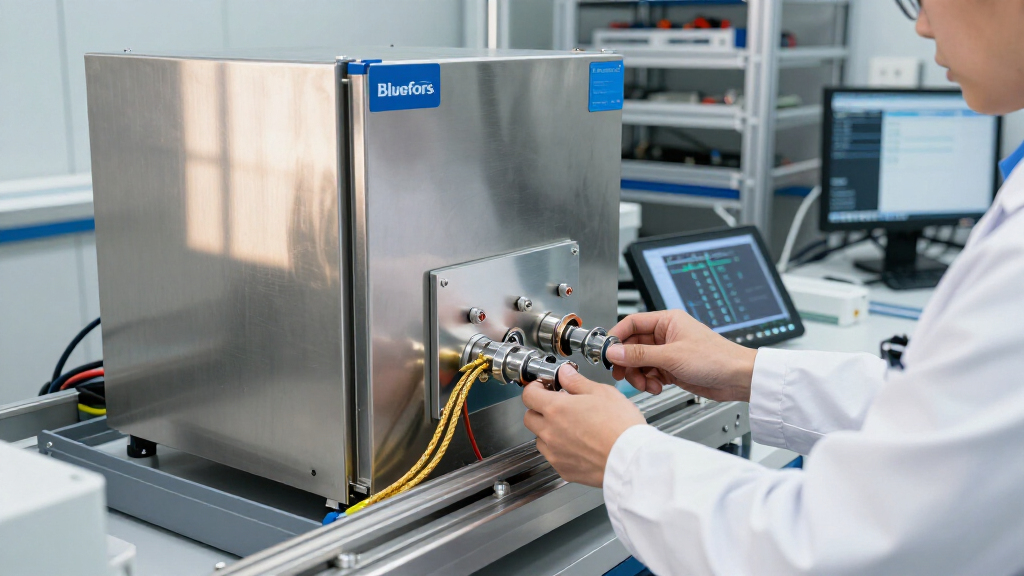
Xanadu and Bluefors have announced a multi-million-dollar strategic partnership to develop a high-performance cryogenic prototype for utility-scale quantum computing (USQC). The companies say a compact, modular approach could replace large industrial cryoplants and inform a mass-manufacturable module for future quantum data centers.
Xanadu Quantum Technologies (NASDAQ/TSX: XNDU) and Finnish cryogenics specialist Bluefors announced on September 29, 2026, a multi-million-dollar strategic partnership to develop a high-performance cryogenic prototype for utility-scale quantum computing (USQC). The companies say the collaboration aims to produce scalable, modular cryogenic infrastructure that could serve as a blueprint for Xanadu’s planned USQC data center and for future quantum data centers more broadly.
The partnership, described in a press release as representing a key milestone in the two companies’ joint development efforts, will draw on Bluefors’ cryogenic technology and Xanadu’s photonic quantum computing platform. The stated goal is a modular cryogenic prototype whose design and test results would feed into a follow-on effort: a mass-manufacturable cryogenic module tailored for single-photon detectors and USQC data center environments.
According to the announcement, the central design shift is compactness. Xanadu CEO Dr. Christian Weedbrook said the industry had until recently assumed that utility-scale quantum computing would require massive, industrial-scale cryoplants. He said the collaboration with Bluefors has instead produced a concept that integrates Bluefors’ most advanced technology into a compact module, an approach the company expects will remove the need for traditional cryoplants and improve the scalability and economics of future quantum data centers.
Bluefors CEO Kim Povlsen framed the partnership around delivering a modular, cryo-tested solution that combines cooling and quantum infrastructure and can grow alongside customers’ technology roadmaps. He said meeting cooling demands at scale would help customers optimize time-to-value and build a foundation for fault-tolerant quantum computers. The exact dollar value of the collaboration was not disclosed beyond being described as multi-million-dollar in USD.
Why Cryogenics Shapes Quantum Scaling
Cryogenic cooling is one of the main infrastructure constraints on scaling quantum computers, particularly for photonic systems that rely on single-photon detectors operating at millikelvin temperatures. If large, industrial-scale cryoplants are required for every utility-scale machine, the cost, footprint and complexity of quantum data centers would grow sharply. Xanadu and Bluefors claim their compact modular concept could avoid that outcome, which they argue would materially improve the economics of building and operating quantum data centers.
The partnership also signals a broader shift in the quantum industry toward pre-commercial infrastructure planning. By targeting a mass-manufacturable module rather than one-off custom systems, the companies are positioning cryogenics as a standardized component of future data centers, similar to how conventional data centers rely on standardized power and cooling equipment. For Bluefors, a leading supplier of dilution refrigerators to quantum labs worldwide, the deal extends its business from research systems toward utility-scale deployment.
Xanadu’s Path to Utility Scale
: “Xanadu is a Toronto-based photonic quantum computing company, publicly listed on NASDAQ and the Toronto Stock Exchange under the ticker XNDU. Photonic approaches encode quantum information in light, and their detection hardware typically requires deep cryogenic cooling, which makes the cooling architecture a direct factor in how large such systems can realistically become.
Bluefors, based in Finland, is a major supplier of dilution refrigerators and other cryogenic equipment used by quantum computing labs and companies globally. The two companies had already been collaborating on development efforts, and the announcement describes this partnership as a milestone in that joint work. Xanadu has previously outlined plans for a utility-scale quantum computer and an associated data center, which this cryogenic prototype is intended to support.
“We are delivering a high-powered, modular and cryo-tested solution that combines cooling and quantum infrastructure designed to grow alongside our customers’ technology roadmaps.”
— Kim Povlsen, CEO of Bluefors
Unproven Claims and Open Questions
The announcement is a press release, and several key claims are projections rather than demonstrated results. The compact-module concept has not yet been validated by a working prototype; the companies say the prototype’s results will be used to inform the design of the eventual mass-manufacturable module. Statements that the approach will ‘remove the need for traditional cryoplants’ and improve economics are framed as expectations by Xanadu’s CEO, not measured outcomes.
The financial terms are undisclosed beyond the description ‘multi-million-dollar.’ No timeline was given for when the prototype will be completed, tested, or translated into a manufacturable product, and no technical specifications — cooling capacity, operating temperature, or module footprint — were released. Performance of the module in an actual data center environment also remains to be demonstrated.
From Prototype to Manufacturable Module
According to the announcement, the next step is completing and testing the cryogenic prototype, then using insights from that work to engineer a mass-manufacturable cryogenic module designed for single-photon detectors and USQC data center environments. The companies intend the resulting design to serve as a foundational blueprint for Xanadu’s planned USQC data center and, they say, for future utility-scale quantum data centers generally.
Watch for future announcements on prototype test results, technical specifications, manufacturing timelines, and progress on Xanadu’s utility-scale quantum computer, any of which would indicate whether the compact-module concept performs as projected.
Key Questions
What did Xanadu and Bluefors announce?
A multi-million-dollar strategic partnership, announced September 29, 2026, to develop a high-performance, modular cryogenic prototype intended to support utility-scale quantum computing, including Xanadu’s planned USQC data center.
Why is cryogenic infrastructure important for photonic quantum computing?
Photonic quantum computers rely on single-photon detectors that operate at deep cryogenic temperatures. The scale, cost and complexity of the required cooling infrastructure directly affects how large and economical quantum data centers can become.
How much is the partnership worth?
The companies described it only as a multi-million-dollar collaboration in USD. The exact figure was not disclosed.
Has the technology been proven to work?
No. The compact-module concept and its claimed benefits — such as eliminating the need for traditional cryoplants — are company projections. The prototype still needs to be built and tested, and no technical specifications or timelines were released.
What comes after the prototype?
Xanadu and Bluefors plan to use results from the prototype to engineer a mass-manufacturable cryogenic module tailored for single-photon detectors and USQC data center environments, which they intend to serve as a blueprint for future quantum data centers.
Source: rss
Halloween Picks
halloween
As an affiliate, we earn on qualifying purchases.