
Choose a science experiment kit that fits a child’s age and interests, then help them complete an experiment safely and understand what happened. This guide is for parents, caregivers, and educators with no specialized science experience. Allow about 30–60 minutes for choosing a kit, preparing the workspace, running one experiment, and cleaning up; the kit’s instructions may call for more time.

Prime made for students and young adults
- Fast, free delivery for dorm and study essentials
- Prime Video and Amazon Music included
- Member-only deals

LUCKY GUESS 8-in-1 STEM Science Kit for Kids
- ✔ Brand: LUCKY GUESS
- ✔ Age range: 8–14 years
- ✔ Number of models: 8
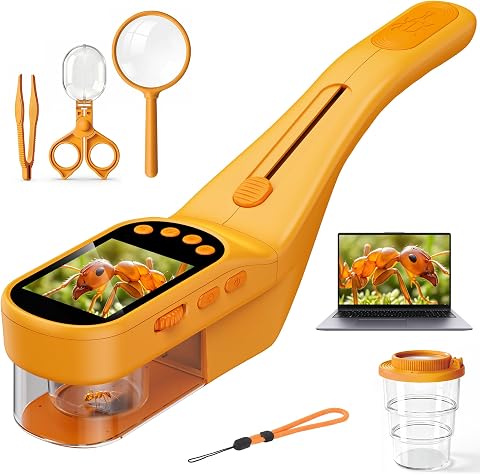
SIIOOE B312 Kids’ Bug Catcher Digital Microscope, 500× Zoom
- ✔ Brand: SIIOOE
- ✔ Model: B312
- ✔ Screen: 2.4-inch IPS

VATOS Space Science Circuit Kit for Kids, 31 Pieces
- ✔ Piece count: 31
- ✔ Projects: 100+
- ✔ Recommended age: 6+
Difficulty: Beginner | Time: 30–60 minutes, depending on the experiment
What You’ll Need
Tools & Materials:
- A science experiment kit with its instruction booklet and all listed components
- A clear, washable work surface
- Paper towels and a bowl or tray to catch spills
- Safety glasses or other protective gear if the kit instructions require them
- A notebook or paper and pencil for recording observations
Knowledge:
- Ability to read and follow the kit’s safety instructions
- Basic supervision appropriate to the child’s age and abilities
Check the kit’s recommended age, warnings, experiment duration, and supply list before opening it. Set aside uninterrupted time. Keep food and drinks away from the work surface, and plan to supervise children throughout the experiment.
LUCKY GUESS 8-in-1 STEM Science Kit for Kids
Of the three kits here, the LUCKY GUESS 8-in-1 covers the widest scientific territory. Where the VATOS kit stays inside electrical circuits and the SIIOOE microscope focuses on biology, this set spans solar energy, optics, magnetism, and mechanical engineering across eight wooden builds — a solar car, a fan, a periscope, and a magnetic levitation project among them. That breadth is why it earns our top spot: a child who discovers they dislike one branch of physics still has seven more projects to explore.Assembly is genuinely kid-friendly. The snap-fit parts need no tools, and the inclusion of three coloring markers means children can personalize each model before (or after) it works — a small touch that extends engagement well past the first build. Compared with the VATOS kit, which targets ages 6 and up, this set skews slightly older at 8–14, and the projects reward that extra maturity with more meaningful physics demonstrations, like seeing levitation emerge from magnetic repulsion.The tradeoffs are real, though. The solar projects depend on adequate sunlight, so a cloudy week or a dim apartment can stall the fun — something the battery-free VATOS circuits never worry about. And while the wood construction feels refreshing next to all-plastic rivals, some structural parts are still plastic, which may disappoint buyers expecting an entirely natural-material kit.
Pros:
- Eight distinct projects spanning physics, engineering, and optics
- Snap-fit assembly with no tools or batteries required
- Solar-powered builds make renewable energy tangible
- Coloring markers add a creative layer to each model
Cons:
- Solar models need suitable sunlight to operate
- Includes plastic parts despite the wooden framing
- Better suited to older children than the other two kits
Best for: Kids ages 8–14 who like building physical models and want exposure to multiple science topics in one box
Not ideal for: Families without reliable sunlight for solar projects, or children under 8 who may find the builds fiddly
Bottom line: The most well-rounded choice here, offering the broadest science coverage and genuine hands-on building for school-age kids.
“The most well-rounded choice here, offering the broadest science coverage and genuine hands-on building for school-age kids.”
SIIOOE B312 Kids’ Bug Catcher Digital Microscope, 500× Zoom
The SIIOOE B312 takes the opposite approach to science learning from the two building kits in this lineup. Instead of constructing models, children observe the natural world directly — insects, leaves, soil, whatever they can catch — through a handheld digital microscope with a 2.4-inch IPS screen and up to 500× zoom. That screen makes all the difference for young learners: unlike a traditional eyepiece microscope, which frustrates small faces, everyone can see the image at once, turning observation into a shared activity.Its age range of 3–12 is the widest here, and rightly so — the catch-and-release transparent chamber and bundled accessories (tweezers, traps, a magnifying glass, and a folding observation cup) turn a walk in the yard into a field expedition. The photo and video recording feature adds a documentation angle the LUCKY GUESS and VATOS kits can’t match, letting kids build a small archive of discoveries.Be clear about what this is not, however. It is not a building kit — there is nothing to assemble or engineer — so children who crave construction will lose interest. LED fill lights and a compact screen also mean some parental involvement helps younger users position specimens properly. Compared with the VATOS kit, the B312 trades structured experiments for open-ended exploration, which is either its greatest strength or its weakness depending on your child’s temperament.
Pros:
- Large 2.4-inch IPS screen replaces frustrating eyepieces
- 500× zoom reveals details invisible to the naked eye
- Catch-and-release chamber supports humane observation
- Full accessory set for immediate indoor or outdoor use
Cons:
- No building or engineering component at all
- Younger children need adult help positioning specimens
- Open-ended design may not hold structured learners’ attention
Best for: Curious younger children (roughly 3–12) who love nature, bugs, and outdoor discovery more than building
Not ideal for: Kids who want to construct and engineer things, or families limiting screen-based toys
Bottom line: The easiest entry point into science for young nature lovers, provided your child prefers observing over building.
“The easiest entry point into science for young nature lovers, provided your child prefers observing over building.”
VATOS Space Science Circuit Kit for Kids, 31 Pieces
If the LUCKY GUESS kit is a survey course in physics and the SIIOOE microscope is a biology field trip, the VATOS Space Science Circuit Kit is a focused electrical engineering class disguised as a toy. From just 31 pieces, children can assemble more than 100 space-themed circuit projects — a rocket launcher, a light-up astronaut, a rotating radar — which gives it by far the highest experiment count per piece in this lineup.The space theme is not just decoration; it gives kids a narrative reason to complete each build, something abstract circuit kits often lack. Like the LUCKY GUESS set, everything is snap-together with no tools or soldering, but the low-voltage design means the electrical concepts are safe to explore hands-on. The illustrated guide walks builders through progressively harder projects, so the kit grows with the child rather than being consumed in a weekend.Its age rating of 6+ is the lowest starting age among the building kits, but that comes with the clearest caveat of the three: because live circuits are involved, adult supervision is expected, particularly at the younger end. It is also the most specialized pick here — if your child tires of electricity, there is no optics or biology content to fall back on, unlike the broader LUCKY GUESS set. And the all-ABS plastic construction feels less premium than the wooden LUCKY GUESS models, even if it is the practical choice for snap-together electronics.
Pros:
- Over 100 projects from a 31-piece set — exceptional replay value
- Teaches genuine electrical concepts through building
- Low-voltage, snap-together design needs no tools or soldering
- Space theme gives each project a story-driven purpose
Cons:
- Requires adult supervision due to live circuits
- Narrowly focused on electricity with no other science topics
- All-plastic build feels less substantial than wooden rivals
Best for: Kids 6 and up who are fascinated by electricity, lights, and how things work — and parents happy to supervise
Not ideal for: Families who cannot provide regular adult supervision, or children seeking variety across science topics
Bottom line: The deepest single-subject kit here, best for a child already curious about circuits and electronics.
“The deepest single-subject kit here, best for a child already curious about circuits and electronics.”
As an Amazon Associate we earn from qualifying purchases.
Before You Start
Read the full instructions and safety information before involving the child. Some kits require household supplies, adult help, or advance preparation. Do not substitute chemicals, containers, or tools unless the manufacturer’s instructions say the substitution is safe. Keep kit materials away from the eyes and mouth, and follow the label if anything contacts skin or eyes. If the instructions are missing or a component is damaged or unlabeled, do not use that experiment; contact the manufacturer or choose another activity.
Step-by-Step Instructions
Step 1: Choose a kit that fits the child
Compare the kit’s recommended age with the child’s age, reading ability, and comfort with following several steps. Pick a subject the child is curious about, such as plants, magnets, weather, or simple chemistry. Read the package and product details to learn how many experiments it contains, whether an adult must supervise, and whether you need supplies that are not included.
Tip:For a first experiment, favor a kit with clear instructions, a short activity, and materials that are easy to identify and handle.
Check: You can name the experiment you plan to do, confirm the child can take part with the stated supervision, and list any extra supplies.
Step 2: Check the materials and instructions
Place the kit on a clear surface and use the inventory list to check that the parts for your chosen experiment are present, intact, and labeled. Read the experiment from start to finish, including warnings, disposal directions, and any waiting time. Gather household supplies listed in the instructions before beginning.
Tip:Do not guess which unlabeled liquid or powder to use. Stop and contact the manufacturer if a label or required part is missing.
Check: All required items are accounted for, and you know the steps, safety precautions, and cleanup directions.
Step 3: Prepare a safe work area
Choose a stable, washable surface with enough room for the kit, instructions, and observation notes. Move food, drinks, pets, and unrelated items away. Set out paper towels and a tray or bowl if spills are possible. Put on any protective gear named in the instructions, and position the child so they can reach the materials without leaning over them.
Tip:Keep the instruction booklet visible. Avoid working near sinks, heat, or electrical equipment unless the experiment specifically requires one and the instructions explain safe use.
Check: The workspace is uncluttered, spills can be managed, and required protective gear is ready.
Step 4: Explain the question and make a prediction
Read the experiment’s question aloud and ask the child what they think will happen. Invite them to record or draw a prediction before mixing, assembling, or testing anything. Keep the prediction simple, such as “I think the magnet will pick up the paper clip.” Explain that a prediction is a guess to test, so it does not need to be correct.
Tip:Ask what the child noticed that led to their prediction. This connects the activity to observation without turning it into a quiz.
Check: The child has stated or recorded a prediction before seeing the result.
Step 5: Follow the experiment steps in order
Guide the child through the printed instructions one step at a time. Let them do the tasks the kit identifies as child-safe, and take over any task marked for adult help. Measure amounts as directed, use only the specified components, and pause at stated waiting times. Avoid touching or tasting experiment materials unless the instructions explicitly say they are safe to handle that way.
Tip:Small changes in amounts or order can affect a result. If a step is unclear, pause and reread it instead of improvising.
Check: Each action matches the instructions, the materials are being used as labeled, and no safety step was skipped.
Step 6: Observe and record the result
Ask the child to describe what they see, hear, or measure, using details rather than only saying whether it worked. Compare the result with the prediction and record observations in words, numbers, or a drawing. If the experiment includes repeated trials, follow the instructions for each one and record each result separately.
Tip:Give the child time to look closely before offering an explanation. A result different from the prediction is still useful evidence.
Check: The observations are recorded, and the child can point to at least one detail from the experiment.
Step 7: Clean up and store the kit
Follow the kit’s disposal instructions for every mixture and used component; do not pour anything down a drain unless the instructions allow it. Wipe the surface, wash hands, and clean reusable tools as directed. Return dry, undamaged pieces to their labeled storage bags or compartments, then store the kit as the manufacturer recommends.
Tip:Keep unused chemicals and small parts out of children’s reach after the activity.
Check: The work area is clean, materials have been disposed of or stored as directed, and everyone has washed their hands.
Common Mistakes to Avoid
- Starting before checking the instructions or gathering extra supplies. — Read the entire experiment first and set out every required item before inviting the child to begin.
- Changing ingredient amounts or the order of steps. — Measure and follow the printed sequence. Ask the manufacturer for clarification if an instruction is unclear.
- Choosing a kit based only on its age label. — Check the reading, fine-motor, and supervision demands too; choose an activity the child can participate in comfortably.
- Treating an unexpected result as failure. — Record what happened and compare it with the prediction. Differences can prompt useful questions, but repeat only if the instructions permit it.
Troubleshooting
Problem: A required component or label is missing.
Solution: Do not guess or substitute. Check the packaging and inventory list once more, then contact the manufacturer or choose a different experiment.
Problem: The result does not match the expected picture or description.
Solution: Check that the correct materials and amounts were used and that you waited as long as directed. Record the actual result; stop if you notice an unusual odor, heat, leak, or other condition not covered by the instructions.
Problem: A spill occurs.
Solution: Pause the experiment and keep the child away from the spill. Use the cleanup directions on the kit label or booklet, including any specified protective gear. If the directions do not cover the spill, contact the manufacturer for guidance.
Problem: The child loses interest or finds a step difficult.
Solution: Pause at a safe stopping point, restate the next action in simpler language, or offer the child a different safe role, such as timing or drawing observations. Do not rush or skip a safety step to finish.
What Success Looks Like
The experiment is complete when the child has followed the kit’s instructions with appropriate supervision, recorded what happened, and taken part in cleanup. They should be able to describe one observation and say whether it matched their prediction. The result does not have to match an illustration exactly; correct use of the steps and a clear record of what occurred are the useful signs of completion.
Next Steps
Ask the child what they would change or test next, then check the kit instructions to see whether another trial is allowed. Store the booklet with the kit so the activity can be repeated consistently. Before the next experiment, check the materials and safety directions again; contact the manufacturer if a component is damaged or instructions remain unclear.
Frequently Asked Questions
How do I know whether a science kit is right for my child?
Use the recommended age as a starting point, then check the reading, coordination, and supervision demands listed on the package. Choose a topic the child enjoys and an experiment they can participate in safely.
Can I replace a missing ingredient with a household item?
Only if the kit instructions explicitly permit that replacement. An unapproved substitute can change the result or create a hazard. Contact the manufacturer or choose a different experiment if a required material is missing.
Should I help my child if their prediction is wrong?
Let the child compare the prediction with the recorded result. Ask what they observed and what they might test next. An unexpected outcome can still teach them how evidence answers a question.
What should I do if experiment material gets in someone’s eyes or on their skin?
Follow the kit’s label and safety instructions immediately. If they direct you to rinse, use the stated rinsing procedure and duration. Contact the manufacturer or local poison advice service for guidance, and seek medical help when the label directs you to do so or symptoms continue.
Columbus Day / Indigenous Peoples' Day Picks
long weekend sales
As an affiliate, we earn on qualifying purchases.