
TL;DR

Prime made for students and young adults
- Fast, free delivery for dorm and study essentials
- Prime Video and Amazon Music included
- Member-only deals
Science reference books — encyclopedias, dictionaries, handbooks, atlases, and field guides — help students look up reliable explanations fast without reading an entire textbook. The right choice depends on the student’s age, subject, and purpose: broad encyclopedias for overview, subject handbooks for focused assignments, lab guides for experiments. Check the publication date, the editorial process behind the work, and whether it cites sources before you trust it [1].
Your kid has a science project due Friday, and the search results are a swamp of forums, outdated pages, and AI summaries that sound confident and cite nothing. Meanwhile, a well-chosen reference book sits on the shelf, organized, fact-checked, and edited by actual scientists. Sometimes old tech wins.
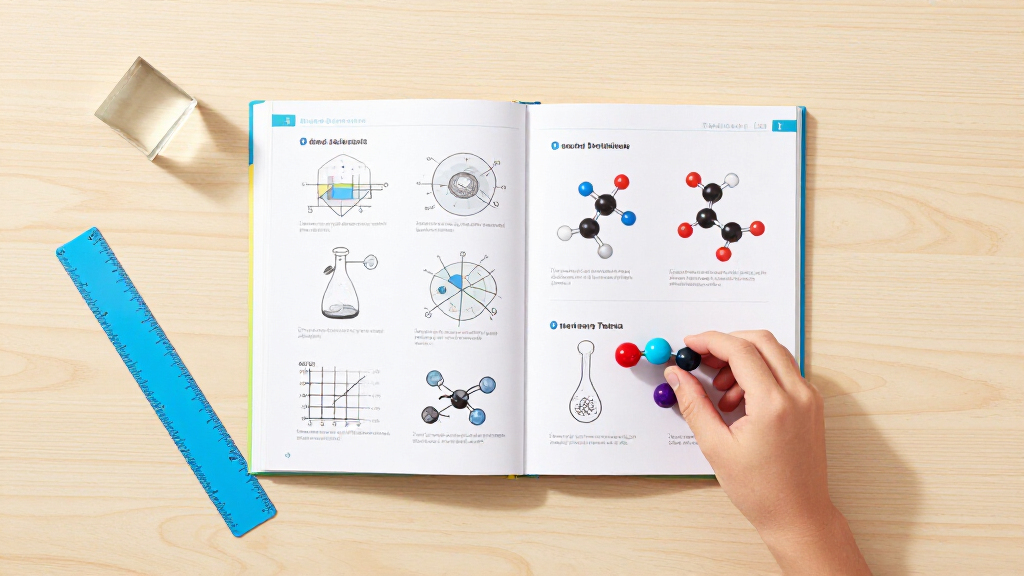
Science reference books help students look up reliable explanations, definitions, data, and context without reading an entire textbook. They include encyclopedias, dictionaries, atlases, handbooks, lab guides, field guides, and exam companions — each built for a different kind of question [1].
In this guide, you’ll learn what counts as a science reference book, which type fits which situation, how to tell an accurate one from a stale one, and how print and digital options can work together instead of competing.
Match the reference to the question: encyclopedias for overviews, dictionaries for quick definitions, handbooks for data, field guides for identification, lab…
Judge currency by topic, not by a single date standard — photosynthesis basics last years, while climate, medicine, and space data may need near-constant revis…
Use the 60-second accuracy check: publication date, editorial credentials, citations, and a skim of a topic you already know.
Treat encyclopedias as a starting point for research — follow their citations to primary or specialist sources for assignments.
Use AI search tools to generate search terms and plain-language summaries, but verify every important claim against an identifiable, current reference.
What Actually Counts as a Science Reference Book (It’s More Than Encyclopedias)
A science reference book is any organized, lookup-friendly work built for consultation rather than cover-to-cover reading. The classic examples are encyclopedias and dictionaries, but the family is much bigger: they include atlases, handbooks, lab guides, field guides, and exam companions [1]. Each one answers a different shape of question.
Think about the difference in feel. A chemistry dictionary sits on the desk for thirty-second lookups — what does electronegativity mean again? An astronomy atlas gets spread across a table on a clear night, star charts glowing under a red flashlight. A field guide gets shoved in a backpack, its corners soft from mud and rain.
The common thread is quick access to background knowledge: entries and indexes help students find a topic, then follow references to related ideas [1]. A textbook teaches in sequence. A reference book answers in seconds.
| Type | Best for | Example use |
|---|---|---|
| Encyclopedia | Broad overviews | First pass at an unfamiliar topic |
| Dictionary | Fast definitions | Decoding a term mid-reading |
| Handbook | Detailed subject data | Constants, tables, formulas |
| Atlas | Spatial and visual info | Star charts, anatomy, geology maps |
| Field guide | Identification outdoors | Naming birds, rocks, plants |
Match the Book to the Student: Why Age Fit Beats Fancy Editions
Science reference books work only when they match the reader’s level, because children’s encyclopedias use simpler language and visuals while advanced handbooks assume prior knowledge [1]. Hand a nine-year-old a university-level biology handbook and you’ll get a bookmark dropped on page three. Hand a high schooler a picture encyclopedia and they’ll finish it in an afternoon and learn nothing new.
The sweet spot is a reference that’s understandable without being misleadingly simplistic — detailed enough for the task, but not so dense that looking things up becomes harder than the original question [1].
Here’s a quick scene: a sixth-grader writing about volcanoes opens a kids’ encyclopedia, finds a two-page spread with a cross-section diagram of a magma chamber, and finishes her outline in twenty minutes. Her older brother, prepping for a chemistry exam, needs the data tables in a subject handbook instead. Same family, same shelf, completely different tools.
- Ages 7–11: visual encyclopedias with big diagrams and glossaries
- Ages 12–14: single-volume science encyclopedias and illustrated dictionaries
- High school: subject handbooks, chemistry dictionaries, astronomy atlases
- Exam prep: subject companions with practice questions and formula summaries
Print or Digital? How to Use Both Without the Downsides of Either
The honest answer is that print and digital references now work alongside one another: print offers a stable, browsable format, while digital adds search, links, multimedia, and sometimes interactive diagrams [1]. This isn’t a war. It’s a tag team.
Print wins for browsing. You open a book to check one entry about tides, and forty minutes later you’ve wandered through ocean currents and bioluminescence — that serendipity is a feature, not a bug. Digital wins for speed and reach. A searchable encyclopedia on a library database finds every mention of mitochondria in a second, and links carry you straight to related entries.
Online access has widened dramatically, but quality varies. Libraries, schools, museums, universities, and established publishers provide reliable digital resources; open websites can help too, but students should check authorship, evidence, dates, and editorial standards [1].
Practical setup: keep one strong print encyclopedia or handbook at home for browsing and power outages, and use your school or public library’s digital subscriptions for fast, searchable lookups. Most public libraries offer free access to reference databases that would cost hundreds of dollars individually — ask a librarian, because students routinely miss this [1].
How to Spot an Accurate, Up-to-Date Science Book in 60 Seconds
You can judge a science reference book fast by checking four things: the publication or revision date, the credentials and editorial process behind it, whether it cites sources, and whether its explanations distinguish established findings from open questions [1]. That’s the whole checklist, and it takes about a minute.
- Check the date. Copyright page, usually within the first few pages.
- Check the publisher and editors. University presses and established science publishers have review processes; a named editorial board is a good sign.
- Look for citations or further reading lists at the back or per entry.
- Skim a topic you already know. If the explanation is clear and honest about uncertainty, the rest is probably trustworthy too.
Here’s the nuance most people miss: reference books don’t all age at the same rate. A basic explanation of photosynthesis may remain useful for years, while data on climate, medicine, space missions, or species classifications may need frequent updating [1]. So judge the date by the topic — a 2012 astronomy atlas can still teach constellation basics, but its planetary moon counts are wrong today.
A good rule of thumb: physics constants age slowly, medicine and climate data age fast, and species classifications age in between. Match your skepticism to the topic’s speed of change.
Why Encyclopedias Are a Starting Point, Not Your Final Source
General science references are useful for orientation, but for research assignments students should follow their citations and consult primary research, specialist sources, or course materials when appropriate [1]. The encyclopedia gets you oriented; it doesn’t get you a finished bibliography.
Why? Because encyclopedia entries compress. They summarize consensus in a few paragraphs, and the interesting edges — the debates, the recent studies, the uncertainty — get smoothed out. A teacher who sees only encyclopedia citations in a research paper knows the student stopped digging at step one.
There’s also a hidden benefit: comparing entries across reputable sources shows students how evidence, uncertainty, and scientific explanations are presented [1]. Read two encyclopedias’ entries on black holes and you’ll notice slightly different framings — that comparison is a mini-lesson in information literacy, taught without a single lecture.
Real-world version: a student writing about renewable energy reads the encyclopedia entry first, then follows its further-reading list to an energy agency’s data tables. The paper cites both. That’s the reference book doing exactly what it was built for — being the door, not the destination.
What AI Search Tools Change (and What They Can’t Replace)
AI search tools have changed how students find explanations: they can generate search terms and plain-language summaries, but they may produce errors or omit sources, so students should verify important claims against identifiable, current references [1]. That’s the balance — helpful starting point, unreliable finish line.
The failure mode is quiet. An AI summary of, say, the human microbiome reads smoothly, sounds authoritative, and cites nothing. There’s no date, no author, no way to check. A reference book — or a library database entry — gives you a name, a publisher, and a revision history you can actually interrogate.
Use AI tools for what they do well:
- Generating better search terms when you don’t know the vocabulary
- Getting a plain-language first pass on a confusing topic
- Brainstorming questions to ask of your reference sources
Then verify. Every claim that matters gets checked against a source you can name, date, and cite. According to guidance on student research practices, this verification step is exactly what separates strong student work from confident-sounding guesswork [1].
Build a Working Reference Shelf: A Simple 4-Step Plan
Building a useful science reference shelf takes one afternoon and a library card. The goal isn’t quantity — it’s covering the main question types a student actually hits during a school year, at the right reading level, with sources you’ve vetted.
- Start with one broad encyclopedia matched to the student’s age — this covers most overview questions.
- Add one subject-specific reference for the year’s main science course: a biology handbook, chemistry dictionary, or astronomy atlas depending on focus [1].
- Add a practical guide for experiments — and prioritize clear safety guidance and age-appropriate adult supervision [1].
- Activate the library’s digital subscriptions so lookups are fast, searchable, and free.
For experiments, that safety point isn’t boilerplate. A good lab guide states precautions per activity, names the adult supervision expected, and explains why each rule exists — that last part is what students actually remember when you’re not in the room.
Finally, check accessibility: diagrams with captions, glossaries, readable layouts, and screen-reader support make references useful to a wider range of learners [1]. A brilliant handbook nobody can comfortably read helps nobody.
Frequently Asked Questions
What counts as a science reference book?
Any organized work built for quick consultation rather than cover-to-cover reading: encyclopedias, science dictionaries, atlases, handbooks, lab guides, field guides, and exam companions. The shared purpose is helping students look up reliable explanations, definitions, and data without reading an entire textbook [1].
Should students use a printed encyclopedia or an online reference?
Both, for different jobs. Print offers stable, browsable reading that invites serendipitous discovery; digital references add search, links, and multimedia [1]. A strong setup is one print encyclopedia at home plus free access to library digital reference databases.
Are general encyclopedias acceptable sources for school research papers?
As starting points, yes — but not usually as final citations. For research assignments, students should follow the encyclopedia’s citations to primary research, specialist sources, or course materials [1]. Many teachers expect exactly this progression from overview to specialist source.
How often do science reference books become outdated?
It depends on the topic. Basic explanations like photosynthesis can stay useful for years, while data on climate, medicine, space missions, and species classifications may need frequent updating [1]. Check the publication or revision date and match your expectations to how fast that field changes.
How can students verify information they find through AI search tools?
AI tools can generate useful search terms and plain-language summaries, but they may produce errors or omit sources [1]. Verify every important claim against an identifiable, current reference — a named book, a library database entry, or an established publisher’s publication with a date and editorial process you can check.
Conclusion
The best science reference book isn’t the biggest or the newest — it’s the one that fits the student’s level, answers the actual question, is transparent about its sources, and is current enough for the topic. Everything else is decoration.
So build the small, smart shelf: one good encyclopedia, one subject reference, one lab guide, and a library login. The next time a project lands on a Friday deadline, the answer will be sitting on the shelf — organized, edited, and quietly waiting to be trusted.
Fall Picks
fall essentials
As an affiliate, we earn on qualifying purchases.