
TL;DR

Prime made for students and young adults
- Fast, free delivery for dorm and study essentials
- Prime Video and Amazon Music included
- Member-only deals
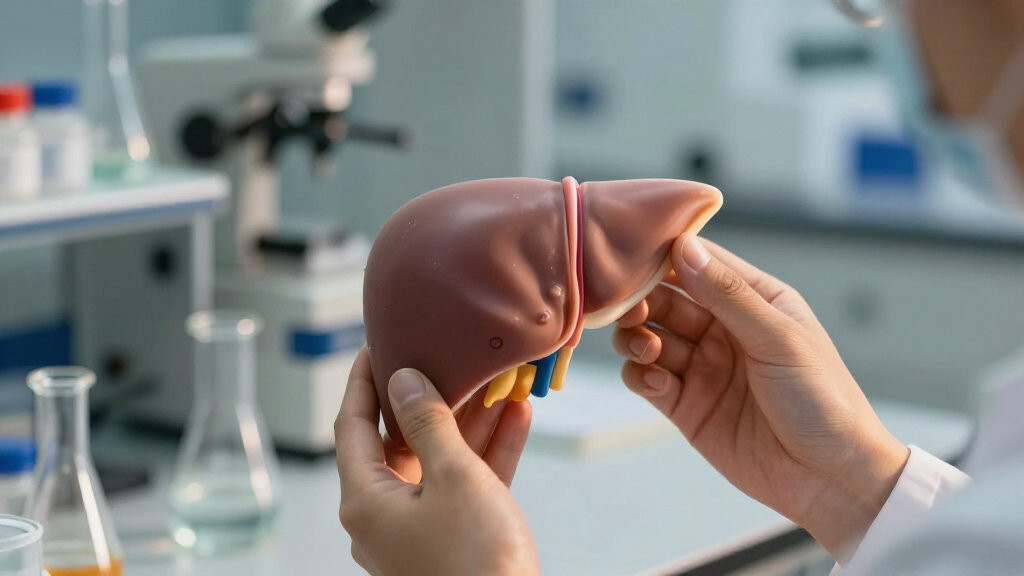
The liver’s remarkable ability to regenerate is a unique biological trait that has puzzled scientists for decades. Recent research highlights complex cellular processes, but many details remain uncertain. Understanding this could impact treatments for liver disease.
The liver’s ability to regenerate itself after injury or surgical removal is a biological phenomenon that has long fascinated scientists. Unlike most organs, which have limited regenerative capacity, the liver can restore its mass and function remarkably quickly. This phenomenon is confirmed through decades of medical observation and research, and recent studies continue to deepen understanding of the cellular and molecular processes involved. The growing interest in this trait is driven by its potential implications for treating liver diseases and improving regenerative medicine.
The liver can regenerate up to 70% of its tissue within a few months after injury or partial removal, a capacity confirmed through clinical and experimental studies. This regeneration involves complex cellular processes, including proliferation of hepatocytes—the primary liver cells—and activation of various signaling pathways. Recent research suggests that the liver’s unique regenerative ability is partly due to its cellular environment, which promotes rapid cell division and tissue remodeling. Scientists have identified key molecules like growth factors and cytokines that regulate this process, though the precise mechanisms are still being unraveled.
Despite extensive research, some aspects of liver regeneration remain unclear. For instance, the exact triggers that initiate regeneration in response to injury, and how the organ balances regeneration with preventing abnormal growth, are not fully understood. Additionally, the regenerative process can be impaired in chronic liver diseases, leading to fibrosis or cirrhosis, which complicates treatment options. Researchers are actively investigating genetic and molecular factors that could enhance regenerative capacity or prevent pathological outcomes.
Implications for Liver Disease Treatment and Regenerative Medicine
The liver’s exceptional regenerative ability has significant implications for medicine, especially in treating liver failure, cirrhosis, and post-surgical recovery. Understanding the cellular and molecular mechanisms could lead to new therapies that stimulate regeneration in damaged livers, reducing the need for transplantation. Moreover, insights gained from liver regeneration research could inform regenerative strategies for other organs, broadening the scope of tissue engineering and stem cell therapies. The potential to harness or mimic this natural regenerative process offers hope for millions suffering from chronic liver conditions.
As an affiliate, we earn on qualifying purchases.
Historical and Scientific Background of Liver Regeneration
The regenerative capacity of the liver was first documented centuries ago through clinical observations of patients recovering from partial hepatectomy. Scientific investigation into the phenomenon accelerated in the 20th century, revealing that hepatocytes can re-enter the cell cycle and proliferate rapidly after injury. Unlike many tissues that rely on stem cells for regeneration, the liver primarily regenerates through the proliferation of mature hepatocytes, which is unusual among human organs. Recent advances in molecular biology and imaging have identified specific growth factors, signaling pathways, and genetic regulators involved in this process.
Interest in liver regeneration has surged in recent years due to the increasing prevalence of liver diseases, such as hepatitis, fatty liver disease, and alcohol-related liver damage. Researchers are now exploring how to replicate or enhance this natural process to develop regenerative therapies. Despite these advances, many questions remain about the organ’s ability to regenerate in different pathological contexts and how to optimize this capacity for clinical benefit.
As an affiliate, we earn on qualifying purchases.
Unresolved Questions About Liver Regeneration Triggers
Although significant progress has been made, it is still unclear what precisely triggers the initiation of liver regeneration after injury. Researchers are investigating whether specific signals from damaged tissue or systemic factors in the body serve as primary triggers. Additionally, it remains uncertain how the organ prevents overgrowth or tumor formation during rapid regeneration, especially in chronic disease states where regulation may be compromised. These gaps in understanding hinder the development of therapies that could reliably stimulate regeneration in damaged or diseased livers.
hepatocyte growth factor supplement
As an affiliate, we earn on qualifying purchases.
As an affiliate, we earn on qualifying purchases.
Future Research Directions in Liver Regeneration
Researchers are focusing on identifying the molecular signals that initiate and regulate liver regeneration, with ongoing studies exploring gene editing, stem cell therapy, and bioengineering approaches. Clinical trials are also underway to test regenerative drugs and growth factors that could enhance recovery after liver injury or surgery. In the coming years, advances in imaging and molecular diagnostics may allow scientists to better predict and control regenerative responses, paving the way for targeted therapies that could transform treatment for liver diseases.
As an affiliate, we earn on qualifying purchases.
Key Questions
Why is the liver the only human organ with such a high regenerative capacity?
The liver’s unique ability is due to its cellular environment and specific signaling pathways that promote rapid cell division, primarily through mature hepatocytes rather than stem cells, which is uncommon among organs.
Can liver regeneration be enhanced in people with chronic liver disease?
Current research aims to develop therapies that stimulate regeneration, but in chronic disease states, this process can be impaired. Future treatments may improve regenerative responses, but more studies are needed.
What are the risks associated with stimulating liver regeneration?
Potential risks include abnormal growth or tumor formation if regulation of the regenerative process is disrupted. Ensuring controlled regeneration is a key focus of ongoing research.
How does understanding liver regeneration help in regenerative medicine overall?
Insights into the liver’s regenerative mechanisms can inform strategies to regenerate other tissues and organs, broadening the potential of regenerative medicine and stem cell therapies.
Source: hn
Evergreen bestsellers Picks
bestsellers
As an affiliate, we earn on qualifying purchases.